Our Top Picks
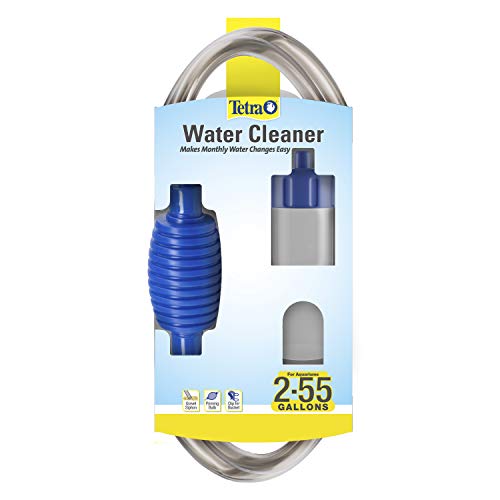 Tetra Water Cleaner Gravel Siphon For Aquariums Up2-55 Gallons5.5 x 3.4 x 13.75 Inches0.6 poundsCheck on Amazon
Best Aquarium Gravel Vacuums for Tank Cleaning
The best aquarium gravel vacuums for tank cleaning depend on your substrate, tank size, and whether you want fast water changes or precise spot cleaning: choose the Python No Spill Clean and Fill for large tanks and rapid changes, an Aqueon Aquarium Water Changer for a similar hose-based setup at a lower general market price, the EHEIM Quick Vac Pro for cordless debris removal without draining water, or a small manual siphon for nano tanks.
Quick comparison
| Model or type | Best fit | Hose or collection reach | Control and priming | Substrate safety | Typical market range |
|---|---|---|---|---|---|
| Python No Spill Clean and Fill | 55-gallon and larger tanks; fast maintenance | 25 ft or 50 ft hose kits | Faucet-powered; no bucket priming | Good with a gravel tube; use caution with sand | Usually $40–$90 |
| Aqueon Aquarium Water Changer | Medium and large tanks near a sink | Commonly 25 ft hose configurations | Faucet-powered; controlled by sink adapter and valve | Good for gravel when the tube is kept moving | Usually $35–$80 |
| EHEIM Quick Vac Pro | Spot cleaning and water removal without a bucket | Short onboard collection system | Battery-powered; no siphon priming | Best for gravel and debris above the substrate | Usually $45–$75 |
| Manual squeeze-bulb gravel vacuum | Small tanks, occasional changes, and low budgets | Usually 5–8 ft hose | Manual priming; flow is controlled by squeezing or a valve | Excellent control if used slowly | Usually $10–$30 |
| Battery or USB electric gravel vacuum | Small to medium tanks and frequent spot cleaning | Usually 4–6 ft discharge hose or collection bag | Push-button start; varies by model | Use a coarse screen or pre-filter with fine gravel | Usually $20–$60 |
Python No Spill Clean and Fill: best for fast, large water changes
The Python system is the strongest choice when cleaning a large aquarium involves carrying too many buckets. Its long hose connects to a faucet, using tap-water pressure to start the siphon and allowing dirty water to drain directly away. The 25-foot version suits many rooms; a 50-foot hose is useful when the aquarium is far from a sink or drain.
Tetra Water Cleaner Gravel Siphon For Aquariums Up to 55 Gal | Makes Water Changes Easier, Removes Debris From Gravel, Remove 30% Of Water Every 30 Days
Picked as a relevant option in this category.
View on Amazon
UPETTOOLS Aquarium Gravel Cleaner - Electric Automatic Removable Vacuum Water Changer Sand Algae Cleaner Filter Changer 110V/28W
Picked as a relevant option in this category.
View on Amazon
Laifoo 5ft-S Aquarium Siphon Vacuum Cleaner for Fish Tank Cleaning Gravel
Picked as a relevant option in this category.
View on Amazon
AQQA Electric Aquarium Vacuum Gravel Cleaner, 6 in 1 Fish Tank Vacuum | Automatic Cleaning Tools Kit Water Changer, Multifunction Wash Sand Filter Water Circulation 20W 320GPH 110V
Chosen because it specifies 6 in 1 Fish Tank Vacuum.
View on AmazonIts main advantage is speed. A 75-gallon aquarium with a 25 percent maintenance change requires removing about 18.75 gallons. With buckets holding 2.5 gallons, that is approximately eight bucket loads:
75 gallons × 0.25 = 18.75 gallons
18.75 ÷ 2.5 = 7.5, rounded up to 8 trips
A faucet-connected vacuum can remove that volume continuously, but the trade-off is less precise flow control than a small manual siphon. Use the shutoff valve and keep the gravel tube only partially buried. When refilling, match the aquarium temperature and use a water conditioner suitable for the full volume of new tap water.
Best for
- 55-, 75-, and 100-gallon aquariums.
- Fish rooms or tanks positioned close to a sink.
- Owners who want to combine gravel cleaning and refilling.
Limitations
- It needs a suitable faucet and a practical drain route.
- It is excessive for a 5-gallon aquarium.
- Strong flow can uproot plants or remove small gravel if the tube is left in one place.
Aqueon Aquarium Water Changer: a practical faucet-powered alternative
The Aqueon Aquarium Water Changer targets the same problem as the Python: moving aquarium water without repeatedly lifting buckets. It is particularly useful for medium and large tanks where the hose length reaches from the aquarium to a utility sink or bathroom.
Choose this style when your priority is a complete water-change workflow rather than maximum precision during a tiny cleanup. The faucet connection helps start the siphon, and the gravel tube allows the user to lift waste from between stones while old water drains away.
For planted aquariums, divide the substrate into sections rather than vacuuming the entire bed every time. During a 25 percent change, clean roughly one-quarter to one-third of the gravel surface, then rotate areas at the next maintenance session. This removes waste while disturbing fewer roots and beneficial microorganisms.
Flow-control technique
- Open the valve only enough to create a steady siphon.
- Place the tube over one small patch of gravel.
- Lift it as debris rises and the water column becomes clearer.
- Move to the next patch before the tube pulls up gravel or exposes plant roots.
If the tank contains sand, do not plunge the wide tube into the bed. Hold it about 1–2 centimeters above the surface and skim visible waste instead.
EHEIM Quick Vac Pro: best for spot cleaning without draining the tank
The EHEIM Quick Vac Pro is a battery-operated gravel cleaner designed for localized debris removal. Its onboard collection arrangement means it can remove uneaten food, fish waste, and detritus while returning the water to the aquarium or collecting debris separately, depending on how it is configured.
This makes it a better match than a faucet-connected changer for a lightly stocked tank that needs frequent spot cleaning. It also avoids siphon priming, which is useful when the aquarium is on a desk, stand, or shelf with no nearby sink.
The Quick Vac Pro is not the fastest tool for a major water change. Its strength is control: clean a dirty corner, remove debris around a plant, or tidy the surface after feeding without automatically removing several gallons of water.
Use it safely
- Inspect the intake screen before each session.
- Keep the intake away from fry, shrimp, and long-finned fish.
- Empty and rinse the collection chamber after use so trapped waste does not decompose inside it.
- Replace or recharge batteries before a full cleaning session; weak power can reduce suction and leave heavy debris behind.
Manual gravel vacuums: the best choice for nano tanks and maximum control
A manual squeeze-bulb vacuum is often the right answer for tanks under about 20 gallons. It is inexpensive, easy to store, and less likely to remove water too quickly. The operator can stop the siphon immediately by raising the outlet hose or closing its valve.
For a 10-gallon aquarium, a 20 percent change is only 2 gallons. A large faucet-powered system can remove that amount so quickly that the aquarist has little time to inspect the substrate. A small manual vacuum gives better control and makes it easier to preserve a stable water level.
Look for a narrow tube for small tanks, a rigid guard that prevents fish from entering, and a thumb-operated flow valve. A very wide tube is faster but awkward around decorations and likely to disturb fine gravel.
How to choose by substrate
| Substrate | Recommended vacuum method | Setting or technique | What to avoid |
|---|---|---|---|
| Coarse gravel, about 3–6 mm | Standard manual or faucet-connected gravel tube | Insert the tube 2–4 cm, then lift it as waste rises | Leaving the tube stationary until clean gravel reaches the hose |
| Fine gravel, about 1–3 mm | Narrow tube or reduced-flow electric vacuum | Hover just above the surface or bury only 0.5–1 cm | Maximum faucet flow |
| Sand | Wide-mouth siphon used as a surface skimmer | Hold the intake 1–2 cm above the sand | Deeply plunging the tube into the bed |
| Planted substrate | Low-flow manual or battery vacuum | Clean open areas and leave rooted zones mostly undisturbed | Vacuuming directly around plant crowns and exposed roots |
Priming, suction, and hose-length decisions
Priming is the process of filling the hose with water so gravity can maintain the siphon. Faucet-powered systems usually start through water pressure, while manual models require a squeeze bulb, a pump, or careful filling. A battery vacuum avoids siphon priming altogether, but its collection chamber and battery become additional parts to maintain.
Hose length should be measured as a route, not as a straight-line distance. Measure from the aquarium rim to the drain, then add roughly 2–3 feet for slack and safe positioning. A hose that is too short can pull the aquarium equipment or kink; excessive length slows setup and is harder to store.
For a tank 12 feet from a sink, a 15-foot route may work, but a 25-foot kit provides useful slack around furniture. A 50-foot hose is justified only when the drain is genuinely far away or the aquarium is part of a multi-tank setup.
Decision matrix: which vacuum fits your situation?
- Under 20 gallons, bucket changes: choose a narrow manual squeeze-bulb vacuum.
- Under 30 gallons, frequent debris removal: choose a compact battery or USB electric vacuum.
- 40–75 gallons with a nearby sink: choose the Python or Aqueon faucet-connected style.
- 75 gallons or more: prioritize a 25-foot or longer hose and direct drainage.
- Sand substrate: choose adjustable, low suction; do not select a vacuum only because it has the highest flow.
- Many plants or shrimp: favor precise flow control and a protective intake screen over maximum speed.
- No nearby sink: use a manual siphon into a bucket or a battery vacuum for spot cleaning.
Bottom line
For the fastest full maintenance on a large tank, the Python No Spill Clean and Fill and Aqueon Aquarium Water Changer are the most suitable classes. For controlled cleanup between water changes, the EHEIM Quick Vac Pro is more convenient. For nano aquariums, planted tanks, and sand, a narrow manual vacuum with reduced flow is usually safer and more useful than a powerful long-hose system.