Key takeaways
- We compared five desktop RX 9070 XT graphics cards with 16GB GDDR6 memory and 4,096 stream processors to help you choose the right one for your build.
The Radeon RX 9070 XT arrived as AMD’s RDNA 4 answer for high-end 1440p gaming and capable 4K gaming, and every desktop card built on it shares the same foundation: the Navi 48 chip, 16GB of GDDR6 memory on a 256-bit bus, and 4,096 stream processors. What changes is the cooler, the factory clock, the length, and the extras, so the right pick depends on your case and your airflow. We narrowed the current desktop shelf to five cards listed on Amazon, each with a verified ASIN you can match before you buy. Every card here is a desktop RX 9070 XT with 16GB of memory. None of them is the regular RX 9070, which uses the same chip with fewer stream processors and different listings, so check the model number on the listing as well as the ASIN.
What to Check Before You Pick an RX 9070 XT
Length comes first. The shortest card here measures 288 mm and the longest reaches 360 mm, so measure the clear space in your case from the rear bracket to the nearest obstruction and compare it with the length in the Specs block. Slot width matters too: most of these cards take three slots, while one takes two and a half, and a triple-slot card can block the slot below it.
Power is the second check. The reference design draws 304W, and the factory-overclocked cards here draw 330W or 360W, so a good 750W unit is the usual guidance, and the GIGABYTE listing suggests 700W for its model. Match the connectors on your unit with the card’s inputs before you order. The third check is outputs: every card here carries HDMI 2.1 and DisplayPort 2.1, but the count of each varies, so count the ports you need for your monitors.
Clock speeds tell you how far each maker pushed the same chip. The reference boost is 2,970 MHz, and the factory-overclocked cards here reach 3,010 MHz, 3,060 MHz, or 3,100 MHz. A higher boost helps at the margins, but the cooler decides how long the card holds that clock under load. A backplate adds rigidity and helps the card resist sag, which matters for a long card hanging off the bracket.
As an Amazon Associate, we earn from qualifying purchases.
1. Sapphire Pulse RX 9070 XT
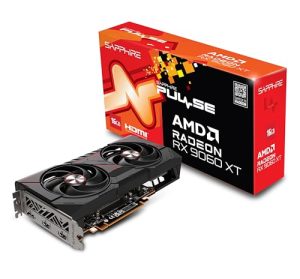
The Sapphire Pulse is the quiet achiever of this group. It runs at the reference boost of 2,970 MHz, which means it does not chase the highest factory clock, but it pairs the Navi 48 chip with a straightforward triple-fan cooler and a clean, dark shroud that suits builds without lighting. The card measures 320 mm long, so it needs a mid-tower or larger case, and it takes three slots. Its outputs are two HDMI 2.1b ports and two DisplayPort 2.1a ports, which covers a dual-monitor setup. The model number is 11348-03-20G, and the UPC is 840777091319, so match the ASIN and the model number on the listing before you buy.
What makes the Pulse a strong opening pick is how little it asks of you. It uses the reference board design, so the power draw stays at the reference 304W and the usual guidance is a 750W unit. The cooler uses ball-bearing fans under a shroud that keeps the card looking tidy, and the backplate keeps the long board from flexing. For a 1440p build where you want the RX 9070 XT experience without a flagship cooler, this is the card that gets out of the way and lets the chip do the work.
Specs
- Model: 11348-03-20G
- GPU: AMD Radeon RX 9070 XT, Navi 48, RDNA 4
- Memory: 16GB GDDR6, 256-bit, 20.1 Gbps effective
- Stream processors: 4,096
- Boost clock: up to 2,970 MHz
- Outputs: 2x HDMI 2.1b, 2x DisplayPort 2.1a
- Length: 320 mm, triple-slot
- Interface: PCIe 5.0 x16
- UPC: 840777091319
2. ASUS Prime RX 9070 XT OC Edition
The ASUS Prime RX 9070 XT OC Edition is the compact triple-fan card in this guide, and it is the one to look at when your case is tight but you still want a factory overclock. It boosts to 3,010 MHz with three axial-tech fans in a 2.5-slot body that measures 312 mm long. The slimmer body helps in cases where a full triple-slot card would crowd the slot below, and the dual BIOS switch lets you pick between a quieter profile and a higher-clock profile without software. The model number is PRIME-RX9070XT-O16G, and the card carries HDMI 2.1 and DisplayPort 2.1 outputs.
ASUS built the Prime line for builds where the card needs to fit without drama, and the OC Edition keeps that idea while adding a modest factory overclock. The axial-tech fans use dual ball bearings, and a 0dB mode holds the fans still under light loads, so the card stays silent on the desktop and during video playback. The shroud is plain black with a subtle pattern, which suits a build that does not lean on lighting.
Specs
- Model: PRIME-RX9070XT-O16G
- GPU: AMD Radeon RX 9070 XT, Navi 48, RDNA 4
- Memory: 16GB GDDR6, 256-bit, 20.1 Gbps effective
- Stream processors: 4,096
- Boost clock: up to 3,010 MHz
- Cooling: triple axial-tech fans, dual BIOS
- Outputs: HDMI 2.1, DisplayPort 2.1
- Length: 312 mm, 2.5-slot
- Interface: PCIe 5.0 x16
3. GIGABYTE RX 9070 XT Gaming OC
The GIGABYTE RX 9070 XT Gaming OC is the shortest card in this guide at 288 mm, and it is also one of the fastest, with a boost clock of 3,060 MHz. That combination makes it the pick for a smaller case that still wants a strong factory overclock. The WINDFORCE cooler uses three fans, and the card takes three slots. Its outputs are two HDMI 2.1b ports and two DisplayPort 2.1a ports, the same layout as the Pulse, and the model number is GV-R9070XTGAMING OC-16GD. The card draws 330W, and the listing suggests a 700W unit, though a 750W unit leaves more headroom for the rest of the build.
GIGABYTE pairs the cooler with a metal backplate and a design that keeps the card rigid despite its short length, and the three 8-pin inputs give the board a steady feed under load. The 288 mm length opens up cases that the 330 mm and 360 mm cards cannot fit, which is a real advantage in compact mid-towers and smaller ATX cases.
Specs
- Model: GV-R9070XTGAMING OC-16GD
- GPU: AMD Radeon RX 9070 XT, Navi 48, RDNA 4
- Memory: 16GB GDDR6, 256-bit, 20.1 Gbps effective
- Stream processors: 4,096
- Boost clock: up to 3,060 MHz
- Cooling: WINDFORCE triple-fan
- Outputs: 2x HDMI 2.1b, 2x DisplayPort 2.1a
- Length: 288 mm, triple-slot
- Power: 330W TDP, 3x 8-pin, suggested PSU 700W
- Interface: PCIe 5.0 x16
4. XFX Mercury RX 9070 XT OC Magnetic Air Edition
The XFX Mercury RX 9070 XT OC Magnetic Air Edition is the fastest card in this guide, with a boost clock of 3,100 MHz, and it is also the longest at 360 mm. It is built for a large case with strong airflow, with a big heatsink and three magnetic air fans you can remove without tools. The model number is RX-97TMARGB9, and the card carries RGB lighting on the shroud and fans, which suits a build with a windowed side panel. The card draws 360W, the highest in this group, so a 750W unit is the minimum guidance and a larger unit gives more headroom.
What sets the Mercury apart is the fan system. The magnetic air fans click into place and come off by hand, so cleaning dust out of the heatsink takes minutes instead of a full teardown, and a worn fan can be swapped without removing the card from the case. The base clock is 1,870 MHz and the game clock is 2,570 MHz, which shows how far XFX pushed the chip beyond the reference clocks.
Specs
- Model: RX-97TMARGB9
- GPU: AMD Radeon RX 9070 XT, Navi 48, RDNA 4
- Memory: 16GB GDDR6, 256-bit, 20.1 Gbps effective
- Stream processors: 4,096
- Boost clock: up to 3,100 MHz
- Base clock: 1,870 MHz, game clock: 2,570 MHz
- Cooling: triple magnetic air fans, RGB lighting
- Length: 360 mm, triple-slot
- Power: 360W TDP
- Interface: PCIe 5.0 x16
5. ASUS TUF Gaming RX 9070 XT OC Edition
The ASUS TUF Gaming RX 9070 XT OC Edition is the rugged pick in this group. It boosts to 3,060 MHz, matching the GIGABYTE card, and it wraps the chip in a 3.125-slot body with military-grade components, a protective PCB coating, and axial-tech fans. The card measures 330 mm long, so it needs a roomy mid-tower, and it draws 330W. The model number is TUF-RX9070XT-O16G-GAMING, and the card carries HDMI 2.1 and DisplayPort 2.1 outputs. The TUF line is built around durability, with a metal backplate and a coating on the board that guards against dust and moisture over time.
The TUF card suits a build that runs long sessions, because the large heatsink and the three fans hold the 3,060 MHz boost under load without the card getting loud. The 3.125-slot width means it will block the slot below it in most boards, so plan your other devices around that.
Specs
- Model: TUF-RX9070XT-O16G-GAMING
- GPU: AMD Radeon RX 9070 XT, Navi 48, RDNA 4
- Memory: 16GB GDDR6, 256-bit, 20.1 Gbps effective
- Stream processors: 4,096
- Boost clock: up to 3,060 MHz
- Cooling: triple axial-tech fans, protective PCB coating
- Outputs: HDMI 2.1, DisplayPort 2.1
- Length: 330 mm, 3.125-slot
- Power: 330W TDP
- Interface: PCIe 5.0 x16
Which One Fits Your Build
If your case is short, the GIGABYTE Gaming OC at 288 mm is the clear fit, and it still gives you a 3,060 MHz boost. If your case is tight on slot width rather than length, the ASUS Prime OC at 2.5 slots is the one that leaves room below. If you want the highest factory clock and you have a large case, the XFX Mercury Magnetic Air at 3,100 MHz is the fastest card here, though it needs 360 mm of clear space and the most power. If you want the reference experience with a tidy cooler, the Sapphire Pulse at 2,970 MHz is the least demanding card in the group. And if you want the toughest build, the ASUS TUF OC pairs a 3,060 MHz boost with military-grade components and a coated board.
All five cards share the same 16GB of GDDR6 memory, the same 256-bit bus, and the same 4,096 stream processors, so the differences between them are about cooling, clocks, length, and extras rather than the chip itself. Check your case length first, then your power unit, then your port count. Whichever you pick, match the ASIN and the model number on the listing, because several of these makers sell the same card in white or in a non-OC version under a different ASIN.
What We Left Out
We left out the Sapphire Nitro+ RX 9070 XT, which is a strong card on paper with a 3,060 MHz boost, because we could not pin a clean Amazon listing for it after several rounds of checking. The PowerColor Red Devil RX 9070 XT, which also boosts to 3,060 MHz, had the same problem, and so did the ASRock Steel Legend RX 9070 XT. We also left out the XFX Swift RX 9070 XT Triple Fan Edition, which was already picked in an earlier graphics card guide, and the white version of the ASUS Prime OC, which is the same card in a different color under a different listing. The regular RX 9070 non-XT cards were not considered at all, because they use the same Navi 48 chip with fewer stream processors and they belong in a different guide.
Frequently Asked Questions
Do all RX 9070 XT cards have 16GB of memory?
Yes. Every desktop RX 9070 XT uses 16GB of GDDR6 memory on a 256-bit bus, so memory size is not a difference between them.
What power unit do I need for an RX 9070 XT?
The usual guidance is a 750W unit for a build with one of these cards, and the GIGABYTE listing suggests 700W for its model. Check the connectors on your unit against the card’s inputs before you order.
Will an RX 9070 XT fit in a mid-tower case?
It depends on the card. The shortest here is 288 mm and the longest is 360 mm, so measure the clear space in your case and compare it with the length in the Specs block.
Is the RX 9070 XT different from the regular RX 9070?
Yes. Both use the Navi 48 chip, but the XT has 4,096 stream processors while the regular RX 9070 has fewer, and the two cards have different listings and different model numbers, so check the name on the listing before you buy.
More from Amazon
Programs that pair well with the guide above. Offers and eligibility are set by Amazon and may change.
Free shipping on eligible items, Prime Video and more. Eligible new members can start with a free trial.
Start a Prime free trialAd-free music streaming. Eligible new subscribers can start with a free trial.
Try Music Unlimited freeA Prime membership for ages 18-24 with a trial period. Eligibility is set by Amazon.
See Prime for Young AdultsAudiobooks and podcasts to listen to on the go. Eligible new members can start with a free trial.
Try Audible freeAs an Amazon Associate we earn from qualifying purchases.