Our Top Picks
 FEELLE Solar Power Bank 50000mAh Magnetic Portable Charger7.24 x 3.54 x 1.97 inches1.1 poundsCheck on Amazon
 SOARAISE Solar Power Bank 48000mAh Wireless Portable Charger6.38 x 3.43 x 1.57 InchesCheck on Amazon
The best solar power bank for most people is a rugged 10,000 mAh to 26,800 mAh bank with fast USB-C charging, such as the BLAVOR 10,000 mAh or the Hiluckey 25,000 mAh, used as an emergency backup rather than a primary solar charger. The built-in panels on these banks are small and slow, so reviewers consistently advise charging the bank from the wall and treating the panel as a trickle top-up. If you want real solar charging, pair a normal power bank with a separate foldable panel such as the Anker SOLIX PS30 or a 28W BigBlue panel.
Quick Comparison of Solar Power Banks
| Pick | Best for | Capacity | Wired output | Solar and extras | Price range |
|---|---|---|---|---|---|
| BLAVOR 10,000 mAh | Best everyday pick, light enough for a pocket | 10,000 mAh (about 37 Wh) | 20W USB-C | Solar panel, wireless charging pad | Budget |
| Hiluckey 25,000 mAh | Rugged entry-level camping | 25,000 mAh (about 92.5 Wh) | USB-C and USB-A | Four fold-out panels | Budget to mid |
| QiSa 26,800 mAh | All-round camping | 26,800 mAh (about 99 Wh) | USB-C and USB-A | Solar panel, flashlight | Mid-range |
| FEELLE 50,000 mAh | Maximum capacity | 50,000 mAh (about 185 Wh) | Multiple ports | Solar panel, hand crank | Mid-range |
| Bank plus Anker SOLIX PS30 panel | Real solar charging | Your own bank | Depends on bank | Foldable 30W panel | Mid-range |
Capacities and ports follow maker listings and roundups from 2026. Watt-hours here are estimates from mAh at 3.7 V and should be checked on the product label.
FEELLE Solar Power Bank 50000mAh Magnetic Portable Charger with Hand Crank
Picked as a relevant option in this category.
View on AmazonSOARAISE Solar Power Bank 48000mAh Wireless Portable Charger with 4 Cables | Solar Charger with 4 Solar Panels, 48000mAh High Capacity, PD QC 3.0 Fast Charging Battery Pack, Flashlights for Camping
Chosen because it specifies Solar Charger with 4 Solar Panels and 48000mAh High Capacity.
View on Amazon
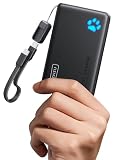
BLAVOR Solar Power Bank 10,000mAh Portable Wireless Charger for Cell Phones | 20W USB-C battery pack, battery bank, IPX5 waterproof, 2 flashlights, camping essentials, hiking gear, emergency solar backup
Chosen because it specifies 000mAh Portable Wireless Charger for Cell Phones and 20W USB-C battery pack.
View on Amazon
SOARAISE 50000mAh Solar Power Bank 22.5W Wireless Portable Solar Charger | PD QC 3.0 Fast Charging, Built-in 2 Cables, Solar Charging, Outdoor Essentials & Bright Flashlight, External Battery Pack
Chosen because it specifies PD QC 3.0 Fast Charging and Built-in 2 Cables.
View on AmazonBest Everyday Solar Power Bank: BLAVOR 10,000 mAh
The BLAVOR is the most frequently recommended solar power bank across 2026 guides. Its 20W USB-C port is fast enough to top up a phone quickly, and one roundup reported an iPhone 15 climbing from 5 percent to about 65 percent in around 30 minutes. It adds a wireless charging pad. Its small solar panel is only good for slow emergency top-ups.
Best Rugged Entry-Level: Hiluckey 25,000 mAh
The Hiluckey uses four fold-out panels instead of one, which speeds up solar charging compared with single-panel banks, though it is still slow. It is a durable choice for camping and hiking. The bank is bulky, and its charging output is modest compared with premium units.
Best All-Rounder for Camping: QiSa 26,800 mAh
The QiSa offers a roughly 99 Wh capacity, a built-in flashlight and a solid case. It is a good fit for weekend trips where you will recharge from a wall or vehicle before leaving. Because its capacity is close to the common airline limit for power banks, check the label before flying.
Best for Maximum Capacity: FEELLE 50,000 mAh
High-capacity banks like the FEELLE or the DJKK 66,800 mAh add hand cranks and flashlights, but they are heavy and bulky. They are suited to car camping and emergency kits and are generally not allowed in carry-on luggage on flights, because they exceed the 100 Wh limit.
Best Real Solar Option: Normal Power Bank Plus a Foldable Panel
A foldable 28W to 30W panel such as the Anker SOLIX PS30 or the BigBlue 28W is the only setup reviewers say meaningfully charges off-grid. In direct sun it can charge a power bank or phone at close to wall-socket speed. The trade-offs are cost, extra weight and the need to point the panel at the sun.
The Math: How Long Does Solar Charging Take?
Use this formula: charging hours = battery watt-hours / actual panel watts. Built-in panels on power banks are small, and their real output in good sun is often only 1 to 2 watts. A foldable panel rated 28W may deliver roughly half of that in real-world sun, around 12 to 15 watts.
| Battery | Energy | 1.5 W built-in panel | 14 W foldable panel |
|---|---|---|---|
| 10,000 mAh | About 37 Wh | About 25 hours of sun | About 2.6 hours |
| 25,000 mAh | About 92.5 Wh | About 62 hours of sun | About 6.6 hours |
| 50,000 mAh | About 185 Wh | About 123 hours of sun | About 13 hours |
One reviewer estimated that a 40,000 mAh bank with standard panels might need 20 to 30 hours of direct sunlight, which fits this arithmetic. A phone battery of roughly 15 Wh would take around 10 hours of sun on a 1.5W panel, which is why built-in panels are only for emergencies.
How to Choose
| Situation | Choose | Why |
|---|---|---|
| Everyday carry, emergency backup | BLAVOR 10,000 mAh | Light, fast USB-C |
| Camping weekends | Hiluckey or QiSa | Rugged, plenty of capacity |
| Multi-day off-grid trips | Normal bank plus foldable panel | Actually recharges |
| Flying | Under 100 Wh (about 27,000 mAh) | Airline limit |
| Charging a Steam Deck or Switch | Bank with 45W or higher USB-C PD | Handhelds draw more than phones |
Also check input speed. A bank that only accepts 10W input can take more than 15 hours to recharge from a wall, while models with 18W to 22.5W input are far faster.
Safety and Ownership
- Do not leave a solar bank on a car dashboard in hot weather: heat shortens battery life.
- Keep the panel clean; dust and smudges reduce output.
- Do not charge a damaged or swollen bank.
- Many “solar” banks use plastic shells that are water resistant at most, not waterproof.
Getting the Most From a Solar Power Bank
- Charge the bank fully from a wall or car outlet before any trip, since solar input is too slow to rely on.
- Place the panel in direct, unobstructed sun and angle it toward the sun; shade from a single leaf can cut output sharply.
- Keep the bank in the shade while the panel is in the sun when possible; heat reduces charging efficiency and battery life.
- Use the bank’s USB-C port to charge devices faster, and keep cables short to reduce losses.
- Top up the bank whenever you pass a wall outlet instead of waiting until it is empty.
What a Bank Can Charge: A Quick Reality Check
A typical phone battery holds about 15 Wh, so a 10,000 mAh bank (around 37 Wh, about 30 Wh usable after conversion losses) offers roughly two full phone charges. A handheld gaming PC with a 40 to 50 Wh battery would get roughly half to three-quarters of a charge from the same bank, and it will draw more power while you play. A 25,000 mAh bank provides around 80 Wh usable, which is closer to one and a half to two handheld charges. These numbers are estimates based on typical conversion losses of 15 to 25 percent.
Frequently Asked Questions
Are solar power banks worth it?
They are worth it as emergency backups and for light outdoor use. Their built-in panels are slow, so most reviewers recommend charging from a wall and using the panel only as a top-up.
How long does it take to charge a solar power bank in the sun?
A large bank can need 20 to 30 hours or more of direct sun on its built-in panel. A separate foldable panel can charge a bank in a few hours.
Can a solar power bank charge a handheld gaming console?
Yes, if it has USB-C Power Delivery output rated high enough for the device, typically 30W to 45W for handhelds. Smaller 10,000 mAh banks with 20W output will charge slowly or only maintain power during light play.
Can I take a solar power bank on a plane?
Most airlines allow power banks up to 100 Wh in carry-on. Banks above that, such as 50,000 mAh models, usually need airline approval or are not allowed.
Is it better to buy a solar panel separately?
For real solar charging, yes. A foldable 28W to 30W panel provides far more power than the small panels built into a bank.