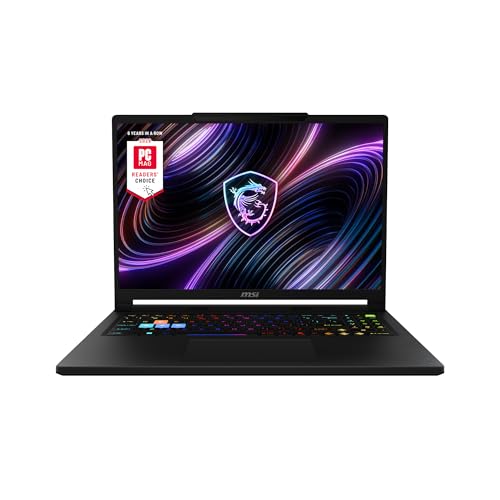
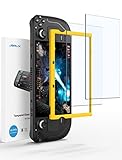
Key takeaways
- Choosing between a 65W and 100W power bank for a ROG Ally is less about maximum wattage than how you use the handheld at home. The Ally can benefit from a USB-C PD power bank that supplies at least 65W,…
Choosing between a 65W and 100W power bank for a ROG Ally is less about maximum wattage than how you use the handheld at home. The Ally can benefit from a USB-C PD power bank that supplies at least 65W, but a larger 100W model may offer more headroom, faster recharging for the battery pack itself, and better support for other devices. The tradeoff is size, weight, price, and the temptation to buy capacity you rarely use.
For a bedroom, living room, or small apartment, a compact 65W bank is usually the sensible choice. For a ROG Ally used at high performance while traveling between rooms, or as part of a household charging kit, a 100W bank is more flexible. The right answer in 2026 depends on whether portability or reserve power matters more.
Our top picks


As an Amazon Associate we earn from qualifying purchases at no extra cost to you. Ratings are shown as listed on Amazon.
Quick Verdict
Choose a 65W power bank if you primarily charge one ROG Ally, want a lighter accessory, and usually play near an outlet. Look for USB-C Power Delivery, a 20V output profile capable of at least 3.25A, and a capacity of roughly 20,000mAh.
Choose a 100W power bank if you play demanding games while charging, want to power a laptop or tablet as well, or need multiple USB-C outputs. A 100W rating does not make the Ally charge at 100W; the handheld negotiates the power level it supports. The extra output is valuable as headroom, not as a promise of a 100W Ally charge.
Side by Side
| Factor | 65W power bank | 100W power bank |
|---|---|---|
| Comfort | Usually about 12–18 oz; easier to hold or carry | Often 16–25 oz; more noticeable in a sling or case |
| Durability | Fewer high-power components; choose a protected, well-built enclosure | Typically sturdier and heavier, but more heat management is required |
| Price range | About $35–$75 for 20,000–25,000mAh models | About $55–$110 for 20,000–25,000mAh models |
| Maintenance | Recharge every few months when stored; simpler charging needs | Same battery-care needs, with more attention to the included high-power cable |
| Space needed | Roughly 5.5–6.5 by 2.5–3 inches and about 1 inch thick | Roughly 6–7 by 2.8–3.2 inches and about 1–1.2 inches thick |
| Look | More discreet on a coffee table or nightstand | More substantial, often with a display and larger vents or ridges |
| Resale | Easy to sell if compact and USB-C compatible | Can retain appeal for laptop and gaming users, despite faster battery aging |
| Best for | One ROG Ally, casual play, and everyday portability | Heavy gaming, laptops, multiple devices, and maximum flexibility |
Where 65W Wins
A 65W bank is the better match for the basic ROG Ally use case: charging one handheld without turning your accessory bag into a second piece of luggage. In practical terms, it can provide the Ally’s full supported USB-C charging mode when the correct PD profile and cable are available. That is important because a bank labeled “65W” may distribute less power if another port is being used.
The main advantage is comfort. A 20,000mAh 65W bank commonly weighs around 14–18 ounces, while a 100W model with similar capacity may add several ounces. That difference matters when the battery is attached to the Ally in a couch setup, placed in a lap, or carried in a small case. A shorter cable and a compact bank can also reduce strain on the Ally’s USB-C port.
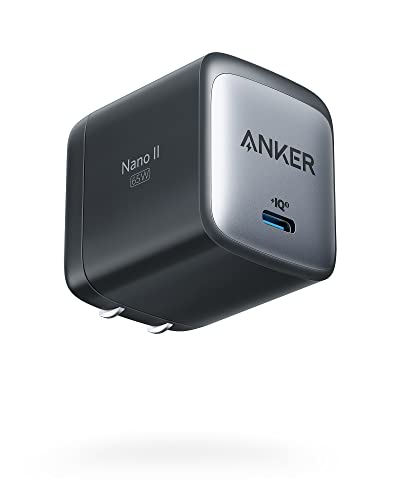
65W models tend to cost less, too. A reasonable shopping range is $35–$75, depending on capacity, display, brand, and the number of outputs. For comparison, a wall charger is not a substitute for a power bank: the Anker Nano 65W GaN II PPS USB C Charger is listed at $29.99, as is the Anker 65W Max 3-Port USB C Charger Block. Those are useful for charging from an outlet, but they do not provide stored power during a gaming session.
There is also less wasted capacity for a single-device household. If the Ally is normally used within reach of a wall outlet, a 65W bank can serve as a backup for power interruptions, room-to-room play, and travel without paying for a larger system that stays in a drawer.
Where 100w Power Bank for Rog Ally Wins
A 100W power bank earns its extra size when the ROG Ally is only one part of your charging routine. The higher rating can leave power available for a phone, earbuds, controller, or tablet while the Ally is connected. Check the output table carefully: some banks advertise 100W from one USB-C port but reduce that port substantially when multiple devices are attached.
It is also the more comfortable option for demanding play. The Ally still will not draw a continuous 100W merely because the bank can provide it, but a stronger bank is less likely to operate at its limit. That can help when the handheld is gaming, a display is connected, or other USB devices are drawing power. The result is useful headroom rather than a guaranteed increase in frame rate or charging speed.
Capacity matters as much as wattage. A 20,000mAh bank stores about 74 watt-hours before conversion losses, while a 25,000mAh bank stores about 92.5 watt-hours. Actual usable energy is lower because of voltage conversion, cable loss, and the power the bank uses internally. A 100W bank with only 10,000mAh may deliver less total playtime than a 65W 25,000mAh model.
For a concrete reference point, the INIU Laptop Power Bank is a 25,000mAh model rated at 100W and listed at $62.99. The UGREEN Nexode 20,000mAh model is rated at 130W and listed at $57.99. Both illustrate why shoppers should compare capacity, port allocation, dimensions, and included cables rather than looking only at the headline wattage.
Cost Over 5 Years
Over five years, the purchase price is only part of the cost. A good 65W power bank generally costs about $35–$75, while a good 100W model generally costs about $55–$110. If either is treated well, one unit may last the full five years, although lithium-ion batteries gradually lose capacity with use and age.
A practical five-year budget is therefore about $40–$90 for a 65W setup and $60–$130 for a 100W setup, allowing for one replacement, a new USB-C cable, or a modest capacity upgrade. Frequent daily cycling, heat, and leaving the bank fully charged for months can shorten its useful life. Electricity costs are minor: the energy used to recharge a bank is typically measured in cents per full cycle, not dollars.
Spend more on a 100W model only if you will use the extra output or capacity. Otherwise, a 65W bank can deliver a lower cost per useful session and take up less storage space.
Which One for Your Home
Small apartment
Choose 65W unless you regularly charge a laptop away from the wall. In a compact home, a lighter 20,000mAh bank can live in a drawer, move easily from the bedroom to the sofa, and provide enough output for the Ally. Pair it with a compact wall charger for overnight recharging. The Anker 65W options mentioned above are wall-based companions, not replacements for the bank.
Family with kids or pets
A 100W bank is often the better household tool. It can support the Ally while another device is connected, and its larger enclosure may be less likely to slide under furniture or disappear in a toy bin. Look for a model with temperature protection, over-current protection, a clear battery indicator, and a braided cable. Keep it out of reach of young children; it is a high-energy battery, not a toy.
Rental
Choose based on outlet access. If you cannot add outlets or rearrange furniture, a 100W model with 20,000–25,000mAh capacity can make one charging station serve several rooms. If every room already has a convenient outlet, choose 65W and avoid carrying unnecessary weight. Renters who work from home may favor 100W because the same bank can provide emergency power for compatible USB-C laptops.
Long-term home
For a settled home with a dedicated gaming area, 65W is usually enough for the Ally, while a wall charger handles routine charging. Choose 100W if you expect to add a USB-C laptop, portable monitor, or second handheld. Planning for those devices can justify the higher price, but verify that the power bank has the ports and simultaneous output you need.
FAQ
Can a 65W power bank charge the ROG Ally while I play?
Yes, provided it supports the appropriate USB-C Power Delivery profile and the cable is rated for the current. Charging speed can vary with the game, system settings, battery level, temperature, and the specific Ally model. A bank may charge more slowly under heavy load than when the handheld is asleep.
Does a 100W bank charge the ROG Ally faster?
Not automatically. The Ally and the power bank negotiate a supported charging level, so the handheld will not simply accept 100W because that is the bank’s maximum. The benefit is headroom for demanding use and other connected devices.
Is 20,000mAh or 25,000mAh better?
25,000mAh provides more stored energy, but it is usually heavier and may exceed some airline carry-on limits depending on its watt-hour rating and the carrier’s rules. For home use, 20,000mAh is a balanced choice; 25,000mAh is worthwhile when longer unplugged sessions matter.
What cable should I use?
Use a USB-C-to-USB-C cable rated for the bank’s output, preferably 100W or higher for a 100W bank. A low-rated cable can limit charging even when both devices support more power. Also confirm that the bank’s highest-wattage USB-C port, rather than a lower-output port, is connected to the Ally.