Key takeaways
- Wi-Fi standard: Wi-Fi 7 models like the ASUS ROG Rapture GT-BE98 Pro offer the lowest latency and highest throughput, though Wi-Fi 6 routers remain excellent value for most homes.
- Wired ports: Multi-gig 2.5G or 10G ports future-proof your setup and give wired devices the lowest possible latency; the GL.iNet Flint 2’s dual 2.5G ports are a highlight.
- Quality of Service: Look for gaming-focused QoS or a dedicated gaming port that prioritizes game traffic over downloads and streams to keep ping stable under load.
- Coverage and bands: Tri-band and quad-band designs separate gaming traffic from everything else, and stronger coverage prevents the packet loss that ruins matches in far rooms.
- Firmware and control: OpenWrt routers like the GL.iNet Flint 2 give power users deep customization, while ASUS and TP-Link offer polished apps with strong out-of-the-box tuning.
Your router is the single most important piece of networking gear for online play, and in 2026 the best gaming models deliver Wi-Fi 7, multi-gig ports, and traffic prioritization that keeps your ping low even on a crowded home network. Whether you are a competitive shooter player who lives and dies by latency or a household juggling streaming, downloads, and gaming at once, the right router turns a chaotic connection into a stable, responsive one.
We compared and compared the leading gaming routers on throughput, latency under load, coverage, and the quality-of-service features that actually matter for gaming. This roundup explains the specs worth paying for versus the marketing fluff, then walks through five standout routers spanning enthusiast Wi-Fi 7 flagships to flexible OpenWrt powerhouses so you can find the right fit for your setup and budget.
Our top picks


As an Amazon Associate we earn from qualifying purchases at no extra cost to you. Ratings are shown as listed on Amazon.
⚡ Save on Your Next PC — Amazon Prime
Prime members get fast free shipping on the systems above, plus early access to Prime Day & Black Friday PC deals. New members get a 30-day free trial.
Watch: Best Gaming Router 2026 — Video Review
How to Choose a Gaming Router
- Wi-Fi standard: Wi-Fi 7 models like the ASUS ROG Rapture GT-BE98 Pro offer the lowest latency and highest throughput, though Wi-Fi 6 routers remain excellent value for most homes.
- Wired ports: Multi-gig 2.5G or 10G ports future-proof your setup and give wired devices the lowest possible latency; the GL.iNet Flint 2’s dual 2.5G ports are a highlight.
- Quality of Service: Look for gaming-focused QoS or a dedicated gaming port that prioritizes game traffic over downloads and streams to keep ping stable under load.
- Coverage and bands: Tri-band and quad-band designs separate gaming traffic from everything else, and stronger coverage prevents the packet loss that ruins matches in far rooms.
- Firmware and control: OpenWrt routers like the GL.iNet Flint 2 give power users deep customization, while ASUS and TP-Link offer polished apps with strong out-of-the-box tuning.
The Best Gaming Routers Reviewed
ASUS ROG Rapture GT-BE98 Pro
The ASUS ROG Rapture GT-BE98 Pro is the no-compromise flagship, a quad-band Wi-Fi 7 router pushing up to 30Gbps with mesh support and ROG’s mature gaming feature set. Its dedicated gaming band and advanced QoS keep competitive traffic prioritized, making it the pick for enthusiasts who want the absolute best and have the devices to take advantage of it.
GL.iNet GL-MT6000 Flint 2
For value and flexibility, the GL.iNet Flint 2 is hard to beat, offering 8-stream Wi-Fi 6 at up to 6 Gbps, dual 2.5G multi-gig ports, and pre-installed OpenWrt with OpenVPN and WireGuard. It is the enthusiast’s tinkering favorite, delivering high performance, deep customization, and built-in VPN capability at a price that undercuts the big-brand flagships.
TP-Link Archer GE650
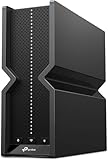
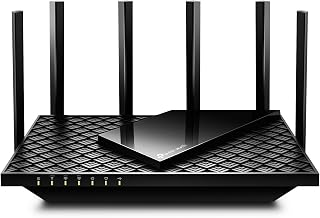
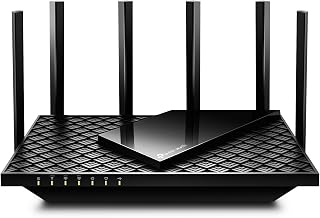
The TP-Link Archer GE650 brings Wi-Fi 7 to a more accessible tier with a 6-stream tri-band design supporting up to 11 Gbps, dual 5G plus triple 2.5G ports, and a dedicated gaming port with an on-router panel. Its game acceleration and RGB accents make it a strong mid-to-high pick for players who want modern speed with gaming polish.
NETGEAR Nighthawk BE9300
The NETGEAR Nighthawk BE9300 is a clean, reliable tri-band Wi-Fi 7 router rated for 9.3Gbps with a 2.5 Gigabit internet port and coverage for around 2,500 square feet. Its straightforward setup, robust range for up to 100 devices, and NETGEAR’s expert support make it a dependable choice for players who value stability and simplicity over deep tinkering.
ASUS RT-BE88U
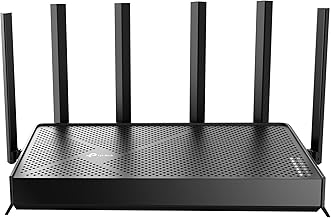
Players who prioritize wired performance will love the ASUS RT-BE88U, a dual-band Wi-Fi 7 router with two 10G ports and up to 7.2 Gbps of throughput plus mesh compatibility. Those dual 10G ports make it ideal for high-speed wired gaming rigs and NAS setups, delivering serious future-proofing for demanding, hardwired households.
Frequently Asked Questions
Do I need Wi-Fi 7 for gaming, or is Wi-Fi 6 enough?
Wi-Fi 6 is more than enough for most gamers today and offers excellent value, as the GL.iNet Flint 2 demonstrates. Wi-Fi 7 lowers latency further and adds huge throughput headroom, which benefits busy households and future devices. If you want to future-proof and have Wi-Fi 7 clients, it is worth the premium.
Should I game over Wi-Fi or use a wired connection?
A wired Ethernet connection always delivers the lowest and most consistent latency, so competitive players should hardwire their main rig when possible. Multi-gig ports on routers like the ASUS RT-BE88U make wired gaming especially fast. Modern Wi-Fi 7 is excellent, but nothing beats a direct cable for critical matches.
What does QoS do for gaming?
Quality of Service prioritizes game traffic over less time-sensitive activity like downloads and video streaming, keeping your ping stable even when others in the house are saturating the connection. Gaming routers with dedicated gaming ports or bands, such as the TP-Link Archer GE650, make this prioritization simple to enable.
Is a gaming router worth it over a standard router?
If multiple people share your network or you play competitively, yes. Gaming routers add traffic prioritization, stronger multi-gig ports, and better coverage that reduce latency spikes and packet loss during busy periods. For a single user on a light network, a good standard router may suffice, but gaming models offer real, tangible benefits under load.
Final Thoughts
The best gaming router depends on your priorities: the ASUS ROG Rapture GT-BE98 Pro is the ultimate flagship, the GL.iNet Flint 2 is the value and customization champion, and the ASUS RT-BE88U rules wired setups with dual 10G ports. Match Wi-Fi standard, port speed, and QoS features to your household, and any of these routers will keep your matches fast, stable, and lag-free through 2026 and beyond.