Key takeaways
- Capacity over raw speed: At this price point, 1TB is the sweet spot. A slower 1TB drive will serve you far better than a blisteringly fast 500GB one, because the biggest performance killer is a nearly-full drive — SSDs slow down noticeably past roughly 80% capacity.
- PCIe 4.0 is the practical target: PCIe 5.0 drives are impressive on paper, but game load times are bottlenecked by decompression and CPU work long before the drive becomes the limiting factor. A solid Gen 4 drive gives you virtually identical in-game results for substantially less money.
- Check DRAM versus HMB: DRAM-less drives use Host Memory Buffer to borrow system RAM instead. That’s fine for gaming and general use, but if you do heavy file transfers, video editing, or run the drive as a scratch disk, a DRAM-equipped model holds up better under sustained load.
- Match the form factor and slot: Nearly everything here is M.2 2280, which fits most modern motherboards and the PS5’s expansion bay. Confirm your board has a free M.2 slot, check whether it’s Gen 4 or Gen 3, and remember the PS5 requires a heatsink on the drive.
- Read the endurance and warranty figures: TBW (terabytes written) ratings and warranty length tell you what the manufacturer actually expects. A five-year warranty with a healthy TBW rating is a stronger signal of quality than any headline sequential read number.
Storage has quietly become the most confusing part of a gaming PC build. Drive listings throw around headline numbers — 7,450 MB/s, 14,700 MB/s, PCIe 5.0 — and it’s genuinely hard to tell which of those figures translate into shorter loading screens and which are marketing gloss. Meanwhile, modern titles keep ballooning: a single AAA install can eat 150GB or more, and a 500GB drive that felt spacious two years ago now holds three games and a Windows partition.
This guide focuses on drives that deliver real gaming performance without stretching past a $100 budget. We’ve prioritised NVMe drives with DRAM or effective host memory buffer implementations, credible sustained write behaviour, and warranties that suggest the manufacturer expects the drive to last. We also flag which premium options are worth watching on sale, since flagship drives frequently dip into budget territory during seasonal discounts — and note honestly where a drive sits above the cap at full price.
Our top picks
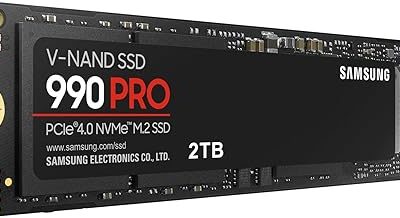
 Samsung SSD 990 PRO 2TB
- Product Group: Personal Computer
- Binding: Personal Computers

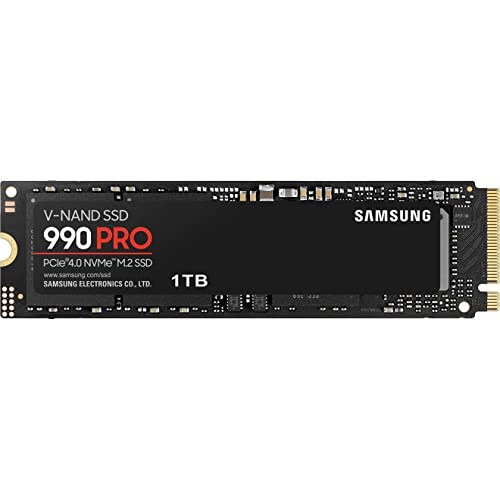 Samsung SSD 990 PRO 1TB
- Product Group: Personal Computer
- Binding: Personal Computers


As an Amazon Associate we earn from qualifying purchases at no extra cost to you. Ratings are shown as listed on Amazon.
⚡ Save on Your Next PC — Amazon Prime
Prime members get fast free shipping on the systems above, plus early access to Prime Day & Black Friday PC deals. New members get a 30-day free trial.
Watch: Best SSD Under $100 — Video Review
How to Choose SSD Under $100
- Capacity over raw speed: At this price point, 1TB is the sweet spot. A slower 1TB drive will serve you far better than a blisteringly fast 500GB one, because the biggest performance killer is a nearly-full drive — SSDs slow down noticeably past roughly 80% capacity.
- PCIe 4.0 is the practical target: PCIe 5.0 drives are impressive on paper, but game load times are bottlenecked by decompression and CPU work long before the drive becomes the limiting factor. A solid Gen 4 drive gives you virtually identical in-game results for substantially less money.
- Check DRAM versus HMB: DRAM-less drives use Host Memory Buffer to borrow system RAM instead. That’s fine for gaming and general use, but if you do heavy file transfers, video editing, or run the drive as a scratch disk, a DRAM-equipped model holds up better under sustained load.
- Match the form factor and slot: Nearly everything here is M.2 2280, which fits most modern motherboards and the PS5’s expansion bay. Confirm your board has a free M.2 slot, check whether it’s Gen 4 or Gen 3, and remember the PS5 requires a heatsink on the drive.
- Read the endurance and warranty figures: TBW (terabytes written) ratings and warranty length tell you what the manufacturer actually expects. A five-year warranty with a healthy TBW rating is a stronger signal of quality than any headline sequential read number.
The Best Picks Reviewed
Kingston NV3 1TB
This is the drive most gamers on a strict budget should buy. It’s DRAM-less and relies on HMB, so it won’t win sustained-write benchmarks, but for loading games and everyday use it feels indistinguishable from drives costing twice as much — and 1TB at this price is genuinely excellent value.
SanDisk Optimus 5100 500GB
A sensible pick if you specifically need a secondary drive for a handful of games or a laptop upgrade rather than a primary boot volume. Its Gen 4 speeds are more than adequate for gaming, though we’d still steer most buyers toward the extra capacity of a 1TB option if the budget allows.
Samsung 990 PRO 1TB
The 990 PRO remains one of the best-executed PCIe 4.0 drives ever released, with a proper DRAM cache, strong sustained performance, and Samsung’s reliable controller and firmware. It typically sits a little above $100 at list price, but it drops into range often enough during sales that it’s worth setting a price alert.
Samsung 990 PRO 2TB
If you’re expanding storage rather than building fresh, the 2TB model is the version to watch for. It comfortably exceeds our budget at normal pricing, but it’s the drive we’d recommend without hesitation to anyone whose ceiling stretches further — the per-gigabyte value is hard to beat at the high end.
Samsung 9100 PRO 1TB
Samsung’s PCIe 5.0 flagship is a legitimately fast drive, and it’s the right choice for creators moving large media files or anyone building a future-proofed high-end system. For pure gaming on a sub-$100 budget, though, it’s firmly outside the brief — the real-world load-time gains over a good Gen 4 drive simply don’t justify the premium.
Frequently Asked Questions
Will a PCIe 5.0 SSD load games faster than PCIe 4.0?
Marginally at best. In most benchmarks the difference in game load times between good Gen 4 and Gen 5 drives is well under a second, because the bottleneck is asset decompression and CPU processing rather than raw sequential throughput. Save the money and put it toward capacity or a better GPU.
Is a DRAM-less SSD bad for gaming?
No. HMB-equipped DRAM-less drives like the Kingston NV3 perform very close to DRAM models in gaming workloads, since games mostly involve reading data rather than heavy sustained writes. The gap only becomes meaningful under prolonged large file transfers or professional workloads.
Can I use these drives in a PlayStation 5?
Most M.2 2280 PCIe 4.0 drives here are compatible, but Sony requires a heatsink on the drive for thermal reasons. Check whether the specific model you’re buying ships with one or budget a few extra dollars for a compatible aftermarket heatsink.
How much SSD storage do I actually need in 2026?
1TB is the realistic minimum for a gaming primary drive. Windows and a handful of applications will consume around 100GB before you install anything, and large modern titles routinely occupy 100–200GB each. If you keep more than four or five big games installed simultaneously, plan for 2TB.
Final Thoughts
For most gamers shopping under $100, the Kingston NV3 1TB is the clear recommendation — it delivers the capacity you actually need at a price that leaves room in the budget elsewhere, and its DRAM-less design costs you almost nothing in real gaming performance. If your primary need is a compact secondary drive, the SanDisk Optimus 5100 500GB is a reasonable alternative, and it’s worth keeping an eye on the Samsung 990 PRO 1TB, which regularly falls into budget range during sales and represents the best build quality of anything on this list.