Our Top Picks
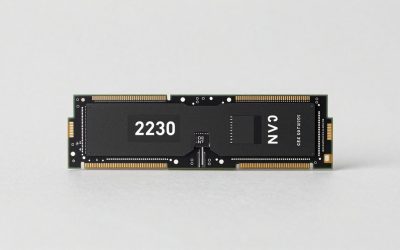
 ProGrade Digital CFexpress™ 2.0 Type A Memory Card240GB1.97 x 1.57 x 0.1 Inches0 PoundsCheck on Amazon
The best CFexpress Type A cards are high-end VPG200 models from Sony, ProGrade Digital, Lexar, Delkin, Angelbird, and OWC; choose capacity according to your codec, while treating sustained write speed—not the headline read speed—as the key specification.
Quick recommendations
- Best all-round choice: Sony TOUGH CEA-G cards, especially 160GB or 320GB, for Sony cameras where reliable high-bitrate video and stills matter.
- Best for long recording sessions: a 320GB or 640GB VPG200 card from Sony, Lexar, Delkin, or another established manufacturer.
- Best value at moderate capacity: a 160GB VPG200 card from ProGrade Digital, Lexar, or Delkin when your camera does not need hours of continuous recording.
- Best for demanding professional workflows: a card rated for at least 700MB/s sustained write performance, with VPG200 certification and a strong warranty.
CFexpress Type A is used primarily in Sony mirrorless and cinema cameras, including models such as the Sony Alpha 1, Alpha 1 II, Alpha 7S III, Alpha 7 IV, FX3, and FX30. Check your camera manual before buying: CFexpress Type A and Type B are different physical formats and cannot be substituted.

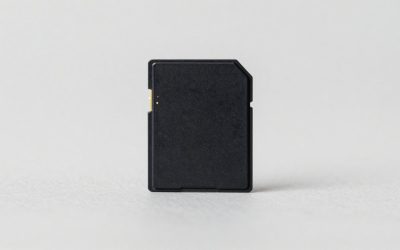
Lexar 512GB CFexpress Type A Silver 4.0 Card, 1750/1650 MB/s, 8K Video | Compatible w/ Sony Alpha/FX Cameras, Filmmakers, Photographers, Videographers, Water/Dust/Drop Resistant, LCAEXS4512G-RNENU
Chosen because it specifies 1750/1650 MB/s and 8K Video.
View on Amazon
Lexar 256GB CFexpress Type A Silver 4.0 Card, 1750/1650 MB/s, 8K Video | Compatible w/ Sony Alpha/FX Cameras, Filmmakers, Photographers, Videographers, Water/Dust/Drop Resistant, LCAEXS4256G-RNENU
Chosen because it specifies 1750/1650 MB/s and 8K Video.
View on Amazon
Lexar 1TB CFexpress Type A Silver 4.0 Card, 1750/1650 MB/s, 8K Video | Compatible w/ Sony Alpha/FX Cameras, Filmmakers, Photographers, Videographers, Water/Dust/Drop Resistant, LCAEXS4001T-RNENU
Chosen because it specifies 1750/1650 MB/s and 8K Video.
View on AmazonProGrade Digital CFexpress™ 2.0 Type A Memory Card (240 GB) Gold | Read Speed Up To 900Mb/S and Write Speed Up To 800Mb/S for Raw Photo Bursts and High-Resolution Video Recording
Picked as a relevant option in this category.
View on AmazonWhat matters when comparing CFexpress Type A cards
Capacity
Capacity determines how long you can record before changing cards, but larger cards are not automatically faster or more durable. The practical choices are usually 80GB, 160GB, 320GB, and 640GB, with some newer product lines offering capacities beyond that.
For occasional photography and short video clips, 80GB or 160GB is often sufficient. A 320GB card is a more comfortable choice for weddings, interviews, travel, and commercial shoots. Choose 640GB when you record long-form video, use multiple cameras, or cannot safely stop to change media.
Sustained write speed
Manufacturers often advertise maximum read speeds of 800–1,000MB/s. Those figures mainly affect copying footage to a computer. The camera depends on sustained write performance, which can be substantially lower and may fall further as the card fills or heats up.
For demanding video, look for a VPG200 rating. VPG means Video Performance Guarantee; VPG200 indicates a guaranteed minimum write rate of 200MB/s for compatible recording conditions. That is not the same as a card having a maximum write speed of 200MB/s, but it gives a useful baseline for professional video reliability.
A card advertised with approximately 700–800MB/s maximum write speed is generally a stronger choice than one rated around 400–500MB/s, particularly for burst photography and intra-frame codecs. However, camera firmware, temperature, file system, and codec limits can prevent any card from reaching its advertised maximum.
Durability and thermal behavior
Look for cards with documented resistance to water, dust, shock, bending, and temperature extremes. Sony’s TOUGH range, for example, is designed around a reinforced one-piece construction. Other professional ranges, including Delkin BLACK, Lexar Professional Gold, ProGrade Digital Cobalt, and Angelbird AV PRO lines, also emphasize professional durability and sustained performance.
Durability claims are not identical between brands. Check whether a specification refers to the card itself, its packaging, or a separate reader. A rugged card still needs a clean slot, a protective case, and safe eject procedures.
Best CFexpress Type A cards by use case
Sony TOUGH CEA-G series: best for Sony shooters who want a conservative choice
Sony’s TOUGH CEA-G cards are a natural match for Sony cameras because the camera and media are developed within the same ecosystem. The range includes capacities such as 80GB, 160GB, 320GB, and 640GB, depending on the specific generation and market.
The cards are built for high-speed recording, carry VPG200 certification in relevant models, and have a reinforced design intended to resist physical damage. They are particularly sensible for FX-series video cameras and Alpha bodies that use high-bitrate XAVC formats.
Choose: 160GB for mixed stills and video, 320GB for regular production, or 640GB for long uninterrupted takes.
ProGrade Digital Cobalt: best when sustained performance is the priority
ProGrade Digital’s Cobalt Type A cards target professional video and high-speed stills. Depending on capacity and generation, specifications commonly emphasize high read performance, high write performance, and VPG200 support rather than simply competing on low price.
These cards make sense when your camera records an intra-frame codec, where the data stream is heavier and more consistent than a long-GOP recording. They are also a good fit for photographers who routinely fill the camera buffer with RAW bursts.
Choose: 160GB for most single-day shoots; move to 320GB if you record high-bitrate video alongside stills.
Lexar Professional CFexpress Type A Gold: best capacity flexibility
Lexar’s Professional Type A Gold range is available in several capacities and is aimed at cameras that need fast continuous writing. The range is commonly positioned around VPG200 video performance, with high advertised read and write rates.
Lexar is a practical choice for creators who want to keep matching cards across several capacities. Verify the exact model designation before buying because Lexar has released multiple generations and card families with similar names.
Choose: 320GB when you want a balance between recording time and replacement cost; 640GB when card changes would interrupt a live event.
Delkin BLACK: best for a rugged professional workflow
Delkin BLACK Type A cards are designed for professional capture and are commonly sold with VPG200 certification, high sequential performance, and a strong durability focus. Delkin also offers replacement and warranty programs that may be valuable for working creators, although terms vary by region and registration requirements.
Consider Delkin BLACK when your priority is a card built for frequent transport, repeated insertion, and demanding production schedules. Capacity should still be chosen from your recording-time needs rather than from the durability label alone.
Angelbird AV PRO and OWC Atlas: alternatives worth checking
Angelbird AV PRO CFexpress Type A cards and OWC Atlas Type A cards are alternatives for users who prefer those manufacturers’ support policies, media-management software, or professional product lines. Compare the exact capacity’s sustained write rating and VPG certification; specifications can differ between standard, SE, XT, and newer-generation products.
Representative specification comparison
The figures below are representative of commonly available professional Type A product classes and are included to show how to compare cards. Always confirm the exact capacity and model number before purchase, because performance can vary within one product family.
| Card family | Typical capacities | Advertised read range | Advertised write range | Video rating | Best fit |
|---|---|---|---|---|---|
| Sony TOUGH CEA-G | 80GB–640GB | Up to about 800MB/s | Up to about 700MB/s | VPG200 on applicable models | Sony Alpha and FX cameras |
| ProGrade Digital Cobalt | 160GB–960GB, depending on generation | Up to about 900MB/s | Up to about 700MB/s | VPG200 on applicable models | High-bitrate video and RAW bursts |
| Lexar Professional Gold | 80GB–640GB, depending on generation | Up to about 900MB/s | Up to about 700–800MB/s | VPG200 on applicable models | Long recording and mixed workloads |
| Delkin BLACK | 80GB–640GB, depending on generation | Up to about 880MB/s | Up to about 730MB/s | VPG200 on applicable models | Rugged professional use |
“Up to” speeds are laboratory maximums, not guaranteed camera performance. A VPG200 marking is more meaningful for video than a very high read-speed number.
How much capacity do you need?
Use this calculation before choosing a card. Divide capacity in megabytes by the camera’s bitrate in megabits per second, then divide by eight to convert the bitrate into megabytes per second.
For example, a 600Mb/s recording mode uses approximately 75MB/s:
600 ÷ 8 = 75MB/s
A nominal 160GB card contains about 160,000MB, so the theoretical recording time is:
160,000 ÷ 75 = 2,133 seconds, or about 35.5 minutes
After formatting overhead, file-management space, and manufacturers’ decimal capacity ratings, usable time will be slightly lower. At the same 600Mb/s rate, a 320GB card provides roughly 70 minutes and a 640GB card roughly 140 minutes.
| Recording bitrate | Approximate data rate | 160GB theoretical time | 320GB theoretical time |
|---|---|---|---|
| 200Mb/s | 25MB/s | About 107 minutes | About 213 minutes |
| 400Mb/s | 50MB/s | About 53 minutes | About 107 minutes |
| 600Mb/s | 75MB/s | About 36 minutes | About 71 minutes |
Decision matrix
| Your situation | Recommended capacity | Minimum specification to target |
|---|---|---|
| Short clips, portraits, and occasional RAW bursts | 80GB–160GB | VPG200 if recording video; high sustained write speed for bursts |
| 4K high-bitrate work around 200–400Mb/s | 160GB–320GB | VPG200 and at least 200MB/s guaranteed video write performance |
| 600Mb/s intra-frame video | 320GB | VPG200 from a professional product line |
| Live events or long interviews | 640GB or two 320GB cards | VPG200, tested camera compatibility, and a backup-card plan |
Buying and recording tips
- Format the card in the camera before an important shoot. This creates the file structure the camera expects and avoids compatibility problems from computer formatting.
- Use a Type A reader that supports the card’s interface. A slow or poor-quality reader can make a fast card appear defective during transfers.
- Leave headroom. Do not choose capacity based on the exact length of a planned recording. Short test clips, proxies, metadata, and retakes consume space.
- Manage heat. High-speed cards and cameras can become warm during continuous writing. Keep vents clear and avoid leaving a card in direct sun.
- Check firmware and codec compatibility. Some cameras restrict particular recording modes to cards meeting a stated VPG or speed class.
- Buy matching cards when possible. Two cards from the same professional range simplify testing and make performance more predictable across a production.
Final verdict
For most creators, a 160GB or 320GB VPG200 card from Sony TOUGH, ProGrade Digital Cobalt, Lexar Professional Gold, or Delkin BLACK is the right starting point. Pick Sony TOUGH for a tightly integrated Sony workflow, ProGrade or Lexar when sustained performance and capacity options are central, and Delkin BLACK when rugged professional support is especially important. Whichever brand you choose, confirm the exact model’s sustained write specification, match the capacity to your codec using the bitrate calculation, and never confuse a high read-speed headline with guaranteed recording performance.