Key takeaways
- Neutral starting point: set bass, mid, and treble at 12 o’clock, disable voicing switches, and set gain so your hardest plucks do not distort unless distortion is intended.
- Muddy rehearsal room: reduce bass by 1–2 dB, add a small amount of upper-mid presence, and avoid placing the combo directly in a corner.
- Thin sound onstage: restore the low mids before adding deep bass. Excessive bass boost often makes the speaker work harder without improving note definition.
- Slap or bright modern tone: add treble gradually and cut low mids only if the sound is genuinely congested. Excessive treble emphasizes finger noise and hiss.
- Overdrive: set the clean volume first, then add drive. If the distorted sound becomes smaller, reduce the bass boost and blend some clean signal back in.
The best bass combo amps for most players are the Fender Rumble 100 for rehearsals and small gigs, the Ampeg Rocket Bass RB-112 for classic amp character, and the Fender Rumble 40 or Orange Crush Bass 50 for home practice; the right choice depends more on speaker efficiency, DI connectivity, and transport weight than on wattage alone.
Best bass combo amps at a glance
| Model | Power and speaker | Best use | Useful connections | Typical market range |
|---|---|---|---|---|
| Fender Rumble 40 | 40 watts, 1 x 10-inch | Home practice, lessons, quiet rehearsals | Aux input, headphone output | Usually $200–$300 |
| Orange Crush Bass 50 | 50 watts, 1 x 12-inch | Practice and small-room rehearsal | Headphones, line output, effects loop | Usually $300–$400 |
| Ampeg Rocket Bass RB-112 | 100 watts, 1 x 12-inch | Rehearsal and small gigs with PA support | Balanced XLR DI, auxiliary input, headphone output | Usually $400–$550 |
| Fender Rumble 100 | 100 watts, 1 x 12-inch | Most versatile practice-to-stage option | Balanced XLR line output, aux input, headphone output | Usually $350–$500 |
| Hartke HD150 | 150 watts, 1 x 15-inch | Fuller low end and louder rehearsals | Balanced direct output, effects loop | Usually $500–$700 |
| Fender Rumble 500 | 350 watts, 2 x 10-inch | Band gigs where the amp must fill the room | Balanced XLR line output, external-speaker capability | Usually $600–$800 |
Power figures are not directly comparable between brands because manufacturers may quote continuous power, peak power, or output with a particular load. Treat the numbers as useful classes rather than a laboratory ranking.

Fender Rumble 100 V3 Bass Amp for Bass Guitar Combo, 100-Watt, 12" Speaker
Included for 'Best Bass Combo Amps for Practice and Gigs' because the listing specifies 100-Watt and 12" Speaker, details this guide uses to compare options.
View on Amazon
Ampeg Rocket Bass RB108 Bass Combo 1x8 30 Watts
Included for 'Best Bass Combo Amps for Practice and Gigs' as a relevant option in this category; details come from the product listing.
View on Amazon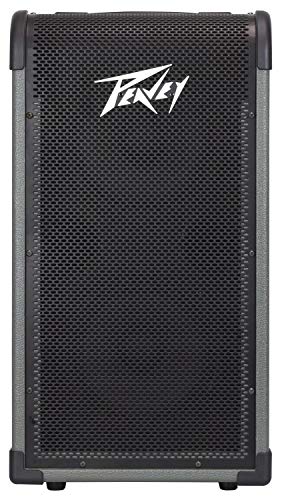
Peavey MAX 208 200-Watt Bass Amp Combo Black
Included for 'Best Bass Combo Amps for Practice and Gigs' as a relevant option in this category; details come from the product listing.
View on Amazon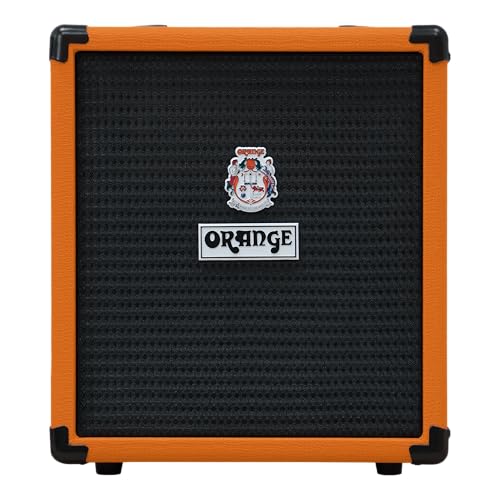
Orange Crush Bass 25 25W 8" Guitar Amplifier and Speaker Combo,
Included for 'Best Bass Combo Amps for Practice and Gigs' as a relevant option in this category; details come from the product listing.
View on AmazonChoose by situation, not by the biggest number
| Your situation | Minimum sensible class | Best direction | Why |
|---|---|---|---|
| Apartment or bedroom practice | 25–50 watts, 8- or 10-inch speaker | Rumble 40 or a similar 1 x 10 combo | Enough clean headroom without excessive size or volume |
| Rehearsing with a restrained drummer | 75–100 watts, 10- or 12-inch speaker | Rumble 100 or Rocket Bass RB-112 | More low-frequency authority and usable clean headroom |
| Small venue with a PA | 100–200 watts with balanced DI | RB-112, Rumble 100, or Hartke HD150 | The PA carries the room while the combo supplies your monitoring |
| Small venue without reliable PA support | 200 watts or more, preferably 2 x 10 or 1 x 15 | Rumble 500 or a comparable gigging combo | Greater projection and reserve before the power amp clips |
| Frequent public transport | Under roughly 35 pounds | Compact 1 x 8 or 1 x 10 combo | Weight and dimensions affect whether you will actually bring it |
Head-to-head: the strongest all-purpose choices
Fender Rumble 100: the safest one-amp recommendation
The Rumble 100 balances a 1 x 12-inch speaker with enough power for serious rehearsal and many small gigs. Its three-band EQ, selectable voicing controls, overdrive option, headphone output, auxiliary input, and balanced output make it useful at home as well as onstage.
Its main advantage is system flexibility. At home, use headphones or the auxiliary input for backing tracks. At rehearsal, the 12-inch speaker produces more convincing low-end weight than most small 8-inch combos. At a gig, send the balanced output to the PA and use the amplifier as a personal monitor.
It is not the lightest 1 x 12-inch combo, and it should not be expected to overpower a loud rock drummer in a large, unamplified room. For that job, move up to a 2 x 10 or a higher-output 1 x 15 design.
Ampeg Rocket Bass RB-112: best for familiar Ampeg character
The RB-112 offers 100 watts through a 12-inch speaker and includes Ampeg-style tone shaping, including a switchable Scrambler overdrive circuit. Its balanced DI, auxiliary input, and headphone output make it practical beyond traditional amp-only use.
Choose it over the Rumble 100 if you want a thicker, more vintage-leaning voice and expect to use overdrive as part of your sound. The trade-off is that its tonal personality may be less neutral for players who use many different basses, pedals, or modern clean tones.
Orange Crush Bass 50: best compact character amp
The Crush Bass 50 is a 50-watt, 1 x 12-inch combo aimed at practice, recording, and smaller rehearsals. It provides an onboard tuner, blend-style control over the overdrive section, an effects loop, headphone output, and line output.
It is a good choice when portability and built-in grit matter more than maximum clean volume. The effects loop is particularly helpful if you use delay, reverb, or modulation after the amp’s distortion section. For a loud drummer, however, 50 watts leaves less clean headroom than a 100-watt combo.
Hartke HD150: best when low-end spread matters
The HD150 uses a 15-inch speaker and a higher-power amplifier, giving it a broad, round presentation that suits fingerstyle, reggae, blues, and vintage rock. It is a more substantial piece of equipment than a small practice combo, but it can cover rehearsals and modest gigs without immediately needing an extension cabinet.
A 15-inch speaker does not automatically produce deeper bass than a 10-inch speaker: cabinet volume, port tuning, driver design, and equalization all matter. Its practical advantage is often the relaxed way it reproduces low notes at moderate volume, rather than a guarantee of more sub-bass.
Fender Rumble 500: best if the amp must carry the band
The Rumble 500 uses two 10-inch speakers and has substantially more output reserve than the Rumble 100. It is suited to rehearsals and small-to-medium club stages, especially when the bass cabinet must remain audible without depending entirely on the PA.
The extra headroom reduces the need to run the master volume near its limit, where many amplifiers become harsh or compressed. The cost is weight, physical size, and a higher price. If every gig has a dependable PA and a competent monitor mix, the Rumble 100 may be the more sensible purchase.
How much power do you actually need?
Consider a bass player whose 100-watt combo produces an average 92 dB SPL at the listening position when the amplifier is working comfortably. Increasing amplifier power by four times gives roughly 6 dB more theoretical headroom, so moving from 100 to 400 watts can make a meaningful difference before clipping. It does not make the amplifier four times as loud, because perceived loudness is not linear with electrical power.
There is another practical limit: bass notes consume much more speaker excursion than midrange guitar notes. A heavily boosted low E can cause a small speaker to reach its mechanical limit even when the amplifier is not at full rated power. That is why a 100-watt 1 x 12-inch combo can sometimes sound more authoritative than a nominally similar 1 x 8-inch model.
Use this rule: for home practice, prioritize low-volume control and headphone output; for rehearsals, prioritize clean headroom and speaker size; for gigs, prioritize balanced DI and enough reserve for your loudest song, not your average song.
Tone controls and useful starting settings
More controls are valuable only when they solve a problem. A three-band EQ is enough for most players. A selectable mid frequency or semi-parametric mid control is more useful than a dramatic bass boost because bass guitar definition usually lives in the low-midrange.
- Neutral starting point: set bass, mid, and treble at 12 o’clock, disable voicing switches, and set gain so your hardest plucks do not distort unless distortion is intended.
- Muddy rehearsal room: reduce bass by 1–2 dB, add a small amount of upper-mid presence, and avoid placing the combo directly in a corner.
- Thin sound onstage: restore the low mids before adding deep bass. Excessive bass boost often makes the speaker work harder without improving note definition.
- Slap or bright modern tone: add treble gradually and cut low mids only if the sound is genuinely congested. Excessive treble emphasizes finger noise and hiss.
- Overdrive: set the clean volume first, then add drive. If the distorted sound becomes smaller, reduce the bass boost and blend some clean signal back in.
Outputs, durability, and transport checks
A balanced XLR DI output is the most important gig feature on this list. It lets the sound engineer receive a consistent signal while you control your personal volume from the combo. Check whether the DI is pre-EQ or post-EQ: post-EQ usually sends your carefully shaped tone to the PA, while pre-EQ gives the engineer a more neutral signal.
Headphone and auxiliary connections make a combo far more useful for practice. An effects loop matters if you use time-based pedals after distortion. An external-speaker output can extend a suitable amp, but verify the minimum impedance and the maximum permitted load before connecting a cabinet.
For durability, inspect the corner protectors, grille, handle, input jack, and control knobs. A lightweight cabinet is convenient, but repeated loading into cars and rehearsal rooms is harder on thin hardware. Keep ventilation clear, avoid stacking equipment on top of the amplifier, and use a cover during transport rather than dragging the combo by its power cable.
Final buying advice
For one dependable amp that can practice quietly, rehearse with a band, and feed a PA, choose the Fender Rumble 100 or Ampeg Rocket Bass RB-112. Pick the Rumble 100 for broader neutrality and practical features; pick the Rocket Bass for its Ampeg-style voice and built-in overdrive. Choose the Orange Crush Bass 50 for compact character, the Hartke HD150 for a large, relaxed low-end presentation, and the Fender Rumble 500 when you need the combo itself to project onstage.
Before buying, measure the route from your storage space to the car or venue, confirm the real weight, and decide whether your gigs provide a PA. The best bass combo amp is the one with enough clean headroom for your loudest situation, outputs that match your stage workflow, and a size you will willingly carry to every rehearsal.