Our Top Picks
 INIU 10000mAh 45W Fast Charging Portable ChargerSmall Size5.26 x 2.7 x 0.5 inches0.5 poundsCheck on Amazon
 Nitecore NB10000 GEN2 Portable Charger 10000mAh Fast Charging12.2 x 5.9 x 1.1 cm0.3 poundsCheck on Amazon

Introduction
A phone that runs out of power at the wrong moment is more than an annoyance. It can mean a missed map direction on a road trip, a dead ticket at the gate, or a lost connection when you need it most. An external phone charger, also called a portable power bank, solves that problem by carrying a spare battery in your pocket or bag, ready to top up your phone wherever you are.

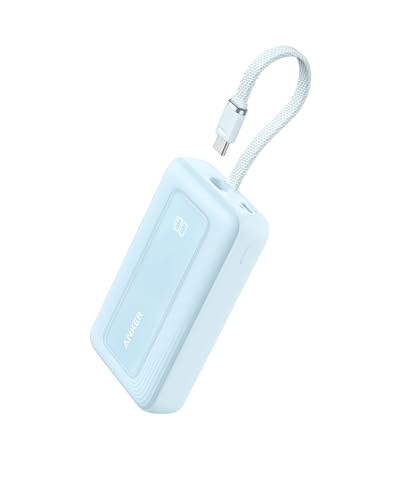
The best external phone chargers balance four things: enough capacity for the day ahead, output that matches what your phone can accept, a size you will actually carry, and cables and ports that fit the devices you own. A charger that stays at home because it is too heavy does no good, and a tiny one that runs dry before lunch is just as unhelpful.
This guide covers five external phone chargers built for phones first. Every pick is a self-contained battery pack with USB output, made to charge iPhone and Android phones. You will find slim everyday options, a featherweight carbon fiber pack, a fast 45W model for quick top-ups, and a larger 20,000mAh pack for long days away. Use the comparison table to narrow the field, then read the full section for any model that catches your eye.
At a Glance
| Charger | Capacity | Max Output | Built-in Cable | Best For |
|---|---|---|---|---|
| Anker PowerCore Slim 10000 | 10,000mAh | 15W | No | Slim everyday carry |
| Anker Zolo 10,000mAh 30W | 10,000mAh | 30W | Yes, USB-C | Cable-free top-ups |
| INIU P41 10,000mAh 45W | 10,000mAh | 45W | Detachable USB-C lanyard cable | Fastest charging |
| Nitecore NB10000 GEN2 | 10,000mAh | 22.5W | No | Lightest carry |
| Anker Zolo 20,000mAh 30W | 20,000mAh | 30W | Yes, USB-C | Long days and travel |
1. Anker PowerCore Slim 10000
The Anker PowerCore Slim 10000 is the straightforward everyday pick in this roundup. It holds 10,000mAh in a body that measures 6.01 by 2.82 by 0.61 inches and weighs 8.5 ounces, so it slides into a jacket pocket or a bag side pocket without adding noticeable bulk.
Inside, the pack uses Anker PowerIQ and VoltageBoost technology to match output to the connected device, with output up to 15W. The listing states it can charge an iPhone 15 Pro in about 1 hour and 41 minutes. A full 10,000mAh pack holds roughly two full charges for a typical modern phone, once conversion losses are taken into account.
Ports are simple and flexible. A USB-C port handles both input and output, a USB-A port handles output, and a Micro USB port handles input only. A trickle-charging mode, activated by pressing the power button twice or holding it for two seconds, supplies a low current for small accessories such as earphones and Bluetooth speakers.
Recharging the pack takes about 5 hours and 10 minutes with a 5V/3A input, so an overnight recharge is the practical routine. The listing notes that a charger of 15W or higher is recommended, and that a 5V/1A adapter will make the process much slower.
Considerations
The 15W ceiling makes this the slowest charger in this guide, and the lack of a built-in cable means you must pack a cord. It holds a single day of power rather than multi-day reserves. If you want the fastest possible top-up or a cable you cannot forget, one of the Zolo or INIU models below fits better.
2. Anker Zolo 10,000mAh 30W Power Bank
Anker Zolo 10,000mAh 30W Power Bank
The Anker Zolo 10,000mAh 30W solves the most common power bank annoyance: the forgotten cable. A USB-C cable is built into the body, so the charger is ready to use the moment you pull it out of your bag, and the same cable recharges the pack.
Output reaches 30W from a single port, twice the output of the PowerCore Slim above, and the listing states the pack can recharge in about 2.5 hours with a 20W input. At 4.32 by 2.58 by 0.98 inches and 0.48 pounds, it is shorter and thicker than the Slim, with a shape closer to a small brick than a flat slab, and the built-in cable tucks away into the body when not in use.
Alongside the built-in cable there is a USB-C port and a USB-A port. A single port can deliver the full 30W, while using several ports at once shares a total of 15W across them, so the fastest results come from charging one device at a time. A low-current mode, entered with a double tap of the power button, handles earphones and other small accessories. Pass-through charging is supported, so the pack can charge a phone while the pack itself is being recharged, although the listing advises against making a habit of it.
The listing includes a useful rule of thumb for estimating real-world charges: multiply the pack capacity by 0.65, then divide by your phone battery capacity. For an iPhone 15 with a 3,877mAh battery, that works out to about 1.67 charges from a 10,000mAh pack.
Considerations
Using several ports at once cuts the available output, so this pack is at its best as a one-device charger. Owners of iPhone 14 and earlier models will need their own Lightning cable connected through the USB-A or USB-C port, since the built-in cable is USB-C only.
3. INIU P41 10,000mAh 45W Portable Charger
INIU P41 10,000mAh 45W Portable Charger
The INIU P41 is the fastest charger in this guide, with output up to 45W. That extra headroom matters most for phones that accept higher wattages and for anyone who wants a meaningful top-up in a short stop, such as a coffee break or a layover. The listing states it can bring an iPhone 16 to 60 percent in about 25 minutes.
Despite the higher output, the P41 stays compact at 4.3 by 2.7 by 0.7 inches and 6.4 ounces, thanks to a high-density cell design. A detachable USB-C cable doubles as a lanyard, so the cable stays attached to the pack, and it can be swapped for a longer cable when you want one.
Ports are generous for a pack this size: two USB-C ports and one USB-A port, for three devices at once. The pack also carries a built-in flashlight, handy on a campsite or during a power cut, and a paw-print indicator display that shows the remaining charge at a glance. Recharging the pack takes about 2 hours. The listing states a 3-year warranty, longer than the coverage that comes with most packs in this class.
Compatibility is broad: the listing names iPhone models from the iPhone 8 onward, Samsung Galaxy S and Note phones, Google Pixel phones, iPad models, Apple Watch, and AirPods.
Considerations
The 45W output only helps if your phone can accept it; phones with lower charging limits will simply draw what they can use. The detachable lanyard cable is short, so charging while the phone sits in a bag may call for a longer separate cable.
4. Nitecore NB10000 GEN2
The Nitecore NB10000 GEN2 is built for people who count every gram. It weighs 150 grams, about 5.3 ounces, and measures just 10.6 millimeters thick, about half the thickness of a conventional 10,000mAh pack. Carbon fiber sheets, formed by compression molding, give the body its rigidity while keeping the weight down, and the slim slab slips into a running vest, a jacket pocket, or a small pouch.
Output runs through one USB-A port and one USB-C port, with two-way PD and QC 3.0 support and output up to 22.5W. That sits between the 15W Anker Slim and the 30W Zolo, and it is enough for fast charging on most current phones. A low-current mode, switched on by holding the mode button until a white indicator appears, supplies a gentle current for wireless headphones, wearables, and other small accessories.
The pack is built for use in temperatures from minus 10 to 40 degrees Celsius, which suits outdoor use in cold mornings and hot afternoons, and protection safeguards guard against short circuits and overcharging. The maker states an energy density of 257mWh per gram, about 22 percent higher than conventional 18650 lithium-ion cells, which is how the pack holds a full 10,000mAh in such a light body.
Nitecore comes from the flashlight and outdoor lighting world, and the NB10000 shows that heritage: it is a tool-like pack with no built-in cable, no display, and no extra features beyond the low-current mode.
Considerations
There is no built-in cable, so you must carry your own, and there is no digital display, only simple LED indicators, so the remaining charge is shown in rough steps rather than an exact figure. The GEN2 is also an older design, first listed in late 2021, so check that the listing you buy matches the GEN2 model and not a bundle or a newer generation.
5. Anker Zolo 20,000mAh 30W Power Bank
Anker Zolo 20,000mAh 30W Power Bank
The Anker Zolo 20,000mAh is the long-haul pick. With double the capacity of the other packs in this guide, it is the one to reach for on multi-day trips, long flights, or any stretch where an outlet is uncertain. The listing states it can charge an iPhone 15 up to four times, which means a phone, a pair of earphones, and a second device can all be kept going from a single pack.
Like its 10,000mAh sibling, it carries a built-in USB-C cable, so there is no separate cord to forget. The cable is engineered to survive more than 10,000 bends, and it folds away into the body for storage. Output reaches 30W, matching the smaller Zolo, and a digital display shows the remaining charge as a number.
The trade-off for the extra capacity is size and weight. A 20,000mAh pack is noticeably larger and heavier than a 10,000mAh one, and it belongs in a bag rather than a trouser pocket. For travel, that is usually a fair exchange: the pack sits in a daypack or carry-on and charges a phone through a cable while you walk, sit, or wait. The listing states an 18-month warranty.
Considerations
The added weight makes this the wrong pick for ultralight carry or for a pocket-only setup. Recharging a 20,000mAh pack also takes longer than recharging a 10,000mAh one, so plan on an overnight recharge after a heavy day. If your trips are usually a single day long, the 10,000mAh models above will serve you well at a smaller size.
How to Choose
Start with capacity. A 10,000mAh pack holds roughly one and a half to two full charges for a typical phone after conversion losses, which covers a long day. A 20,000mAh pack holds roughly three to four charges, which covers a weekend or a long trip. Bigger is not automatically better: every extra milliamp-hour adds weight, and a pack you leave at home because it is heavy is worth less than a smaller one you carry every day.
Next, match output to your phone. Most current phones accept between 15W and 45W over a cable, and a pack that delivers more than your phone can use will not charge it any faster. Check your phone maker specifications for the maximum wired charging wattage, then pick a pack that meets it without going far beyond. A 45W pack is a good fit for a phone that accepts 45W; for a phone capped at 15W, a 15W or 30W pack will do the same job.
Then look at cables and ports. A built-in cable is the single most convenient feature on a power bank, because a cable you cannot forget is a cable you always have. If you carry both USB-C and Lightning devices, look for a pack with a USB-A port as well, so you can use your own Lightning cable alongside the built-in USB-C one. If you charge two or three devices at once, count the ports and remember that shared output is split between them.
Finally, think about the conditions you will use it in. Airline rules generally allow power banks up to 100 watt-hours in carry-on luggage, and both 10,000mAh and 20,000mAh packs fall well under that limit, but confirm the current rules for your airline before you fly. A slim pack suits a pocket, a light pack suits a trail, and a pack with a display suits anyone who wants to know how much charge is left before leaving the house.
Fit and Installation
An external phone charger needs no installation, but a few habits make it far more useful. First, match the pack to your carry. A slim pack rides well in a jacket pocket or a bag side pocket, while a larger pack belongs in the main compartment of a bag. If you charge while walking, a short built-in cable keeps the phone and pack together as one unit; if you charge while the pack sits in a bag, a longer cable gives you room to hold the phone comfortably.
Second, keep the pack itself charged. The simplest routine is to recharge it overnight after any day you used it, so it starts every morning full. Do not store a pack fully empty for long stretches; top it up every few weeks if it has been sitting unused.
Third, mind heat and ventilation. Charging generates warmth, and a pack buried under heavy clothing or left in direct sun will charge more slowly and age faster. Let the pack breathe while it works, keep it out of a hot car, and avoid charging a phone and recharging the pack at the same time unless the pack is designed for pass-through charging.
Fourth, check case and cable fit. Thick phone cases can stop a short cable from seating fully, and a stiff cable can strain the port if the phone hangs from it. Use a cable with a little slack, and check the connection is firm before you put the phone and pack away.
Frequently Asked Questions
How many times will a 10,000mAh charger recharge my phone?
A 10,000mAh pack typically delivers about one and a half to two full charges to a modern phone. Conversion losses mean only around 65 percent of the stated capacity reaches your phone, so a phone with a 3,877mAh battery gets about 1.67 charges. A 20,000mAh pack roughly doubles those figures.
Can I take an external phone charger on a plane?
In most cases, yes, in carry-on luggage. Power banks are generally not allowed in checked luggage, so keep yours in your carry-on or personal item. Packs up to 100 watt-hours are widely accepted, and both 10,000mAh and 20,000mAh packs fall well under that limit. Rules vary by airline, so confirm the current rules with your airline before you travel.
Why does my phone charge slowly when the battery is nearly full?
Phones deliberately slow down as the battery approaches full. This protects battery health and is normal behavior, not a fault in the charger. The fastest charging happens when the battery is low, typically in the first half of the charge. If charging is slow from the start, check the cable, the port, and whether the pack is sharing output between several devices.
Do I need a USB-C or a Lightning cable for my external charger?
It depends on your phone. Most Android phones and iPhone 15 and later models use USB-C, while earlier iPhones use Lightning. A pack with a built-in USB-C cable covers USB-C phones on its own, and a pack with a USB-A port lets you use your own Lightning cable for older iPhones. If you carry both kinds of phone, a pack with a built-in cable plus a spare port is the most flexible setup.
Conclusion
The best external phone chargers are the ones you will actually carry, and that means matching the pack to your day. The Anker PowerCore Slim 10000 is the plain, pocketable choice for everyday use. The Anker Zolo 10,000mAh 30W adds a built-in cable and faster output in a compact body. The INIU P41 brings the fastest charging in this guide, with 45W output and a detachable lanyard cable. The Nitecore NB10000 GEN2 is the lightest way to carry 10,000mAh. The Anker Zolo 20,000mAh is the reserve for long trips, with double capacity and a built-in cable.
Pick the capacity that covers your longest day, the output your phone can use, and the cable setup that fits the devices you own. Charge the pack overnight, keep it in your bag, and your phone will be ready whenever you need it.
As an Amazon Associate, we earn from qualifying purchases.
FAQ
How many times will a 10,000mAh charger recharge my phone?
Can I take an external phone charger on a plane?
Why does my phone charge slowly when the battery is nearly full?
Do I need a USB-C or a Lightning cable for my external charger?
More from Amazon
Programs that pair well with the guide above. Offers and eligibility are set by Amazon and may change.
Free shipping on eligible items, Prime Video and more. Eligible new members can start with a free trial.
Start a Prime free trialAd-free music streaming. Eligible new subscribers can start with a free trial.
Try Music Unlimited freeA Prime membership for ages 18-24 with a trial period. Eligibility is set by Amazon.
See Prime for Young AdultsAudiobooks and podcasts to listen to on the go. Eligible new members can start with a free trial.
Try Audible freeAs an Amazon Associate we earn from qualifying purchases.