Our Top Picks
The best power chargers are the ones that match the devices you actually own, fit the outlets you actually use, and keep working without fuss. A charger is a small purchase, yet it sits at the center of how every phone, tablet, laptop, and pair of earbuds stays ready. Pick the wrong wattage and a laptop crawls along on a slow charge, and pick the wrong port mix and you end up carrying three bricks where one would have done the job.

This guide focuses on wall chargers, the plug-in bricks that turn wall power into the USB power your devices expect. It does not cover battery packs, wireless pads, or car chargers. Every charger below is a general-purpose wall charger sold on Amazon US, chosen for a different job: one phone, a laptop plus a phone, or a full desk setup.
What to Look For in a Power Charger
Wattage sets the ceiling on how much power a charger can deliver. A phone typically draws between 18 and 30 watts at its fastest, a tablet often draws between 20 and 45 watts, and a USB-C laptop commonly needs 45, 65, or 100 watts depending on its size. A charger rated below what a device can accept will still charge it, only more slowly, while a charger rated above it is safe to use because the device draws only what it is built to take. Buy enough wattage for the most demanding device you plan to charge, then treat anything above that as headroom.
Port count and port type matter just as much as wattage. Most modern devices charge over USB-C, while older accessories, some controllers, and many earbuds cases still use USB-A. A charger with two USB-C ports and one USB-A port covers a laptop, a phone, and one legacy accessory from a single outlet. A single-port charger is smaller and simpler, and it suits a bedside table where only one device ever charges at a time. Count the devices you charge at the same moment on a normal evening, then add one spare port.
Charging standards decide whether a charger and a device agree on a fast speed. USB Power Delivery, often shortened to USB PD, is the standard behind fast charging for most phones, tablets, and laptops, and it negotiates voltage and current between the charger and the device. Many Android phones also use Programmable Power Supply, or PPS, a part of the USB PD standard that adjusts voltage in fine steps for steadier fast charging. A charger that lists USB PD covers the widest range of devices.
Gallium nitride, known as GaN, is the material behind the current generation of compact chargers. GaN components switch faster and waste less energy as heat than the silicon parts in older chargers, so a charger can deliver 65 or 100 watts from a body not much larger than an old phone charger. GaN alone is not a guarantee of quality, but it is the reason a multi-port laptop charger fits in a jacket pocket.
Safety features deserve a close look at the listing before anything else. A reputable charger lists protection against overcurrent, overvoltage, short circuits, and overheating, and it carries certification from a recognized laboratory. Foldable prongs are a practical travel feature too, because they keep the metal blades covered inside a bag. A charger that runs warm during a fast laptop charge is normal, but one that becomes too hot to touch or smells of hot plastic should be unplugged and replaced.
Cables can quietly limit even the best charger. A USB-C cable with a 60-watt limit will not carry 100 watts to a laptop, and a worn cable can drop in and out of fast-charging mode. Check the wattage limit printed on the cable or its packaging, and replace any cable whose connector wobbles in the port. The chargers in this guide ship without cables, so confirm you already own suitable cables before ordering.
The Best Power Chargers
The three chargers below cover three different jobs rather than three versions of the same job: a compact single-port charger for a phone, a mid-power three-port charger for a laptop and a phone together, and a high-power three-port charger for a laptop, a tablet, and a phone at once. All three are wall chargers sold on Amazon US, described here from their published listing specifications.
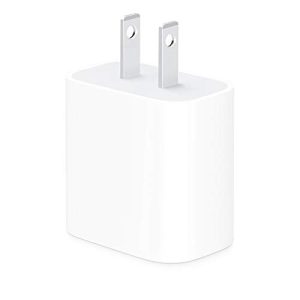
Apple 20W USB-C Power Adapter
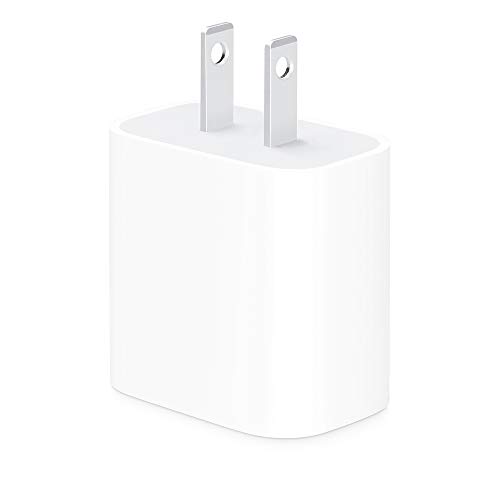
The Apple 20W USB-C Power Adapter is the simplest charger in this roundup, and for many households it is also the most sensible. It is a compact white wall charger with a single USB-C port and a 20-watt output, designed by Apple for iPhone, iPad, Apple Watch, and AirPods charging. It provides fast charging at home, in the office, or on the go, and it pairs with an iPhone 8 or later when used with a suitable USB-C cable.
View the Apple 20W USB-C Power Adapter on Amazon
The listing gives the model number as MHJA3AM/A, the total output as 20 watts, and the port count as one USB-C port. The body measures about 1.04 by 0.5 by 1.29 inches, so it sits behind a bed or a desk without blocking a neighboring socket. According to the listing, pairing this adapter with a compatible iPhone can bring the battery to around 50 percent in about 30 minutes. The adapter draws only what the connected device requests, so it will not force extra power into a small accessory such as an AirPods case.
This charger suits anyone who charges one Apple device at a time and wants the adapter the phone maker itself designed for the job. It fits a bedside table or a travel bag where a single phone is the only device that needs power overnight. The limits are straightforward: there is only one port, so a second device must wait its turn, and the charging cable is sold separately. Twenty watts is ample for a phone, a watch, or earbuds, but it is not enough for a laptop.
Anker 735 Charger GaNPrime 65W
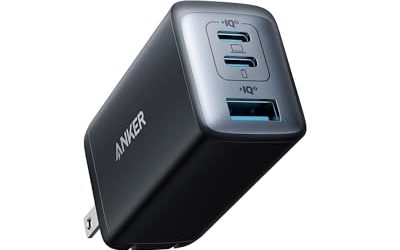
The Anker 735 Charger, also known as the GaNPrime 65W charger, is the mid-power pick in this roundup and the one most readers will find the most useful. It is a compact three-port wall charger with two USB-C ports and one USB-A port, delivering up to 65 watts in total through gallium nitride internals and Anker PowerIQ 4.0 technology, which distributes power between the ports as devices connect and disconnect.
View the Anker 735 Charger GaNPrime 65W on Amazon
The listing gives the model number as A2668, the total output as 65 watts, and the port layout as two USB-C ports plus one USB-A port. The charger uses PPS for compatible devices, supports fast charging for MacBook Pro and MacBook Air, iPad Pro, Galaxy phones, Dell XPS laptops, and iPhone models, and it carries foldable prongs for travel. The box includes a silicone stabilizer that helps the brick sit steady in a loose outlet, a welcome guide, and a 24-month warranty from Anker.
A single USB-C port can deliver the full 65 watts to one laptop, which covers a MacBook Air, many 13-inch ultrabooks, and a Chromebook. When a phone joins on the second USB-C port, the charger shares the 65 watts between them, so the laptop charges more slowly while the phone tops up. The USB-A port handles a third device, such as an earbuds case or a controller, at a lower output. That sharing is normal for multi-port chargers, and it is the trade that buys a three-device setup from a single outlet.
This charger suits a desk where a laptop and a phone charge side by side, and a travel bag where one brick must replace two chargers at once. The main limits are worth noting: the 65-watt figure is a total for the whole charger, not a promise for each port at the same time, and cables are not included. A larger laptop that shipped with a 90-watt or 100-watt brick will stay powered here but may charge slowly while in use, so owners of those machines should look at the 100-watt charger below instead.
Anker Prime Charger 100W
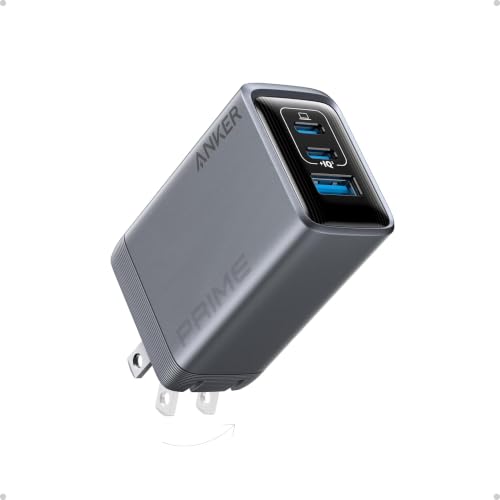
The Anker Prime Charger 100W is the high-power pick in this roundup, built for a desk where a laptop, a tablet, and a phone all need power at the same time. It is a compact three-port GaN wall charger with two USB-C ports and one USB-A port, delivering up to 100 watts in total, and it folds flat for travel.
View the Anker Prime Charger 100W on Amazon
The listing gives the model number as A2688, the total output as 100 watts, and the port layout as two USB-C ports plus one USB-A port. The body measures about 1.7 by 1.1 by 2.7 inches and weighs about 6 ounces. The input range is 100 to 240 volts at 50 to 60 hertz, which covers standard wall power in the United States and in many other countries.
The output breakdown in the listing shows how the 100 watts are shared. With one port in use, either USB-C port can deliver up to 100 watts on its own, while the USB-A port can deliver up to 22.5 watts. With two ports in use, the two USB-C ports share the output at 65 watts plus 35 watts. With all three ports in use, the combined output reaches 89 watts. The charger also lists protection for high voltage, short circuits, and temperature control.
This charger suits a full desk setup: a 14-inch or 16-inch laptop on one USB-C port, a tablet or a phone on the second, and an accessory on the USB-A port. It also suits a traveler who wants to leave the original laptop brick at home. The limits follow from the power on hand: a laptop needs a USB-C cable with a 100-watt limit to receive the full output, and the charger is larger and heavier than the other two picks here, so it is less suited to a jacket pocket.
Power Charger Comparison
| Charger | Total output | Ports | Best for | Cable included |
|---|---|---|---|---|
| Apple 20W USB-C Power Adapter | 20 watts | 1 USB-C | One phone or small Apple device | No |
| Anker 735 Charger GaNPrime 65W | 65 watts | 2 USB-C, 1 USB-A | Laptop plus phone from one outlet | No |
| Anker Prime Charger 100W | 100 watts | 2 USB-C, 1 USB-A | Laptop, tablet, and phone together | No |
The table makes the trade clear. The Apple charger is the smallest and simplest, and it does one job well. The Anker 735 covers the common case of a laptop and a phone sharing one outlet, and the Anker Prime covers the heavier case of a larger laptop plus two more devices. None of the three includes a cable.
Choosing for Your Use Case
Start with the most demanding device you own. If that device is a phone, a watch, or a pair of earbuds, a 20-watt single-port charger is enough. If that device is a MacBook Air, a 13-inch ultrabook, or a Chromebook, a 65-watt charger covers it with room for a phone beside it. If that device is a 14-inch or 16-inch laptop, a gaming handheld that charges over USB-C, or a laptop that shipped with a 100-watt brick, a 100-watt charger is the safer choice.
Next, count the devices that charge at the same time on a normal day. A household with one phone and one laptop needs two ports at least, and a third port is useful for earbuds, a controller, or a guest device. A desk with a laptop, a tablet, and a phone needs three ports, and enough total wattage that the laptop does not slow to a crawl when the other two connect. A bedside table with one phone needs one port and nothing more.
Travel changes the balance. A compact charger with foldable prongs and a wide input voltage range is easier to pack and safer in a bag than a wide brick with fixed prongs. A single 65-watt or 100-watt charger can replace two or three original bricks on a trip. Away from mains power, remember that a wall charger still needs a wall outlet, so a battery pack is the companion for those hours.
Compatibility is the final check before ordering. Confirm the connector your device uses, because a USB-C charger cannot help a device that only accepts a barrel plug or a proprietary connector. Confirm the wattage your laptop shipped with, because a charger far below that figure may not charge it while it is in use. Confirm the cable limit as well, since a cable with a low limit becomes the bottleneck for the whole setup.
Care and Use
A charger lasts longer when it is treated as part of the electrical setup rather than as a disposable accessory. Plug it fully into the outlet so the prongs make firm contact, and avoid hanging a heavy charger from a loose outlet where it can sag. Keep the charger ventilated and dry, and do not cover it with clothing or bedding while it is in use, because trapped heat is the main cause of early failure. Unplug the charger by gripping its body rather than pulling on the cable.
Heat deserves attention without alarm. A charger delivering 65 or 100 watts to a laptop will feel warm, and that warmth is a normal result of converting wall power to USB power. If the charger becomes too hot to hold, gives off a smell of hot plastic, or makes a buzzing sound, unplug it at once and stop using it. Do not open a charger or attempt a repair, because the internals carry mains voltage even when the charger looks simple from the outside.
Cables need the same care. Coil a cable loosely rather than wrapping it tightly around the charger, keep the connectors clean and dry, and replace a cable whose strain relief has split or whose connector wobbles in the port. A damaged cable can interrupt fast charging, and a cable with exposed wiring should be retired at once.
Frequently Asked Questions
How many watts do I need in a power charger?
Match the charger to the most demanding device you plan to charge. A phone is well served by 20 watts, a tablet often needs 20 to 45 watts, a MacBook Air or a 13-inch ultrabook commonly needs 45 to 65 watts, and a larger laptop often needs 65 to 100 watts. A charger with a higher wattage than the device can accept is safe, because the device draws only what it is built to take.
Can one charger charge a laptop and a phone at the same time?
Yes, if the charger has at least two ports and enough total wattage for both devices. A 65-watt three-port charger can charge a 65-watt laptop on its own, and when a phone joins, the charger shares the 65 watts between the two, so each charges more slowly than it would alone. A 100-watt charger shares its output the same way, with more headroom, so the laptop keeps a larger share.
Is a 100-watt charger safe for a phone?
Yes. USB Power Delivery is a negotiation between the charger and the device, and the phone requests only the power it is built to accept. A 100-watt charger will not force 100 watts into a phone, and the phone will charge at its own fastest supported speed. The same rule applies to earbuds and watches, which draw only a small amount of power from any charger.
Do I need a special cable for fast charging?
Often, yes. The cable must be suited to the wattage the charger and the device agree on, and a cable with a 60-watt limit will hold a 100-watt charger to that lower figure. Check the wattage limit on the cable packaging or printed on the cable itself. A worn or damaged cable can also drop out of fast charging, so replace any cable whose connector is loose or whose strain relief has split.
Why does my charger feel warm while it is working?
Warmth is a normal result of converting wall power into USB power, and a charger delivering 65 or 100 watts to a laptop will feel warmer than a 20-watt phone charger. Keep the charger ventilated, dry, and uncovered while it is in use. If it becomes too hot to hold, smells of hot plastic, or makes an unusual sound, unplug it at once and stop using it.
Conclusion
The best power chargers are not the most powerful ones, but the ones that fit the devices on your desk. A 20-watt charger serves a single phone with nothing wasted, a 65-watt three-port charger covers the common case of a laptop and a phone sharing one outlet, and a 100-watt three-port charger handles a full setup. Check the wattage your most demanding device needs, count the ports you use at once, confirm the cable limit, and choose the smallest charger that covers all three answers.
Disclosure: As an Amazon Associate, we earn from qualifying purchases.
FAQ
How many watts do I need in a power charger?
Can one charger charge a laptop and a phone at the same time?
Is a 100-watt charger safe for a phone?
Do I need a special cable for fast charging?
Why does my charger feel warm while it is working?
More from Amazon
Programs that pair well with the guide above. Offers and eligibility are set by Amazon and may change.
Free shipping on eligible items, Prime Video and more. Eligible new members can start with a free trial.
Start a Prime free trialAd-free music streaming. Eligible new subscribers can start with a free trial.
Try Music Unlimited freeA Prime membership for ages 18-24 with a trial period. Eligibility is set by Amazon.
See Prime for Young AdultsAudiobooks and podcasts to listen to on the go. Eligible new members can start with a free trial.
Try Audible freeAs an Amazon Associate we earn from qualifying purchases.