Key takeaways
- Five RX 7600 graphics cards for 1080p gaming PCs, from triple-fan overclocked models to compact dual-fan cards — cooling, clocks, and outputs compared.
The Radeon RX 7600 is AMD’s entry point into the RDNA 3 generation, and it has settled into a clear role: a 1080p gaming card with enough headroom for high refresh rates in competitive titles and solid frame rates at high settings in demanding single-player games. Every model below shares the same Navi 33 XL silicon with 2,048 stream processors, 32 compute units, 32 MB of Infinity Cache, and 8 GB of GDDR6 memory on a 128-bit bus, so the differences between them come down to cooling, factory clocks, size, and outputs.
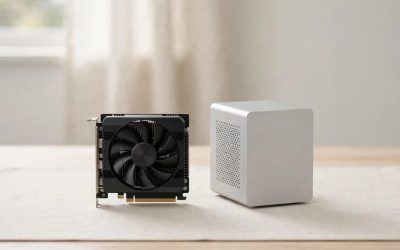
That shared foundation makes the RX 7600 a straightforward card to shop for. A triple-fan card runs quieter under load and holds its boost clock longer, while a compact dual-fan card fits small cases that a longer card cannot. A card with a USB-C output suits a creator who drives a portable monitor.
All five cards here use a single 8-pin power connector and a PCIe 4.0 x8 interface, and AMD lists a 550 W power supply as the recommended minimum. The 8 GB frame buffer is the one real limit to keep in mind: it is ample for 1080p and workable at 1440p, but ultra texture packs in the newest titles can push past it.
As an Amazon Associate, we earn from qualifying purchases.
How to Pick an RX 7600
Cooling comes first. The RX 7600 draws around 165 W at full load, which is modest for a modern graphics card, but a cooler with more surface area still runs quieter and keeps the GPU closer to its peak boost clock during long sessions. Triple-fan designs spread heat across a longer heatsink and can spin each fan slower for the same airflow. Dual-fan designs are shorter and fit compact cases, and the best of them use a 0 dB mode that stops both fans when the card is idle or under light load.
Factory clocks matter less than the cooler does. The reference boost clock sits at 2,655 MHz, and most partner cards push a little past it: 2,695 MHz is common, and the fastest factory-tuned models reach 2,755 MHz. That gap is a few percent in frame rates, not a different class of performance.
Length and slot thickness decide whether a card fits your case. Triple-fan models run close to 280 mm long, while compact dual-fan models can be as short as 240 mm. Measure the clearance from the rear bracket to the front of the case, and leave room for the power cable bend at the top edge.
Outputs deserve a look before you buy. Most RX 7600 cards carry one HDMI 2.1 port and three DisplayPorts, which covers a triple-monitor setup with room to spare. A few add a USB-C port that can drive a display, which is handy for a portable monitor. Match the outputs to the monitors you own.
The PCIe 4.0 x8 interface is a quirk worth knowing about. The card uses eight PCIe lanes instead of sixteen, which is fine on a modern board with a PCIe 4.0 slot. On an older board with only PCIe 3.0, the narrower link can trim a small amount of performance in a handful of titles.
Finally, match the listing by ASIN and model number. Several RX 7600 models have close variants with different suffixes, and a few listings mix new and renewed offers under one page. Check the model code on the box against the one in this guide before you buy, and confirm the condition is new.
1. GIGABYTE Gaming OC 8G
The GIGABYTE Gaming OC is the most complete RX 7600 in this roundup, and it leads on cooling and connectivity at the same time. Its WINDFORCE triple-fan cooler is the longest heatsink in the group, and the three fans share the load so each one spins slower and quieter than the pair of fans on a compact card. The factory overclock is also the highest here, with a boost clock up to 2,755 MHz and a game clock of 2,355 MHz.
Connectivity is where this card pulls away from the rest. It carries two HDMI 2.1a ports, two DisplayPort 1.4a outputs, and a USB-C port, so it can drive four displays at once and connect a portable monitor without an adapter. A metal backplate stiffens the long board and protects the components on the rear.
At around 282 mm, this is the longest card in the group, so it belongs in a mid-tower or larger case with clear front clearance. If your case has the room and you want the quietest RX 7600 with the most flexible outputs, this is the one to get.
Specs
- GPU: AMD Radeon RX 7600, Navi 33 XL, RDNA 3
- Stream processors: 2,048
- Boost clock: Up to 2,755 MHz
- Game clock: Up to 2,355 MHz
- Memory: 8 GB GDDR6, 18 Gbps, 128-bit
- Infinity Cache: 32 MB
- Cooling: WINDFORCE triple fan
- Outputs: 2x HDMI 2.1a, 2x DisplayPort 1.4a, 1x USB-C
- Power connector: 1x 8-pin
- Model: GV-R76GAMING OC-8GD
2. ASRock Challenger 8GB OC
The ASRock Challenger is the quiet achiever of this group. It pairs a dual-fan cooler with a 0 dB mode that stops both fans when the card is idle or under light load, so the desktop stays silent during browsing and video playback. The metal backplate adds rigidity and gives the card a finished look from the side window of a case.
Its factory overclock is modest but useful, with a boost clock up to 2,695 MHz and a game clock of 2,280 MHz over a base clock of 1,770 MHz. The striped axial fans move air through a compact heatsink that fits cases where a triple-fan card would not. Outputs are the standard set for this class: one HDMI 2.1 port and three DisplayPort 1.4 outputs, which cover a triple-monitor setup without fuss.
The Challenger is a good match for a mid-size build where you want silence at idle and a solid factory overclock without paying for a triple-fan board. Match the listing by ASIN and the model code RX7600 CL 8GO, since ASRock sells a closely named XT version with 16 GB of memory that is a different card.
Specs
- GPU: AMD Radeon RX 7600, Navi 33 XL, RDNA 3
- Stream processors: 2,048
- Boost clock: Up to 2,695 MHz
- Game clock: 2,280 MHz
- Base clock: 1,770 MHz
- Memory: 8 GB GDDR6, 18 Gbps, 128-bit
- Infinity Cache: 32 MB
- Cooling: Dual fan, 0dB silent cooling
- Outputs: 1x HDMI 2.1, 3x DisplayPort 1.4
- Power connector: 1x 8-pin
- Model: RX7600 CL 8GO
3. XFX Speedster SWFT210
The XFX Speedster SWFT210 is the straightforward pick in this group: a dual-fan card at the reference boost clock of 2,655 MHz, with no factory overclock to pay for and no extra bulk to fit. Its SWFT dual-fan cooler uses a simple two-fan layout over a full-length heatsink, and the card runs the same 2,048 stream processors and 8 GB of GDDR6 memory as every other RX 7600 here. The board carries one HDMI port and three DisplayPorts, and the single 8-pin connector keeps the cable run tidy.
One detail to watch: XFX sells this card under two model suffixes, and the listing covered here is the RX-76PSWFTFA variant. Match the ASIN and the model code before you buy, since the other suffix appears under a separate listing.
Specs
- GPU: AMD Radeon RX 7600, Navi 33 XL, RDNA 3
- Stream processors: 2,048
- Boost clock: Up to 2,655 MHz
- Memory: 8 GB GDDR6, 18 Gbps, 128-bit
- Infinity Cache: 32 MB
- Cooling: SWFT dual fan
- Outputs: 1x HDMI, 3x DisplayPort
- Power connector: 1x 8-pin
- Model: RX-76PSWFTFA
4. PowerColor Fighter RX 7600
The PowerColor Fighter is the compact dual-fan card in this roundup, and it is the best fit for a small case. It keeps the reference game clock of 2,250 MHz and boost clock of 2,655 MHz, so it delivers the same baseline performance as the reference design in a shorter board with a simple two-fan cooler. The Fighter line is PowerColor’s no-frills tier: no lighting, no oversized shroud, just a solid cooler on a short board.
That simplicity is a strength in a compact build. The card draws the usual 165 W through a single 8-pin connector, and the shorter length leaves room for front-mounted radiators or drive cages that a triple-fan card would crowd. The dual-fan cooler is louder under sustained load than the triple-fan GIGABYTE, which is the trade you make for the smaller footprint.
Match the listing by ASIN and the model code RX7600 8G-F. PowerColor also sells a Hellhound version of this card with a larger cooler and lighting, which is a different model.
Specs
- GPU: AMD Radeon RX 7600, Navi 33 XL, RDNA 3
- Stream processors: 2,048
- Game clock: 2,250 MHz
- Boost clock: 2,655 MHz
- Memory: 8 GB GDDR6, 18 Gbps, 128-bit
- Infinity Cache: 32 MB
- Cooling: Dual fan
- Outputs: 1x HDMI, 3x DisplayPort
- Power connector: 1x 8-pin
- Model: RX7600 8G-F
5. ASUS Dual RX 7600 EVO OC Edition
The ASUS Dual EVO OC is the most refined dual-fan card in this group. Its Axial-tech fans use a smaller hub and longer blades than a standard fan, which moves more air at the same noise level, and the 0 dB mode stops both fans under light loads. The EVO revision is the current version of the ASUS Dual RX 7600, with a revised heatsink and a 2.5-slot profile that fits most mid-tower cases.
The factory overclock matches the ASRock Challenger, with a boost clock up to 2,695 MHz, and the card carries the usual 8 GB of GDDR6 memory on a 128-bit bus. Outputs are one HDMI 2.1 port and three DisplayPort 1.4a outputs.
This is the pick for a builder who wants the quietest dual-fan RX 7600 and is willing to accept a 2.5-slot footprint to get it. Match the listing by ASIN and the model code DUAL-RX7600-O8G-EVO, since ASUS sells an earlier non-EVO version of this card and a V2 variant under different model codes.
Specs
- GPU: AMD Radeon RX 7600, Navi 33 XL, RDNA 3
- Stream processors: 2,048
- Boost clock: Up to 2,695 MHz
- Game clock: 2,280 MHz
- Memory: 8 GB GDDR6, 18 Gbps, 128-bit
- Infinity Cache: 32 MB
- Cooling: Axial-tech dual fan, 0dB mode, dual ball bearings
- Outputs: 1x HDMI 2.1, 3x DisplayPort 1.4a
- Power connector: 1x 8-pin
- Model: DUAL-RX7600-O8G-EVO
What We Left Out
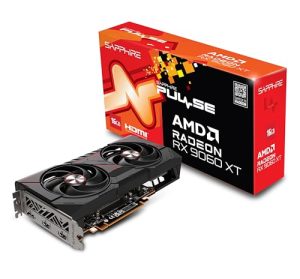
A few familiar RX 7600 models did not make the list because their US listings could not be pinned down cleanly. The Sapphire Pulse is the best-known RX 7600 of all, and it is widely available through overseas storefronts, but no clean US listing surfaced in our checks, so it stays out until a US code can be confirmed. The ASRock Steel Legend only surfaced through a non-US listing, and the PowerColor Hellhound and the MSI Mech 2X Classic OC showed no clean US ASIN either.
The XFX Speedster SWFT210 also appears under a second model suffix with its own listing, and that variant was already covered in an earlier roundup, so it is not repeated here. The RX 7600 XT models from the same brands are a different card with 16 GB of memory and higher clocks, and they belong in their own roundup rather than this one.
Frequently Asked Questions
Is the RX 7600 good enough for 1080p gaming?
Yes. The RX 7600 is built for 1080p, with 2,048 stream processors and 8 GB of GDDR6 memory, and it handles high settings in demanding titles and high refresh rates in competitive games. It also manages 1440p at medium to high settings in most titles.
How much power does an RX 7600 need?
The card draws around 165 W at full load through a single 8-pin connector, and AMD recommends a 550 W power supply for a system built around it. A quality 550 W unit is enough for a typical build with a mid-range processor.
Does the RX 7600 work on a PCIe 3.0 motherboard?
Yes, it works, but the card uses a PCIe 4.0 x8 link, so on a PCIe 3.0 board the narrower link can trim a small amount of performance in a handful of titles. The effect is minor in most games, and the card still performs well.
Should I pick a triple-fan or a dual-fan RX 7600?
Pick a triple-fan card if your case has the room and you want the quietest operation under load, since the larger heatsink lets each fan spin slower. Pick a dual-fan card if your case is compact, and look for a 0 dB mode if you want silence when the card is idle. The GPU underneath is the same either way, so the difference is noise and size, not class.
More from Amazon
Programs that pair well with the guide above. Offers and eligibility are set by Amazon and may change.
Free shipping on eligible items, Prime Video and more. Eligible new members can start with a free trial.
Start a Prime free trialAd-free music streaming. Eligible new subscribers can start with a free trial.
Try Music Unlimited freeA Prime membership for ages 18-24 with a trial period. Eligibility is set by Amazon.
See Prime for Young AdultsAudiobooks and podcasts to listen to on the go. Eligible new members can start with a free trial.
Try Audible freeAs an Amazon Associate we earn from qualifying purchases.