Key takeaways
- Find the best RX 7900 GRE graphics cards for gaming PCs, from quiet triple-fan flagships to a compact dual-fan model, all with 16GB of GDDR6 memory.
The Radeon RX 7900 GRE occupies one of the most useful positions in AMD’s RDNA 3 lineup. It uses the same Navi 31 silicon as the RX 7900 XT and RX 7900 XTX, with 80 of 96 compute units enabled, and pairs that with 16GB of GDDR6 memory. The result is a card aimed squarely at high-refresh 1440p gaming that can also stretch into 4K. GRE stands for Golden Rabbit Edition, launched first in Asia in July 2023 and globally in February 2024.
Because every RX 7900 GRE shares the same GPU and memory configuration, the differences between models come down to cooling, clocks, size, and extras such as dual BIOS switches and lighting. This guide compares five real cards, from large triple-fan flagships to a shorter dual-fan model for tighter cases, so you can match a card to your build.
As an Amazon Associate, we earn from qualifying purchases.
What the RX 7900 GRE Brings to a Gaming PC
Every card in this guide is built on the Navi 31 XL GPU with 5,120 stream processors, 80 compute units, 80 ray accelerators, and 160 AI accelerators. Memory is 16GB of GDDR6 running at 18 Gbps across a 256-bit bus, which works out to 576 GB/s of bandwidth, backed by 64MB of AMD Infinity Cache. The reference boost clock is 2,245 MHz with a game clock of 1,880 MHz, and most partner cards ship with a factory overclock above those figures. Board power for the reference design is 260W, and every partner card here draws through two 8-pin PCIe connectors.
That combination matters most at 1440p, where the GRE lands ahead of the RX 7800 XT and within reach of the RX 7900 XT. The 16GB frame buffer gives it room for high-resolution texture packs, and RDNA 3 adds hardware ray tracing, AV1 encoding, and DisplayPort 2.1 outputs.
One point worth settling: the GRE is a desktop card, not the same product as the RX 7900 XT or RX 7900 XTX. Those siblings carry more compute units and, in the XTX, more memory. The GRE trades a little of that headroom for a lower board power figure and a simpler cooling requirement, which is why so many partner designs run quietly.
How to Pick the Right RX 7900 GRE
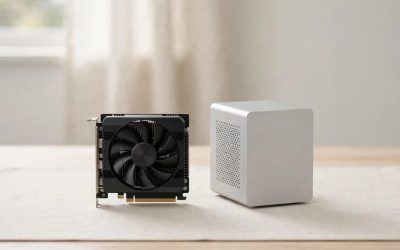
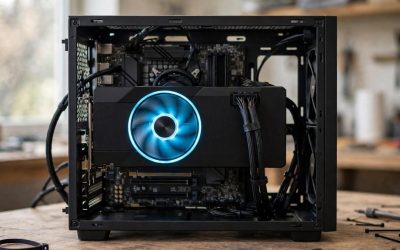
Cooler size is the first thing to check, because these cards vary more in length and thickness than in silicon. Triple-fan flagships such as the Sapphire Nitro+ measure over 320 mm long and occupy more than three slots, so they need a case with real clearance and good airflow. Shorter dual-fan cards fit mid-tower and some compact cases, but they give up some thermal headroom. Measure your case clearance against the card length and slot width before you order.
Fan count and BIOS options shape noise more than raw frame rates. Most triple-fan cards in this guide include a dual BIOS switch with a quiet mode and a performance mode, letting you choose between lower fan noise and maximum boost clocks. Power delivery is uniform here: every card uses two 8-pin PCIe connectors, so confirm your power supply has two free 8-pin leads and leave headroom above the card’s board power.
Display outputs are worth a look if you run more than one monitor. Most GRE cards offer a mix of DisplayPort 2.1 and HDMI 2.1, but the split varies: some give you three DisplayPort outputs and one HDMI, while others split them two and two. Count the ports your monitors need before you pick.
1. PowerColor Red Devil RX 7900 GRE
The Red Devil is PowerColor’s flagship take on the GRE, and it earns the top spot through the highest factory clocks in this guide, a large triple-fan cooler, and a dual BIOS that switches between performance and quiet operation. Its boost clock reaches up to 2,391 MHz, and it holds that clock with a thick heatsink and a metal backplate that stiffens the card. The fans stop below a temperature threshold, so the card runs silently at idle, then ramp smoothly as load rises.
Outputs follow the flagship pattern with three DisplayPort 2.1 connectors and one HDMI 2.1 port, covering a high-refresh main display and extra monitors at the same time. Two 8-pin connectors supply power. For a builder who wants the strongest GRE without stepping up to the XT tier, the Red Devil is the most complete package here.
Specs
- GPU: AMD Radeon RX 7900 GRE, Navi 31 XL, RDNA 3
- Stream processors: 5,120, compute units: 80
- Boost clock: up to 2,391 MHz
- Memory: 16GB GDDR6, 18 Gbps, 256-bit, 576 GB/s
- Infinity Cache: 64MB
- Cooling: triple-fan, dual BIOS, metal backplate
- Power connectors: 2x 8-pin PCIe
- Outputs: 3x DisplayPort 2.1, 1x HDMI 2.1
2. Sapphire Nitro+ RX 7900 GRE
The Sapphire Nitro+ is the quietest card in this guide and the one to pick if fan noise matters as much as frame rates. Independent testing found its quiet BIOS mode running softer than the other GRE cards tested alongside it, while its performance BIOS still delivers the full 2,391 MHz boost clock and a 2,052 MHz game clock. Sapphire lists board power at 295W for this card, above the GRE’s 260W reference figure, which reflects the headroom built into its cooler.
The triple-fan cooler uses a large heatsink and a full-length metal backplate. Outputs split two and two between HDMI 2.1a and DisplayPort 2.1. At 320 mm long and more than three slots thick, it belongs in a roomy case with solid airflow.
Specs
- GPU: AMD Radeon RX 7900 GRE, Navi 31 XL, RDNA 3
- Stream processors: 5,120, compute units: 80
- Boost clock: up to 2,391 MHz, game clock: up to 2,052 MHz
- Memory: 16GB GDDR6, 18 Gbps, 256-bit, 576 GB/s
- Infinity Cache: 64MB
- Cooling: triple-fan with ARGB, dual BIOS, metal backplate
- Board power: 295W
- Power connectors: 2x 8-pin PCIe
- Outputs: 2x DisplayPort 2.1, 2x HDMI 2.1a
- Dimensions: 320 x 134.85 x 61.57 mm, triple-slot
3. GIGABYTE Radeon RX 7900 GRE Gaming OC
GIGABYTE’s Gaming OC pairs the same 2,391 MHz boost clock and 2,052 MHz game clock as the Nitro+ with the company’s WINDFORCE 3X cooling system, in a package that balances cooling, lighting, and size without pushing to extremes. Three 90 mm fans move air across a large heatsink and stop entirely at low load, so the card runs silently on the desktop and during light tasks.
The card carries RGB Fusion lighting, a dual BIOS with OC and silent modes, and a metal backplate. Board power stays in line with the GRE’s 260W reference figure, and two 8-pin connectors supply power. Outputs split two and two between HDMI and DisplayPort, handy for a monitor and a TV on the same card.
Specs
- GPU: AMD Radeon RX 7900 GRE, Navi 31 XL, RDNA 3
- Stream processors: 5,120, compute units: 80
- Boost clock: up to 2,391 MHz, game clock: up to 2,052 MHz
- Memory: 16GB GDDR6, 18 Gbps, 256-bit, 576 GB/s
- Infinity Cache: 64MB
- Cooling: WINDFORCE 3X triple-fan, dual BIOS, metal backplate
- Power connectors: 2x 8-pin PCIe
- Outputs: 2x DisplayPort, 2x HDMI
4. XFX Speedster QICK 319 RX 7900 GRE
The XFX Speedster QICK 319 carries the highest listed boost clock in this guide at 2,395 MHz, a small but real edge over the 2,391 MHz cards around it. It is a triple-fan design built on XFX’s QICK 319 cooler, with a straightforward black shroud and no elaborate lighting, aimed at builders who want the clocks and the cooling without decoration.
Under the shroud it follows the standard GRE formula: 5,120 stream processors, 16GB of GDDR6 at 18 Gbps, and 64MB of Infinity Cache. Two 8-pin connectors supply power, and outputs run to three DisplayPort 2.1 connectors plus one HDMI 2.1 port. The triple-fan cooler gives it thermal headroom beyond what a dual-fan card can offer, which helps it sustain its boost clock during long sessions.
Specs
- GPU: AMD Radeon RX 7900 GRE, Navi 31 XL, RDNA 3
- Stream processors: 5,120, compute units: 80
- Boost clock: up to 2,395 MHz
- Memory: 16GB GDDR6, 18 Gbps, 256-bit, 576 GB/s
- Infinity Cache: 64MB
- Cooling: triple-fan, metal backplate
- Power connectors: 2x 8-pin PCIe
- Outputs: 3x DisplayPort 2.1, 1x HDMI 2.1
- Model: RX-79GMERCB9
5. ASUS Dual RX 7900 GRE OC Edition
The ASUS Dual OC Edition is the compact card in this guide, built for cases where a triple-fan flagship does not fit. Two Axial-tech fans cool the card, and at 280 mm long it slides into mid-tower and smaller cases that would struggle with a 320 mm card. It still carries the full GRE specification: 5,120 stream processors, 16GB of GDDR6 at 18 Gbps, and a factory overclock to 2,366 MHz boost and 2,013 MHz game clock.
ASUS builds the Dual with dual ball fan bearings, a protective backplate, and GPU Tweak III software for tuning and monitoring. Outputs match the larger models with one HDMI 2.1 port and three DisplayPort 2.1 connectors. Two 8-pin connectors supply power.
Specs
- GPU: AMD Radeon RX 7900 GRE, Navi 31 XL, RDNA 3
- Stream processors: 5,120, compute units: 80
- Boost clock: up to 2,366 MHz, game clock: up to 2,013 MHz
- Memory: 16GB GDDR6, 18 Gbps, 256-bit, 576 GB/s
- Infinity Cache: 64MB
- Cooling: dual Axial-tech fans, dual ball fan bearings, backplate
- Power connectors: 2x 8-pin PCIe
- Outputs: 3x DisplayPort 2.1, 1x HDMI 2.1
- Length: 280 mm
- Model: DUAL-RX7900GRE-O16G
Which Card Fits Your Build
If you want the strongest overall GRE, the PowerColor Red Devil leads with top clocks, a large triple-fan cooler, and a dual BIOS. If silence matters most, the Sapphire Nitro+ is the quietest card here, with a quiet BIOS mode that runs softer than the rest of the field while keeping the same 2,391 MHz boost. The GIGABYTE Gaming OC matches those clocks with a balanced cooler and a two-and-two output split. The XFX Speedster QICK 319 edges ahead on headline boost clock at 2,395 MHz in a plain, functional triple-fan design. And if your case cannot take a long triple-fan card, the ASUS Dual OC Edition fits where the others cannot.
Every card here shares the same GPU, 16GB of GDDR6, and two 8-pin power connectors, so the choice comes down to cooler size, noise, outputs, and fit.
Frequently Asked Questions
Does the RX 7900 GRE handle 4K gaming?
Yes, it handles 4K gaming in many titles thanks to 16GB of GDDR6 memory and 5,120 stream processors, though its strongest resolution is 1440p. In the heaviest titles at 4K, lowering a few settings or using FidelityFX Super Resolution in supported games keeps frame rates smooth.
How much memory does the RX 7900 GRE have?
Every RX 7900 GRE carries 16GB of GDDR6 memory on a 256-bit bus, running at 18 Gbps for 576 GB/s of bandwidth, backed by 64MB of AMD Infinity Cache. That memory configuration is identical across all partner cards.
What power connectors do RX 7900 GRE cards need?
All five cards in this guide use two 8-pin PCIe power connectors. Make sure your power supply has two free 8-pin leads and enough headroom above the card’s board power before you install the card.
Will an RX 7900 GRE fit in a compact case?
It depends on the model. Triple-fan cards such as the Sapphire Nitro+ measure over 320 mm long and occupy more than three slots, so they need a roomy case. The ASUS Dual OC Edition is 280 mm long with two fans and is the compact pick in this guide. Measure your case before ordering.
Conclusion
The RX 7900 GRE remains one of the most sensible graphics cards for a 1440p gaming PC, pairing a cut-down Navi 31 GPU with 16GB of GDDR6 memory and a feature set that covers ray tracing, AV1 encoding, and DisplayPort 2.1. Partner cards differ mainly in cooling, clocks, and size, and the five cards here cover the full range from quiet flagships to a compact dual-fan model. The PowerColor Red Devil is the strongest all-round pick, the Sapphire Nitro+ is the quietest, the GIGABYTE Gaming OC is the balanced middle, the XFX Speedster QICK 319 carries the highest boost clock, and the ASUS Dual OC Edition fits the smallest cases. Match the card to your case, your monitors, and your tolerance for fan noise, and any of these five will serve a 1440p build well.
More from Amazon
Programs that pair well with the guide above. Offers and eligibility are set by Amazon and may change.
Free shipping on eligible items, Prime Video and more. Eligible new members can start with a free trial.
Start a Prime free trialAd-free music streaming. Eligible new subscribers can start with a free trial.
Try Music Unlimited freeA Prime membership for ages 18-24 with a trial period. Eligibility is set by Amazon.
See Prime for Young AdultsAudiobooks and podcasts to listen to on the go. Eligible new members can start with a free trial.
Try Audible freeAs an Amazon Associate we earn from qualifying purchases.