Key takeaways
- Pro: Instant productivity boost with a genuine second display.
- Pro: Single-cable USB-C operation on most models.
- Pro: Clip-on extenders create an integrated dual-screen laptop.
- Pro: Compatible with phones, tablets, and game consoles too.
A second screen is the productivity upgrade that pays for itself within a week. Keep your reference material on one display and your work on the other, drag your video call off to the side during a presentation, or simply stop endlessly swiping between windows. For laptop users, portable monitors make all of that possible anywhere.
We evaluated the leading portable second-screen options for laptops, weighing image quality, connectivity, portability, and the little extras that make daily use pleasant. Here’s our take on what these screens offer and how to pick the one that fits your setup.
Our top picks




As an Amazon Associate we earn from qualifying purchases at no extra cost to you. Ratings are shown as listed on Amazon.
🎮 Get More From Your Setup — Free
Prime Gaming gives you free PC games every month, in-game loot, and a free Twitch channel sub — plus fast free shipping on all the gear above. New members get a 30-day free trial.
Watch: Second Screen For Laptop: Review & Buyer’s Guide — Video Review
Design & Build
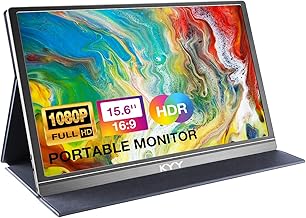
Portable second screens have converged on a winning formula: a slim 15.6-inch FHD IPS panel with a zero-frame design and a smart cover that doubles as a stand. The MNN and Anyuse models exemplify this, ultra-slim, lightweight, and USB-C driven. The ForHelp portable adds a premium smart cover, while the KYY includes a built-in speaker and protective cover for a more complete package. For a different form factor, the KEFEYA and Upgraded Screen Extender attach directly to your laptop lid, creating an integrated dual-monitor laptop with detachable, multi-mode positioning. All are built to travel, favoring thinness over ruggedness.
Performance
In daily use, these screens deliver crisp 1080p IPS visuals with wide viewing angles, plenty for documents, browsing, coding, and media. The single-cable USB-C connection on models like the MNN and Anyuse makes setup nearly instant, while HDMI fallback ensures compatibility with laptops lacking video-capable USB-C. The clip-on extenders such as the KEFEYA and the 4-in-1 Upgraded model are standouts for road warriors, offering true side-by-side multitasking without a separate stand. HDR support and built-in speakers on several models add welcome versatility for casual gaming and video without extra gear.
Pros & Cons
- Pro: Instant productivity boost with a genuine second display.
- Pro: Single-cable USB-C operation on most models.
- Pro: Clip-on extenders create an integrated dual-screen laptop.
- Pro: Compatible with phones, tablets, and game consoles too.
- Con: USB-C-powered screens tax your laptop’s battery.
- Con: Attach-style extenders add bulk to your laptop lid.
- Con: Basic built-in speakers won’t replace dedicated audio.
Alternatives to Consider
If you mostly work at one spot, a standalone portable monitor like the MNN or KYY gives you flexibility to use it with multiple devices. If you’re constantly on the move and want the tidiest setup, the KEFEYA or Upgraded 4-in-1 laptop screen extender integrates directly with your machine. For those who want a fixed home office instead, a full-size desktop monitor delivers more screen for the money.
Frequently Asked Questions
What’s the difference between a portable monitor and a screen extender?
A portable monitor is a standalone display on a stand; a screen extender clips onto your laptop lid to create an integrated dual-screen setup that travels as one unit.
Do I need a special cable or port?
A USB-C port with video output makes it a one-cable affair. If your laptop lacks that, use the included HDMI cable plus a USB power connection.
Can these run purely off my laptop?
Yes, USB-C models draw power and signal from your laptop, though this shortens battery life. For all-day unplugged use, choose a model with separate power input.
Are portable screens good enough for gaming?
For casual and console gaming at 1080p, absolutely. Competitive gamers wanting high refresh rates should look at dedicated gaming monitors instead.
Verdict
For versatile everyday use, a standalone 15.6″ portable like the MNN or KYY is our top recommendation. Frequent travelers who want a seamless setup should choose the KEFEYA clip-on extender, which turns any laptop into a true dual-screen workstation.