Our Top Picks
Pros & cons
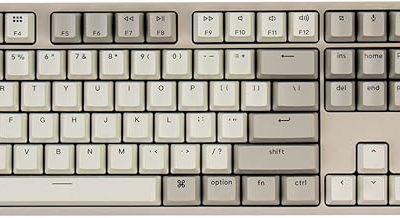
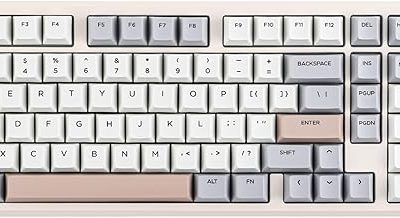
- PBT keycaps resist heat and wear over time
- Aluminum top case adds a durable, premium feel
- Twelve FN media keys simplify playback and volume control
- Single white backlight lacks full RGB customization
- Full-size layout takes up more desk space
The top budget gaming keyboards for low-power setups are the Keychron C3 Pro for wired value, Logitech G515 LIGHTSPEED TKL for low-latency wireless play, Keychron K2 for long battery life, and Redragon K552 Kumara when the lowest price matters most.
For gaming away from a permanent desk, the important distinction is not simply “mechanical” versus “membrane.” You need to balance input latency, cable dependence, battery capacity, charging convenience, switch feel, portability, and whether the keyboard can reconnect reliably after being stored or transported.

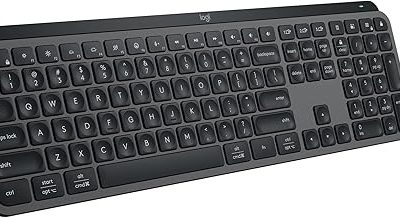
TECKNET Wired Gaming Keyboard, RGB Backlit Keyboard with Metal Panel Design | 15-Zone RGB Illumination, Whisper Quiet Design, IP32 Water Resistance, 25 Anti-ghosting Keys, Ergonomic Design
Chosen because it specifies RGB Backlit Keyboard with Metal Panel Design.
View on Amazon

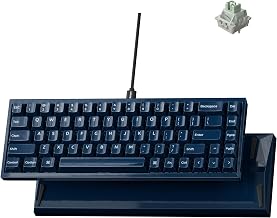
Logitech G413 SE Full-Size Mechanical Gaming Keyboard - Black | Backlit, anti-ghosting, compatible with Windows and macOS, aluminum material
Chosen because it specifies Black.
View on Amazon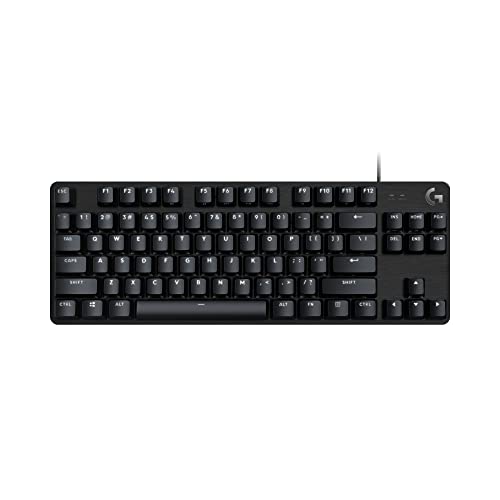
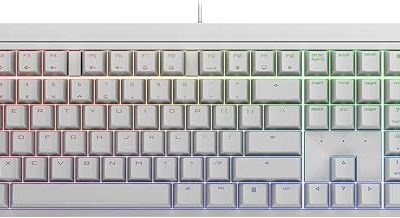
Logitech G413 TKL SE Mechanical Gaming Keyboard - Black | Tactile switches, anti-ghosting, compatible with Windows and macOS, compact design
Chosen because it specifies Black.
View on AmazonTop budget gaming keyboards ranked
| Rank | Keyboard | Connection | Typical market range | Battery or power detail | Best use |
|---|---|---|---|---|---|
| 1 | Logitech G515 LIGHTSPEED TKL | 2.4GHz wireless, Bluetooth, USB | Usually $90–$130 | Up to about 625 hours with lighting off | Competitive wireless gaming and travel |
| 2 | Keychron C3 Pro | USB-C wired | Usually $35–$55 | No battery; powered through USB-C | Lowest-cost serious wired gaming |
| 3 | Keychron K2 | Bluetooth and USB-C | Usually $60–$100 | About 400–570 hours with backlight off, depending on version | Portable gaming and general use |
| 4 | Redragon K552 Kumara | USB wired | Usually $25–$40 | No battery; powered through USB | Very tight budgets and fixed setups |
| 5 | HyperX Alloy Origins Core | USB-C wired | Usually $55–$90 | No battery; powered through USB | Durable TKL gaming at sale pricing |
1. Logitech G515 LIGHTSPEED TKL: best overall wireless choice
The Logitech G515 LIGHTSPEED TKL is the strongest all-round pick when wireless latency matters but you still want a keyboard slim enough to carry between rooms. Its 2.4GHz LIGHTSPEED receiver is preferable to Bluetooth for gaming because it avoids Bluetooth’s higher latency and power-saving behavior. It also supports Bluetooth and wired USB use, giving you three connection options.
Its low-profile design takes up less vertical space in a backpack than a conventional high-profile mechanical keyboard. The low-profile tactile or linear switches provide a shorter key travel than standard mechanical switches, which can feel faster for repeated inputs. The trade-off is a flatter, less cushioned typing feel and less flexibility if you want to install ordinary MX-style key switches.
Logitech quotes up to roughly 625 hours of battery life with lighting disabled. Actual runtime falls sharply with RGB enabled, especially at high brightness. A practical travel setting is static white or a dim single color at around 20–30% brightness. Charge it through USB-C before leaving, and keep the receiver in the keyboard or in the same case as your gaming device so it does not get lost.
2. Keychron C3 Pro: best wired budget keyboard
The Keychron C3 Pro is the sensible choice if your gaming device already has a USB port and you want to spend as little as possible without dropping to a basic office keyboard. It is a tenkeyless model, so it removes the number pad while retaining arrow keys and a conventional navigation cluster. That gives your mouse more room in shooters.
Depending on the version, it is available with mechanical switches such as Keychron’s red, brown, or similar options. Linear switches are usually the better gaming default because they have no tactile bump to interrupt rapid presses. Tactile switches are better if the keyboard will also be used for writing and you want clearer feedback.
Wired operation eliminates battery anxiety and makes charging irrelevant. It also avoids the occasional wake-up or pairing delay common with Bluetooth keyboards. The disadvantage for a low-power or mobile setup is cable management: the keyboard draws power from the host, and some handheld PCs may need a USB-C hub or adapter.
3. Keychron K2: best battery-conscious portable option
The Keychron K2 is a compact 75% wireless keyboard with function-row keys, arrow keys, and a smaller footprint than a TKL board. It is a better travel layout than a 60% keyboard if you frequently adjust volume, brightness, or game controls without using function-layer shortcuts.
Battery capacity varies by K2 version, but Keychron lists approximately 400 hours without backlighting on some versions and up to about 570 hours on others. With RGB or white backlighting active, expect dramatically less runtime; the exact result depends on brightness, connection mode, and whether the keyboard enters sleep promptly.
Bluetooth is convenient for a laptop, tablet, or handheld PC, but it is not the lowest-latency option. For slower single-player games, strategy games, RPGs, and ordinary desktop work, the difference is rarely important. For rhythm games or competitive shooters, use the USB-C connection if your device permits it.
The K2’s taller keycaps and conventional mechanical layout offer a more substantial typing feel than the G515. It is less flat in a travel bag, but its 75% layout is a useful compromise when you do not want to sacrifice dedicated arrow keys.
4. Redragon K552 Kumara: cheapest acceptable gaming pick
The Redragon K552 Kumara remains attractive when the target price is close to $30. It is a wired tenkeyless mechanical keyboard, commonly sold with clicky or linear-style switches depending on the exact version. Always check the listed switch type because the name alone does not guarantee one feel.
Its biggest advantage is simplicity: plug in the USB cable and play. There is no battery to maintain, wireless receiver to misplace, or pairing menu to troubleshoot. Its latency is generally suitable for ordinary PC gaming, although it offers fewer firmware, remapping, and connection features than more expensive models.
Clicky versions can be loud in shared rooms, hotels, or living rooms. A linear version is the safer choice for gaming away from a private desk. The fixed cable or less refined cable routing on some variants also makes it less convenient to pack than the Keychron and Logitech options.
5. HyperX Alloy Origins Core: best durability-focused wired model
The HyperX Alloy Origins Core is worth considering when it falls into the lower end of its usual market range. Its TKL layout saves desk space, while the aluminum body gives it a more rigid, planted feel than many entry-level plastic keyboards.
HyperX mechanical switches are available in linear, tactile, and clicky forms depending on the model and regional stock. The linear version is the most straightforward gaming recommendation. It is not the lightest keyboard to carry, but that extra weight prevents it from sliding around on a small folding table.
Because it is wired, it suits a desktop or console setup better than a battery-powered travel kit. It is also a good solution if a shared gaming device may sit unused for weeks: there is no battery to discharge while stored.
Latency, battery life, and charging: what matters in practice
Connection type creates the clearest ranking. A direct USB connection is predictable and normally gives the lowest end-to-end delay. A dedicated 2.4GHz gaming connection is the best wireless alternative. Bluetooth is adequate for casual and turn-based games but is the least desirable option for latency-sensitive play.
Battery claims are normally measured with lighting disabled. A useful travel estimate is:
Estimated runtime = rated runtime × actual lighting factor × usage factor.
For example, if a keyboard is rated for 500 hours with the lights off, you use lighting that reduces endurance to 30%, and the keyboard is active only half the time, the rough result is 500 × 0.30 ÷ 0.50, or about 300 hours of calendar use. This is not a laboratory prediction, but it explains why a “500-hour” keyboard may last weeks rather than months with RGB active.
For a handheld or small laptop, charging is also a power-budget question. A keyboard using roughly 0.5–1 watt while active is minor beside a gaming handheld drawing 20–30 watts. However, a USB hub, external SSD, mouse, and keyboard can exceed what a small adapter or power bank comfortably supplies. If your handheld reports low-power USB warnings, connect the keyboard through a powered hub or use Bluetooth.
Choose by your actual gaming situation
| Your situation | Best choice | Why | Accept the trade-off |
|---|---|---|---|
| Competitive gaming from a laptop | Logitech G515 LIGHTSPEED TKL | Dedicated wireless latency, compact TKL layout, long battery life | Higher price and low-profile switch feel |
| Gaming handheld with one USB-C port | Keychron K2 | Bluetooth avoids occupying the only port; USB-C remains available for serious play | Bluetooth latency and a taller body |
| Permanent desk with a desktop PC | Keychron C3 Pro | No charging, low cost, dependable wired input | A cable is always required |
| Shared room or quiet environment | G515 or a linear C3 Pro | Quieter than clicky switch versions | Linear switches provide less typing feedback |
| Absolute minimum budget | Redragon K552 Kumara | Mechanical and TKL at a very low market price | Basic portability, software, and cable design |
Settings that improve mobile use
- Use 2.4GHz for competitive games: place the receiver on the same side of the laptop or handheld as the keyboard to reduce obstruction from metal ports and cables.
- Disable lighting while travelling: this is the single largest battery-life improvement on most RGB keyboards.
- Set sleep to five or ten minutes: a short timeout prevents a keyboard inside a bag from draining its battery through accidental key presses.
- Use wired mode for rhythm games: it removes wireless wake-up behavior and makes latency more consistent.
- Carry a short USB-C cable: a 0.5-meter cable reduces tangles compared with the long desktop cable included with many wired models.
Final verdict
The Logitech G515 LIGHTSPEED TKL is the best overall answer for a low-power setup that moves around, particularly when wireless responsiveness and battery life both matter. Choose the Keychron C3 Pro if you want maximum gaming value and can tolerate a cable. The Keychron K2 is the better compact Bluetooth-first option, while the Redragon K552 Kumara is the budget floor and the HyperX Alloy Origins Core is the sturdier wired alternative.