Key takeaways
- Upscaling: NVIDIA DLSS with frame generation generally produces cleaner results than AMD FSR, especially in motion and at lower base resolutions.
- Ray tracing: NVIDIA holds a clear lead in heavy ray-traced and path-traced games; AMD has closed the gap but still trails at the top.
- Raster value: AMD typically offers more traditional (non-RT) frames per dollar at each price tier.
- VRAM: AMD often bundles more memory at a given price, which helps at 4K and in texture-heavy titles.
- Creator features: NVIDIA’s CUDA and NVENC encoder make it the safer choice for streaming and video editing.
- Power draw: Efficiency varies by model, but a quality PSU like the SEASONIC Focus V4 GX-750 is essential for either brand’s mid-to-high tier.
Choosing between NVIDIA and AMD graphics cards in 2026 is less about raw horsepower and more about which features you actually use. Both camps offer cards that deliver triple-digit frame rates at 1440p, but they diverge sharply on upscaling quality, ray tracing, and price per frame. Get that trade-off right and you will save money without giving up the settings you care about.
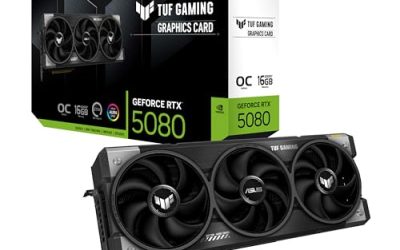
Below we break down where each brand wins, using real-world configurations like the iBUYPOWER Element with an RTX 5070 and the ZOTAC MEK paired with an RTX 5080 to ground the discussion in shipping hardware rather than spec-sheet fantasy.
Our top picks
 iBUYPOWER Element SE Gaming PC Desktop Computer
- AMD Ryzen 5 8400F, NVIDIA GeForce RTX 3050…
- Connectivity: 6 x USB 3.1 | 1x RJ-45…
- Special Add-Ons: Tempered Glass RGB Gaming Case |…
 iBUYPOWER Element Gaming PC Desktop Computer AMD
- AMD Ryzen 9 7900X, NVIDIA GeForce RTX 5070…
- Connectivity: 6 x USB 3.1 | 1x RJ-45…
- Special Add-Ons: Tempered Glass RGB Gaming Case |…
 ZOTAC MEK Gaming PC Desktop
- Effortless Gaming: MEK from ZOTAC comes with all…
- Heart of the MEK: the ZOTAC GAMING GeForce…
- Powerful Processor: the AMD Ryzen 7 9800X3D AM5…
| Product | Key specs | |
|---|---|---|
| iBUYPOWER Element SE Gaming PC Desktop Computer | AMD Ryzen 5 8400F, NVIDIA GeForce RTX 3050… Connectivity: 6 x USB 3.1 | 1x RJ-45… Special Add-Ons: Tempered Glass RGB Gaming Case |… | Check price |
| iBUYPOWER Element Gaming PC Desktop Computer AMD | AMD Ryzen 9 7900X, NVIDIA GeForce RTX 5070… Connectivity: 6 x USB 3.1 | 1x RJ-45… Special Add-Ons: Tempered Glass RGB Gaming Case |… | Check price |
| ZOTAC MEK Gaming PC Desktop | Effortless Gaming: MEK from ZOTAC comes with all… Heart of the MEK: the ZOTAC GAMING GeForce… Powerful Processor: the AMD Ryzen 7 9800X3D AM5… | Check price |
 Acer Nitro 16S AI Copilot+ PC Gaming Acer Nitro 16S AI Copilot+ PC Gaming | Unlock Transformational AI PC Experiences: Dive into a… Unleash Next-Gen Performance: Driven by the advanced 10-core… Game Changer: Powered by NVIDIA Blackwell architecture, GeForce… | Check price |
 msi Vector A18 HX 18” 240Hz QHD+ msi Vector A18 HX 18” 240Hz QHD+ | Check price | |
 Advanced GPU Assembly Programming Third Edition: A Advanced GPU Assembly Programming Third Edition: A | Check price | |
 PCIE 3.0 x16 22Gbps eGPU DOCK PCIE 3.0 x16 22Gbps eGPU DOCK | Check price | |
 SEASONIC Focus V4 GX-750-750W SEASONIC Focus V4 GX-750-750W | High Efficiency, 80 PLUS Gold Certified ATX 3 and 16-Pin PCIe Gen 5 Cable… OptiSink Design | Check price |
As an Amazon Associate we earn from qualifying purchases at no extra cost to you.
⚡ Save on Your Next PC — Amazon Prime
Prime members get fast free shipping on the systems above, plus early access to Prime Day & Black Friday PC deals. New members get a 30-day free trial.
Watch: NVIDIA vs AMD GPUs in 2026 — Video Review
Quick Verdict
NVIDIA still leads in ray tracing and its DLSS upscaling remains the quality benchmark, making it the pick for visual maximalists and content creators. AMD counters with more raw rasterization performance per dollar, so if you play mostly competitive or non-ray-traced titles, a Radeon card stretches your budget further.
Key Differences
- Upscaling: NVIDIA DLSS with frame generation generally produces cleaner results than AMD FSR, especially in motion and at lower base resolutions.
- Ray tracing: NVIDIA holds a clear lead in heavy ray-traced and path-traced games; AMD has closed the gap but still trails at the top.
- Raster value: AMD typically offers more traditional (non-RT) frames per dollar at each price tier.
- VRAM: AMD often bundles more memory at a given price, which helps at 4K and in texture-heavy titles.
- Creator features: NVIDIA’s CUDA and NVENC encoder make it the safer choice for streaming and video editing.
- Power draw: Efficiency varies by model, but a quality PSU like the SEASONIC Focus V4 GX-750 is essential for either brand’s mid-to-high tier.
NVIDIA GeForce: Features First
NVIDIA’s pitch is a complete feature stack. DLSS, robust ray tracing, and the NVENC encoder make cards like the RTX 5070 inside the iBUYPOWER Element attractive to anyone who streams or dabbles in creative apps. If you want the prettiest possible image with ray tracing enabled, GeForce is the path of least resistance.
The catch is price. NVIDIA commands a premium at nearly every tier, so you often pay more for equivalent rasterization performance. That premium is worth it if you lean on DLSS and RT; it is wasted money if you play esports titles that never touch those features.
AMD Radeon: Raw Value
AMD’s Radeon cards are the value champions of 2026. At a given price you usually get more traditional rendering muscle and more VRAM, which is why budget-to-midrange builders keep gravitating toward them. For 1440p high-refresh gaming in popular multiplayer titles, a Radeon card frequently matches a pricier GeForce in the metrics that matter.
Where AMD asks for compromise is at the bleeding edge of ray tracing and in creator workflows that depend on CUDA. If those are not part of your world, the savings are real and immediate.
Which Should You Buy?
- Ray tracing and DLSS fan: Go NVIDIA.
- Streaming or video editing: Go NVIDIA for NVENC and CUDA.
- Best raster frames per dollar: Go AMD.
- 4K on a budget: Lean AMD for the extra VRAM.
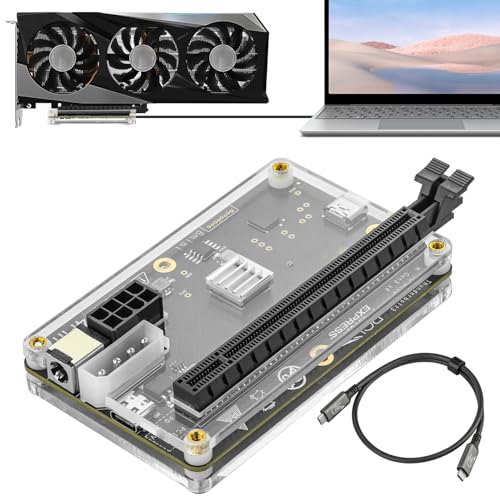
- External GPU setups: Either works, but confirm compatibility with your enclosure and Thunderbolt connection.
Frequently Asked Questions
Is DLSS really better than FSR?
In most side-by-side tests DLSS holds an edge in image stability and detail, particularly in motion. FSR has improved and is often good enough, especially at higher base resolutions.
Does AMD’s extra VRAM matter?
At 4K and in texture-heavy or modded games, yes. At 1080p it rarely becomes the limiting factor within a card’s lifespan.
Can I use an external GPU with a laptop?
Yes, with a Thunderbolt 4 or USB4 eGPU dock, though you lose some performance to the connection overhead compared with a desktop slot.
Which PSU wattage do I need?
A quality 750W unit comfortably powers most midrange builds from either brand. Always check the card’s recommended wattage and leave headroom.
Final Verdict
Pick NVIDIA if ray tracing, DLSS, and creator tools shape your buying decision. Pick AMD if you want the most raw performance and VRAM for your money in traditional rendering. Both build great 2026 gaming rigs; the right choice is simply the one whose feature set matches how you play.