Our Top Picks
 Go Power! GP-IC2000-12-PKG Pure Sine Wave Inverter2000W12.6 x 13.7 x 7.9 inches38.71 poundsCheck on Amazon
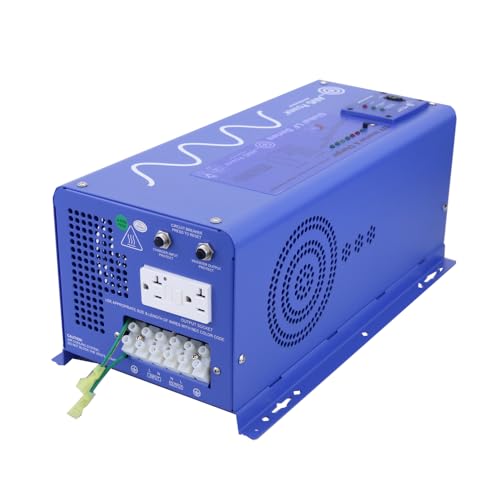 AIMS 2000W 12V Pure Sine Inverter Charger w/2000W 120V17.4 x 8.59 x 7.05 inches49 poundsCheck on Amazon
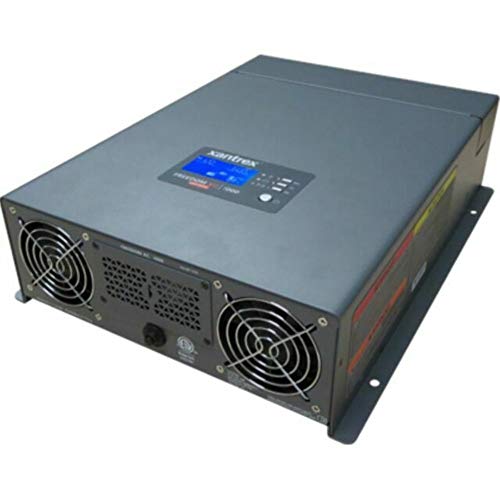 Xantrex Freedom XC 2000 817-2080 Power Inverter15.4 x 10.8 x 4.0 inches19.5 x 15.4 x 8.5 inches16.3 poundsCheck on Amazon


As an Amazon Associate I earn from qualifying purchases.
The Short Answer
An inverter charger does two jobs in one box. It turns battery power into household AC power, and it charges your battery bank when shore power or a generator is connected. For a gaming setup away from a wall socket, one unit replaces a separate inverter, a separate battery charger and a separate transfer switch, and it changes between battery power and shore power without you unplugging anything.
Start with the Renogy REGO 3000W: 3000 watts continuous, a 9000-watt surge, Bluetooth monitoring and four-stage charging for large RV and off-grid systems. For a 50-amp RV, the Go Power GP-IC2000-12-PKG pairs a 100-amp charger with a dual 50-amp transfer switch. The Xantrex Freedom XC 2000 is the lightest 2000-watt unit here at 16.3 pounds, with an 80-amp charger. For motor loads, compare the low-frequency AIMS PICOGLF20W12V120VR with the Victron MultiPlus-II, which has the strongest charger here at 120 amps.
Every pick here is a true inverter charger, not a plain inverter: each one inverts DC power to AC power and charges a battery bank from an AC source. All five produce a pure sine wave output, the clean form of AC power that sensitive electronics expect. A gaming laptop, a monitor, a console and a router all run on the kind of power a pure sine wave unit produces. Confirm on the listing that the exact model you buy matches the wattage and voltage in this guide, because several brands sell look-alike models with different outputs.
Our Top Picks
- Best overall for large systems: Renogy REGO 3000W Pure Sine Wave Inverter Charger — 3000 watts continuous, 9000-watt surge, Bluetooth monitoring, four-stage charging.
- Best for 50-amp RVs: Go Power GP-IC2000-12-PKG 3-in-1 Inverter Charger — 2000 watts continuous, 100-amp charger, dual 50-amp transfer switch.
- Best low-frequency unit for motor loads: AIMS Power PICOGLF20W12V120VR Pure Sine Inverter Charger — 2000 watts continuous, 6000-watt surge, transformer-based design.
- Best lightweight 2000-watt unit: Xantrex Freedom XC 2000 Inverter Charger — 2000 watts continuous, 80-amp charger, 16.3 pounds.
- Best advanced system unit: Victron Energy MultiPlus-II Pure Sine Wave Inverter Charger — 3000VA, 2500 watts output, 120-amp charger, PowerAssist.
Quick Comparison
| Product | Continuous Output | Surge | Charger | Transfer Switch | Waveform | Weight |
|---|---|---|---|---|---|---|
| Renogy REGO 3000W | 3000W | 9000W | Four-stage, current to confirm on the listing | Confirm on the listing | Pure sine wave | 63.5 pounds |
| Go Power GP-IC2000-12-PKG | 2000W | 3400W | 100A | Dual 50A | Pure sine wave | 38.71 pounds |
| AIMS PICOGLF20W12V120VR | 2000W | 6000W | Multi-stage, current to confirm on the listing | Confirm on the listing | Pure sine wave | Confirm on the listing |
| Xantrex Freedom XC 2000 | 2000W | Confirm on the listing | 80A | 30A | True sine wave | 16.3 pounds |
| Victron MultiPlus-II 12/3000/120-50 | 2500W (3000VA) | 5500W | 120A | 50A | Pure sine wave | 51.5 pounds |
How to Choose
Match the output to your real load
Add up the continuous draw of everything you plan to run at the same time. A gaming laptop plus a monitor, a router and a few small accessories is a modest load. A gaming desktop with a large monitor, a console, a television and a mini fridge is a much larger one. The continuous output of the inverter charger must sit above that total with headroom left over. A 2000-watt unit suits a laptop-based setup or a single console station. A 3000-watt unit suits a desktop station with several screens running at the same time.
Look at surge capacity
Motors and compressors draw far more power for a few seconds when they start than they draw while running. A fridge, an air conditioner, a well pump and many power tools all behave this way. Surge capacity is the short burst the inverter can supply for those starts. The Renogy REGO and the AIMS both carry a 6000-watt surge or higher, which is why they suit systems with motor loads. The Go Power carries a 3400-watt surge for five seconds, which is enough for many RV appliances but less generous than the two units above.
Charger current decides how fast the bank refills
When you plug into shore power, the charger side refills your battery bank. A higher charger current refills a large bank faster. The Victron leads this guide at 120 amps, followed by the Go Power at 100 amps and the Xantrex at 80 amps. Also check which battery types the charger supports. The Renogy REGO lists compatibility with gel, AGM, sealed lead-acid, flooded and lithium battery types, but the exact battery profiles vary, so confirm on the listing that your battery chemistry is supported before you buy.
Match the transfer switch to your shore service
The transfer switch moves your AC loads between shore power and battery power. A fast automatic change keeps a gaming session, a download and a video call running through the switch. The Go Power uses a dual 50-amp transfer switch built for 50-amp shore service. The Victron uses a 50-amp transfer switch with PowerAssist, which can add battery power to limited shore power when the load exceeds what the shore connection can supply. The Xantrex uses a 30-amp transfer relay, a natural match for 30-amp service.
Low-frequency versus high-frequency
Low-frequency inverter chargers use a large transformer. They are heavy, and they handle surge loads and motor starts with more composure. The AIMS is the low-frequency unit in this guide, and its 6000-watt surge from a 2000-watt continuous output shows that character. High-frequency units use electronics instead of a large transformer, so they are lighter and more compact, which is why the Xantrex weighs only 16.3 pounds at 2000 watts.
Size the battery bank first
An inverter charger is only as useful as the battery bank behind it. A 2000-watt load at 12 volts draws a very large DC current, and a small bank will drain in minutes and suffer damage from deep discharge. Size the bank for the runtime you need, use cables thick enough for the full DC current, and fit fusing and a disconnect exactly as the manual describes. Undersized cable on a 3000-watt 12-volt system is a fire risk, so have a qualified installer do the work if you are unsure.
The Picks in Detail
Renogy REGO 3000W Pure Sine Wave Inverter Charger
Renogy REGO 3000W Pure Sine Wave Inverter Charger
The Renogy REGO 3000W is the most powerful unit in this guide. It converts 12-volt DC power to 120-volt AC power at 3000 watts continuous, with a 9000-watt surge for starting motors and compressors. It combines an inverter and a battery charger in one unit, with four-stage charging using bulk, boost, float and equalisation stages. Built-in Bluetooth lets you monitor the unit from a phone through the Renogy app, and an LCD display shows operating status and alerts. The listing states compatibility with gel, AGM, sealed lead-acid, flooded and lithium 12-volt battery types, plus UL458 and CSA certification. At 63.5 pounds, plan a solid mount with ventilation. Charger current is not stated in the listing details used here, so confirm on the listing before you buy.
Pros
- 3000 watts continuous with a 9000-watt surge, the strongest output here
- Four-stage charging for gel, AGM, sealed lead-acid, flooded and lithium batteries
- Built-in Bluetooth monitoring and an LCD display
Cons
- Heavy at 63.5 pounds, and needs a solid mount with ventilation
- Charger current is not stated in the listing details used here
- The listing model name field carries an odd parenthetical note, so confirm the exact variant
Go Power GP-IC2000-12-PKG 3-in-1 Inverter Charger
Go Power GP-IC2000-12-PKG 3-in-1 Inverter Charger
The Go Power GP-IC2000-12-PKG combines an inverter, a battery charger and an automatic transfer switch in one unit. It supplies 2000 watts of pure sine wave output from a 12-volt bank, with a 3400-watt surge for five seconds. The built-in charger runs at 100 amps, the second strongest charger in this guide, and the listing states a three-year warranty. Its dual 50-amp transfer switch suits 50-amp shore service and can pass through a large amount of shore power to the AC panel, and the unit is also compatible with 30-amp service. A battery temperature sensor on a 25-foot cable is included, and the package includes the GP-ICR-50 remote. At 38.71 pounds it is lighter than the two 3000-watt units here. This is the pick for a 50-amp RV where the transfer switch and charger matter as much as the inverter.
Pros
- 100-amp charger, the second strongest charger in this guide
- Dual 50-amp transfer switch built for 50-amp shore service
- Battery temperature sensor and remote included in the package
Cons
- 2000 watts continuous is less headroom than the 3000-watt units
- 3400-watt surge is the smallest surge in this guide
- Heavy and hardwired, so installation takes planning and proper cabling
AIMS Power PICOGLF20W12V120VR Pure Sine Inverter Charger
AIMS Power PICOGLF20W12V120VR Pure Sine Inverter Charger
The AIMS PICOGLF20W12V120VR is the low-frequency unit in this guide. It supplies 2000 watts of pure sine wave output from a 12-volt bank, with a 6000-watt surge for starting motors and heavy loads. That transformer-based build suits fridges, pumps, compressors and power tools in an off-grid cabin or workshop. The listing describes a multi-stage smart charger, a GFCI outlet, an AC terminal block and dip switches for configuration. The model number is PICOGLF20W12V120VR, and the listing is for the 12-volt 120-volt version, so confirm on the listing that you are buying the 12-volt version and not the 24-volt or 48-volt version of the same family. Charger current and weight are not stated in the listing details used here, so confirm on the listing before you buy.
Pros
- 6000-watt surge from a 2000-watt unit, strong for motor starts
- Low-frequency transformer design for sustained surge loads
- GFCI outlet and multi-stage smart charger described on the listing
Cons
- Charger current and weight are not stated in the listing details used here
- The same model family sells in 12-volt, 24-volt and 48-volt versions, so check the exact version
Xantrex Freedom XC 2000 Inverter Charger
Xantrex Freedom XC 2000 Inverter Charger
The Xantrex Freedom XC 2000 is the lightest 2000-watt unit in this guide at 16.3 pounds, and the easiest of the five to fit into a tight space. It supplies 2000 watts of true sine wave output from a 12-volt bank, with an 80-amp built-in charger and a 30-amp AC transfer relay. The listing describes dead battery charging down to zero volts, which matters when a bank has been left flat and a normal charger refuses to start. Its light weight makes it a good fit for a van or a small RV where every pound counts. The 30-amp transfer relay is a natural match for 30-amp shore service, but not for a 50-amp RV. Surge capacity is not stated in the listing details used here, so confirm on the listing if surge is a deciding factor. The model number is 817-2080.
Pros
- Lightest unit in this guide at 16.3 pounds
- 80-amp charger with dead battery charging down to zero volts
- True sine wave output for sensitive electronics
Cons
- 30-amp transfer relay suits 30-amp service, not 50-amp service
- Surge capacity is not stated in the listing details used here
- Less continuous headroom than the 3000-watt units
Victron Energy MultiPlus-II Pure Sine Wave Inverter Charger
Victron Energy MultiPlus-II Pure Sine Wave Inverter Charger
The Victron MultiPlus-II is the advanced system unit in this guide. The listing is for the 12-volt 3000VA 120-amp model, model number PMP122305122, with 2500 watts of output power and a 5500-watt peak. The built-in charger runs at 120 amps, the strongest charger in this guide, and the transfer switch is 50 amps. PowerAssist can add battery power to shore power when the load exceeds the shore supply, so a limited shore connection can still run a larger load for a short time. The unit is UL-certified and supports parallel and three-phase configuration for larger systems. At 51.5 pounds it is heavy, and it suits a buyer building a full Victron system or working with an installer. The listing shows conflicting availability signals in cached copies, so confirm on the listing that the exact model is in stock before you order.
Pros
- 120-amp charger, the strongest charger in this guide
- PowerAssist adds battery power to limited shore power
- 50-amp transfer switch and UL certification
Cons
- Heavy at 51.5 pounds and built for a full system install
- Listing copies show conflicting availability signals, so confirm on the listing
- More complex to configure than a standalone inverter charger
Who Should Choose What
Choose the Renogy REGO 3000W for a large station with several screens, a desktop, a console and household loads at the same time. Choose the Go Power GP-IC2000-12-PKG if your RV has 50-amp shore service and you want the transfer switch and the 100-amp charger to match that wiring. Choose the AIMS PICOGLF20W12V120VR if motor loads dominate your system and you want low-frequency surge strength. Choose the Xantrex Freedom XC 2000 if weight and space matter most and your system runs on 30-amp shore service. Choose the Victron MultiPlus-II if you are building an expandable system and want the strongest charger here with PowerAssist.
Common Mistakes
The most common mistake is buying on continuous watts alone and ignoring the battery bank. A 3000-watt inverter on a small bank is a short runtime and a damaged bank, not a powerful system. The second mistake is buying the wrong DC voltage: several model families sell in 12-volt, 24-volt and 48-volt versions with near-identical names, so check the model number on the listing. The third mistake is undersized DC cabling, which drops voltage, wastes energy as heat and creates a safety risk. The fourth mistake is ignoring the transfer switch rating: a 30-amp switch on a 50-amp RV limits what shore power can pass through. The fifth mistake is forgetting ventilation, which leads to thermal shutdowns in the middle of a gaming session on a hot day.
FAQ
What is an inverter charger?
An inverter charger is a single unit that does two jobs. It turns DC power from a battery bank into AC power for household devices, and it charges the battery bank when an AC source such as shore power or a generator is connected. An automatic transfer switch inside the unit moves the loads between battery power and shore power.
Do I need a pure sine wave inverter charger for gaming gear?
Yes. Gaming laptops, monitors, consoles and routers expect clean AC power, and all five units in this guide produce a pure sine wave output, described as true sine wave on the Xantrex listing.
How many watts do I need for a gaming station?
A laptop, a monitor and a router is a modest load that a 2000-watt unit handles with headroom. A desktop with a large monitor, a console, a television and other room loads can approach or exceed 2000 watts, in which case a 3000-watt unit is the safer choice.
Can an inverter charger charge a lithium battery?
Many inverter chargers support lithium batteries, and the Renogy REGO lists lithium among its supported battery types. Support varies by model, so confirm on the listing that your exact battery chemistry is supported before first use.
What is the difference between a low-frequency and a high-frequency inverter charger?
A low-frequency unit uses a large transformer and handles surge loads and motor starts with more composure, at the cost of weight. A high-frequency unit uses electronics instead of a large transformer, so it is lighter and more compact. The AIMS here is the low-frequency unit, and the Xantrex is the lightest unit here.
Do I need a professional to install an inverter charger?
For a hardwired unit, a qualified installer is a sensible choice unless you are confident with DC wiring, fusing, grounding and AC panel work. The DC currents involved are large, and mistakes carry a real safety risk.
Conclusion
The best inverter chargers in this guide all do the same core job, and the right one depends on your system. The Renogy REGO 3000W is the pick for the largest systems, with 3000 watts continuous, a 9000-watt surge and Bluetooth monitoring. The Go Power GP-IC2000-12-PKG is the pick for 50-amp RVs, with a 100-amp charger and a dual 50-amp transfer switch. The AIMS PICOGLF20W12V120VR is the pick for motor loads, with low-frequency surge strength. The Xantrex Freedom XC 2000 is the pick when weight and space matter most. The Victron MultiPlus-II is the pick for an expandable system with the strongest charger here and PowerAssist. Before you buy, confirm on the listing that the model number, the DC voltage, the continuous output and the charger current match your system, and that the exact variant you want is in stock.
FAQ
What is an inverter charger?
Do I need a pure sine wave inverter charger for gaming gear?
How many watts do I need for a gaming station?
Can an inverter charger charge a lithium battery?
What is the difference between a low-frequency and a high-frequency inverter charger?
Do I need a professional to install an inverter charger?
More from Amazon
Programs that pair well with the guide above. Offers and eligibility are set by Amazon and may change.
Free shipping on eligible items, Prime Video and more. Eligible new members can start with a free trial.
Start a Prime free trialAd-free music streaming. Eligible new subscribers can start with a free trial.
Try Music Unlimited freeA Prime membership for ages 18-24 with a trial period. Eligibility is set by Amazon.
See Prime for Young AdultsAudiobooks and podcasts to listen to on the go. Eligible new members can start with a free trial.
Try Audible freeAs an Amazon Associate we earn from qualifying purchases.