Our Top Picks


At a campsite there is no wall outlet to fall back on, so the real decision is how many phone charges you carry in, and how you replace them once they are gone. A small pack is lighter but may cover only a weekend, while a larger battery lasts longer and weighs more. Solar charging helps, but a small panel refills a battery slowly, so capacity, panel size, and your other recharge options matter more than any single headline number.
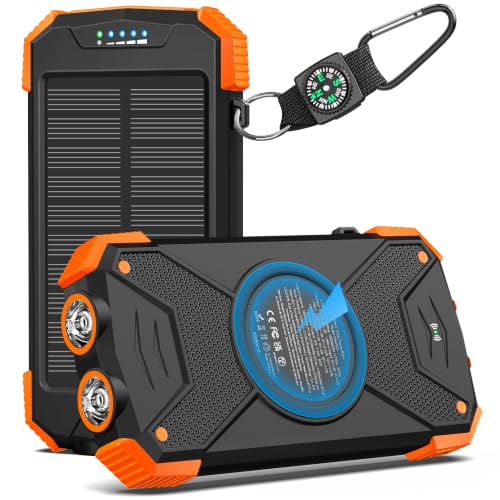

This guide is for tent campers, backpackers, car campers, and anyone spending nights away from mains power who still needs a phone for maps, photos, and emergencies. The five picks below were chosen because their own listings state camping or outdoor use, from solar power banks with lights and built-in cables to a foldable panel charger and a hand-crank model for backup power when sunlight is limited.
Quick Picks
As an Amazon Associate we earn from qualifying purchases
| Product | Best for | Key spec from title |
|---|---|---|
| BLAVOR Solar Power Bank 10,000mAh (PN-W05) | Light weekend backpacking where pack weight matters most | 10,000mAh with 20W fast charging |
| BLAVOR Solar Power Bank 20,000mAh with Built-in Cables (PN-W39) | Campers who want built-in cables and an Apple Watch charger | 20,000mAh with 4 built-in cables |
| BLAVOR Solar Power Bank with Hand Crank 20,000mAh | Emergency backup when sunlight is unreliable for days | 20,000mAh with hand crank charging |
| Hiluckey Solar Charger 25,000mAh (HI-S025) | Longer trips needing the largest battery and more panels | 25,000mAh with 4 solar panels |
| BigBlue 28W Solar Panel Charger | Daytime charging at a base camp in direct sunlight | 28W solar panel with dual USB-C |
The table above is an entry point rather than a final answer, because the right charger depends on how long you are away, how many devices travel with you, and whether you will have reliable sunlight. A compact bank suits a short trip, while a larger bank, a hand crank model, or a separate panel suits longer trips, uncertain weather, or shared use at camp.
How to Choose
Choosing well begins with matching the charger to the trip rather than buying the biggest battery you can find. Think about nights away, phone use, how you will refill the charger, what ports your devices need, and which outdoor extras you will actually use at camp.
Battery Capacity in mAh Versus Pack Weight for a Backpack
Capacity decides how many phone charges you carry, but every step up in size usually adds weight and bulk to your pack. A 10,000mAh bank is easier to carry on a backpacking trip and may be enough for a weekend if you begin fully charged. Models at 20,000mAh or 25,000mAh suit longer trips, shared use, or heavier phone use, yet they take up more room and are noticeably heavier to carry all day. Match capacity to nights away and number of devices, not to the largest number available.
Solar Panel Size and Realistic Solar Recharge Expectations
A small built-in solar panel is best treated as a slow top-up and an emergency trickle, not as a fast way to refill a large battery from empty in a single afternoon. Larger or multiple foldable panels give the sun more surface to work with, so they are more realistic for daytime charging at camp. Shade, cloud, panel angle, and short winter days all reduce what you collect. Plan to arrive with the power bank already full, then use solar to extend that charge rather than replace it entirely.
Output Wattage and Ports for USB-C, Cables, and Wireless
Check that the charger can power every device you plan to bring, in the way you plan to use it. USB-C matters for many current phones, and 20W fast charging is stated on the BLAVOR models in this list, while the Hiluckey lists 3A fast charge and a maximum output power of 15W. Built-in cables reduce the chance of forgetting a lead, multiple outputs let two people charge at once, and wireless charging removes a cable altogether, although a wired connection is usually the simpler option to position securely inside a tent.
Outdoor Durability and Extras Like Lights and a Hand Crank
Outdoor extras are useful only when they match the conditions you expect. Look carefully at any water resistance rating exactly as the listing states it, and note any limits, such as a junction box that is not waterproof. A built-in flashlight or camping light can replace a separate lamp for tent tasks, and a hand crank gives you a way to add some charge when sunlight fails. Compasses, carabiners, and similar included accessories can help with carrying and orientation, but they should not outweigh capacity, ports, and recharge method in your decision.
The 5 Best Options
The five options below cover different camping styles. Four are power banks that store energy for use at any hour, including after dark, while the fifth is a panel-only charger that makes power only while sunlight reaches it. Read each specification exactly as its listing states it, note the watch-out points, and check that the ports fit your devices.
BLAVOR Solar Power Bank 10,000mAh (PN-W05)
This is the lightest direction to take in this list, aimed at backpackers and weekend tent campers who want a stored battery without committing to a larger 20,000mAh or 25,000mAh pack. Its 10,000mAh capacity suits shorter trips and lighter phone use, while wireless charging and USB-C give you two ways to connect. The solar panel offers a daytime top-up at camp, and the dual flashlight adds a practical tent light, making it a sensible first choice when pack space and simplicity matter more than maximum reserves.
Specs
- 10,000mAh battery
- 20W fast charging
- USB-C input/output
- Wireless charging
- Solar panel charging
- Dual flashlight
- Listing title states “for Camping”
Best for: Short backpacking and tent trips where a compact stored battery is enough for the weekend.
Watch out for: Check that 10,000mAh covers your nights away, because this is the smallest battery in this list and solar top-ups are slow.
BLAVOR Solar Power Bank 20,000mAh with Built-in Cables (PN-W39)
Choose this model if tangled or forgotten cables are your main frustration at camp, or if you also need to charge an Apple Watch away from mains power. The 20,000mAh battery doubles the capacity of the smaller BLAVOR above, and four built-in cables mean the leads travel with the pack itself. A flashlight, a camping light with adjustable levels, and included navigation and carrying accessories broaden its role beyond phone charging, so it fits car campers and family campers who value convenience and shared use over travelling ultralight.
Specs
- 20,000mAh battery
- 20W fast charging
- USB-C
- 4 built-in cables
- Wireless charger for Apple Watch
- Flashlight with 3 modes
- Camping light with 3 adjustable levels
- Compass, thermometer, carabiner and rope included per listing
- Listing body calls it a companion “for camping, hiking, or any emergency situation”
Best for: Campers who want built-in cables, Apple Watch charging, and a camping light in one larger pack.
Watch out for: Confirm the built-in cables include the connector your own phone needs before relying on them as your only cables.
BLAVOR Solar Power Bank with Hand Crank 20,000mAh
This model is for campers who worry less about sunny forecasts and more about having a fallback when the weather closes in for days. Alongside solar charging, its hand crank gives you a manual way to add power, which makes it relevant for emergency kits and changeable mountain or forest trips. The 20,000mAh battery, four built-in cables, wireless charging, and camping light cover everyday camp needs, while USB-C and 20W fast charging handle compatible phones. It suits anyone who prefers a manual backup option over trusting sunlight alone.
Specs
- 20,000mAh battery
- Hand crank charging
- Solar charging
- 4 built-in cables
- Wireless charging
- USB-C
- 20W fast charging
- Camping light
Best for: Trips in unreliable weather where a hand crank backup matters alongside solar charging.
Watch out for: Understand before buying that hand cranking is a manual backup method, so plan on arriving with the battery already charged.
Hiluckey Solar Charger 25,000mAh (HI-S025)
Pick the Hiluckey when you need the biggest stored battery in this group and a larger solar surface to support it. Its 25,000mAh capacity suits longer trips, heavier phone use, and sharing between devices, while four foldable solar panels give it more panel area than a single small built-in panel. Three outputs, including USB-C and USB-A, let you connect smartphones and tablets, and the built-in flashlight covers basic camp tasks after dark. It is the natural option here for campers staying out longer who can carry a bigger pack.
Specs
- 25,000mAh battery
- 4 foldable solar panels
- USB-C plus USB-A outputs, 3 outputs total
- 3A fast charge
- Maximum output power 15W per listing product information
- Built-in flashlight
- Over-charge and short-circuit protection stated
Best for: Longer camping trips where maximum stored capacity and four solar panels matter most.
Watch out for: Note the stated maximum output power of 15W and check it suits the charging speed you expect for your devices.
BigBlue 28W Solar Panel Charger
The BigBlue is different from every other pick here because it is a panel, not a battery, so it belongs in a base camp setup where you can leave it unfolded in direct sunlight during the day. Its 28W panel, dual USB-C and USB-A ports, and included carabiners suit campers who want to charge a phone, tablet, GPS, or a separate power bank while the sun is up. It folds down for carrying between camps, and its stated conversion efficiency is 25.4 percent. Choose it as a daytime charging station, not as stored power.
Specs
- 28W solar panel
- Dual USB-C plus one USB-A port
- 5V/3A max per port, 5V/4.8A combined
- Conversion efficiency 25.4 percent
- IP44 waterproof, and the listing states the junction box is NOT waterproof
- Folds to 11 x 6 x 1.4 inches
- Weight 1.5 lbs
- Includes a USB-C to USB-C cable and 4 carabiners
- No internal battery, and the listing states it cannot store electricity and must be used in direct sunlight connected to a device
Best for: Base camp daytime charging of phones and a separate power bank in direct sunlight.
Watch out for: It stores no power for the night, because this panel has no internal battery and only works while sunlight reaches it.
Which One Fits Your Situation
Your trip length, carrying style, and weather should decide between these five. The short guides below match common camping situations to the pick that fits them best.
Backpacking Light for a Short Weekend
Take the BLAVOR Solar Power Bank 10,000mAh (PN-W05) if you are walking in with everything on your back for one or two nights. Its smaller battery keeps the focus on weight and pack space, while USB-C, wireless charging, solar top-up, and the dual flashlight still cover the essentials. Begin with it fully charged, use your phone sparingly for navigation and photos, and treat any solar collected at camp as a bonus rather than the main plan.
Car Camping and Sharing Power With Others
Choose the BLAVOR Solar Power Bank 20,000mAh with Built-in Cables (PN-W39) when weight matters less and several devices need attention at the same tent. The larger battery, four built-in cables, and Apple Watch wireless charger reduce the cable hunt, while the flashlight and adjustable camping light handle evening tasks. It is also the most convenient pick here if your group mixes phones, a tablet, and a watch and wants one central pack to pass around camp.
Camping Where Cloudy Weather Limits Solar
Pick the BLAVOR Solar Power Bank with Hand Crank 20,000mAh when the forecast is unreliable and you do not want sunlight to be your only way of adding charge. Solar remains available on brighter spells, but the hand crank provides a manual fallback, and the built-in cables, wireless charging, USB-C, and camping light keep it practical. Charge it fully before departure, because the crank is backup support rather than your primary refill method.
A Longer Stay With Time to Charge by Day
Choose the Hiluckey Solar Charger 25,000mAh if you want the largest stored battery in this list, with four foldable panels to support it during the day. Or choose the BigBlue 28W Solar Panel Charger if your camp stays in one sunny place for hours. The BigBlue makes daytime power but stores nothing itself, so it works best feeding a phone or a separate bank while the sun is shining.
Common Mistakes
- Expecting a small solar panel to refill a big battery in a day, when a built-in panel is realistically a slow top-up that depends on strong sunlight, panel angle, and clear skies, so a large battery can still be far from full after one afternoon outside the tent.
- Leaving home without charging the power bank first, because solar and hand crank options are backup and extension methods rather than a substitute for beginning the trip with a full battery ready for the first night and the journey to the campsite.
- Buying a panel-only charger and expecting stored power, when a panel such as the BigBlue in this list has no internal battery, cannot store electricity, and stops supplying power once sunlight is gone unless it is connected to a separate battery.
- Forgetting to check cables and ports before departure, including whether built-in cables match your phone, whether you need USB-C or USB-A, and whether a second person needs to charge at the same time, which is much easier to solve at home than at camp.
- Ignoring the limits written into durability claims, such as assuming every part of a charger is waterproof because a rating is mentioned, when a listing may state that a specific part, such as a junction box, is not waterproof and still needs protection from rain.
Frequently Asked Questions
These answers cover the questions campers ask most often before trusting a phone to solar power away from home, focusing on preparation, sunlight, and stored power for after dark.
How long does solar charging take to refill a power bank?
It depends on panel size, sunlight strength, cloud, shade, and how empty the battery is, so there is no single reliable time for every campsite. Small built-in panels are slow and work best as top-ups during a trip. Larger foldable panels collect more during the day, but you should still leave home fully charged and treat solar as extra power rather than a guaranteed complete refill.
Can I charge my phone at night from a solar charger?
Yes, if the charger is a power bank with a stored battery, because that stored energy remains available after dark for your phone. A panel-only charger is different, since it has no battery and cannot store electricity for later use. If night charging matters on your trip, choose one of the power bank models here, or pair a separate panel with a battery during the day.
Do built-in cables remove the need to pack my own cable?
Not always, because you still need to confirm that a built-in cable matches your phone and any other device you bring. Built-in cables are convenient and harder to leave behind, and they help when several people share one pack. Packing one spare cable you trust is still sensible, especially on a longer trip where a damaged lead would otherwise leave you without a wired option.
Is a larger battery always better for camping?
No, because a larger battery adds weight and bulk, takes longer to refill, and may be more than a short trip requires. A 10,000mAh pack can suit a light weekend, while 20,000mAh or 25,000mAh models suit longer stays, heavier use, or sharing. The better choice is the smallest capacity that safely covers your nights away, your devices, and a margin for delays, poor weather, or extra navigation.
FAQ
How long does solar charging take to refill a power bank?
Can I charge my phone at night from a solar charger?
Do built-in cables remove the need to pack my own cable?
Is a larger battery always better for camping?
More from Amazon
Programs that pair well with the guide above. Offers and eligibility are set by Amazon and may change.
Free shipping on eligible items, Prime Video and more. Eligible new members can start with a free trial.
Start a Prime free trialAd-free music streaming. Eligible new subscribers can start with a free trial.
Try Music Unlimited freeA Prime membership for ages 18-24 with a trial period. Eligibility is set by Amazon.
See Prime for Young AdultsAudiobooks and podcasts to listen to on the go. Eligible new members can start with a free trial.
Try Audible freeAs an Amazon Associate we earn from qualifying purchases.