Our Top Picks
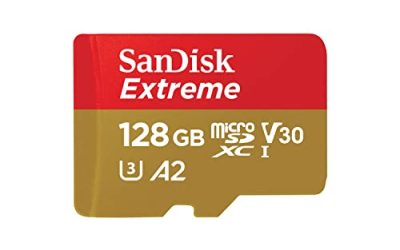
 SanDisk 128GB Extreme microSDXC UHS-I Memory Card with128GB0.04 x 0.59 x 0.43 inches0.01 poundsCheck on Amazon


A GoPro Hero 6 can fill a memory card fast, and the card you slide into it decides whether a clip records cleanly or cuts out at the worst moment. Capacity is only the first decision. Speed class, sustained write performance, and durability matter just as much, because a card that cannot keep up with the camera’s video stream will drop frames or stop recording altogether. A 128GB card sits in the middle ground: large enough for long shooting days, small enough that losing one card does not take your whole trip with it.


This guide is for Hero 6 owners who want a straightforward 128GB pick. The five cards below come from Amazon listings, with every specification taken from the listing itself. Read speeds, video classes, and durability ratings are stated as the listings state them, so you can match a card to the way you shoot.
Quick Picks
As an Amazon Associate we earn from qualifying purchases
| Product | Best for | Key spec from title |
|---|---|---|
| SanDisk Ultra 128GB (140MB/s) | Everyday Full HD shooting | Up to 140MB/s, C10, U1, A1 |
| SanDisk Ultra 128GB with Adapter (100MB/s) | A spare card with an adapter | Up to 100MB/s, C10, U1, A1 |
| SanDisk Extreme 128GB SDSQXAA | 4K action footage | Up to 190MB/s read, U3, V30, A2 |
| SanDisk Extreme 128GB SDSQXA1 | 4K recording at a lower headline speed | Up to 160MB/s read, U3, V30, A2 |
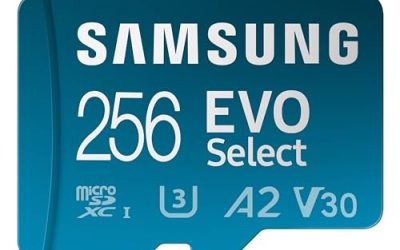
| Samsung EVO Select 128GB | Mixed use across phones, tablets, and consoles | Up to 130MB/s read, U3, V30, A2 |
How to Choose
Match the speed class to your video mode
Video speed class is the number that decides whether a card keeps up with 4K recording. A U1 card is rated for Full HD video, while U3 and V30 cards are built for the sustained write speeds that 4K demands. The Hero 6 records 4K, so a V30 card is the safer choice if you shoot at the camera’s top resolution. For Full HD-only shooting, a U1 card still works, but it leaves less headroom when a scene gets busy. Check the class printed on the card and the listing, not just the headline read speed, because read speed says nothing about how fast the card writes while you record.
Read speed decides how fast footage moves off the card
Read speed matters most after the shoot, when you copy footage to a computer. The cards in this guide range from up to 100MB/s to up to 190MB/s, and the gap shows up when you move large 4K files. A faster card shortens the wait, but only if the reader keeps up. The fastest card here uses QuickFlow Technology to reach beyond the usual UHS-I ceiling of 104MB/s, and that only works with a compatible reader. With an ordinary reader, transfers run at ordinary UHS-I rates no matter what the box promises. Match the card to the reader you already own, or budget for one that can use the speed you are paying for.
Durability ratings matter for an action camera
A Hero 6 goes where phones do not: rain, dust, cold mornings, and the bottom of a bag. A card rated waterproof, shockproof, temperature proof, and X-ray proof is built for that life, and every card in this guide carries at least some of those ratings. The Samsung card adds magnetic proof and wearout proof to the list. Ratings do not make a card indestructible, and they say nothing about how it handles a full day of 4K recording. Treat them as insurance against rough handling, not as a reason to skip backing up footage. Copy your clips to a computer or a second card before you format anything.
Adapters and warranties are worth a look
Two cards in this guide come with a full-size SD adapter in the box, which is handy when a laptop or card reader only takes the larger format. An adapter costs little on its own, yet having one ready saves a trip to the store on the day you need to move footage. Warranty terms also differ: several cards here carry a 10-year limited warranty from the manufacturer, which is a long stretch of cover for a small accessory. Read what the warranty covers before you rely on it, because accidental damage and normal wear are usually outside it. Keep the packaging and the order details until the card has proved itself over a few shoots.
The 5 Best Options
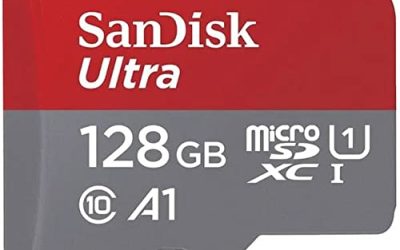
SanDisk Ultra 128GB (140MB/s)
The newer SanDisk Ultra is the straightforward pick for everyday Hero 6 use. Its headline speed is up to 140MB/s, with a U1 speed class and an A1 rating for app performance, and the listing pairs that with Full HD video support. That combination suits owners who shoot mostly in Full HD and want a card that simply works without a second thought. It carries a 10-year limited warranty, which is generous cover for a card at this level. Treat it as the general-purpose option in this guide, and step up to a U3 card if 4K is your main mode.
Specs
- 128 GB microSDXC, UHS-I
- Up to 140MB/s transfer speed
- C10, U1, A1
- Full HD video
- 10-year limited warranty
Best for: everyday Full HD shooting with the Hero 6.
Watch out for: U1 class — step up to a U3/V30 card for 4K.
SanDisk Ultra 128GB with Adapter (100MB/s)
This is the older Ultra, and its listing is clear about what it offers: up to 100MB/s read speed, a U1 class, an A1 rating, and Full HD video, plus an SD adapter in the box. Its durability list is long, covering waterproof, temperature proof, shockproof, and X-ray proof ratings, and it weighs just 4.54 g. Note that the listing names smartphones and tablets among compatible devices, with no camera named, so it fits best as a general-purpose spare rather than a dedicated action-camera card. The adapter makes it handy for moving files on a laptop.
Specs
- 128 GB microSDXC, UHS-I
- Up to 100MB/s transfer read speed
- C10, U1, A1
- Full HD video
- Waterproof, temperature proof, shockproof, X-ray proof
- SD adapter included
- 10-year limited warranty
- 4.54 g
Best for: a general-purpose spare card, mostly for phones and tablets, with an adapter in the box.
Watch out for: the listing names smartphones and tablets among compatible devices, with no camera named.
SanDisk Extreme 128GB SDSQXAA
The fastest card in this guide is built for owners who shoot 4K and want the quickest offload as well. It reads at up to 190MB/s and writes at up to 90MB/s, with a U3 class, a V30 video rating, and an A2 rating, and the listing names action cameras among its compatible devices. It also covers 4K and 5K UHD video alongside Full HD, and it carries shockproof, temperature-proof, waterproof, and X-ray-proof ratings. The headline read speed needs a compatible reader to reach beyond the UHS-I ceiling, so pair it with one that supports QuickFlow Technology.
Specs
- 128 GB microSDXC, UHS-I
- Up to 190MB/s read speeds (QuickFlow Technology, requires a compatible reader to reach beyond UHS-I 104MB/s)
- Up to 90MB/s write speeds
- C10, U3, V30, A2
- 4K and 5K UHD and Full HD video
- Shockproof, temperature-proof, waterproof, X-ray-proof
- Action Cameras among compatible devices
Best for: 4K action footage and fast offloads.
Watch out for: the 190MB/s read speed needs a compatible reader; without one, transfers run at UHS-I rates.
SanDisk Extreme 128GB SDSQXA1
The second Extreme is the same idea at a lower headline speed: up to 160MB/s read and up to 90MB/s write, with the same U3 class, V30 rating, and A2 rating as its faster sibling. Its listing states 4K UHD video and names cameras and smartphones among compatible devices, so it is aimed squarely at camera use. Do not confuse it with the 190MB/s SDSQXAA version — the model numbers are close, but the speeds differ, and mixing them up means paying for performance you did not get or expecting speed the card cannot deliver. Check the model number on the listing before ordering.
Specs
- 128 GB microSDXC, UHS-I
- Up to 160MB/s read
- Up to 90MB/s write
- C10, U3, V30, A2
- 4K UHD video
- Compatible devices: Camera, Smartphone
Best for: 4K recording when the 190MB/s card is more than you need.
Watch out for: do not confuse it with the 190MB/s SDSQXAA version — check the model number.
Samsung EVO Select 128GB
Samsung’s EVO Select is the card for owners who share one card across several devices. Its listing states up to 130MB/s read speed, a U3 class, a V30 rating, and an A2 rating, with Full HD and 4K UHD video support, and the title names Android smartphones, tablets, and Nintendo Switch. Its protection list is the widest here, adding magnetic proof and wearout proof to the usual water, temperature, and X-ray ratings, and it carries a 10-year limited warranty. Only the read speed is stated on the listing, so do not expect a write-speed figure the listing never gives.
Specs
- 128 GB microSDXC, UHS-I
- Up to 130MB/s read speed
- C10, U3, A2, V30
- Full HD & 4K UHD video
- Magnetic proof, temperature proof, water proof, wearout proof, X-ray proof
- 10-year limited warranty
Best for: sharing one card across Android smartphones, tablets, and Nintendo Switch.
Watch out for: only the read speed is stated — the listing gives no write-speed figure.
Which One Fits Your Situation
You shoot mostly Full HD and want a simple pick
Take the SanDisk Ultra at up to 140MB/s. Its U1 class and Full HD support cover everyday Hero 6 shooting, and the 10-year limited warranty adds cover for a card you will use often. You give up the V30 rating and the faster read speeds of the Extreme cards, but for Full HD that trade is painless. Keep a spare card in the bag for long days.
You shoot 4K action footage and offload a lot
Take the SanDisk Extreme SDSQXAA at up to 190MB/s read and up to 90MB/s write. Its U3 class and V30 rating are built for 4K, and the listing names action cameras among compatible devices. Add a reader that supports QuickFlow Technology, or the top read speed stays out of reach. The 160MB/s Extreme is the step-down option if you want the same V30 rating at a lower headline speed.
You share one card between a phone, a tablet, and a console
Take the Samsung EVO Select. Its listing states up to 130MB/s read speed with a U3 class and V30 rating, and the title names Android smartphones, tablets, and Nintendo Switch, so it is framed for exactly that kind of mixed use. Its protection list is the widest in this guide, which helps when a card moves between devices and bags. Remember that only the read speed is stated, so judge it on that figure.
You want a spare card with an adapter in the box
Take the older SanDisk Ultra at up to 100MB/s, which includes an SD adapter. The adapter lets you move files on a laptop that only takes full-size SD cards, and the card’s waterproof, shockproof, temperature proof, and X-ray proof ratings suit rough handling. Its listing names smartphones and tablets, not cameras, so use it as a general spare or a backup card rather than your main action-camera card.
Common Mistakes
- Buying a 32GB or 64GB card by mistake — every card in this guide is 128GB, so check the capacity on the listing before ordering.
- Mixing up the two Ultra versions or the two Extreme versions — the 140MB/s and 100MB/s Ultras, and the 190MB/s and 160MB/s Extremes, are separate listings with different model numbers.
- Assuming a card is GoPro-approved — no listing in this guide states that, so do not treat any of these cards as officially approved.
- Expecting top read speeds from an ordinary reader — the 190MB/s Extreme needs a compatible reader to reach beyond the UHS-I ceiling.
- Forgetting to back up footage before formatting — copy your clips to a computer or a second card first.
Frequently Asked Questions
Is 128GB enough for a GoPro Hero 6?
For most owners, yes. A 128GB card holds many hours of Full HD footage and a solid stretch of 4K, which covers a full day of casual shooting for most people. Heavy 4K shooters should carry a second card, because high-resolution video fills storage faster than Full HD. Swap cards during a break rather than mid-clip, and back up each card before formatting it.
Do I need a U3 or V30 card for 4K?
Yes, if 4K is your main mode. A V30 rating guarantees the sustained write performance that 4K recording demands, while a U1 card is rated for Full HD video. A U1 card may still record short 4K clips, but it leaves little headroom when a scene gets busy, and the camera can stop recording if the card falls behind. A U3/V30 card removes that worry for most shooting.
Can I use the same card in my phone and my Hero 6?
Physically, yes — both devices take microSDXC cards, and moving a card between them works. The catch is formatting: format the card in the device you are about to use, and copy any footage off it first, because formatting erases everything on the card. A card shared between devices also wears faster and risks carrying the wrong files, so many owners keep one card per device.
Why do two SanDisk Extreme cards have different speeds?
They are different models with different model numbers. The SDSQXAA version reads at up to 190MB/s, while the SDSQXA1 version reads at up to 160MB/s, and both write at up to 90MB/s. The listings are separate, so check the model number on the page before ordering. Picking the wrong one means paying for speed you did not get or expecting speed the card cannot deliver.
FAQ
Is 128GB enough for a GoPro Hero 6?
Do I need a U3 or V30 card for 4K?
Can I use the same card in my phone and my Hero 6?
Why do two SanDisk Extreme cards have different speeds?
More from Amazon
Programs that pair well with the guide above. Offers and eligibility are set by Amazon and may change.
Free shipping on eligible items, Prime Video and more. Eligible new members can start with a free trial.
Start a Prime free trialAd-free music streaming. Eligible new subscribers can start with a free trial.
Try Music Unlimited freeA Prime membership for ages 18-24 with a trial period. Eligibility is set by Amazon.
See Prime for Young AdultsAudiobooks and podcasts to listen to on the go. Eligible new members can start with a free trial.
Try Audible freeAs an Amazon Associate we earn from qualifying purchases.