Our Top Picks
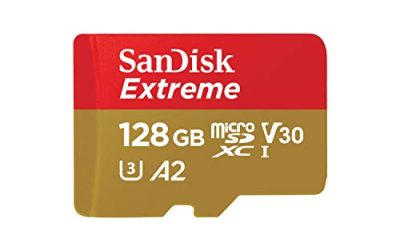
 SanDisk 128GB Extreme microSDXC UHS-I Memory Card with128GB0.04 x 0.59 x 0.43 inches0.01 poundsCheck on Amazon


As an Amazon Associate we earn from qualifying purchases.
The GoPro HERO5 still earns its place in a kit bag. It shoots 4K video, captures burst photos, handles water and vibration well, and travels easily. None of that matters if the memory card cannot keep up. A slow or oversized card can stop a recording, corrupt a clip, or refuse to work at all, usually at the worst possible moment.

This guide focuses on one narrow job: choosing a microSD card that the HERO5 can actually use. Every pick below is a microSD card, not a full-size SD card. The HERO5 has a microSD slot, so a full-size card will not fit on its own. Most of the cards here ship with a full-size SD adapter in the package, which is useful for a laptop or card reader, but the adapter stays out of the camera. Only the small microSD card goes into the HERO5.
Disclosure: This article contains affiliate links to Amazon. If you buy through those links, the site may earn a commission at no additional cost to you.
What the HERO5 Actually Requires
Before comparing brands, it helps to start with the limits GoPro sets in the HERO5 Black manual. The camera uses brand name memory cards that meet these requirements: microSD, microSDHC, or microSDXC format, a Class 10 or UHS-I rating, and a capacity up to 128GB. That last point is the one buyers miss most often. Larger microSD cards exist in 256GB, 512GB, and beyond, but the HERO5 Black is documented for cards up to 128GB, so this guide stays at 128GB and below.
For 4K recording, the practical floor is higher than the bare minimum on paper. The HERO5 records 4K at up to 30 frames per second, and its higher frame rate modes, burst shooting, and Protune settings all push a steady stream of data to the card. A card that only just meets Class 10 can work for lower resolutions, yet a UHS-I card with a U3 speed class and a V30 video speed class gives far more headroom. U3 and V30 both point to a minimum sustained write speed suited to 4K video, which is exactly the kind of steady writing a long action camera clip demands.
That is why every pick in this guide is UHS-I, Class 10, U3, and V30. None of them relies on a fast headline read speed alone. Read speed matters when you copy footage to a computer at the end of the day, but sustained write performance is what keeps the camera recording in the field.
Quick Picks
If you want a short answer before the details, here is how the four cards divide up:
- Best overall for most HERO5 owners: SanDisk Extreme 128GB microSDXC — the largest capacity the HERO5 supports, with strong read and write speeds and an included adapter.
- Best high-capacity alternative: Samsung EVO Select 128GB microSDXC — also 128GB, U3 and V30, with an included adapter and fast transfers for offloading footage.
- Best balanced 64GB option: Lexar High-Performance 633x 64GB microSDXC — a mid-size card with U3 and V30 ratings for 4K and Full HD action camera use.
- Best compact SanDisk option: SanDisk Extreme 64GB microSDXC — the same Extreme family in a smaller capacity, suited to shorter sessions and a second spare card.
Capacity matters. A 128GB card suits travel days and long rides where swapping is awkward. Many owners prefer two 64GB cards, so one lost card does not take a whole trip with it. The picks below cover both approaches.
1. SanDisk Extreme 128GB microSDXC
The SanDisk Extreme 128GB is the most straightforward recommendation for a HERO5 owner who wants one card that covers almost every situation. It is a microSDXC card with an adapter included, and its 128GB capacity sits exactly at the maximum the HERO5 supports, so you get the most storage the camera can address without stepping outside the documented limit.
SanDisk lists this model, SDSQXA1-128G-GN6MA, with read speeds up to 160MB/s and write speeds up to 90MB/s. Those write speeds are the important part for the camera. With a Class 10, U3, and V30 rating and an A2 application performance class, the card is built for sustained 4K video capture as well as fast action shooting. In a HERO5, that translates to headroom for 4K at 30 frames per second, high frame rate Full HD, time lapse sequences, and photo bursts without the card becoming the bottleneck.
The included full-size SD adapter makes offloading simple. Pop the microSD card into the adapter, slide it into a laptop slot or reader, and the fast read speed shortens the wait when a full card of 4K clips needs to move. SanDisk also builds the Extreme line for rough handling, with resistance to water, shock, temperature extremes, and X-rays described in the listing, which fits the way action cameras actually get used.
Specifications
- Format: microSDXC, UHS-I, with SD adapter included
- Capacity: 128GB
- Speed class: Class 10, U3, V30, A2
- Read speed: up to 160MB/s
- Write speed: up to 90MB/s
- Model: SDSQXA1-128G-GN6MA
Pros
- Maximum 128GB capacity the HERO5 supports
- Strong write speed for 4K, burst, and Protune recording
- Adapter included for easy transfers to a computer
- Built for water, shock, and temperature resistance
Cons
- A single large card concentrates a lot of footage in one place
- Read speed above the UHS-I baseline needs a compatible reader to reach
View the SanDisk Extreme 128GB on Amazon
2. Samsung EVO Select 128GB microSDXC
The Samsung EVO Select 128GB, model MB-ME128KA/AM, is the other strong 128GB choice in this guide. It is an Amazon-listed Samsung microSDXC card sold with an adapter, rated UHS-I with Class 10, U3, V30, and A2 markings, and listed with transfer speeds up to 130MB/s. That combination clears the HERO5 requirements with room to spare and matches the SanDisk pick on the ratings that matter most for video.
For HERO5 use, the appeal is consistency. The U3 and V30 ratings address sustained writing for 4K and Full HD clips, while the 128GB capacity gives long sessions plenty of space. If you record a full day of mixed riding, water, and family footage, a card of this size reduces the number of swaps and the chance of missing a moment while the camera is open and a tiny card is being handled with wet or gloved hands.
Samsung positions the EVO Select for phones, tablets, and action camera style use, and the listing describes protection against water, temperature, X-rays, magnets, drops, and wear. As with any microSD card, careful handling still matters, since the card itself is small and easy to lose, but a durable design is welcome in a camera that mounts to helmets, boards, and handlebars.
Choose this card if you want the maximum HERO5 capacity from Samsung rather than SanDisk, or if you already use EVO Select cards in other devices and prefer to keep one card family across your kit. Performance on paper is close enough that brand familiarity and the included adapter are reasonable deciding factors.
Specifications
- Format: microSDXC, UHS-I, with adapter included
- Capacity: 128GB
- Speed class: Class 10, U3, V30, A2
- Transfer speed: up to 130MB/s
- Model: MB-ME128KA/AM
Pros
- Maximum 128GB capacity the HERO5 supports
- U3 and V30 ratings suited to sustained 4K recording
- Adapter included for computer transfers
- Durability protections described for water, drops, and temperature
Cons
- Headline speed is a transfer figure, so check the listing for full detail
- Same single-card risk as any one large card on a long trip
View the Samsung EVO Select 128GB on Amazon
3. Lexar High-Performance 633x 64GB microSDXC
Lexar has a long history on GoPro recommended card lists, and the High-Performance 633x line was designed with action cameras in mind. This 64GB version, model LMS0633064G-BNNAA, is a microSDXC UHS-I card rated Class 10, U3, V30, and A1, with read speeds up to 100MB/s listed for the card.
The 64GB size is the sweet spot for many HERO5 owners. It holds a generous amount of 4K and Full HD footage for a day of shooting, yet it keeps each card’s contents manageable when you offload and back up in the evening. Photographers who mix burst stills with shorter video clips often find 64GB easier to organise than one very large card, and carrying two of these gives a natural backup plan.
One detail to check before ordering is the package contents. This listing is for the card without a full-size SD adapter, so if your laptop or reader only accepts full-size SD cards, you will need a separate adapter or a microSD reader. If you already own an adapter, as many camera owners do, that is no obstacle at all, and the card itself works in the HERO5 exactly as a microSD card should.
The listing describes the card for smartphones, tablets, IP cameras, and action camera style recording, with support for 1080p Full HD, 3D, and 4K UHD video capture. For a HERO5, the U3 and V30 ratings are the relevant promise, since they speak to the sustained write floor that video recording depends on.
Specifications
- Format: microSDXC, UHS-I
- Capacity: 64GB
- Speed class: Class 10, U3, V30, A1
- Read speed: up to 100MB/s
- Model: LMS0633064G-BNNAA
- Adapter: not included in this listing
Pros
- U3 and V30 ratings for 4K and Full HD action camera recording
- 64GB size suits a one-day, easy-to-back-up workflow
- Lexar line designed for action camera use
- Good candidate for a matched pair of cards
Cons
- No SD adapter in this package, so a reader may be needed
- Lower capacity fills sooner during long 4K sessions
View the Lexar High-Performance 633x 64GB on Amazon
4. SanDisk Extreme 64GB microSDXC
The SanDisk Extreme 64GB, model SDSQXAF-064G-GN6MA, brings the same Extreme design as the 128GB pick in a smaller, more focused size. It is a microSDXC UHS-I card with an adapter, listed with read speeds up to 100MB/s and write speeds up to 60MB/s, and rated Class 10, U3, and V30 with an A1 application performance class.
That write speed and the U3 and V30 ratings put it comfortably in HERO5 territory. It handles 4K recording, high frame rate modes, and burst photography with the sustained performance those modes need, while the 64GB capacity suits half-day and full-day outings where you plan to offload regularly. For owners who shoot in shorter sessions, or who want a dependable spare card in the case beside a larger main card, this size makes practical sense.
The included adapter keeps transfers simple, and the Extreme family’s resistance to water, shock, and temperature extremes, as described in the listing, suits a camera that lives outdoors. If the 128GB SanDisk is the main card, this 64GB version is a natural companion from the same family, which keeps behaviour predictable when you swap between them.
It is also a sensible first card for a HERO5 bought secondhand. A new owner can confirm the camera works well, learn how much footage a typical outing creates, and then decide whether the next card should be another 64GB or the maximum 128GB.
Specifications
- Format: microSDXC, UHS-I, with adapter included
- Capacity: 64GB
- Speed class: Class 10, U3, V30, A1
- Read speed: up to 100MB/s
- Write speed: up to 60MB/s
- Model: SDSQXAF-064G-GN6MA
Pros
- Proven Extreme family in a manageable 64GB size
- U3 and V30 ratings for sustained 4K recording
- Adapter included for straightforward offloading
- Works well as a spare beside a 128GB main card
Cons
- Fills faster than the 128GB options on long recording days
- Slower listed speeds than the 128GB Extreme model
View the SanDisk Extreme 64GB on Amazon
How to Choose the Right Card for Your HERO5
Start with fit and limits. The card must be microSD, microSDHC, or microSDXC, and for the HERO5 Black it should be no larger than 128GB. Ignore full-size SD cards for the camera itself, and ignore larger microSD cards even when they look like better value per gigabyte, because the camera is not documented to use them.
Next, look past the biggest number on the front of the package. A high read speed helps you copy footage, but the speed classes tell you more about recording. Class 10 is the baseline in the manual. UHS-I describes the bus the card uses. U3 and V30 are the marks to prioritise for 4K, because they relate to sustained minimum write performance rather than a brief peak. Every card in this guide carries those marks.
Then choose capacity by how you shoot. If you record long continuous 4K sessions, travel without a laptop, or shoot events where swapping is difficult, pick 128GB. If you offload each evening, shoot shorter clips, or prefer spreading footage across cards for safety, pick 64GB and consider buying two. Think about your backup habit as well. A card is not an archive, so copy footage to a computer or drive and keep a second copy of anything you cannot replace.
Buy from a reputable listing and check the model number and capacity on the product page against the card you intend to use. Counterfeit memory cards are a known problem in this category, and a card that reports the wrong capacity can lose footage silently. When a new card arrives, format it in the camera before an important shoot, record a short test clip at your highest planned settings, play it back, and copy it to a computer. That simple routine catches most problems while they are still easy to fix.
Finally, keep spares in a small hard case and label each card. The HERO5 is rugged, but its tiny card deserves care too.
Frequently Asked Questions
Does the GoPro HERO5 use SD or microSD cards?
It uses microSD cards. The slot in the camera is microSD size, so a full-size SD card will not fit. Many microSD cards include a full-size adapter for a computer or reader, but only the microSD card itself goes into the camera.
What is the largest card the HERO5 can use?
For the HERO5 Black, GoPro documents a capacity up to 128GB, with microSD, microSDHC, or microSDXC cards carrying a Class 10 or UHS-I rating. This guide therefore recommends 64GB and 128GB cards and does not recommend larger cards for this camera.
Is U1 fast enough, or should I choose U3?
A U1 card can meet the minimum Class 10 and UHS-I requirement on paper, but U3 is the safer choice for 4K, high frame rates, burst shooting, and Protune. U3 and V30 point to a higher sustained write floor, which is what continuous video recording needs.
How much 4K footage fits on 64GB and 128GB?
It depends on resolution, frame rate, and Protune settings, so treat any estimate as rough. Higher settings use space quickly, which is why frequent 4K shooters tend to choose 128GB or carry a spare 64GB card. Recording a typical outing and checking how much space it used is the most reliable way to judge your own needs.
Should I format the card in the camera?
Yes. Formatting a new card in the HERO5, and formatting again after you have safely copied footage off, keeps the file system set up the way the camera expects. Never format until you have confirmed your clips are backed up in another place.
Can I use these cards in other devices?
Generally yes, within each device’s own limits. These are standard microSDXC UHS-I cards, so they can work in phones, tablets, drones, and other action cameras that accept microSD cards, and the included adapters, where supplied, let them fit full-size SD slots. Always check the other device’s capacity and speed requirements first.
Conclusion
The best SD card for a GoPro HERO5 is really a microSD card that respects three things: the camera’s 128GB documented maximum, a Class 10 or UHS-I baseline, and the sustained write performance that 4K recording demands. The SanDisk Extreme 128GB is the easiest single recommendation, the Samsung EVO Select 128GB is a strong maximum-capacity alternative, and the Lexar 633x 64GB and SanDisk Extreme 64GB suit owners who prefer smaller cards, easier backups, or a dependable spare.
Pick the capacity that matches how you shoot, confirm the model and size on the listing before you order, format the card in the camera, and test it before anything important. Do that, and the card disappears into the background, which is exactly where good storage belongs, leaving the HERO5 free to record the ride, the water, and the moment you actually bought it for.
FAQ
Does the GoPro HERO5 use SD or microSD cards?
What is the largest card the HERO5 can use?
Is U1 fast enough, or should I choose U3?
How much 4K footage fits on 64GB and 128GB?
Should I format the card in the camera?
Can I use these cards in other devices?
More from Amazon
Programs that pair well with the guide above. Offers and eligibility are set by Amazon and may change.
Free shipping on eligible items, Prime Video and more. Eligible new members can start with a free trial.
Start a Prime free trialAd-free music streaming. Eligible new subscribers can start with a free trial.
Try Music Unlimited freeA Prime membership for ages 18-24 with a trial period. Eligibility is set by Amazon.
See Prime for Young AdultsAudiobooks and podcasts to listen to on the go. Eligible new members can start with a free trial.
Try Audible freeAs an Amazon Associate we earn from qualifying purchases.