Our Top Picks
 Lexar 128GB Professional 1066x Micro SD Card w/SD128GB0.04 x 0.59 x 0.43 inches0 poundsCheck on Amazon

As an Amazon Associate we earn from qualifying purchases.
Disclosure: This article contains affiliate links. If you buy through a link on this page, we may earn a commission at no additional cost to you.


The GoPro HERO7 has no room for a slow memory card. The HERO7 Black records 4K video at high frame rates, shoots rapid photo bursts, and captures high frame rate slow motion, and all of that data lands on a single microSD card in the slot next to the battery. If that card cannot sustain the write speed the camera demands, recording stops, files can be damaged, and the moment you were filming is gone. That is why the search for the best sd cards for hero 7 is really a search for a short list of specifications, not for the largest capacity or the boldest speed number on a retail box.
GoPro documentation for the HERO7 family sets clear limits. The camera uses microSD, microSDHC and microSDXC cards, it works on a UHS-I bus, and it supports capacities up to 256GB. A card larger than 256GB is outside the supported range for this camera, however attractive a bigger card may look for other devices. For reliable high resolution recording, look for a UHS Speed Class 3 rating, marked U3, and a Video Speed Class 30 rating, marked V30. Both ratings describe the same practical floor: a minimum sustained write speed of 30MB/s, maintained long enough for continuous video rather than a brief burst of speed.
Every card in this guide meets that standard. All four picks are microSDXC cards on a UHS-I interface, all carry U3 and V30 ratings, and all are offered at or below the 256GB ceiling for the HERO7. They differ in capacity, in read speed when you move footage to a computer, and in the maker and model line behind the card. That gives you a sensible choice for a single long day of filming, for a travel kit with a spare card, and for the maximum supported capacity in one card.
Quick Picks
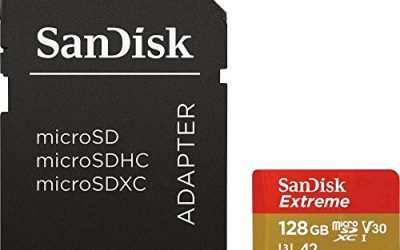
- Best overall for most HERO7 owners: SanDisk Extreme 128GB microSDXC — a UHS-I, U3, V30 and A2 card with read speeds up to 190MB/s and a full-size SD adapter in the package, at the capacity that suits most shooting days.
- Best for maximum headroom: SanDisk Extreme PRO 256GB microSDXC — the largest capacity the HERO7 supports, with read speeds up to 200MB/s and write speeds up to 140MB/s on its listing.
- Best Samsung option at full capacity: Samsung EVO Select 256GB microSDXC — a UHS-I, U3, V30 and A2 card with read speeds up to 160MB/s and an adapter included.
- Best for fast offloads: Lexar Professional 1066x 128GB microSDXC — a UHS-I, U3, V30 and A2 card rated at up to 160MB/s read and up to 120MB/s write, with an SD adapter included.
1. SanDisk Extreme 128GB microSDXC
The SanDisk Extreme line is the card family most closely associated with GoPro cameras, and the 128GB version is the balanced choice for a HERO7. It is a microSDXC UHS-I card, model SDSQXAA-128G-GN6MA, with Class 10, U3 and V30 ratings for video and an A2 application performance rating. Its listing gives read speeds up to 190MB/s, achieved with the maker’s QuickFlow technology and a compatible reader. Inside the camera, what matters more is the V30 floor, which is the sustained write guarantee behind continuous 4K recording.
Capacity is the main reason to start here. At 128GB, this card holds a long day of mixed 4K clips, time lapse sequences and still photos for most riders, skiers, surfers and family shooters, without pushing you to the cost or the single point of failure of putting an entire trip on one very large card. Many experienced action camera users prefer two 128GB cards to one 256GB card for exactly that reason: one card in the camera, one formatted spare in the case, and footage spread across both.
The package includes a full-size SD adapter, which is normal for microSD cards and does not change what the product is. The adapter simply lets the same card slide into a laptop slot or a standard SD reader when you offload. SanDisk also describes this line as built for action use, with protection claims covering water, shock, temperature and X-rays on the card itself.
Specifications
- Capacity: 128GB, microSDXC
- Interface: UHS-I
- Speed classes: Class 10, U3, V30
- Application performance: A2
- Read speed: up to 190MB/s, with a compatible reader for the highest figures
- Model: SDSQXAA-128G-GN6MA
- Includes: microSD card and full-size SD adapter
Pros
- Meets the HERO7 requirement for UHS-I, U3 and V30 in a widely used GoPro card line
- 128GB capacity suits a full shooting day while keeping a second spare card practical
- Fast read specification helps shorten offloads when paired with a capable reader
- Adapter included for laptops and standard card readers
Cons
- Highest read figures depend on a compatible reader, and the HERO7 itself works at UHS-I speeds in the camera
- 128GB can fill quickly during long 4K60 sessions, so heavy shooters should carry a spare
See the SanDisk Extreme 128GB on Amazon
2. SanDisk Extreme PRO 256GB microSDXC
The SanDisk Extreme PRO 256GB is the pick when you want the largest card the HERO7 officially supports and the strongest specifications in this roundup. It is a microSDXC UHS-I card, model SDSQXCD-256G-GN6MA, rated Class 10, U3 and V30 with an A2 application rating. Its Amazon listing gives a read speed of 200MB/s and a media write speed of 140MB/s, figures that place it at the top of the UHS-I class for transfers and for demanding continuous recording.
That extra write headroom does not change the HERO7 recording modes, because the camera writes at its own bitrates and the V30 floor is what those modes require. What the headroom does buy is consistency and speed outside the camera. Large batches of 4K clips move to a computer faster with a suitable reader, burst sequences clear with confidence, and the card remains a strong performer if you later use it in another compatible action camera, drone or handheld device that accepts microSDXC cards up to this size.
At 256GB, this is also the travel card. A multi-day trip, a festival weekend or a long trail project can live on one card without swapping in the field, which matters when changing a tiny card with cold hands or gloves risks dropping it. The trade-off is concentration of risk, so copy footage to a second location each evening whenever you can. SanDisk describes the Extreme PRO line as shockproof, temperature-proof, waterproof and X-ray-proof, which suits the outdoor use a HERO7 usually sees.
Specifications
- Capacity: 256GB, microSDXC
- Interface: UHS-I
- Speed classes: Class 10, U3, V30
- Application performance: A2
- Read speed: up to 200MB/s
- Write speed: up to 140MB/s on the listing
- Model: SDSQXCD-256G-GN6MA
Pros
- Uses the full 256GB maximum capacity supported by the HERO7
- Strongest read and write figures in this guide for faster offloads
- U3 and V30 ratings cover the sustained write needs of 4K and high frame rate modes
- Durability design aimed at outdoor and action use
Cons
- Putting a whole trip on one card concentrates risk if the card is lost, so regular backups matter
- Performance beyond UHS-I limits cannot be used by the HERO7 in camera
See the SanDisk Extreme PRO 256GB on Amazon
3. Samsung EVO Select 256GB microSDXC
The Samsung EVO Select 256GB gives HERO7 owners a full-capacity alternative from a second major memory maker. This listing, model MB-ME256SA/AM, is a microSDXC card with a UHS-I interface, Class 10, U3, V30 and A2 ratings, and read speeds up to 160MB/s. Its title and specification table name those classes directly, and the card is sold with a full-size adapter for use in computers and readers with standard SD slots.
For the HERO7, the important match is exact: 256GB sits at the camera’s supported maximum, UHS-I matches its bus, and the U3 and V30 ratings meet the sustained write floor for 4K recording. Samsung positions the EVO Select line for phones, tablets, handheld consoles and cameras, and lists protection features for the card covering water, temperature, X-ray, magnet, drop and wear-out resistance, backed by a limited warranty whose terms are stated on the product page.
Choose this card if you prefer Samsung memory, if you already standardise on EVO Select cards for other devices, or if you want maximum HERO7 capacity without moving to a professional labelled line. As with any 256GB card, build a simple routine around it: format it in the camera before an important shoot, avoid filling it completely, and copy the files before you format it again.
Specifications
- Capacity: 256GB, microSDXC
- Interface: UHS-I
- Speed classes: Class 10, U3, V30
- Application performance: A2
- Read speed: up to 160MB/s
- Model: MB-ME256SA/AM
- Includes: microSD card and full-size SD adapter
Pros
- Full 256GB capacity at the HERO7 supported maximum
- UHS-I, U3 and V30 ratings match the camera’s requirements exactly
- A clear alternative from a major maker for buyers avoiding a single brand
- Adapter included for offloading to a computer
Cons
- Read specification is lower than the two SanDisk picks, so large offloads take longer
- A single large card still needs a backup routine on long trips
See the Samsung EVO Select 256GB on Amazon
4. Lexar Professional 1066x 128GB microSDXC
The Lexar Professional 1066x 128GB is built specifically with action cameras and drones in mind, which makes it a natural fit for a HERO7 kit. It is a microSDXC UHS-I card, model LMS1066128G-BNANU, rated Class 10, U3 and V30 with an A2 application rating. Lexar’s own product sheet for the 1066x SILVER Series gives read speeds up to 160MB/s and write speeds up to 120MB/s for the 128GB capacity, and states that an SD adapter is included.
Those write figures are the appeal here. The V30 rating already guarantees the sustained floor the HERO7 needs, and a higher maximum write specification gives the card comfortable margin for photo bursts and for quick saves between clips. Lexar also describes this series as designed for durability in harsh conditions, with water, shock, vibration and X-ray resistance named in its product material. That suits a camera that gets mounted on helmets, handlebars, boards and chest harnesses.
At 128GB, this card follows the same practical logic as the SanDisk Extreme above: enough room for a busy day, at a size that encourages carrying a second card rather than trusting one card with everything. If you shoot both a HERO7 and another action camera or drone, a matched pair of these cards also simplifies your kit, since the same card type serves both devices when their own limits allow it.
Specifications
- Capacity: 128GB, microSDXC
- Interface: UHS-I
- Speed classes: Class 10, U3, V30
- Application performance: A2
- Read speed: up to 160MB/s
- Write speed: up to 120MB/s
- Model: LMS1066128G-BNANU
- Includes: microSD card and SD adapter
Pros
- Designed for action cameras and drones, the same work a HERO7 does
- Strong write specification for bursts and continuous clips
- U3, V30 and A2 ratings cover both camera recording and general use
- Durability design covering water, shock, vibration and X-ray exposure
Cons
- 128GB capacity means long 4K trips need a second card or nightly offloads
- Top transfer speeds need a reader that can use them
See the Lexar Professional 1066x 128GB on Amazon
How to Choose an SD Card for the HERO7
Start with the three non-negotiable checks. First, the card must be microSD in physical size; a full-size SD card does not fit the HERO7, and the adapter bundled with many microSD cards is only for computers and readers. Second, capacity must be 256GB or smaller, because that is the maximum the HERO7 supports in GoPro documentation. Third, look for U3 and V30 printed in the specifications. A card marked only Class 10 or U1 may work in easier modes, but it does not carry the sustained write guarantee that 4K and high frame rate recording need, and a card error mid-recording costs far more than the small saving.
Next, understand what the speed numbers actually promise. V30 is a minimum sustained write speed, which is the figure a video camera depends on. The large read and write numbers in a product title are maximums, usually measured with a specific reader on a computer. They are useful for judging how fast footage will copy across after a shoot, but they do not make the HERO7 record at higher quality. A UHS-II card is also not an upgrade for this camera, because the HERO7 host is UHS-I and a faster bus card simply works at UHS-I speeds inside it.
Then choose capacity by how you shoot. A 64GB card can suit short outings, 128GB is the comfortable middle ground for a full day, and 256GB is the choice for travel and multi-day projects where swapping cards is awkward. Whichever size you pick, carrying one formatted spare is cheap insurance against a lost, damaged or unexpectedly full card. Finally, buy from a reputable seller and check the model number on the listing against the maker page, because memory cards are a common target for counterfeits and a fake card often fails exactly when it fills up.
Good habits extend the life of any card here. Format the card in the HERO7 itself before important shoots rather than on a computer, power the camera down before removing the card, keep spare cards in a hard case instead of a pocket, and copy footage promptly so a card can be formatted clean for the next outing.
FAQs
Does the HERO7 need a full-size SD card or a microSD card?
The HERO7 takes a microSD card. The slot sits in the battery compartment area of the camera, and only the small microSD format fits it. Many microSD cards include a full-size SD adapter, but that adapter is for a computer or card reader, not for the camera.
What is the largest card a HERO7 can use?
GoPro documentation lists 256GB as the maximum supported microSD capacity for the HERO7. Cards of 64GB, 128GB and 256GB are the practical choices in this guide, and every pick above stays within that limit.
Is U1 or Class 10 enough for HERO7 4K video?
It is not the safe choice. Class 10 and U1 guarantee a lower sustained write floor than U3 and V30. For 4K and high frame rate modes, choose a card rated U3 and V30 so the sustained write speed is guaranteed at the level those modes require.
Will a UHS-II card make my HERO7 faster?
No. The HERO7 uses a UHS-I interface, so a UHS-II card works at UHS-I speeds in the camera. Money is better spent on a quality UHS-I card with U3 and V30 ratings and the capacity you need.
How many cards should I carry?
At least two for any shoot that matters. One card in the camera and one formatted spare in your case protects you against a full card, a damaged card or a simple mistake, and it lets you keep filming while the first card waits to be copied.
Should I format the card in the camera or on a computer?
Format it in the HERO7. Formatting in the camera sets the card up exactly as the camera expects, and it is the simplest habit for avoiding file system problems before a shoot. Copy everything you need first, because formatting erases the card.
Conclusion
The best sd cards for hero 7 are not exotic. They are genuine microSD cards from established memory makers, on a UHS-I bus, rated U3 and V30, and sized at 256GB or below to stay inside the camera’s supported limit. The SanDisk Extreme 128GB is the balanced default for most owners, the SanDisk Extreme PRO 256GB adds maximum capacity and the fastest transfer figures here, the Samsung EVO Select 256GB offers the same full capacity from a second major brand, and the Lexar Professional 1066x 128GB brings a strong write specification in a card designed for action cameras. Pick the capacity that matches your longest day, carry a spare, format in the camera, and the card will stay out of the way of the footage you bought the HERO7 to capture.
FAQ
Does the HERO7 need a full-size SD card or a microSD card?
What is the largest card a HERO7 can use?
Is U1 or Class 10 enough for HERO7 4K video?
Will a UHS-II card make my HERO7 faster?
How many cards should I carry?
Should I format the card in the camera or on a computer?
More from Amazon
Programs that pair well with the guide above. Offers and eligibility are set by Amazon and may change.
Free shipping on eligible items, Prime Video and more. Eligible new members can start with a free trial.
Start a Prime free trialAd-free music streaming. Eligible new subscribers can start with a free trial.
Try Music Unlimited freeA Prime membership for ages 18-24 with a trial period. Eligibility is set by Amazon.
See Prime for Young AdultsAudiobooks and podcasts to listen to on the go. Eligible new members can start with a free trial.
Try Audible freeAs an Amazon Associate we earn from qualifying purchases.