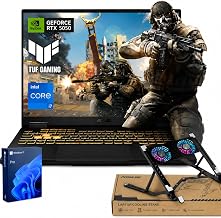
Our Top Picks
A practical gaming setup list for beginners starts with six decisions: choose a platform, pair it with a suitable display, add comfortable controls, use a headset or speakers, prepare a stable desk and chair, and connect everything to reliable internet power. A sensible entry-level setup costs about $500–$900 without a gaming PC, or roughly $1,000–$1,800 with a capable desktop, depending on whether you buy new, refurbished, or used equipment.
1. Choose Your Gaming Platform
Your platform determines the games you can play, the accessories you need, and much of your total budget. There is no universally correct choice, so begin with the games and people you want to play with.

M100 Podcast Equipment Bundle,XLR/USB Dynamic Mic with Audio Interface
Chosen because it specifies XLR/USB Dynamic Mic with Audio Interface.
View on Amazon
190Pcs Cable Management Kit, Self-Adhesive Cord Clips for Desk Office Home | R-Type Clips, Soft Silicone Holders, Strong Adhesive No Residue, Reusable Ties for Under Desk Gaming Nightstand
Chosen because it specifies Self-Adhesive Cord Clips for Desk Office Home.
View on Amazon
Meta Quest 3S User Guide For Beginners: A Step-by-Step VR & Mixed Reality Handbook for Easy Setup, Casting to TV, Custom Boundaries for Work and Play.
Chosen because it specifies Casting to TV and Custom Boundaries for Work and Play..
View on Amazon
Stereo Audio Mixer 4 Channel with Bass Treble Control
Picked as a relevant option in this category.
View on AmazonConsole setup
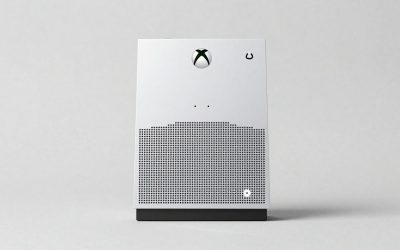
A PlayStation 5, Xbox Series X, Xbox Series S, or Nintendo Switch 2 offers the simplest route to gaming. Consoles are easy to install, receive automatic system updates, and work well from a television or monitor. The Xbox Series S is designed for digital games and lower-cost entry, while the PlayStation 5 and Xbox Series X provide more storage, performance, or disc options depending on the model. Nintendo Switch 2 is especially useful if you want both television and handheld play.
Allow approximately $300–$800 for the console, one controller, and several games. Remember to budget for online multiplayer subscriptions where required. A second controller is usually $50–$80, while a charging dock commonly costs $20–$40.
PC setup
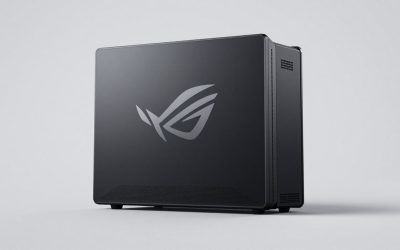
A beginner gaming PC should have at least a modern six-core processor, 16GB of system memory, and a 1TB solid-state drive. For 1080p gaming, look for a dedicated graphics card with at least 8GB of video memory. A desktop in the $800–$1,300 range is a practical target before adding a monitor and accessories. A gaming laptop can save desk space, but its screen, battery, and upgrade options are usually less flexible.
| Component | Beginner target | Comfortable target | Typical 2026 price |
|---|---|---|---|
| Gaming desktop | 6-core CPU, 16GB RAM, 1TB SSD, 8GB GPU | 8-core CPU, 32GB RAM, 1TB SSD, 12GB GPU | $800–$1,800 |
| Gaming monitor | 24–27 inches, 1080p, 120–180Hz | 27 inches, 1440p, 144–180Hz | $120–$400 |
| Keyboard and mouse | Full-size keyboard, wired mouse | Mechanical keyboard, lightweight gaming mouse | $40–$220 |
| Headset | Wired stereo headset with microphone | Wireless headset with 15–40 hours of battery life | $25–$180 |
| Desk and chair | 120cm desk, adjustable office chair | 140–160cm desk, adjustable armrests and lumbar support | $180–$700 |
2. Pick the Right Display
A display affects motion clarity, comfort, and how much detail you can see. For a first setup, a 24-inch or 27-inch monitor with a 1080p resolution and a refresh rate of 120Hz or higher is a strong value. It is easier for an entry-level graphics card to drive than a high-resolution screen.
Resolution and refresh rate
Choose 1080p for affordability and consistent performance. Choose 1440p if your PC has a stronger graphics card and you want sharper text and images on a 27-inch screen. A 4K display is attractive for cinematic games and compatible consoles, but it costs more and requires substantially more graphics performance.
Refresh rate is measured in hertz. A 60Hz screen updates 60 times per second; 144Hz updates 144 times. For competitive shooters and racing games, 144Hz or 165Hz is worthwhile. Enable adaptive sync, such as AMD FreeSync or Nvidia G-SYNC Compatible support, when available to reduce tearing.
Placement and comfort
Place the top edge of the screen near eye level, about an arm’s length away. Keep the display directly in front of you rather than turning your neck. Reduce brightness in a dark room, and use the monitor’s low-blue-light or night mode if it feels more comfortable during evening sessions.
3. Select Controls for Your Games
Controls should match the games you play. A controller is generally better for platformers, driving games, sports titles, and many action games. A keyboard and mouse provide precise aiming and fast access to commands in shooters, strategy games, and simulation titles.
Controller checklist
Check that the controller works with your platform, includes a comfortable layout, and can connect through USB or Bluetooth where supported. A wired controller avoids charging interruptions. If buying a wireless model, keep a USB-C cable nearby and consider a spare rechargeable battery or charging pack.
Keyboard and mouse checklist
Beginners do not need an expensive mechanical keyboard. A reliable full-size or tenkeyless keyboard, a mouse with adjustable sensitivity, and a large mouse pad are enough. A mouse between 800 and 1,600 DPI is a useful starting range; adjust in the game until you can turn accurately without lifting the mouse constantly. Keep your wrists neutral and avoid gripping the mouse tightly.
4. Add Audio and Desk Equipment
Audio helps you hear dialogue, directional effects, and teammates. A wired headset with a boom microphone is the simplest choice and often costs $25–$80. Wireless headsets are tidier, but check battery life, charging time, platform compatibility, and whether the microphone works in your chosen voice-chat application.
Separate speakers are useful for casual or single-player gaming. Compact powered desktop speakers typically use 10–40 watts of total power and connect through a 3.5mm jack, USB, or Bluetooth. Use headphones late at night and keep volume at a level that does not cause ringing or discomfort.
Desk and chair essentials
Choose a desk at least 120cm wide for one monitor, keyboard, mouse, and speakers. A 140–160cm desk gives more room for a second screen or a console. Prioritize a stable surface, cable management openings, and enough legroom over aggressive “gaming” styling.
An adjustable office chair is usually more useful than a fixed racing-style chair. Set the seat so your feet rest flat, your knees are near a 90-degree angle, and your elbows sit comfortably beside the desk. A monitor arm is optional, but it can free desk space and improve screen height.
5. Prepare Networking, Power, and Accessories
Use wired Ethernet when possible, particularly for competitive multiplayer. If Wi-Fi is necessary, place the router or mesh node in an open location and use a modern Wi-Fi 6 or Wi-Fi 6E connection. For online play, download speed is less important than stable latency: a consistent connection under about 50 milliseconds is a useful target, although game servers and location affect the result.
Do not rely on an overloaded extension strip. Use a surge-protected power strip rated for the equipment connected to it. A desktop gaming PC may draw 300–700 watts during demanding play, while a console commonly uses considerably less. Leave spare capacity rather than operating a power strip at its limit.
Useful accessories include a 2-meter HDMI or DisplayPort cable, a USB hub if the computer has few ports, a large mouse pad, cable ties, and a small external drive for backups. Confirm the cable specification before buying: a high-refresh 1440p monitor may require a suitable DisplayPort cable, while a 4K high-refresh display may require a newer HDMI standard.
6. Set Up and Maintain Everything
Install the platform on a stable surface with ventilation space. Do not block a console’s air vents or place a desktop PC directly against a wall. Update the operating system, graphics drivers, controller firmware, and games before troubleshooting performance.
Start with sensible settings rather than maximum settings. At 1080p, enable a frame-rate limit close to your monitor’s refresh rate, use medium or high presets, and lower shadows, reflections, or volumetric effects first if performance is poor. Keep at least 10–15% of your SSD free so updates and temporary files have room.
Organize cables by routing power and video cables separately where practical. Clean dust filters every few months, keep drinks away from electronics, and save important game files or documents to cloud storage or an external drive. Basic maintenance prevents many avoidable problems.
FAQ
How much should a beginner spend on a complete gaming setup?
For console gaming, plan on about $500–$1,000 for the console, display, headset, second controller, games, and basic furniture. A PC setup usually starts around $1,000–$1,600 when the computer, monitor, keyboard, mouse, headset, and desk are included. Spend first on the platform and display; decorative lighting and premium accessories can wait.
Is a gaming monitor necessary for a beginner?
No. A television works well with a console and can also serve a PC. A monitor is preferable when you sit close to the screen, want 120Hz or higher refresh, need a smaller display, or play competitive games. Choose based on resolution, refresh rate, response behavior, and connectivity rather than appearance alone.
Bottom line
The best beginner setup is balanced rather than extravagant: a platform that runs your preferred games, a 1080p 120Hz-or-higher display, comfortable controls, a clear-microphone headset, a stable desk and chair, Ethernet or dependable Wi-Fi, and safe power. Build in that order, test each addition with the games you actually play, and upgrade only when you can identify a specific limitation.