Key takeaways
- Excellent 1440p gaming performance with ray tracing enabled
- Compact, SFF-ready cooler that runs cool and quiet
- DLSS 4 and multi-frame generation extend usable performance
- Modern PCIe 5.0 and HDMI/DP 2.1 connectivity
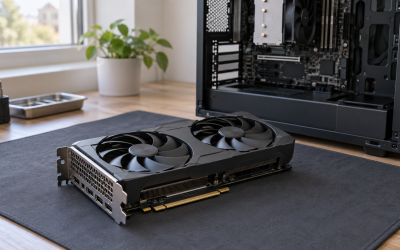
The GeForce RTX 5070 is NVIDIA’s mainstream Blackwell card, and this ASUS Prime OED White edition wraps that GPU in a compact, SFF-ready cooler with 12GB of fast GDDR7, PCIe 5.0, and HDMI/DP 2.1 outputs. It targets the sweet spot of the market: enough horsepower for smooth 1440p gaming with ray tracing, plus DLSS 4 and multi-frame generation to stretch that performance further, all without the size or price of the higher tiers.
This is a card for 1440p gamers who want strong frame rates with modern features turned on, and for small-form-factor builders who need a physically compact board that still cools well. It’s a weaker fit for anyone eyeing 4K at native resolution or for creators who lean on large VRAM pools, where the 12GB buffer becomes the limiting factor sooner than you might like.
Our top picks
 ASUS SFF-Ready Prime NVIDIA GeForce RTX 5070
- AI Performance: 1005 AI TOPS OC mode boosts…
- Powered by the NVIDIA Blackwell architecture and DLSS…
- SFF-Ready enthusiast GeForce card compatible with small-form-factor builds
 ASUS SFF-Ready Prime NVIDIA GeForce RTX™ 5070
- AI Performance: 1005 AI TOPS
- OC mode boosts clock 2587 MHz (OC mode)…
- Powered by the NVIDIA Blackwell architecture and DLSS…
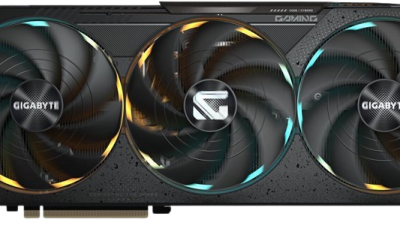
 GIGABYTE GeForce RTX 5070 Gaming OC 12G
- Powered by the NVIDIA Blackwell architecture and DLSS…
- Powered by GeForce RTX 5070
- Integrated with 12GB GDDR7 192bit memory interface
| Product | Key specs | |
|---|---|---|
| ASUS SFF-Ready Prime NVIDIA GeForce RTX 5070 | AI Performance: 1005 AI TOPS OC mode boosts… Powered by the NVIDIA Blackwell architecture and DLSS… SFF-Ready enthusiast GeForce card compatible with small-form-factor builds | Check price |
| ASUS SFF-Ready Prime NVIDIA GeForce RTX™ 5070 | AI Performance: 1005 AI TOPS OC mode boosts clock 2587 MHz (OC mode)… Powered by the NVIDIA Blackwell architecture and DLSS… | Check price |
| GIGABYTE GeForce RTX 5070 Gaming OC 12G | Powered by the NVIDIA Blackwell architecture and DLSS… Powered by GeForce RTX 5070 Integrated with 12GB GDDR7 192bit memory interface | Check price |
 ASUS SFF-Ready Prime NVIDIA GeForce RTX 5070 ASUS SFF-Ready Prime NVIDIA GeForce RTX 5070 | Powered by the NVIDIA Blackwell architecture and DLSS… SFF-Ready enthusiast GeForce card compatible with small-form-factor builds Axial-tech fans feature a smaller fan hub that… | Check price |
 ASUS Dual NVIDIA GeForce RTX 5060 8GB ASUS Dual NVIDIA GeForce RTX 5060 8GB | Check price | |
 NVIDIA NVIDIA | Check price | |
 GIGABYTE GeForce RTX 5070 Ti Gaming OC GIGABYTE GeForce RTX 5070 Ti Gaming OC | Check price | |
 ASUS Dual NVIDIA GeForce RTX 5060 Ti ASUS Dual NVIDIA GeForce RTX 5060 Ti | AI Performance: 767 AI TOPS OC mode: 2632 MHz (OC mode)/ 2602 MHz… Powered by the NVIDIA Blackwell architecture and DLSS… | Check price |
As an Amazon Associate we earn from qualifying purchases at no extra cost to you.
⚡ Save on Your Next PC — Amazon Prime
Prime members get fast free shipping on the systems above, plus early access to Prime Day & Black Friday PC deals. New members get a 30-day free trial.
Watch: GeForce RTX 5070 Review — Video Review
Design & Build
ASUS’s Prime cooler here is a clean, understated white shroud with Axial-tech fans, a 2.5-slot profile, and dual BIOS for quiet or performance modes. The SFF-ready certification means it fits the airflow and clearance envelopes of compact cases, which is genuinely useful given how many mainstream builds are shrinking. Build quality is solid, the backplate is metal, and thermals stay in check thanks to the modest power draw of the 5070 silicon. The white finish looks great in a matching build but limits mix-and-match aesthetics.
Performance
At 1440p the RTX 5070 is a comfortable high-refresh performer, handling most current titles at high settings and using DLSS 4 with multi-frame generation to push demanding, ray-traced games into very playable territory. The GDDR7 memory and Blackwell architecture give it a healthy lift over the previous generation in the same tier, and it stays cool and quiet under the ASUS cooler.
The honest limitations are the 12GB frame buffer and the reliance on frame generation for the heaviest scenarios. Native 4K is a stretch in modern AAA titles, and a few texture-heavy games can nudge against the VRAM ceiling at max settings. Frame generation smooths the numbers beautifully but adds a little latency, so competitive players may prefer to keep it off and accept lower raw frames.
Pros & Cons
- Excellent 1440p gaming performance with ray tracing enabled
- Compact, SFF-ready cooler that runs cool and quiet
- DLSS 4 and multi-frame generation extend usable performance
- Modern PCIe 5.0 and HDMI/DP 2.1 connectivity
- 12GB VRAM is adequate now but limits headroom for the future
- Native 4K in demanding titles leans heavily on frame generation
- White-only finish restricts build color schemes
Alternatives to Consider
If you want a beefier cooler and don’t mind a thicker card, the ASUS TUF Gaming RTX 5070 offers stronger thermals and military-grade components. Value hunters should compare the MSI Ventus 2X RTX 5070, which often lands at a lower price, while anyone who can stretch the budget for more VRAM and 4K headroom should look hard at the 16GB GIGABYTE RTX 5070 Ti before committing.
Frequently Asked Questions
Is the RTX 5070 a 4K card?
It can play at 4K with DLSS and frame generation, but its natural home is high-refresh 1440p. For consistent native 4K in demanding titles, a 5070 Ti or higher is a safer choice.
Is 12GB of VRAM enough?
For 1440p today, yes in nearly all games. It’s the main long-term concern, though, as future titles and 4K textures can approach that limit faster than a 16GB card would.
Will it fit a small-form-factor build?
Yes. This Prime model is SFF-ready with a 2.5-slot design, making it one of the easier 5070 cards to fit in a compact case.
Do I need a new power supply?
Most quality mid-wattage units handle the 5070’s modest draw fine, but check that your PSU has the required connector and headroom for your full system.
Verdict
The ASUS Prime RTX 5070 White OC is a well-judged mainstream card: strong 1440p performance, a compact and quiet cooler, and the full DLSS 4 feature set in a package that fits small builds. The 12GB VRAM buffer is the one thing keeping it from being future-proof, so if 4K or long-term headroom matters, budget for a 5070 Ti. For high-refresh 1440p right now, though, it hits the value sweet spot cleanly.