Key takeaways
- Latency: Wired is instantaneous by definition; 2.4GHz wireless now sits low enough that most players can’t perceive a difference, while Bluetooth still lags noticeably and should be reserved for music and calls.
- Audio fidelity: Wired analog and USB connections avoid compression entirely, whereas wireless relies on codecs — though “lossless” 2.4GHz modes, as advertised on the Ozeino Wireless, have closed most of the gap.
- Battery and upkeep: Wired headsets never need charging; wireless models require a routine, though 80-hour batteries on the NUBWO and Stealth 600 mean weekly top-ups at most.
- Platform flexibility: Wireless headsets with USB-A and USB-C dongles connect to PS5, PC, Switch and handhelds without adapters; wired headsets depend on a 3.5mm port or controller jack that some devices no longer include.
- Price per performance: At any given budget, a wired headset typically offers larger drivers and better build than its wireless equivalent, because none of the cost goes to radios and batteries.
- Freedom of movement: Wireless lets you walk away mid-match or lean back on a couch; wired tethers you to a desk or controller, with cable snag being a genuine annoyance in longer sessions.
The wireless-versus-wired debate used to have an easy answer: cables won on latency and audio fidelity, and that was that. In 2026 the gap has narrowed to the point where most competitive players no longer feel they’re compromising. Low-latency 2.4GHz dongles, USB-C transmitters that work on a handheld as easily as a desktop, and 40- to 80-hour batteries have turned wireless from a luxury feature into the default for mid-range headsets. Meanwhile, wired headsets have quietly become the value play — the same drivers and microphones for less money, with nothing to charge.
The choice matters more than it used to because platform sprawl is real. A single gamer might jump between a PS5, a gaming laptop, a Switch, and a phone in the same evening. Wireless headsets with dual or tri-mode connectivity handle that gracefully; wired headsets handle it only if every device you own still has a 3.5mm jack — and increasingly, they don’t. Below we break down where each option genuinely wins, and which models are worth your shortlist.
Our top picks
 NUBWO Wireless Gaming Headset for PS5
- ⚡ Anti-Interference 2.4GHz
- 🎧 7.1 Surround Sound for Pro-Level Gaming Immersion
- 🔋 80-Hour Battery Life: Nothing kills the vibe…
 Acer 2.4GHz Wireless Gaming Headsets for PS5
- Acer Gaming Headset with Aluminum Frame for PS5,…
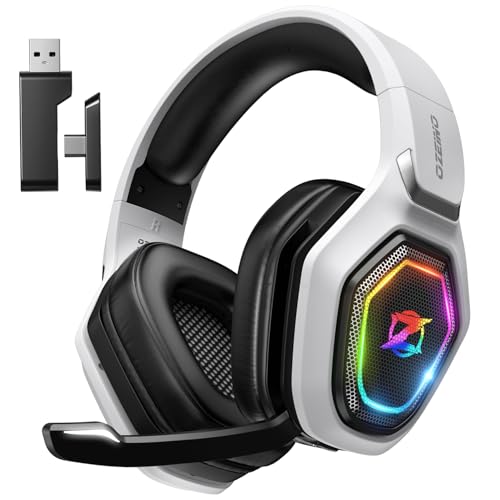 Ozeino Wireless Gaming Headset for PS5
- 【Amazing Stable Connection-Quick Access to Games】Real-time gaming audio…
- 【Game Communication-Better Bass and Accuracy】The 50mm driver plus…
- 【Flexible and Convenient Design-Effortless in Game】Ideal intuitive button…
| Product | Key specs | |
|---|---|---|
| NUBWO Wireless Gaming Headset for PS5 | ⚡ Anti-Interference 2.4GHz 🎧 7.1 Surround Sound for Pro-Level Gaming Immersion 🔋 80-Hour Battery Life: Nothing kills the vibe… | Check price |
| Acer 2.4GHz Wireless Gaming Headsets for PS5 | Acer Gaming Headset with Aluminum Frame for PS5,… | Check price |
| Ozeino Wireless Gaming Headset for PS5 | 【Amazing Stable Connection-Quick Access to Games】Real-time gaming audio… 【Game Communication-Better Bass and Accuracy】The 50mm driver plus… 【Flexible and Convenient Design-Effortless in Game】Ideal intuitive button… | Check price |
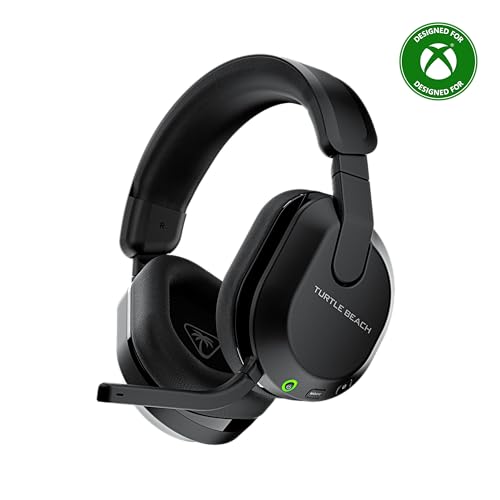 Turtle Beach Stealth 600 Wireless Gaming Headset Turtle Beach Stealth 600 Wireless Gaming Headset | Memory Foam Cushions with Glasses-Friendly Technology Powerful, 50mm Nanoclear Drivers for Vibrant Spatial Audio Mappable Wheel and Mode Button for Customizable Functions | Check price |
 Razer Hammerhead V3 X Wireless Multi‐Platform Gaming Razer Hammerhead V3 X Wireless Multi‐Platform Gaming | Check price | |
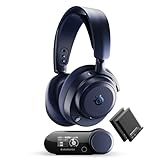
 SteelSeries Arctis Nova 5 Wireless Multi-System Gaming SteelSeries Arctis Nova 5 Wireless Multi-System Gaming | 100+ GAME AUDIO PRESETS Play longer than ever with the next-gen battery Toggle between 2.4GHz gaming and Bluetooth 5.3 with… | Check price |
 Wireless Gaming Headset for PS5 Wireless Gaming Headset for PS5 | GAMING HEADSET | Check price |
 NUBWO Wireless Gaming Headset with Mic for NUBWO Wireless Gaming Headset with Mic for | Zero-Latency, Interference-Free Wireless Gaming Headset: Powered by proprietary… 100-Hour Uninterrupted Gaming: Powered by a 1200mAh high-capacity… Dual Wireless Freedom: Equipped with dual wireless technology… | Check price |
As an Amazon Associate we earn from qualifying purchases at no extra cost to you.
⚡ Save on Your Next PC — Amazon Prime
Prime members get fast free shipping on the systems above, plus early access to Prime Day & Black Friday PC deals. New members get a 30-day free trial.
Watch: Wireless vs Wired Gaming Headset in 2026 — Video Review
Quick Verdict
Buy wireless if you play across multiple systems, take calls or Discord on your phone, or simply hate cable drag — models like the SteelSeries Arctis Nova 5 and Turtle Beach Stealth 600 deliver near-wired latency with 60 to 80 hours of battery. Buy wired if you want the maximum audio quality per dollar, need absolute zero-latency certainty for competitive FPS or fighting games, or want a headset that will never die mid-match. For most players in 2026, a 2.4GHz wireless headset is the better everyday choice; wired remains the purist’s and the budget-conscious buyer’s pick.
Key Differences
- Latency: Wired is instantaneous by definition; 2.4GHz wireless now sits low enough that most players can’t perceive a difference, while Bluetooth still lags noticeably and should be reserved for music and calls.
- Audio fidelity: Wired analog and USB connections avoid compression entirely, whereas wireless relies on codecs — though “lossless” 2.4GHz modes, as advertised on the Ozeino Wireless, have closed most of the gap.
- Battery and upkeep: Wired headsets never need charging; wireless models require a routine, though 80-hour batteries on the NUBWO and Stealth 600 mean weekly top-ups at most.
- Platform flexibility: Wireless headsets with USB-A and USB-C dongles connect to PS5, PC, Switch and handhelds without adapters; wired headsets depend on a 3.5mm port or controller jack that some devices no longer include.
- Price per performance: At any given budget, a wired headset typically offers larger drivers and better build than its wireless equivalent, because none of the cost goes to radios and batteries.
- Freedom of movement: Wireless lets you walk away mid-match or lean back on a couch; wired tethers you to a desk or controller, with cable snag being a genuine annoyance in longer sessions.
Wireless Gaming Headsets: The 2026 Default
The strongest argument for wireless is no longer convenience alone — it’s versatility. The SteelSeries Arctis Nova 5 pairs 2.4GHz with Bluetooth and ships with over 100 audio presets, so you can switch from a footstep-focused FPS profile to a cinematic RPG mix without touching an equaliser. The Turtle Beach Stealth 600 covers both Xbox and PlayStation ecosystems with 50mm drivers, a flip-to-mute mic and roughly 80 hours of playtime. For handheld and mobile players, the Razer Hammerhead V3 X Wireless earbuds strip the concept down to something pocketable while keeping a low-latency gaming mode.
Budget wireless has improved dramatically too. The NUBWO Wireless offers 7.1 surround, mic monitoring and a 270g foldable frame that’s genuinely comfortable for marathon sessions, while the Acer 2.4GHz tri-mode headset adds Bluetooth alongside its dongle. The Ozeino Wireless is worth a look for its play-and-charge design, which lets you keep gaming while topping up — the closest thing to eliminating the one real wireless drawback.
Wired Gaming Headsets: Still The Value Champion
Wired headsets win on three fronts that haven’t changed: cost, reliability and consistency. There’s no dongle to lose, no firmware to update, no pairing to troubleshoot, and no risk of the battery dying during the third round of a ranked match. If you play primarily at a desk on PC, or plug into a DualSense or Xbox controller, a wired connection removes an entire category of problems. Audio purists also appreciate that an analog signal isn’t being compressed and reconstructed.
The catch is ecosystem fit. Phones, some laptops and certain handhelds have dropped the 3.5mm jack, which means dongles of a different kind. It’s also worth noting that several wireless models can operate over a cable — the Ozeino‘s USB-C play-and-charge being the clearest example — so check the connectivity list before assuming you must choose one or the other outright.
Which Should You Buy?
- For multi-platform players: pick wireless — the Stealth 600 or Arctis Nova 5 handle console, PC and mobile without swapping hardware.
- For competitive FPS on a budget: pick wired, or step up to the NUBWO if 2.4GHz latency and 80-hour battery matter more than raw driver quality.
- For handheld and travel gaming: pick the Razer Hammerhead V3 X Wireless earbuds for the smallest possible footprint.
- For long sessions without downtime: pick wired, or the Ozeino with its charge-while-playing design.
- For the best all-rounder: pick the Arctis Nova 5 — 60-hour battery, dual connectivity and a proven ClearCast microphone.
Frequently Asked Questions
Is wireless latency still a problem in 2026?
Not with a 2.4GHz dongle. Modern low-latency wireless is imperceptible to the vast majority of players, including at a competitive level. Bluetooth is a different story — use it for music and calls, not for reaction-based gameplay.
Do wireless headsets sound worse than wired?
Marginally, and mostly at the high end. At mainstream price points, driver quality and tuning matter far more than the connection type, which is why a well-tuned wireless headset often outperforms a cheap wired one.
How long should a wireless gaming headset battery last?
Aim for 40 hours minimum. The Acer and Ozeino models sit around the 40-hour mark, while the NUBWO and Stealth 600 push toward 80 — enough for weeks of casual play between charges.
Will a wireless PS5 headset work on Xbox?
Only if it’s explicitly certified for it. The Turtle Beach Stealth 600 is the safest multiplatform pick here; most PS-oriented dongles won’t be recognised by an Xbox console.
Final Verdict
For 2026, wireless is the smarter default for most gamers: the latency argument has largely been settled, batteries now outlast the average play week, and multi-device support solves a problem wired headsets simply can’t. Wired remains genuinely excellent if you play at one desk, want maximum sound per dollar, or refuse to think about charging — but if you’re choosing today and your budget allows it, a 2.4GHz wireless headset like the SteelSeries Arctis Nova 5 or Turtle Beach Stealth 600 will serve you better across more situations.