Key takeaways
- Wired gear never needs charging, never dies mid-match, and has one fewer point of failure, which is why some players still prefer it for pure peace of mind.
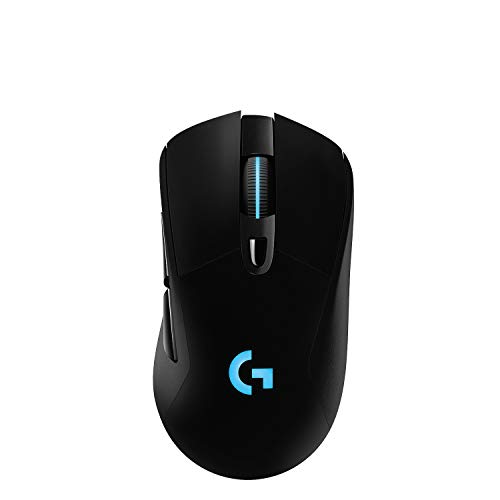
- Wireless mice such as the Logitech G703 Lightspeed often last many days per charge and support wireless charging pads, so downtime is minimal if you build a habit of topping up.
- A dropped wireless signal from interference is rare with good hardware but not impossible in crowded RF environments; wired sidesteps that entirely.
- Keep a spare cable handy either way, since even wireless gear usually charges over USB-C.
The wired-versus-wireless debate used to have an easy answer: serious players went wired for the lowest latency, everyone else picked wireless for convenience. In 2026 that line has blurred almost completely. Modern 2.4GHz wireless mice and keyboards now respond fast enough that pros use them in tournaments, while cables have gotten lighter and more flexible than ever. The right choice now depends on your desk, your budget, and how much you value a clean setup versus never thinking about a battery.
This guide breaks down what actually separates wired and wireless gear today: real latency, battery and reliability, cost, and the practical feel at your desk. You will learn where the old assumptions still hold, where they have quietly become myths, and how to decide which route fits the way you play.
Our top picks
 Logitech G305 Lightspeed Wireless Gaming Mouse
- Formats: DVD-ROM
- Product Group: Personal Computer
- Binding: Personal Computers
 Razer Basilisk V3 X HyperSpeed Customizable Wireless
- Product Group: Personal Computer
- Binding: Personal Computers



As an Amazon Associate we earn from qualifying purchases at no extra cost to you. Ratings are shown as listed on Amazon.
⚡ Save on Your Next PC — Amazon Prime
Prime members get fast free shipping on the systems above, plus early access to Prime Day & Black Friday PC deals. New members get a 30-day free trial.
Watch: Wired vs Wireless Gaming Gear: Which Is Better? — Video Review
Latency: the gap has nearly closed
For years, wired was synonymous with instant response. That reputation was earned, but today’s 2.4GHz wireless technology has erased most of the difference. A modern wireless mouse like the Logitech G305 Lightspeed or Razer Viper V3 HyperSpeed polls at speeds indistinguishable from a cable to human reflexes. The key detail is the connection type: dedicated USB dongles are fast, while Bluetooth is not, adding lag you can feel in fast games. If you are comparing a quality wired mouse to a quality dongle-based wireless one, latency should no longer be your deciding factor.
Battery, charging, and reliability
- Wired gear never needs charging, never dies mid-match, and has one fewer point of failure, which is why some players still prefer it for pure peace of mind.
- Wireless mice such as the Logitech G703 Lightspeed often last many days per charge and support wireless charging pads, so downtime is minimal if you build a habit of topping up.
- A dropped wireless signal from interference is rare with good hardware but not impossible in crowded RF environments; wired sidesteps that entirely.
- Keep a spare cable handy either way, since even wireless gear usually charges over USB-C.
Weight and feel at the desk
This is where wireless has flipped from disadvantage to advantage. Removing the cable eliminates “cable drag,” the subtle tug that can throw off a fast flick. Ultralight wireless mice like the Razer Viper V3 HyperSpeed weigh around 82 grams with no tether at all, giving a floaty, unrestricted feel that many aimers prefer. A wired mouse can approach this with a soft paracord-style cable and a bungee to lift the wire off the desk, but it takes extra hardware to match what wireless does by default.
Cost and value
Wired gear almost always costs less for the same sensor and build, because you are not paying for a radio, receiver, and battery. If your budget is tight, a wired mouse gives you more performance per dollar. Wireless commands a premium, though options like the Redragon M810 PRO show that low-latency wireless has reached aggressive price points with high-DPI sensors and remappable keys. Decide how much a cable-free desk is worth to you, then shop within that bracket rather than assuming wireless has to be expensive.
When to choose which
Go wired if you want the lowest possible cost, never want to think about charging, or your setup keeps the cable managed and out of the way. Go wireless if you value a clean desk, do a lot of fast wrist aiming where cable drag matters, or you move your gear between rooms. For premium wireless with a customizable shape, the Razer Basilisk V3 X HyperSpeed suits players who want extra buttons, while a lightweight model fits pure competitive aiming. There is no wrong answer in 2026, only the one that matches your priorities.
Tips
- If you buy wireless, always use the included 2.4GHz dongle for gaming and save Bluetooth for travel or a secondary device.
- Plug the wireless receiver into a front USB port or an included extender to keep it close to the mouse and reduce interference.
- For wired setups, add a mouse bungee; it removes most of the cable-drag disadvantage for a few dollars.
- Set a simple charging routine, like docking a wireless mouse every night, so battery anxiety never enters a session.
Frequently Asked Questions
Do pro players use wired or wireless in 2026?
Most now use wireless. Once 2.4GHz latency reached parity with cables, the freedom from cable drag made wireless the default for competitive aiming. Wired remains common for keyboards and budget builds.
Is Bluetooth good enough for gaming?
Not for fast-paced games. Bluetooth adds noticeable latency and can stutter. It is fine for office use or a couch controller, but for gaming you want a dedicated 2.4GHz dongle connection instead.
Will a wireless mouse die during an important match?
Only if you ignore charging. Quality wireless mice last days per charge and many warn you at low battery. Build a charging habit and mid-match death effectively never happens.
Is wired still cheaper for the same performance?
Generally yes. You avoid paying for the radio and battery, so wired gear delivers more sensor and build quality per dollar. Wireless closes the gap at the value end but still carries a small premium.
Conclusion
The honest verdict for 2026 is that both wired and wireless gaming gear are excellent, and the tired “wired is faster” rule no longer decides it. Judge your choice on cost, desk cleanliness, and whether cable drag bothers your aim rather than on latency alone. Wired wins on price and simplicity; wireless wins on feel and freedom. Pick the priority that matters most to you, choose from the well-regarded options above, and you will not be held back either way.