Key takeaways
- Top-tier sequential read among Gen 4 drives
- Proven firmware reliability and broad compatibility
- Priced higher than competitors with similar specs
A 2 terabyte SSD is the capacity sweet spot for gamers, content creators, and power users who want to stop juggling drives. One 2TB unit can hold dozens of modern AAA titles alongside project files, or serve as a single-boot drive that never hits the “storage almost full” warning that plagues smaller capacities. The problem is that not every 2TB drive earns its label. Speed gaps between PCIe 3.0 and 5.0 models are enormous, prices swing by hundreds of dollars for similar-looking spec sheets, and at least one entry in this category is not actually a solid-state drive at all.
What separates a worthwhile 2TB purchase from a regrettable one comes down to three things: whether the drive’s interface matches your motherboard’s capabilities, whether the endurance and thermal design suit your workload, and whether the price reflects genuine performance or just brand positioning. A PCIe 3.0 drive costs less but throttles in sustained transfers. A flagship Gen 5 model delivers staggering sequential numbers but may offer no practical advantage over a Gen 4 drive in daily use. This roundup for 2026 compares eight products using published specifications, current market pricing, and aggregated owner feedback to help you match capacity, speed, and budget without guesswork.
Our top picks
 Samsung SSD 990 PRO 2TB
Sequential speeds up to 7450 MB/s suit heavy workloads
Improved random performance aids faster everyday load times
Compact M.2 2280 form factor fits most modern motherboards
Requires a PCIe 4.0 slot to reach full speed
Capacity tops out lower than some rival 4TB drives
 Sandisk 2TB Extreme Portable SSD
- Get NVMe solid state performance with up to…
- Up to 3-meter drop protection and IP65 water…
- Use the handy carabiner loop to secure it…
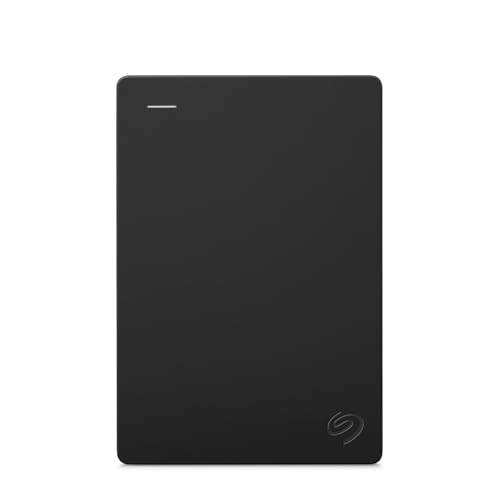 Seagate 2TB Portable Hard Drive
- Easily store and access 2TB to content on…
- Designed to work with Windows or Mac computers,…
- To get set up, connect the portable hard…
| Product | Key specs | |
|---|---|---|
| Samsung SSD 990 PRO 2TB | Check price | |
| Sandisk 2TB Extreme Portable SSD | Get NVMe solid state performance with up to… Up to 3-meter drop protection and IP65 water… Use the handy carabiner loop to secure it… | Check price |
| Seagate 2TB Portable Hard Drive | Easily store and access 2TB to content on… Designed to work with Windows or Mac computers,… To get set up, connect the portable hard… | Check price |
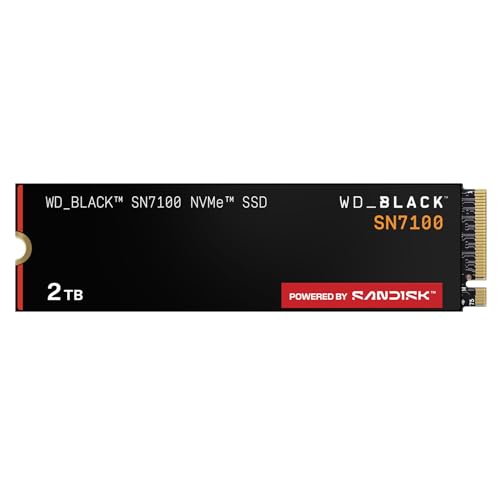 WD_Black SN7100 2TB NVMe SSD WD_Black SN7100 2TB NVMe SSD | This product has been replaced by our latest… OCTANE GAMING BUILT | Check price |
 Samsung SSD 9100 PRO 2TB Samsung SSD 9100 PRO 2TB | BREAKTHROUGH PCIe 5.0 PERFORMANCE: Supercharge your workflow and… EVERY TASK, TURBOCHARGED: Speed past productivity limits THINK FAST, CREATE FASTER: With random read/write speeds… | Check price |
 Silicon Power 2TB NVMe M.2 PCIe Gen3x4 Silicon Power 2TB NVMe M.2 PCIe Gen3x4 | PCIe Gen 3x4 interface with read speeds up… TBW=1200 The warranty terms on all of its SSDs… | Check price |
 Lexar 2TB NM790 Internal NVMe SSD Lexar 2TB NM790 Internal NVMe SSD | [2TB] Exceptional performance up to 7400MB/s read, 6500MB/s… 2x faster than PCIe Gen 3 SSDs Up to 40% less power consumption than DRAM… | Check price |
 Samsung Internal SSD 990 2TB Samsung Internal SSD 990 2TB | Spend less time waiting and more time creating,… Strike the right balance between performance and power… FULL LIBRARY, FEWER COMPROMISES: The days of deleting… | Check price |
As an Amazon Associate we earn from qualifying purchases at no extra cost to you.
Quick Picks
| Product | Best for | Price |
|---|---|---|
| Samsung SSD 990 PRO 2TB | High-end Gen 4 builds | $389 |
| Sandisk 2TB Extreme Portable | On-the-go transfers | $289.99 |
| Seagate 2TB Portable Hard Drive | Cold storage and backup | $129.99 |
| WD_Black SN7100 2TB | Laptops and handheld gaming | $305 |
| Samsung SSD 9100 PRO 2TB | Maximum sequential throughput | $399.99 |
| Silicon Power 2TB Gen 3×4 | Tight budgets with Gen 3 slots | $245.97 |
| Lexar NM790 2TB | Write-heavy workloads on a budget | $299.86 |
| Samsung Internal SSD 990 2TB | Gaming at a lower premium | $339.99 |
How We Picked
Four criteria drove these rankings. Interface generation determines your speed ceiling—a Gen 3 drive cannot be upgraded by software. Sequential read and write figures set the practical floor for game load times and large-file transfers. Endurance ratings and thermal management matter most for sustained workloads like video editing or virtual machine hosting. Finally, price per gigabyte separates fair-value picks from overpriced flagships when performance differences shrink to single-digit percentages in real use.
The 8 Best 2 Terabyte Ssd in 2026
Samsung SSD 990 PRO 2TB
The 990 PRO remains the benchmark Gen 4 drive. Its 7,450 MB/s sequential read figure keeps it competitive even as Gen 5 models arrive, and Samsung’s firmware maturity means fewer compatibility surprises across motherboards. Owners consistently report stable sustained performance during long transfers, a weakness that plagues some rival Gen 4 drives.
- Top-tier sequential read among Gen 4 drives
- Proven firmware reliability and broad compatibility
- Priced higher than competitors with similar specs
Skip this if your motherboard only has a PCIe 3.0 M.2 slot, or if you can find the standard 990 below $300 and do not need the extra few hundred megabytes per second of peak throughput.
Sandisk 2TB Extreme Portable SSD
This is a portable drive rather than an internal M.2 unit, and Sandisk labels it as an older model. Its 1050 MB/s read speed reflects a Gen 2-class controller, meaning it falls well behind modern internal drives. For travel, video editors shuttling between locations, or anyone needing a rugged external volume, it remains a known quantity with positive owner reviews on durability.
- Compact external form factor with IP-rated housing
- Plug-and-play USB connectivity across platforms
- Speed lags far behind current internal NVMe drives
Skip this if you need internal boot storage or work exclusively at a desk. Newer portable SSDs with USB 3.2 Gen 2×2 interfaces deliver double the throughput.
Seagate 2TB Portable Hard Drive (STGX2000400)
Important caveat: this is a mechanical hard drive, not a solid-state drive. It appears in 2TB storage searches because of its price, not its technology. With USB 3.0 connectivity and a spinning platter, sequential throughput sits roughly an order of magnitude below any NVMe SSD in this list. For archive-and-forget storage or console backup, it fills a role no SSD matches at this price point.
- Lowest cost per gigabyte by a wide margin
- Bus-powered with no separate adapter needed
- Not an SSD; far slower and more fragile
Skip this entirely if your priority is speed, gaming, or running applications. Choose it only for cold backup where budget outweighs every other factor.
WD_Black SN7100 2TB
Western Digital positions the SN7100 specifically for space-constrained devices: laptops, handheld PCs, and small-form-factor builds. Its 7,250/6,900 MB/s read/write figures are close to Samsung’s 990 PRO, but the thermal design and power profile target systems with limited cooling. Next Gen TLC 3D NAND keeps endurance respectable without the cost of QLC alternatives.
- Excellent write speed relative to Gen 4 peers
- Low-power profile ideal for handheld and laptop slots
- Limited real-world advantage over cheaper Gen 4 drives
Skip this if you are building a desktop with ample cooling and a budget-friendly option like the Lexar NM790 covers your needs at a lower price.
Samsung SSD 9100 PRO 2TB
The 9100 PRO is Samsung’s PCIe 5.0 flagship, and its 14,700 MB/s sequential read figure nearly doubles what Gen 4 drives achieve. In practice, few consumer applications saturate a Gen 4 link, so this speed lands mainly in sequential benchmark scores and specific professional workflows. It requires a Gen 5-compatible motherboard and typically runs hotter than Gen 4 drives, demanding good airflow or a heatsink.
- Extreme sequential read and write throughput
- Future-proof for the next generation of storage-intensive software
- Requires Gen 5 slot and robust thermal management
Skip this unless your motherboard supports PCIe 5.0 M.2 and you have a concrete workload that benefits from sequential speeds beyond 7,500 MB/s. For gaming, the difference is imperceptible.
Silicon Power 2TB NVMe M.2 Gen 3×4
Silicon Power offers one of the cheapest 2TB NVMe paths available, built on a PCIe Gen 3×4 interface. If your system has only Gen 3 slots, this drive runs at its native ceiling without compatibility drama. Owner feedback highlights adequate performance for office work, media playback, and moderate multitasking. It will not match Gen 4 or Gen 5 drives in large file transfers or heavy game loading.
- Aggressive price for 2TB NVMe capacity
- Works in any M.2 2280 slot regardless of generation
- Speed ceiling is a fraction of modern Gen 4 drives
Skip this if your motherboard supports Gen 4. The price gap to drives like the Lexar NM790 is small enough that Gen 4 represents clearly better value.
Lexar NM790 2TB
The NM790 pairs 7,400 MB/s read with a strong 6,500 MB/s write figure, making it one of the best write-speed-per-dollar options among Gen 4 drives. For anyone moving large video files, compiling code, or running write-heavy databases, that write number matters more than peak read. It carries a modest price premium over budget Gen 4 models but consistently outperforms them in sustained workloads.
- High sustained write speed for the price tier
- Competitive read performance within Gen 4
- Brand awareness and firmware ecosystem lag Samsung
Skip this if you want the most polished software utility suite or the broadest long-term owner-report corpus. For raw performance at the price, it is hard to beat.
Samsung Internal SSD 990 2TB
The standard 990 sits below the PRO in Samsung’s lineup at 7,250/6,450 MB/s. The gap between this drive and the 990 PRO is narrow enough that for pure gaming loads—where random read latency dominates—most owners will not perceive a difference. Its $339.99 price undercuts the PRO by $49, which for many buyers makes it the smarter Samsung choice.
- Practically identical gaming performance to the 990 PRO
- $49 cheaper than the PRO variant
- Lower write speed hurts in sustained creative workloads
Skip this if you regularly write multi-gigabyte files in bursts. For a game library or a general-purpose boot drive, the 990 PRO premium is hard to justify.
Buying Guide
Match the Interface to Your Motherboard
Check your M.2 slot’s supported generation before buying. A PCIe 5.0 drive in a Gen 3 slot still functions but runs at Gen 3 speeds, wasting the premium. Conversely, a Gen 3 drive cannot be upgraded by swapping the cable or slot—it is permanently capped. Most motherboards built after 2022 include at least one Gen 4 slot; newer flagship boards add Gen 5. Verify using your board’s spec sheet rather than assuming the physical connector tells you the generation.
Read Speed Is Marketing, Write Speed Is Daily Use
Manufacturers lead with sequential read because it looks impressive on a box. Game installs, document opens, and application launches benefit from read throughput. But video exports, file archives, large downloads writing to disk, and virtual machine snapshots all depend on sustained write speed. Compare both numbers. A drive that writes at 4,500 MB/s versus one at 6,500 MB/s will feel noticeably slower during any task that fills the drive’s SLC cache.
Endurance and Thermals Decide Longevity
Every NAND flash cell degrades with use. The TBW rating (terabytes written) tells you how much total data the drive can handle before warranty concern. For a 2TB drive, anything below 600 TBW is adequate for typical consumer use, but creative professionals writing hundreds of gigabytes weekly should prioritize higher-endurance models. Thermal throttling is the silent killer in laptops and handhelds: a drive that starts at 7,000 MB/s but drops to 3,000 after two minutes of sustained load has a thermal design problem that no spec sheet will flag prominently.
Our Verdict
The Samsung 990 PRO 2TB is the top overall pick for desktop users who want the best combination of speed, firmware stability, and broad compatibility that Gen 4 offers. For budget-conscious buyers who need internal NVMe capacity without paying a premium, the Silicon Power 2TB Gen 3×4 at $245.97 is the entry point—provided your system has only a Gen 3 slot. One condition shifts the recommendation decisively: if your primary use is a laptop or handheld gaming device with limited thermal headroom, the WD_Black SN7100 is the better choice over both picks, because its power efficiency and write speed suit confined environments where sustained performance matters more than peak burst numbers.
FAQ
Is a 2TB SSD worth it for gaming?
Yes. Modern AAA titles routinely occupy 80–150 GB each, and 1TB fills quickly with an operating system and a handful of large games. A 2TB drive lets you keep an active library installed without uninstall-and-reinstall cycles, and NVMe load times are meaningfully faster than SATA SSDs or hard drives for open-world titles.
Can I use a PCIe 4.0 drive in a PCIe 3.0 slot?
Absolutely. NVMe drives are backward compatible and will operate at the slot’s maximum speed. A PCIe 4.0 drive in a 3.0 slot tops out around 3,500 MB/s read rather than its rated 7,000+ MB/s, but you still gain the drive’s random-read performance and endurance advantages over a native Gen 3 product.
Do I need a heatsink on a 2TB NVMe drive?
For desktops with good airflow and light-to-moderate workloads, most Gen 4 drives run acceptably without an added heatsink. For sustained write tasks, small-form-factor builds, or any PCIe 5.0 drive, an aftermarket or motherboard-supplied heatsink prevents thermal throttling and extends the drive’s usable life.
What is the difference between SLC caching and TLC NAND?
TLC (triple-level cell) NAND stores three bits per cell, offering a balance of cost, capacity, and speed. SLC caching designates a portion of TLC as single-level cell to accelerate writes in bursts—typically the first 20–40% of a drive’s capacity. Once the cache fills, write speed drops to the native TLC rate, which is why sustained-write specs matter for large transfers.