Key takeaways
- Table of Contents 7 sections 10 min read 1 Quick Verdict 2 Side by Side 3 Where Steam Deck Trackpads Wins 4 Where Rog Ally Joysticks Aiming Wins 5 Cost Over 5 Years 6 Which One for Your Home 6.1…
What's inside
For handheld PC buyers, the decision between Steam Deck trackpads and ROG Ally joysticks aiming is less about which control is universally better and more about how, where, and by whom the device will be used. The Steam Deck’s two square trackpads support mouse-like control, fine cursor placement, and gyro-assisted aiming. The ROG Ally relies on familiar analog sticks, which feel closer to a traditional Xbox-style controller and usually require less learning.
That difference matters in a home. A device used on the sofa, at a desk, or in a shared family room needs to fit your hands, furniture, storage habits, and tolerance for maintenance. The Steam Deck is larger and heavier, but its trackpads can make strategy games and PC interfaces more comfortable. The ROG Ally is lighter and more compact, with joysticks that suit fast action games and a more conventional controller layout.
As an Amazon Associate we earn from qualifying purchases at no extra cost to you. Product prices and availability are accurate as of the date shown and are subject to change.


Quick Verdict
Choose the Steam Deck if you play strategy games, simulation titles, shooters with extensive PC menus, or games that benefit from precise cursor movement. Its trackpads are particularly useful when aiming with a controller feels too coarse or when you want to navigate Windows-like interfaces without constantly reaching for a touchscreen.
Choose the ROG Ally if your priority is straightforward gamepad aiming, a lighter handheld, and a familiar control scheme. Its analog joysticks are generally easier for new players and work well for action games, racing games, platformers, and console-style shooters.
For most living-room players who already prefer Xbox or PlayStation controls, ROG Ally joysticks aiming will feel immediately natural. For PC-focused players who switch between genres, the Steam Deck’s trackpads offer more flexibility, although they take practice and can feel less comfortable during long sessions.
Side by Side
| Factor | Steam Deck trackpads | ROG Ally joysticks |
|---|---|---|
| Comfort | Useful for precise thumb movement, but the wider body and trackpad pressure can require adjustment | Familiar controller feel; lighter body is easier to hold, though stick tops can tire thumbs |
| Aiming style | Fine control for cursor-style aiming, with gyro support available in compatible games | Traditional analog aiming with predictable console-style movement |
| Durability | Few exposed moving parts, but the pad surface can collect skin oil and grit | Joysticks are robust in normal use but can eventually develop drift or wear |
| Price range | Trackpad skins and protectors commonly cost about $10–$15 | Replacement joystick parts commonly cost about $12–$17 for one or two sticks |
| Maintenance | Wipe with a dry microfiber cloth; textured skins may need occasional careful cleaning | Keep dust from the stick bases and replace a worn module or cap when necessary |
| Space needed | Steam Deck is about 11.7 inches wide and weighs roughly 1.4–1.5 pounds, depending on version | ROG Ally is about 11.0 inches wide and weighs roughly 1.34 pounds |
| Look | Distinctive PC-gaming appearance with large black touchpads | Cleaner console-like face with offset sticks and an illuminated front accent |
| Resale | Original, clean trackpads help; visible skin residue or damaged surfaces can reduce appeal | Stick condition matters greatly; drift or loose movement can discourage buyers |
| Best for | Strategy, simulation, RPG menus, desktop navigation, and adaptable PC controls | Action games, racing, platformers, sports titles, and players who want familiar aiming |
Where Steam Deck Trackpads Wins
The Steam Deck’s strongest advantage is versatility. Each trackpad can act like a laptop touchpad, a virtual trackball, a radial menu, or a precision input surface. In a game such as a strategy or city-building title, moving a cursor across a map is often more natural with a trackpad than with a joystick. The same is true for inventory screens, desktop launchers, and games designed around mouse-and-keyboard input.
Trackpads can also help in shooters, particularly when combined with gyro aiming. A common setup uses the right trackpad for broad camera movement and the gyroscope for small corrections. This can produce a more mouse-like feel than an analog stick alone, but the result depends on game settings and personal practice. New users should expect a learning period rather than instant precision.
Steam Deck controls are also highly configurable. You can assign a trackpad to buttons, menus, scroll wheels, or custom sensitivity curves. That makes the device useful for a broad household: one person can create a conventional gamepad layout, while another can use trackpads for desktop work or complex PC games.
The physical size of the Steam Deck gives your palms more room to settle around the grips. Its LCD version weighs about 669 grams, while the OLED version is about 640 grams. That is heavier than many traditional controllers, so a lap cushion or armrest can make long sessions more comfortable. A stable sofa setup matters more here than with the lighter Ally.
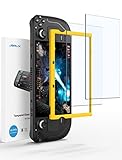
Trackpad accessories can change the feel without permanently modifying the handheld. The TALONGAMES Touchpad Protector Compatible with Steam Deck OLED/Steam Deck Trackpad Skin, Matrix Mini Hex – Black, is listed at $9.99. The Luck&Link Touchpad Protector for Steam Deck, Honeycomb – Silvery, includes touchpad and four back-button protectors and is listed at $12.98. These products are useful reference points for texture, grip, and surface protection, but any skin can alter sensitivity slightly and should be installed carefully.
Where Rog Ally Joysticks Aiming Wins
The ROG Ally’s joysticks win on familiarity. If you have spent years using a console controller, pushing an analog stick to turn, track, or aim requires almost no explanation. That makes the Ally easier to share with guests and family members who do not want to learn custom trackpad profiles.
For fast games, predictable stick movement can also be an advantage. Racing, sports, platforming, and action games typically map naturally to two joysticks, triggers, and face buttons. The Ally’s controls are arranged in a conventional offset-stick layout, so moving from a living-room console to the handheld involves little mental adjustment.
The Ally is slightly narrower and lighter than the Steam Deck. At approximately 608 grams, it can feel less demanding during handheld play, especially when your elbows are unsupported. It also supports performance modes around 15 watts and 25 watts, depending on the game and power source. Higher performance can increase heat, fan noise, and battery drain, so a nearby outlet or a comfortable charging spot is helpful for home use.
Joysticks are not maintenance-free, however. Dust, heavy use, and mechanical wear can eventually cause loose movement or drift. Replacement listings illustrate the relatively modest parts cost: Joysticks for Asus ROG Ally RC71L Handheld Console Joystick Replacement for GPD Win3, with repair tools, is listed at $11.99 for one piece. The YWLRONG 2Pack Joysticks for Asus ROG Ally RC71L is listed at $16.99. These are parts rather than professional repair services, and opening a handheld requires care and may affect warranty coverage.
Cost Over 5 Years
Control-related ownership costs are usually small compared with the handheld itself, but they are worth planning for. A Steam Deck owner might spend $9.99 to $12.98 on a textured protector at the beginning, then replace it once during five years if the surface becomes worn. That creates an accessory budget of roughly $10 to $26, before any tools or repair labor.
An ROG Ally owner may spend nothing if the joysticks remain accurate. If one stick needs replacement once, the listed parts range of $11.99 to $16.99 is a reasonable reference for the component alone. Replacing both at once could cost about $17 to $34 when using a two-pack or two single parts, not including labor.
In practical terms, both control systems can remain inexpensive over five years. The larger difference is convenience: a textured Steam Deck skin is a preventive comfort and protection purchase, while an Ally joystick replacement is usually a response to wear. Keep the original parts, screws, and packaging if resale matters.
Which One for Your Home
Small apartment
Choose the ROG Ally if storage and portability are priorities. Its slightly smaller footprint and lower weight make it easier to place in a drawer, on a narrow side table, or beside a laptop. Choose the Steam Deck if your apartment setup includes a desk and you frequently play PC genres that benefit from a trackpad.
Family with kids or pets
The Steam Deck’s configurable controls are valuable for different skill levels, but its larger screen-and-control area deserves protected storage. The Ally’s familiar joysticks make it easier for children and visitors to understand. Whichever you choose, use a case and keep the device away from pet hair, crumbs, and charging cables across walkways.
Rental
Neither handheld requires changes to walls, furniture, or electrical systems, making both renter-friendly. The Ally may be the simpler shared device because its joystick layout needs little explanation. The Steam Deck is a better fit if you use a rented desk as a compact PC workstation and want trackpad-based navigation.
Long-term home
For a dedicated gaming room or permanent sofa station, the Steam Deck offers more control customization and broader PC usability. For a household centered on console-style games, the ROG Ally is the lower-friction choice. Plan for a charging dock, a protective case, and a cool, ventilated resting surface for either model.
FAQ
Are Steam Deck trackpads better than ROG Ally joysticks for aiming?
They are better for some players and games, not all. Trackpads provide precise cursor-like movement and can work with gyro aiming, while joysticks offer simpler, familiar analog control. Your preferred genres and sensitivity settings matter more than the control type alone.
Which is easier for a beginner?
The ROG Ally’s joysticks are usually easier because they behave like standard console controls. Steam Deck trackpads become more capable after customization, but new users may need to adjust sensitivity, button layouts, and gyro behavior.
Can Steam Deck trackpads wear out?
They can collect dirt, develop surface wear, or become less pleasant to use over time. A compatible protector can change texture and help shield the surface. Clean gently and avoid liquids entering the control area.
Are ROG Ally joystick replacements worth keeping on hand?
They can be worthwhile if you use the Ally heavily or plan to keep it for years. The listed replacement parts cost about $11.99 to $16.99, but installation requires care. If you are uncomfortable opening electronics, budget for qualified repair service instead.