Our Top Picks
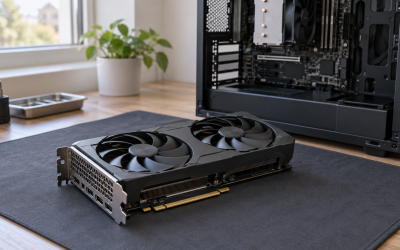
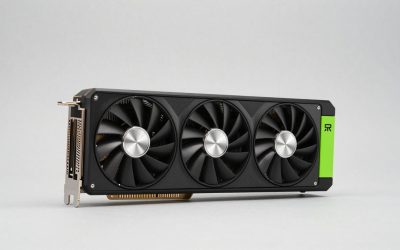
 GIGABYTE Radeon RX 9070 Gaming OC 16G GraphicsRADEON907011.34 x 5.2 x 1.97 inches3.2 poundsCheck on Amazon


The Radeon RX 9070 sits in the middle of AMD’s RDNA 4 lineup, and it is the card to look at when 1440p is the main target and 4K is a welcome bonus. Every card here uses the same Navi 48 silicon with 56 compute units and 3,584 stream processors, paired with 16GB of GDDR6 memory on a 256-bit bus at 20 Gbps. Board power is 220 W and the interface is PCIe 5.0 x16. The differences between the five cards below come down to cooling, factory clocks, length, slot width, and finish.
As an Amazon Associate, we earn from qualifying purchases.
One warning before the list: the RX 9070 XT shares cooler designs and model names with the plain RX 9070, and the XT has 64 compute units with 4,096 stream processors and higher clocks. Always match the listing by ASIN and model name, and confirm the name says RX 9070 without the XT suffix. The RX 9070 GRE is a second trap, a different card with 12GB of memory. None of the five picks below is an XT or a GRE card.
How to Choose an RX 9070 Card
Length is the first check. The shortest card here is 280 mm and the longest is 325 mm, so measure the clearance in your case before ordering. Most of these cards take 2.5 slots, while the thickest takes 3.5, which can block the PCIe slot below it.
Power is the second check. AMD guidance for the RX 9070 is a 650 W power supply, and every card here uses two 8-pin PCIe connectors. Two partners list a higher minimum, so read the guidance for the exact card you buy.
Outputs are the third check. Every pick here drives up to four displays and mixes DisplayPort 2.1a and HDMI 2.1, though the count of each varies. Two cards have two DisplayPort outputs and the other three have three.
1. GIGABYTE RX 9070 Gaming OC 16G
The GIGABYTE Gaming OC is the most balanced card in this roundup. Its boost clock reaches up to 2,700 MHz with a game clock up to 2,210 MHz, a clear step above the reference figures of 2,520 MHz boost and 2,070 MHz game clock. That factory overclock comes from the Windforce triple-fan cooler, and the 288 mm length fits most mid-tower cases. At 50 mm thick it takes 2.5 slots.
GIGABYTE lists two 8-pin power connectors and recommends a 750 W power supply, above AMD’s own 650 W guidance for the chip. A dual BIOS switch offers a performance position and a quieter fan position. Outputs are two DisplayPort 2.1a and two HDMI 2.1b, which covers two monitors and a television without an adapter. The black shroud has no lighting.
Choose this one when you want the highest factory clocks in a card that still fits a standard case. Match the listing by ASIN B0DS2QZC9P and model GV-R9070GAMING OC-16GD; the XT version uses model GV-R9070XTGAMING OC-16GD and a different listing.
Specs
- GPU: AMD Radeon RX 9070, RDNA 4, 56 compute units
- Stream processors: 3,584
- Memory: 16GB GDDR6, 256-bit bus, 20 Gbps
- Boost clock: Up to 2,700 MHz
- Game clock: Up to 2,210 MHz
- Cooling: Windforce triple-fan
- Outputs: 2 x DisplayPort 2.1a, 2 x HDMI 2.1b
- Power: 2 x 8-pin connectors; 750 W PSU recommended by GIGABYTE
- Dimensions: 288 x 132 x 50 mm, 2.5 slots
- Model: GV-R9070GAMING OC-16GD
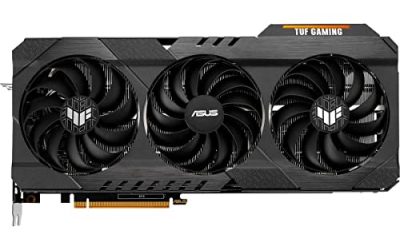
2. ASUS PRIME RX 9070 OC Edition
The ASUS PRIME OC is the quiet achiever of the group. Its factory overclock is modest — up to 2,610 MHz boost and up to 2,140 MHz game clock in OC mode, or up to 2,590 MHz boost and up to 2,120 MHz game clock in default mode — but it pairs that with a compact 304 mm body and a 2.5-slot width that fits cases the longer triple-fan cards cannot. Three axial-tech fans with dual ball bearings cool the heatsink, and the dual BIOS gives a quiet mode for late-night sessions.
ASUS adds GPU Guard bracket reinforcement and a stainless steel I/O bracket, which help resist sag over time. The shroud is plain black with no lighting, and the card is SFF-Ready, which means ASUS has checked it for small-form-factor cases. Outputs are three DisplayPort 2.1 and one HDMI 2.1, the most DisplayPort-heavy layout in this roundup.
Two 8-pin connectors supply power, and ASUS follows AMD guidance with a 650 W recommendation. Choose this one when case length is tight but you still want three fans and a factory overclock. Match the listing by ASIN B0DRRJ511M and the model name PRIME-RX9070-O16G. ASUS also sells an EVO version at 312 mm long, so confirm the model name and the 304 mm length on the listing.
Specs
- GPU: AMD Radeon RX 9070, RDNA 4, 56 compute units
- Stream processors: 3,584
- Memory: 16GB GDDR6, 256-bit bus, 20 Gbps
- Boost clock: Up to 2,610 MHz in OC mode; up to 2,590 MHz in default mode
- Game clock: Up to 2,140 MHz in OC mode; up to 2,120 MHz in default mode
- Cooling: Triple axial-tech fan, dual ball bearings
- Outputs: 3 x DisplayPort 2.1, 1 x HDMI 2.1
- Power: 2 x 8-pin connectors; 650 W PSU recommended
- Dimensions: 304 x 126 x 50 mm, 2.5 slots
- Model: PRIME-RX9070-O16G
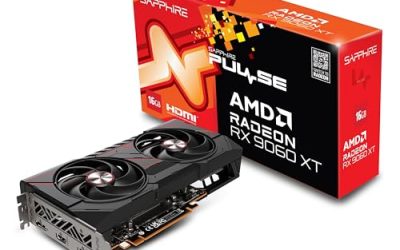
3. Sapphire Pulse RX 9070
The Sapphire Pulse is the reference-clock card of this roundup, and that is its strength rather than a weakness. It runs at the AMD reference figures — boost up to 2,520 MHz and game clock up to 2,070 MHz — with no factory overclock, which keeps heat and fan noise low. At 280 mm long it is the shortest card here, and its 2.5-slot, 51.5 mm body fits mid-size cases that reject the longer cards in this list.
The Pulse uses two fans rather than three, yet the shorter heatsink and the reference clocks keep the thermal load manageable. Board power is 220 W, and Sapphire follows AMD guidance with a 650 W power supply minimum and two 8-pin connectors. Outputs are two HDMI and two DisplayPort 2.1a, which suits a two-screen setup. The black shroud is plain, with no lighting.
Choose this one when length is the main constraint. At 280 mm it fits cases that the 304 mm ASUS and the 325 mm XFX cannot, and the reference clocks ask the least of your case airflow and your power supply. Match the listing by ASIN B0DTHN37BP and the model number 11349-03-20G. A second listing for the same Pulse model circulates with a different code, so match the ASIN and the model number, not the product name alone.
Specs
- GPU: AMD Radeon RX 9070, RDNA 4, 56 compute units
- Stream processors: 3,584
- Memory: 16GB GDDR6, 256-bit bus, 20 Gbps
- Boost clock: Up to 2,520 MHz
- Game clock: Up to 2,070 MHz
- Cooling: Dual-fan, Honeywell PTM7950 thermal interface material
- Outputs: 2 x HDMI, 2 x DisplayPort 2.1a
- Power: 2 x 8-pin connectors; 650 W PSU recommended; 220 W board power
- Dimensions: 280 x 120.25 x 51.5 mm, 2.5 slots
- Model: 11349-03-20G
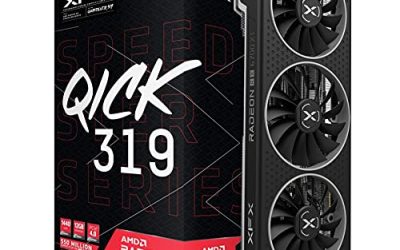
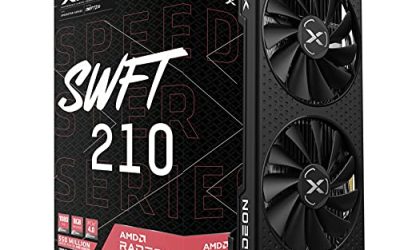
4. XFX Swift RX 9070 OC Triple Fan Gaming Edition
The XFX Swift OC is the biggest card in this roundup, and it uses that size for cooling headroom. Its boost clock reaches up to 2,700 MHz with a game clock up to 2,210 MHz, matching the GIGABYTE card for the highest factory clocks here. Three fans sit on a 3.5-slot cooler, and the card measures 325 mm long, 150 mm tall, and 65 mm thick, so it needs a roomy case and blocks the two slots below it.
Outputs are three DisplayPort 2.1a and one HDMI 2.1, the best layout here for three monitors. Power comes from two 8-pin connectors, and XFX lists an 800 W power supply minimum, which is high for a 220 W-class chip. The black shroud is plain, with no lighting.
Choose this one when your case has room and you want the highest factory clocks with the most cooling headroom. The 325 mm length and 3.5-slot width rule out compact cases, so measure before ordering. Match the listing by ASIN B0DXLBTL4B and the model number RX-97SWFB3B9. A second listing for the same Swift OC card circulates under a different model suffix, so match the ASIN and the model number.
Specs
- GPU: AMD Radeon RX 9070, RDNA 4, 56 compute units
- Stream processors: 3,584
- Memory: 16GB GDDR6, 256-bit bus, 20 Gbps
- Boost clock: Up to 2,700 MHz
- Game clock: Up to 2,210 MHz
- Base clock: 1,440 MHz
- Cooling: Triple-fan, 3.5 slots
- Outputs: 3 x DisplayPort 2.1a, 1 x HDMI 2.1
- Power: 2 x 8-pin connectors; 800 W PSU minimum listed by XFX
- Dimensions: 325 x 150 x 65 mm, 3.5 slots
- Model: RX-97SWFB3B9
5. Sapphire Pure RX 9070 Gaming OC
The Sapphire Pure RX 9070 Gaming OC is the white card in this roundup, and it is the one to look at when the build uses a white case and white cables. Its boost clock reaches up to 2,700 MHz, matching the GIGABYTE and XFX cards for the highest factory clocks here, with the same 16GB of GDDR6 on a 256-bit bus at 20 Gbps as every other pick. The white shroud and white backplate give a clean look that the four black cards here cannot match.
At 320 mm long it is nearly as long as the XFX Swift, and at 61.6 mm thick it takes roughly three slots, so it needs a full-size case with clearance to spare. Outputs are two HDMI and two DisplayPort 2.1a, the same layout as the Pulse, which covers two screens. Power comes from two 8-pin connectors, and AMD guidance for the chip is a 650 W power supply. Confirm the 320 mm length against your case before ordering.
Choose this one when the build is white and you still want a 2,700 MHz boost clock. The white finish is the reason to pick it over the black cards, and the factory overclock means you give up nothing on clocks to get it. Match the listing by ASIN B0DRPRN49L and model 11349-02-20G; the Pulse version uses model 11349-03-20G and a different listing.
Specs
- GPU: AMD Radeon RX 9070, RDNA 4, 56 compute units
- Stream processors: 3,584
- Memory: 16GB GDDR6, 256-bit bus, 20 Gbps
- Boost clock: Up to 2,700 MHz
- Cooling: White shroud and backplate
- Outputs: 2 x HDMI, 2 x DisplayPort 2.1a
- Power: 2 x 8-pin connectors; 650 W PSU recommended
- Dimensions: 320 x 120.25 x 61.6 mm, about 3 slots
- Model: 11349-02-20G
What We Left Out
The RX 9070 XT versions of these same cards were not used, because the XT is a different GPU with 64 compute units and 4,096 stream processors. That includes the GIGABYTE Gaming OC XT, the ASUS PRIME XT OC, the Sapphire Pulse XT, and the XFX Swift XT, which share cooler designs and model names with the cards above. The RX 9070 GRE was also left out: it is a different card with 12GB of memory, not a 16GB RX 9070.
PowerColor’s Reaper RX 9070 was considered but not used, because no clean listing for it could be pinned down with a verified code. The white version of the XFX Swift OC was also left out to keep the list to one XFX card, since it shares the same clocks and cooler as the black Swift OC above.
Frequently Asked Questions
Is the RX 9070 enough for 1440p gaming?
Yes. The RX 9070 pairs 3,584 stream processors with 16GB of GDDR6 memory, and it is built for 1440p gaming with high settings. It also handles 4K in many titles when FSR 4 upscaling is turned on, though the XT is the stronger choice when 4K is the main target.
What power supply does an RX 9070 need?
AMD guidance for the RX 9070 is a 650 W power supply, and every card here uses two 8-pin PCIe connectors. GIGABYTE recommends 750 W for its Gaming OC and XFX lists 800 W for its Swift OC.
How is the RX 9070 different from the RX 9070 XT?
The plain RX 9070 has 56 compute units and 3,584 stream processors with a reference boost clock up to 2,520 MHz, while the XT has 64 compute units and 4,096 stream processors with higher clocks. The two cards share cooler designs and similar model names, so match the listing by ASIN and model name.
Will an RX 9070 fit in a small case?
It depends on the card. The Sapphire Pulse at 280 mm is the shortest pick here and fits most mid-size cases, while the XFX Swift at 325 mm and the Sapphire Pure at 320 mm need a full-size case. Measure from the rear bracket to the nearest obstruction before ordering.
More from Amazon
Programs that pair well with the guide above. Offers and eligibility are set by Amazon and may change.
Free shipping on eligible items, Prime Video and more. Eligible new members can start with a free trial.
Start a Prime free trialAd-free music streaming. Eligible new subscribers can start with a free trial.
Try Music Unlimited freeA Prime membership for ages 18-24 with a trial period. Eligibility is set by Amazon.
See Prime for Young AdultsAudiobooks and podcasts to listen to on the go. Eligible new members can start with a free trial.
Try Audible freeAs an Amazon Associate we earn from qualifying purchases.