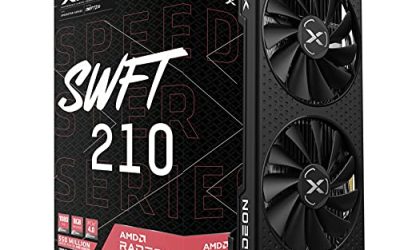
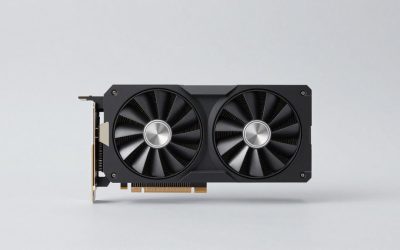
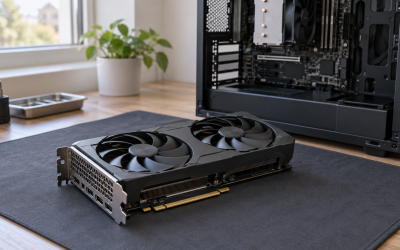
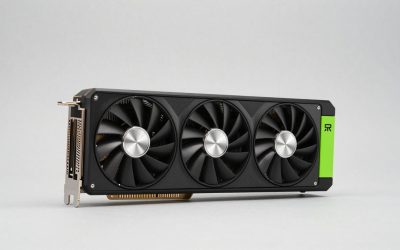
Our Top Picks
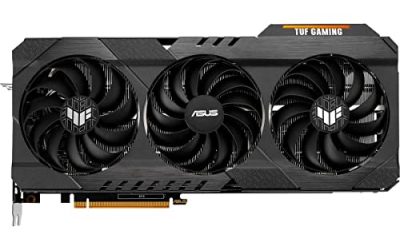
 ASUS ROG-STRIX-GTX1080TI-O11G-GAMING GeForce 11GB OC Edition VR ReadyBoost Clock 1708 MHz11.73 x 2.07 x 5.28 inches2 poundsCheck on Amazon
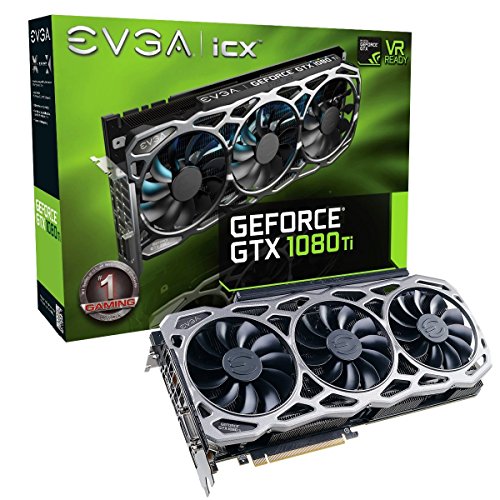 EVGA GeForce GTX 1080 Ti FTW3 GamingReal Boost Clock: 1683 MHz12.81 x 2.81 x 9.5 inches3.7 poundsCheck on Amazon
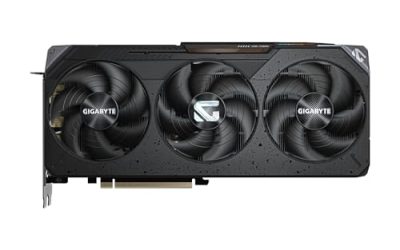
 GIGABYTE AORUS GeForce GTX 1080 Ti 11GB Graphic11 GB11.5 x 5.6 x 2.2 inches4.2 poundsCheck on Amazon
 ASUS ROG-STRIX-GTX1080TI-11G-GAMING GeForce11GB VR Ready 5K HD GamingBase Clock 1493 MHz11.73 x 2.07 x 5.28 inches2 poundsCheck on Amazon
 EVGA GeForce GTX 1080 Ti FTW3 DT GamingReal Boost Clock: 1582 MHz11.8 x 2.5 x 5.6 inches3 poundsCheck on Amazon
The GTX 1080 Ti remains a familiar name for anyone building a gaming PC around older hardware. Launched in 2017 as the flagship of the Pascal generation, it pairs 3,584 CUDA cores with 11GB of GDDR5X memory on a 352-bit bus, and it still handles 1440p play in a wide range of titles. Because NVIDIA ended production long ago, the listings that remain are a mix of new old stock and third-party offers, so matching the ASIN and model number matters more than usual.
This roundup covers five distinct desktop cards, all with the full 11GB frame buffer. We left out laptop variants, the plain GTX 1080, and any listing that only appears as a refurbished offer. Each pick below names its exact model number, boost clock, cooler, and output set, so you can check fit and connectors before you commit.
What to check before you buy a 1080 Ti
Every card here draws from two 8-pin PCIe connectors and is rated at 250W, so a 600W power supply is the usual baseline for a single-card build. Measure your case first: the triple-fan cards in this roundup run from about 267 mm to 298 mm long, and the GIGABYTE AORUS takes three expansion slots. The ASUS Strix cards are 2.5 slots wide, which can crowd the slot below them on a compact board.
Outputs vary more than buyers expect. The Founders Edition layout of three DisplayPort connectors and one HDMI port is common, but the Strix cards add a second HDMI port for a VR headset, and the AORUS adds a front-facing HDMI port for the same purpose.
Condition is the other point to watch. Several 1080 Ti listings now circulate as refurbished offers under a separate code, so match the ASIN and the model number together and choose the new condition.
1. ASUS ROG Strix OC
The ROG Strix OC is the fastest card in this roundup on paper, and it earns the top spot on the strength of its cooler as much as its clocks. In OC mode it boosts to 1,708 MHz from a 1,594 MHz base, with 11GB of GDDR5X memory running at 11 Gbps. The triple-fan cooler uses MaxContact, a machined heat spreader that sits flat against the GPU die, plus wing-blade fans that move more air at lower fan speeds. A metal backplate stiffens the card and carries an illuminated ROG logo that syncs with the rest of an ASUS build through Aura Sync.
At 298 mm long and 2.5 slots wide, this is a large card, so check clearance against your case and any drive cages in front of the PCIe slots. The output set is generous: two HDMI 2.0 ports, two DisplayPort 1.4 connectors, and one dual-link DVI-D port, which lets you run a VR headset and a monitor at the same time. Two 8-pin connectors feed the board.
The Strix OC suits a builder who wants the highest factory clocks in this roundup without touching manual tuning. The fan-stop mode keeps the fans off under light loads, and the card stays quiet during desktop work. If your case has room for a 298 mm card, match ASIN B06XRWYXJY with model ROG-STRIX-GTX1080TI-O11G-GAMING and choose the new condition.
Specs
- Model: ROG-STRIX-GTX1080TI-O11G-GAMING
- GPU: NVIDIA GeForce GTX 1080 Ti, 3,584 CUDA cores
- Boost clock: 1,708 MHz (OC mode), 1,683 MHz (Gaming mode)
- Memory: 11GB GDDR5X, 352-bit, 11 Gbps
- Cooling: Triple-fan MaxContact cooler with wing-blade fans, fan-stop mode
- Outputs: 2x HDMI 2.0, 2x DisplayPort 1.4, 1x dual-link DVI-D
- Power: 2x 8-pin PCIe, 250W
- Length: 298 mm, 2.5 slots
2. EVGA FTW3 Gaming
The EVGA FTW3 Gaming is the most compact triple-fan card in this roundup, and it pairs that smaller frame with the iCX sensor array that EVGA built its reputation on. Nine thermal sensors sit across the GPU, memory, and power stages, and the three fans run on independent curves so each one responds to the heat in its own zone. The factory clock is a 1,683 MHz boost from a 1,569 MHz base, with the same 11GB of GDDR5X memory at 11 Gbps as the rest of this roundup.
At about 267 mm long and two slots wide, the FTW3 fits cases that reject the longer triple-fan cards, and the dual-slot design leaves the neighboring slot free. The output set covers three DisplayPort 1.4 connectors, one HDMI 2.0b port, and one dual-link DVI-D port. Two 8-pin connectors feed the board, and the card carries RGB lighting on the shroud that can be tuned through EVGA software.
The FTW3 suits a builder who values thermal monitoring and a shorter card over the last few megahertz of factory clock. The iCX sensors give you a clear picture of memory and power-stage temperatures, which matters on a card of this age. If your case is tight on length, match ASIN B06Y15DWXR with model 11G-P4-6696-KR and choose the new condition.
Specs
- Model: 11G-P4-6696-KR
- GPU: NVIDIA GeForce GTX 1080 Ti, 3,584 CUDA cores
- Boost clock: 1,683 MHz, base 1,569 MHz
- Memory: 11GB GDDR5X, 352-bit, 11 Gbps
- Cooling: Triple-fan iCX cooler, 9 thermal sensors, 3x async fan control
- Outputs: 3x DisplayPort 1.4, 1x HDMI 2.0b, 1x dual-link DVI-D
- Power: 2x 8-pin PCIe, 250W
- Length: 267 mm, 2 slots
- UPC: 843368048044
3. GIGABYTE AORUS
The GIGABYTE AORUS is the widest card in this roundup, and its triple-slot frame exists to feed a 12+2 power phase design that holds its factory overclock steady under load. In OC mode it boosts to 1,708 MHz from a 1,594 MHz base, matching the Strix OC at the top of this roundup, and it drops to 1,683 MHz in Gaming mode. The WINDFORCE Stack cooler uses three 100 mm fans in a stacked layout, with a copper backplate that pulls heat away from the rear of the board.
The output set is the most VR-friendly here: three DisplayPort 1.4 connectors, two rear HDMI 2.0b ports, one dual-link DVI-D port, and one extra front-facing HDMI port, so a headset can stay plugged in at the front of the case. At 293 mm long and three slots wide, this card needs a roomy case and a board with a free slot below it. Two 8-pin connectors feed the board, and RGB Fusion lighting covers the shroud and backplate.
The AORUS suits a builder with a large case who wants the strongest power delivery in this roundup and a front HDMI port for a headset. If your case has three slots to spare and you want the AORUS power design, match ASIN B06XXJMF19 with model GV-N108TAORUS-11GD and choose the new condition.
Specs
- Model: GV-N108TAORUS-11GD
- GPU: NVIDIA GeForce GTX 1080 Ti, 3,584 CUDA cores
- Boost clock: 1,708 MHz (OC mode), 1,683 MHz (Gaming mode)
- Memory: 11GB GDDR5X, 352-bit, 11 Gbps
- Cooling: WINDFORCE Stack 3x 100 mm fans, copper backplate
- Outputs: 3x DisplayPort 1.4, 2x HDMI 2.0b, 1x dual-link DVI-D, 1x front HDMI
- Power: 2x 8-pin PCIe, 250W
- Length: 293 mm, 3 slots
- UPC: 889523009710
4. ASUS ROG Strix
The non-OC Strix shares the same triple-fan MaxContact cooler, the same 298 mm frame, and the same output set as the OC version above, but it ships with lower factory clocks. In OC mode it boosts to 1,632 MHz from a 1,518 MHz base, and in Gaming mode it runs at 1,607 MHz boost from a 1,493 MHz base. The 11GB of GDDR5X memory still runs at 11 Gbps, and the card keeps the fan-stop mode, the metal backplate, and the Aura Sync lighting of its faster sibling.
The output set is identical to the OC card: two HDMI 2.0 ports, two DisplayPort 1.4 connectors, and one dual-link DVI-D port. Two 8-pin connectors feed the board. In practice the gap between this card and the OC version is small, and the shared cooler means the non-OC card often holds its boost clock well under load.
This card suits a builder who wants the Strix cooler and the dual HDMI layout but does not need the highest factory clock in the roundup. It is the same physical card as the OC version apart from its clock profile, so case fit and connector planning are identical. Match ASIN B06XY25VTC with model ROG-STRIX-GTX1080TI-11G-GAMING and choose the new condition, since one crawl of the listing recorded no featured offers at the time.
Specs
- Model: ROG-STRIX-GTX1080TI-11G-GAMING
- GPU: NVIDIA GeForce GTX 1080 Ti, 3,584 CUDA cores
- Boost clock: 1,632 MHz (OC mode), 1,607 MHz (Gaming mode)
- Memory: 11GB GDDR5X, 352-bit, 11 Gbps
- Cooling: Triple-fan MaxContact cooler with wing-blade fans, fan-stop mode
- Outputs: 2x HDMI 2.0, 2x DisplayPort 1.4, 1x dual-link DVI-D
- Power: 2x 8-pin PCIe, 250W
- Length: 298 mm, 2.5 slots
5. EVGA FTW3 DT Gaming
The FTW3 DT Gaming is the de-tuned sibling of the FTW3 above, and it is the most affordable way into the FTW3 design. It keeps the same triple-fan iCX cooler with nine thermal sensors and independent fan curves, the same dual-slot 267 mm frame, and the same output set, but it ships at reference clocks: a 1,582 MHz boost from a 1,480 MHz base. The 11GB of GDDR5X memory still runs at 11 Gbps, and the board still takes two 8-pin connectors.
Because the cooler is unchanged, the DT card runs cool and quiet, and the headroom in its thermal design leaves room for manual tuning through EVGA software if you want to close the gap to the full FTW3. The output set covers three DisplayPort 1.4 connectors, one HDMI 2.0b port, and one dual-link DVI-D port.
The FTW3 DT suits a builder who wants the iCX cooler and the compact dual-slot frame at reference clocks, with the option to tune upward later. It is the weakest pick here only because its factory clock is the lowest in the roundup and its listing rests on a single Amazon field. Match ASIN B0762Q49NV with model 11G-P4-6694-KR and choose the new condition.
Specs
- Model: 11G-P4-6694-KR
- GPU: NVIDIA GeForce GTX 1080 Ti, 3,584 CUDA cores
- Boost clock: 1,582 MHz, base 1,480 MHz
- Memory: 11GB GDDR5X, 352-bit, 11 Gbps
- Cooling: Triple-fan iCX cooler, 9 thermal sensors, 3x async fan control
- Outputs: 3x DisplayPort 1.4, 1x HDMI 2.0b, 1x dual-link DVI-D
- Power: 2x 8-pin PCIe, 250W
- Length: 267 mm, 2 slots
What we left out
The NVIDIA Founders Edition is the reference 1080 Ti, but its Amazon listing now circulates only as a refurbished offer, so it does not belong in a roundup of standard listings. The MSI Gaming X Trio is a strong triple-fan card, but no clean .com ASIN surfaced after repeated searches; only a .co.uk code appeared. The ZOTAC AMP Extreme and the PNY XLR8 Gaming OC are both real cards with strong clocks, yet neither exposed a clean .com ASIN either. The EVGA SC Black Edition appears on Amazon only under refurbished listings, and the AORUS Xtreme Edition never exposed a clean .com ASIN.
How to pick the right 1080 Ti for your build
Match the card to your case first, then to your monitor setup. If your case is short on length, the two EVGA FTW3 cards at 267 mm are the safe choice, and the DT version adds manual tuning headroom. If you have room for a 298 mm card and want the highest factory clock, the Strix OC leads this roundup. If you run a VR headset and want a front HDMI port, the AORUS is the only card here with one. And if you want the Strix cooler without the top clock, the non-OC Strix gives you the same frame and outputs.
Whichever card you choose, confirm the ASIN and the model number together before you buy, and confirm that the listing is a new offer rather than a refurbished one.
As an Amazon Associate, we earn from qualifying purchases.
Frequently Asked Questions
Is the GTX 1080 Ti still good for 1440p gaming?
Yes, the 11GB frame buffer and 3,584 CUDA cores handle 1440p play in a wide range of titles, though newer cards run modern effects more efficiently and the 1080 Ti lacks hardware ray tracing.
What power supply do I need for a GTX 1080 Ti?
A 600W power supply is the usual baseline for a single 1080 Ti build, since every card here takes two 8-pin PCIe connectors and is rated at 250W.
Do all GTX 1080 Ti cards need two 8-pin connectors?
Yes, every desktop 1080 Ti in this roundup uses two 8-pin PCIe connectors, so check that your power supply has two free 8-pin leads before you buy.
How long is the longest GTX 1080 Ti in this roundup?
The ASUS ROG Strix cards are the longest at 298 mm, followed by the GIGABYTE AORUS at 293 mm, while the two EVGA FTW3 cards are the shortest at 267 mm.
More from Amazon
Programs that pair well with the guide above. Offers and eligibility are set by Amazon and may change.
Free shipping on eligible items, Prime Video and more. Eligible new members can start with a free trial.
Start a Prime free trialAd-free music streaming. Eligible new subscribers can start with a free trial.
Try Music Unlimited freeA Prime membership for ages 18-24 with a trial period. Eligibility is set by Amazon.
See Prime for Young AdultsAudiobooks and podcasts to listen to on the go. Eligible new members can start with a free trial.
Try Audible freeAs an Amazon Associate we earn from qualifying purchases.