Key takeaways
- Prioritize the GPU tier over the CPU: In this bracket your graphics card determines almost all of your gaming performance. An RTX 5060 paired with a mid-range i5 will outperform an RTX 5050 paired with a flagship CPU in nearly every title, so put your budget behind the GPU first.
- Match the panel to the hardware: A 165Hz screen is only worth paying for if your GPU can push frames to fill it. At 1080p or 1200p most cards here comfortably exceed 100fps in competitive shooters, making high refresh a genuine upgrade rather than a spec-sheet trophy.
- Check the RAM configuration, not just the capacity: 16GB is the sensible floor in 2026, but it should arrive as two 8GB sticks in dual-channel. Single-stick configurations can cost you 10-15% in CPU-bound games and are worth avoiding even at a small discount.
- Don’t underestimate storage needs: Modern AAA installs routinely exceed 100GB. A 512GB drive fills fast, so either budget for a 1TB model up front or confirm the laptop has a free M.2 slot for a cheap second drive later.
- Weigh cooling and chassis quality: Sustained performance depends on thermal headroom. Thicker chassis with dual-fan, multi-heatpipe designs hold clock speeds longer under load, and they’re usually quieter doing it than thin machines pushed to their limits.
Shopping for a gaming laptop under $1500 in 2026 means navigating a market crowded with confusing model numbers, recycled chassis designs, and spec sheets engineered to hide compromises. A machine with an impressive-sounding GPU might be paired with a dim 60Hz panel, a thermally throttled CPU, or a single stick of RAM that halves your effective memory bandwidth. The result is that two laptops at the same price can deliver wildly different real-world frame rates.
This guide cuts through that noise. We’ve focused on machines that pair current-generation RTX 50-series and late-model RTX 40-series graphics with high-refresh displays, adequate cooling, and enough RAM and storage to last a few years without an immediate upgrade. Every pick below realistically lands within the $1500 ceiling, and we’ve flagged exactly who each one is for so you don’t overspend on hardware you’ll never use.
Our top picks


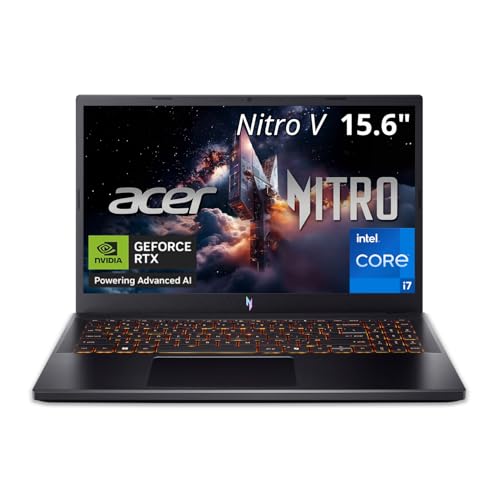
 acer Nitro V 15.6” FHD IPS 165Hz
- Product Group: Personal Computer
- Binding: Personal Computers



As an Amazon Associate we earn from qualifying purchases at no extra cost to you. Ratings are shown as listed on Amazon.
⚡ Save on Your Next PC — Amazon Prime
Prime members get fast free shipping on the systems above, plus early access to Prime Day & Black Friday PC deals. New members get a 30-day free trial.
Watch: Best Gaming Laptop Under $1500 — Video Review
How to Choose Gaming Laptop Under $1500
- Prioritize the GPU tier over the CPU: In this bracket your graphics card determines almost all of your gaming performance. An RTX 5060 paired with a mid-range i5 will outperform an RTX 5050 paired with a flagship CPU in nearly every title, so put your budget behind the GPU first.
- Match the panel to the hardware: A 165Hz screen is only worth paying for if your GPU can push frames to fill it. At 1080p or 1200p most cards here comfortably exceed 100fps in competitive shooters, making high refresh a genuine upgrade rather than a spec-sheet trophy.
- Check the RAM configuration, not just the capacity: 16GB is the sensible floor in 2026, but it should arrive as two 8GB sticks in dual-channel. Single-stick configurations can cost you 10-15% in CPU-bound games and are worth avoiding even at a small discount.
- Don’t underestimate storage needs: Modern AAA installs routinely exceed 100GB. A 512GB drive fills fast, so either budget for a 1TB model up front or confirm the laptop has a free M.2 slot for a cheap second drive later.
- Weigh cooling and chassis quality: Sustained performance depends on thermal headroom. Thicker chassis with dual-fan, multi-heatpipe designs hold clock speeds longer under load, and they’re usually quieter doing it than thin machines pushed to their limits.
The Best Picks Reviewed
ASUS ROG Strix G16 (2025)
The Strix G16 is the most complete package here, combining an RTX 5060 with a 14-core i7-14650HX and a 16:10 165Hz panel that gives you meaningfully more vertical working space than a standard 16:9 display. With 16GB of DDR5, a 1TB Gen 4 SSD and Wi-Fi 7 already on board, it’s the pick that requires the fewest compromises and no immediate upgrades.
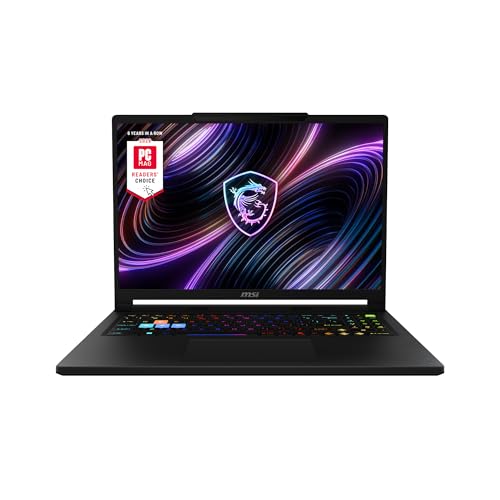
MSI Katana 15
The Katana 15 is the value outlier thanks to an RTX 4070 — a step above the 5060-class cards elsewhere in this roundup — driving a native QHD 165Hz display. The i7-13620H is a generation behind, but for players who want the highest sustained frame rates at 1440p rather than the newest CPU silicon, this is the most raw performance per dollar on the list.
GIGABYTE Gaming A16
GIGABYTE’s A16 hits a smart middle ground with an RTX 5060, a 1920×1200 165Hz WUXGA panel, and a full 1TB of storage alongside 16GB of DDR5. It lacks the brand cachet of the ASUS and Alienware options, which is precisely why it tends to undercut them while matching their core gaming performance.
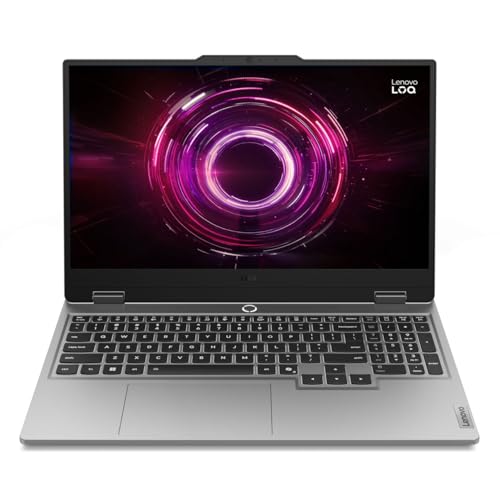
Lenovo LOQ 15.6″
The LOQ pairs an RTX 5060 with a Ryzen 7 250 in a restrained chassis that looks at home in an office as easily as a dorm room. The 144Hz FHD panel and 512GB SSD are the clear cost-saving measures, but the GPU is the same class as far pricier machines, making this the budget-conscious performance pick — just plan on adding storage.
Alienware 16 Aurora
Alienware’s 16 Aurora brings the brand’s build quality, keyboard feel and thermal engineering down to a genuinely accessible price with an RTX 5050 and Intel Core 7 240H. The GPU is the modest one in this group, so this is the choice for buyers who value chassis quality, service support and a premium 16-inch experience over chasing the highest possible frame rate.
Frequently Asked Questions
Is an RTX 5050 enough for gaming in 2026?
Yes, for 1080p gaming at high settings it remains perfectly capable, and DLSS upscaling extends its useful life considerably. It’s the right tier if you play primarily esports titles or older AAA games, but if you want to run the newest releases at maximum settings or game at 1440p, stepping up to a 5060 or 4070 is worth the extra outlay.
Should I buy an RTX 4070 laptop or an RTX 5060 laptop?
Broadly, the 4070 delivers more raw rasterization performance while the 5060 brings newer architecture features and better efficiency. If you’re chasing frame rates at 1440p today, the 4070 usually wins; if you want the longer-term feature support and a more modern platform, the 5060 is the safer bet.
How much RAM and storage do I actually need?
16GB of dual-channel DDR5 is the practical minimum in 2026 and is sufficient for the vast majority of games. For storage, 1TB is the comfortable target — if you buy a 512GB model, check that it has a spare M.2 slot so you can add a second drive inexpensively rather than replacing the original.
Do I need a QHD display, or is FHD fine?
FHD and WUXGA (1920×1200) remain the sweet spot for laptops in this price range because they let mid-range GPUs sustain high frame rates on high-refresh panels. QHD looks noticeably sharper and is worthwhile if you have the GPU headroom for it, but it will meaningfully reduce your frame rates in demanding titles.
Final Thoughts
For most buyers, the ASUS ROG Strix G16 is the strongest all-round choice under $1500, balancing a current-generation RTX 5060, a fast 14-core CPU, and a 1TB drive with no glaring weak points. If you want the highest possible frame rates for the money and don’t mind a slightly older CPU, the MSI Katana 15 and its RTX 4070 offer more raw performance per dollar, while the Lenovo LOQ is the smartest pick for anyone trying to secure 5060-class graphics at the lowest possible entry price.