Key takeaways
- Building yourself gives you full control over every part and often the best value per dollar, but it takes research, patience, and a willingness to troubleshoot.
- Buying a prebuilt like the Alienware Aurora or a KOTIN Ryzen system gets you a tested, warrantied machine out of the box with support if something goes wrong.
- The middle path is to buy a solid prebuilt now and learn to upgrade RAM, storage, or the GPU later, easing into building at your own pace.
Building a gaming PC used to feel like a rite of passage reserved for the technically fearless, but in 2026 it is more approachable than ever, and it remains the best way to understand exactly what you are paying for. Whether you assemble the parts yourself or start from a well-specced prebuilt, knowing how the pieces fit together lets you buy smart, avoid bottlenecks, and upgrade with confidence instead of guesswork. A little knowledge here saves real money and years of frustration.
This beginner’s guide explains what each core component does, how they work together, and how to decide between building from scratch and buying a ready-made system. You will learn how to match a graphics card to your monitor, why balance matters more than any single expensive part, and how to plan a build that lasts. If you would rather skip the screwdriver, the prebuilt gaming PCs below are the configurations we recommend as strong, balanced starting points.
Our top picks

 Alienware Aurora Gaming Desktop
- Product Group: Personal Computer
- Binding: Personal Computers

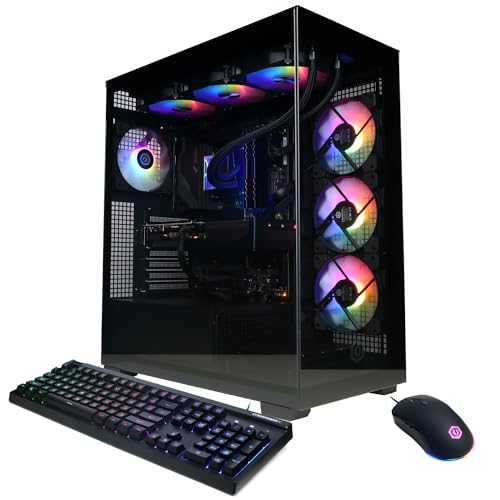
 YAWYORE Gaming PC
- Product Group: Personal Computer
- Binding: Personal Computers


As an Amazon Associate we earn from qualifying purchases at no extra cost to you. Ratings are shown as listed on Amazon.
⚡ Save on Your Next PC — Amazon Prime
Prime members get fast free shipping on the systems above, plus early access to Prime Day & Black Friday PC deals. New members get a 30-day free trial.
Watch: How to Build a Gaming PC (2026 Beginner’s Guide) — Video Review
Know the Core Components
Every gaming PC comes down to a handful of parts working in concert. The graphics card (GPU) does the heavy lifting for gaming and matters most for frame rates. The processor (CPU) feeds the GPU and handles logic, physics, and background tasks. Memory (RAM) gives the system room to juggle the game and everything else at once, storage (an SSD) holds your games and loads them fast, and the power supply quietly keeps it all fed with clean, stable electricity. Get these five right and the rest is detail.
Match the GPU to Your Monitor
The most common beginner mistake is buying a graphics card that does not fit the screen it feeds. There is little point pairing a top-tier GPU with a basic 1080p display, or a modest card with a 4K monitor it cannot drive. Prebuilts like the KOTIN with an RTX 5070 or the CyberPowerPC with an RTX 50-series card are tuned for high-refresh 1440p, while an RTX 5060-class machine such as the ZOTAC MEK or KOTIN RTX 5060 Ti build is a smart match for smooth 1080p. Decide your target resolution first, then pick the card to suit it.
Build vs Buy a Prebuilt
- Building yourself gives you full control over every part and often the best value per dollar, but it takes research, patience, and a willingness to troubleshoot.
- Buying a prebuilt like the Alienware Aurora or a KOTIN Ryzen system gets you a tested, warrantied machine out of the box with support if something goes wrong.
- The middle path is to buy a solid prebuilt now and learn to upgrade RAM, storage, or the GPU later, easing into building at your own pace.
Don’t Skimp on the Power Supply
The power supply is the least glamorous part and the one beginners most often cut corners on, which is a mistake. A cheap, underrated unit can crash your system under load, run hot and loud, or in the worst case damage other components. Look for a reputable 80 Plus certified supply with enough wattage headroom for your graphics card, ideally with a little room to spare for future upgrades. Reputable prebuilts already account for this, which is one quiet advantage of buying a system that has been balanced for you.
Plan for Airflow and Upgrades
A build is not finished when it powers on; it needs to stay cool and it should leave you room to grow. Make sure the case has clear intake and exhaust so hot air actually leaves, since a cramped, hot machine throttles and ages faster. Think ahead too: an extra RAM slot, a spare drive bay, and a power supply with headroom mean your next upgrade is a quick swap rather than a full rebuild. The best first PC is one you can improve piece by piece over the years.
Tips
- Set your target resolution and frame rate before shopping, then build the whole PC around the GPU that hits it.
- Prioritize an SSD for your operating system and games; nothing makes a PC feel slower than a hard drive boot.
- Choose a power supply with 100 to 150 watts of headroom above your parts so future upgrades drop straight in.
- Read reviews of any prebuilt’s exact configuration, since two machines with the same GPU can differ a lot elsewhere.
Frequently Asked Questions
Is it cheaper to build my own gaming PC?
Building can save money and lets you pick every part, but prebuilts like the KOTIN and YAWYORE systems have narrowed the gap, especially once you factor in warranty and support. For a first machine, a well-priced prebuilt is often the safer value.
What matters more, the CPU or the GPU?
For gaming the GPU almost always matters most, since it determines your frame rates. The CPU still needs to be capable enough not to hold the GPU back, which is why balanced prebuilts pair the two sensibly.
How much should I spend on my first gaming PC?
Spend enough to comfortably hit your target resolution. An RTX 5060-class machine handles smooth 1080p well, while an RTX 5070 build like the KOTIN or Alienware Aurora steps you up to high-refresh 1440p gaming.
Can I upgrade a prebuilt later?
Most standard-layout prebuilts let you add RAM and storage easily, and many allow a future GPU swap. Check that the case, motherboard, and power supply leave room before you buy if upgrading matters to you.
Conclusion
Building or buying a gaming PC comes down to understanding five core parts, matching your graphics card to your monitor, and refusing to cut corners on the power supply and cooling. Whether you assemble it yourself or start with a balanced prebuilt like the ones above, aim for a machine that fits your resolution today and has room to grow tomorrow. Do that in 2026 and your first gaming PC will reward you for years.