Key takeaways
- Nintendo Switch Lite review covering its 5.5-inch display, battery life, controls, storage, and game compatibility for handheld players on the move.
The Nintendo Switch Lite takes a clear position in the Nintendo Switch family. Instead of trying to be a home console and a portable system at the same time, it commits fully to handheld play. The controls are built into the body, there is no dock in the box, and there is no output to a television. That focus shapes every strength and every limitation covered in this review, from its smaller screen and lighter weight to the kinds of games it can and cannot play well.
For many players, that trade is exactly the point. A dedicated handheld is simpler to carry, simpler to set up, and easier to hand to a younger player or to keep as a personal second system alongside a shared family console. For others, especially anyone who values playing on a large screen or sharing controllers for local multiplayer at home, the missing features will matter more than the portability gains. Understanding which group you fall into is the key decision behind this console.
As an Amazon Associate, we earn from qualifying purchases.
Quick Verdict
The Nintendo Switch Lite is a focused handheld console for players who game on the move and rarely use a television. Its compact body, integrated controls, and long battery range suit commuting and travel, while the lack of TV output and detachable controllers makes it a poor fit for shared living-room play.
Key Specs
| Specification | Detail |
|---|---|
| Model | Nintendo Switch Lite, model HDH-001, Gray version listed as HDHSGAZAA |
| Display | 5.5-inch capacitive touch screen LCD, 1280 by 720 resolution |
| Processor | NVIDIA custom Tegra processor |
| Internal storage | 32 GB, with a portion reserved for system use |
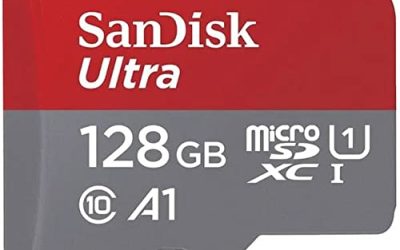
| Expandable storage | microSD, microSDHC, and microSDXC card slot |
| Battery | Built-in lithium-ion battery, 3570 mAh capacity |
| Battery life | Approximately 3 to 7 hours, depending on the game and settings |
| Charging | USB Type-C terminal, approximately 3 hours in sleep mode |
| Size | 91.1 mm by 208 mm by 13.9 mm, thicker at the sticks and shoulder buttons |
| Weight | Approximately 275 g |
| Wireless | Wi-Fi, Bluetooth 4.1, and NFC for compatible accessories |
| Sensors | Accelerometer and gyroscope |
| Audio | Built-in stereo speakers and a 3.5 mm headphone jack |
| Game media | Nintendo Switch game card slot and digital downloads |
| Play mode | Handheld mode only, with no TV output |
Design and Setup
The most noticeable design choice is the unibody construction. On the standard Nintendo Switch, the Joy-Con controllers slide off the sides of the tablet. On the Switch Lite, the controls are part of the console itself. That makes the system feel like a single solid handheld rather than an assembly of separate parts. There are no rails to align, no controllers to charge separately, and no small detachable pieces to keep track of in a bag. For travel and for younger players, that simplicity has real practical value.
The layout will be familiar to anyone who knows the Switch family. There are two analog sticks, face buttons, shoulder buttons, and triggers, along with volume and power controls. One important change sits on the left side, where a traditional plus-shaped Control Pad replaces the four separate directional buttons found on a left Joy-Con. For platform games, puzzle games, and older-style titles that rely on precise directional input, a proper Control Pad is generally easier to use consistently than four individual buttons, and its inclusion signals that this system was designed around classic handheld play.
Size and weight reinforce that purpose. At approximately 275 grams, the Switch Lite is noticeably lighter than a standard Switch with controllers attached, and its 5.5-inch screen makes the whole unit shorter and easier to hold for long sessions. Smaller hands in particular may find the reach to the sticks and shoulder buttons more comfortable. The trade-off is screen area. Text in role-playing games and strategy titles can look small, and players who prefer a larger view may find the standard and OLED models easier on the eyes during extended play at home.
Setup is deliberately simple. The box contains the console and an AC adapter, and the first steps involve charging through the USB Type-C port, connecting to Wi-Fi, signing in with or creating a Nintendo Account, and setting basic preferences such as language, region, and parental controls where needed. There is no dock to connect to a television, no HDMI cable to route, and no controller pairing routine for the built-in controls. A microSD card can be inserted to expand storage, which is worth doing early for anyone planning a mostly digital library, because game downloads, updates, and save-related data quickly compete for the internal space.
The Gray version covered here is understated and practical. Because the controls cannot be swapped, color is a permanent choice, so buyers should choose a finish they expect to live with.
Features and Performance
Performance on the Switch Lite should be understood in context. It uses an NVIDIA custom Tegra processor and plays Nintendo Switch software designed for handheld mode, rendering games on its built-in display at up to the screen resolution of 1280 by 720. Because there is no docked mode, there is no second performance profile to consider. What a game does in handheld mode on other Switch systems is the relevant comparison, and the Lite was built specifically around that mode rather than treating it as a secondary option.
That consistency can be a benefit. Players do not need to think about whether a game looks or runs differently on a television, because the television is simply not part of this system. Brightness, screen size, and viewing distance stay constant, and the experience is the same on a train, in a waiting room, or on a couch. The 5.5-inch LCD keeps images reasonably sharp for its size because the resolution is packed into a smaller area than on the larger Switch screens. Colors and contrast, however, reflect LCD technology rather than the OLED panel used on the premium model in the family, so deep blacks and vivid contrast are not the selling points here. Clarity and portability are.
Battery life is central to any handheld, and Nintendo rates the Switch Lite at approximately 3 to 7 hours depending on the software and usage conditions. As an example given by Nintendo, a demanding title such as The Legend of Zelda: Breath of the Wild can be played for roughly four hours on a single charge. Lighter games, lower brightness, and limited wireless use will push play time toward the upper end of the range, while graphically intensive games will pull it toward the lower end. Charging takes approximately three hours while the system is in sleep mode through its USB Type-C connection. That port choice also means many common USB-C chargers and power banks can top the system up away from home, although Nintendo’s included adapter remains the straightforward option.
Storage deserves careful thought before buying games. The console includes 32 GB of internal storage, with a portion reserved for the system, so the usable space is smaller than the headline figure. A few large digital games can fill it. The microSD card slot supports microSD, microSDHC, and microSDXC cards, and expanding storage is the practical answer for anyone who prefers downloads over game cards. Physical game cards reduce pressure on internal storage, but updates and downloadable content still consume space. Buyers with a large digital library on another Switch should factor a memory card into the total cost of ownership from the start.
Wireless features cover the essentials for modern handheld play. Wi-Fi supports online play, digital purchases from the Nintendo eShop, and system and game updates, with a paid Nintendo Switch Online membership required for online multiplayer in most titles and for other membership features. Bluetooth 4.1 and NFC are built in, with NFC used for compatible figures and accessories that are tapped to the system. The accelerometer and gyroscope support motion-aware controls in games that use them in handheld mode. Separate Joy-Con controllers and the Nintendo Switch Pro Controller can be connected wirelessly for games that require or benefit from them, which matters for the small number of titles that do not fully support handheld play, although a way to prop the console up is then needed because there is no built-in kickstand.
Game compatibility is the most important feature to check. The Switch Lite supports all Nintendo Switch software that can be played in handheld mode, across both physical and digital releases. Most major titles, including large adventure, racing, platform, and role-playing games, support handheld mode and work as expected. The exceptions are games that require detached Joy-Con features, such as certain party, fitness, and motion-focused titles. Those games may need separately sold controllers and may still feel awkward on a small screen that cannot stand on its own. Before buying the Lite for a specific game, checking that game’s supported play modes on its packaging or store page is a simple step that prevents disappointment.
Local multiplayer also works differently than on a docked system. Multiple Switch systems can connect locally for multiplayer in supported games, which suits households or friends where each player has a personal console. Sharing one screen for multiplayer is far less natural, because the display is small and the controls are fixed to the body. Tabletop play, a signature mode of the standard Switch, is not part of the Lite design. This is a personal system first, and its feature set consistently reflects that priority.
Everyday details round out the picture. The touch screen supports input in compatible games and menus, built-in stereo speakers handle game audio, and the 3.5 mm headphone jack offers a simple wired option for quiet play in shared spaces.
Who It’s For / Who Should Skip
Who it’s for
The Switch Lite suits players who know their gaming happens away from a television. Commuters, frequent travelers, and students who play in short sessions between other activities get the most from its size, weight, and quick setup. It also fits households that already own a standard Switch for the television, where a Lite serves as a personal second system for another family member, avoiding arguments over a shared console and allowing each player to carry a separate library and save progress.
Younger players and first-time handheld owners are another natural audience. The integrated controls mean there are no small detachable controllers to lose, the lighter body is easier to hold, and the focused feature set keeps setup and daily use straightforward. Fans of platform games, role-playing games, indie titles, and other genres that play well in handheld mode will find that most of what they want is fully supported, often with the benefit of the proper Control Pad on the left side.
Who should skip
Players who want to play on a television should skip the Lite entirely, because no accessory adds TV output to this model. Anyone whose favorite games are party, fitness, or motion titles that depend on detached controllers should also look elsewhere, or at least budget for separate controllers and accept a compromised setup. Shared-screen multiplayer at home is similarly better served by the standard or OLED models, which include detachable controllers and a dock.
Buyers who value the largest and most vivid screen in the family should consider the OLED model instead, and anyone planning long sessions reading dense on-screen text may prefer a bigger display. Finally, players who strongly dislike buying a memory card should think carefully, because the internal storage fills quickly with digital games on any Switch system, and the Lite is no exception.
How It Compares With Alternatives
Within the Nintendo family, the comparison is straightforward. The standard Nintendo Switch offers handheld, tabletop, and TV modes with detachable Joy-Con controllers and a larger screen, making it the flexible all-purpose choice for a household. The Nintendo Switch OLED model keeps that same flexibility and adds a larger, more vivid OLED display and other refinements aimed at players who split time between the dock and handheld play. The Switch Lite removes the flexibility deliberately, and in exchange delivers the smallest, lightest, and simplest system in the line. None of these systems is universally better; the right choice depends on where and how the games will actually be played.
Outside the family, other portable options serve different priorities. Larger PC-based handhelds offer access to computer game libraries and more control over settings, but they tend to be bigger, heavier, and more complex to manage, and they do not play Nintendo’s exclusive games natively. Mobile phones and tablets are already in many pockets and handle casual games well, yet they lack built-in physical controls as standard and do not offer the same dedicated game library or the consistency of a console built only for games. For a player whose main interest is Nintendo titles in a truly pocket-friendly form, the Lite occupies a specific and still distinctive place among these alternatives.
The value question follows the same logic. Paying for a dock, detachable controllers, and TV features makes sense only if those features will be used. A player who games exclusively in handheld mode is not giving up anything meaningful by choosing the Lite, while a player who later discovers a desire for television play cannot upgrade the Lite into a hybrid system. That one-way nature of the decision is worth stating plainly, because it is the most common source of regret with this model.
FAQ
Can the Nintendo Switch Lite connect to a TV?
No. The Nintendo Switch Lite is a dedicated handheld system and does not support output to a television. It cannot be used with a Nintendo Switch dock, and no cable or adapter changes that, because TV output is not part of the hardware design. Players who want television play need a standard Nintendo Switch or a Nintendo Switch OLED model instead.
Which games work on the Nintendo Switch Lite?
The system supports all Nintendo Switch games that can be played in handheld mode, in both physical game card and digital download form. Most major releases support handheld mode. Games that require detached Joy-Con controllers or specific motion features may need separately sold controllers or may not be a good fit, so checking the supported play modes listed for a specific game before buying is recommended.
How long does the Nintendo Switch Lite battery last?
Nintendo rates battery life at approximately 3 to 7 hours, depending on the game, screen brightness, and wireless use. As a guide provided by Nintendo, The Legend of Zelda: Breath of the Wild can be played for roughly four hours on a single charge. Charging the built-in 3570 mAh battery takes approximately three hours while the system is in sleep mode.
Can storage be expanded on the Nintendo Switch Lite?
Yes. Alongside the 32 GB of internal storage, the console has a slot for microSD, microSDHC, and microSDXC memory cards. Adding a card is strongly recommended for players who buy games digitally, because downloads, updates, and downloadable content can fill the internal storage quickly. Physical game cards also help, since the main game data stays on the card rather than the console.
Final Verdict
The Nintendo Switch Lite succeeds because it does not pretend to be everything. It is a dedicated handheld with integrated controls, a comfortable weight for long portable sessions, a useful Control Pad, and access to the large share of the Nintendo Switch library that supports handheld mode. Its battery range, expandable storage, and simple setup all support the same goal of personal play anywhere, without docks, cables, or detachable parts to manage.
Its limitations are equally clear and should be accepted before purchase rather than discovered afterward. There is no television output, no tabletop mode, and no included detachable controllers, and a small group of games built around those features will not suit it. The screen is smaller and uses LCD rather than OLED technology, and internal storage is modest for a digital library.
For the player those limitations do not touch, the Lite is an easy recommendation as a personal, travel-ready console, and as a second system in a household that already has a hybrid model for the television. For everyone else, the standard Switch or the OLED model is the safer choice. Decide based on where the gaming will happen, and the right system in the family becomes obvious.
Product and ASIN Reference
| Product | ASIN |
|---|---|
| Nintendo Switch Lite – Gray | B07V2BBMK4 |
FAQ
Can the Nintendo Switch Lite connect to a TV?
Which games work on the Nintendo Switch Lite?
How long does the Nintendo Switch Lite battery last?
Can storage be expanded on the Nintendo Switch Lite?
More from Amazon
Programs that pair well with the guide above. Offers and eligibility are set by Amazon and may change.
Free shipping on eligible items, Prime Video and more. Eligible new members can start with a free trial.
Start a Prime free trialAd-free music streaming. Eligible new subscribers can start with a free trial.
Try Music Unlimited freeA Prime membership for ages 18-24 with a trial period. Eligibility is set by Amazon.
See Prime for Young AdultsAudiobooks and podcasts to listen to on the go. Eligible new members can start with a free trial.
Try Audible freeAs an Amazon Associate we earn from qualifying purchases.