Key takeaways
- Speed (MHz or MT/s) measures how fast the memory transfers data; 6000MHz kits like the CORSAIR Vengeance RGB 6000 or Lexar Thor Z RGB hit the current sweet spot for gaming platforms.
- Timings (the CL number) measure latency, or how quickly the memory responds; lower is better, so a CL36 kit edges out a CL40 one at the same speed.
- The balance that matters is a fast speed paired with reasonable timings; chasing extreme numbers gives diminishing returns for real gameplay.
RAM is one of the easiest components to misunderstand, and getting it wrong pulls your gaming experience in one of two unhappy directions: too little and games stutter as the system scrambles for memory, too much and you have spent money that would have bought a better graphics card. In 2026, with games ballooning in size and more players streaming or keeping a browser full of tabs open while they play, knowing how much memory you actually need has never been more useful.
This guide cuts through the confusion around capacity, speed, and the DDR5 standard so you can buy exactly the right kit. You will learn why 32GB has become the comfortable target, why running two sticks matters more than most people realize, and how speed and timings affect real performance. The DDR5 memory kits below are the ones we recommend for smooth, future-proof gaming without overpaying.
Our top picks

 Corsair Vengeance RGB RS DDR5 16GB
- Product Group: Personal Computer
- Binding: Personal Computers

 CORSAIR Vengeance LPX DDR4 RAM 32GB
- Product Group: Personal Computer
- Binding: Personal Computers
 Corsair Vengeance DDR5 16GB
- Product Group: Personal Computer
- Binding: Personal Computers


As an Amazon Associate we earn from qualifying purchases at no extra cost to you. Ratings are shown as listed on Amazon.
⚡ Save on Your Next PC — Amazon Prime
Prime members get fast free shipping on the systems above, plus early access to Prime Day & Black Friday PC deals. New members get a 30-day free trial.
Watch: How Much RAM Do You Need for Gaming in 2026? — Video Review
How Much RAM You Actually Need
For pure gaming, 16GB has long been the baseline, and a solid 16GB kit like the Corsair Vengeance RGB RS 16GB or Patriot Viper Venom 16GB still runs most titles well. But in 2026 the smart target has shifted to 32GB, because modern games use more, and because most people keep a browser, chat app, and maybe a stream running alongside. A 32GB kit such as the CORSAIR Vengeance RGB 32GB or Crucial 32GB gives you comfortable headroom so nothing has to fight for memory. Beyond 32GB offers little gaming benefit unless you also do heavy content creation.
Why Dual-Channel Matters
How you reach your capacity matters as much as the number itself. Two matched sticks run in dual-channel mode, effectively doubling the memory bandwidth compared to a single stick of the same size, and that bandwidth directly boosts frame rates in many games. This is why kits are sold in pairs like 2x16GB. A single 32GB stick will technically work but leaves real performance on the table. Always buy a matched two-stick kit rather than one large module or two mismatched ones.
Understanding DDR5 Speed and Timings
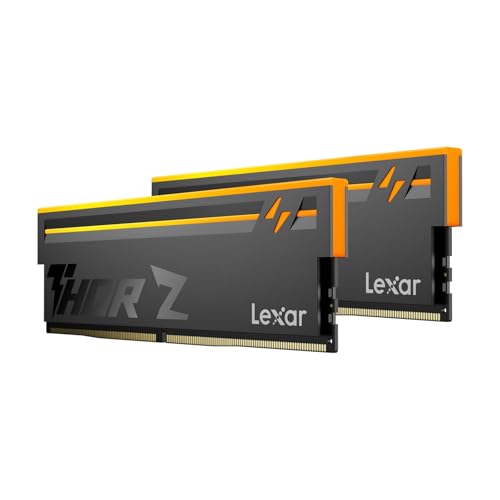
- Speed (MHz or MT/s) measures how fast the memory transfers data; 6000MHz kits like the CORSAIR Vengeance RGB 6000 or Lexar Thor Z RGB hit the current sweet spot for gaming platforms.
- Timings (the CL number) measure latency, or how quickly the memory responds; lower is better, so a CL36 kit edges out a CL40 one at the same speed.
- The balance that matters is a fast speed paired with reasonable timings; chasing extreme numbers gives diminishing returns for real gameplay.
Don’t Forget to Enable Your Speed Profile
Here is the step that trips up countless builders: your fast new memory does not run at its rated speed out of the box. By default it runs at a slow baseline until you enable its speed profile, called EXPO on AMD systems or XMP on Intel, in the BIOS. It is a single setting, but forgetting it means your 6000MHz kit crawls along far slower than advertised. After installing memory, always boot into the BIOS, switch on the EXPO or XMP profile, save, and confirm the speed in a monitoring tool.
Match RAM to Your Platform
Not every kit suits every motherboard. DDR5 and the older DDR4 are physically different and not interchangeable, so your memory must match what your motherboard accepts. Most current gaming builds are DDR5, and a 6000MHz kit is the well-supported sweet spot for both modern AMD and Intel platforms. Also note that laptop memory, like the Crucial SODIMM kits, uses a different smaller form factor than desktop sticks, so confirm you are buying the right shape for your machine before you order.
Tips
- Target 32GB in 2026 for comfortable headroom, but a good 16GB kit remains fine for pure gaming on a budget.
- Always buy a matched two-stick kit so you get the frame-rate benefit of dual-channel mode.
- Enable the EXPO or XMP profile in the BIOS after installing, or your fast memory will run slow.
- Confirm your board uses DDR5 and buy the desktop or laptop form factor that physically fits it.
Frequently Asked Questions
Is 16GB still enough for gaming in 2026?
For gaming alone, a quality 16GB kit like the Patriot Viper Venom still handles most titles. But if you multitask, stream, or want headroom for newer games, 32GB is the more comfortable and future-proof choice.
Do I really need two sticks instead of one?
Yes. A matched pair runs in dual-channel mode and delivers noticeably better frame rates than a single stick of the same capacity. Kits like the CORSAIR Vengeance 2x16GB are sold in pairs for exactly this reason.
What RAM speed should I buy?
On current gaming platforms, 6000MHz is the sweet spot, offering excellent performance without paying for diminishing returns. Kits like the Lexar Thor Z RGB or CORSAIR Vengeance 6000 sit right in that range.
My new RAM runs slower than advertised, why?
It is almost certainly because the speed profile is not enabled. Boot into the BIOS and switch on EXPO (AMD) or XMP (Intel), then save. Your memory will then run at its rated speed.
Conclusion
The right gaming memory in 2026 means aiming for 32GB in a matched dual-channel kit, choosing a 6000MHz DDR5 speed with sensible timings, and remembering to switch on the EXPO or XMP profile so it actually runs fast. Match the kit to your platform and you get smooth, stutter-free performance with room to spare. Buy memory thoughtfully and it quietly does its job for the entire life of your build.