Key takeaways
- Actuation force is how hard you must press for a key to register, measured in grams, with lighter switches feeling effortless and heavier ones resisting accidental presses.
- Actuation point is how far down the key travels before it registers, and shorter points make a switch feel faster and more responsive for gaming.
- Total travel is the full distance a key moves to the bottom, affecting how deep and cushioned each press feels.
- Sound profile ranges from near-silent to sharply clicky, which matters if you share a space or record audio while you play.
The switch is the heart of every mechanical keyboard. It is the small mechanism under each keycap that decides how a key feels, how loud it sounds, and how quickly it registers your press. Two keyboards can look identical yet feel worlds apart simply because of the switches inside them, which is exactly why choosing the right switch type matters more than almost any other spec when you buy a board.
This guide demystifies mechanical switches so you can pick the feel that suits how you play and type. You will learn the three main switch families and what separates them, the key specs like actuation force and travel, how switch choice affects gaming versus typing, and why hot-swappable boards give you room to experiment. Since the best way to understand switches is to try them in a good keyboard, the mechanical boards below span linear, tactile, and quiet options worth considering.
Our top picks
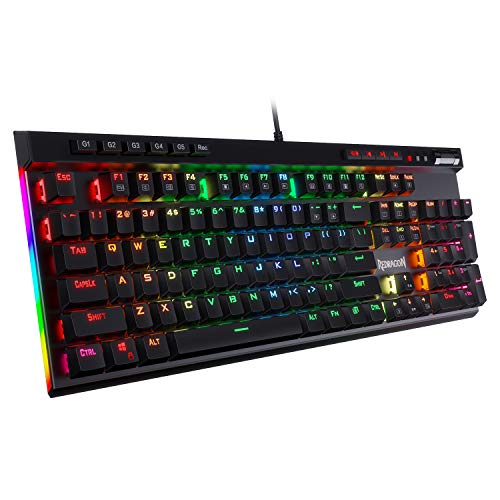
 Redragon Mechanical Gaming Keyboard Wired
- Product Group: Personal Computer
- Binding: Personal Computers

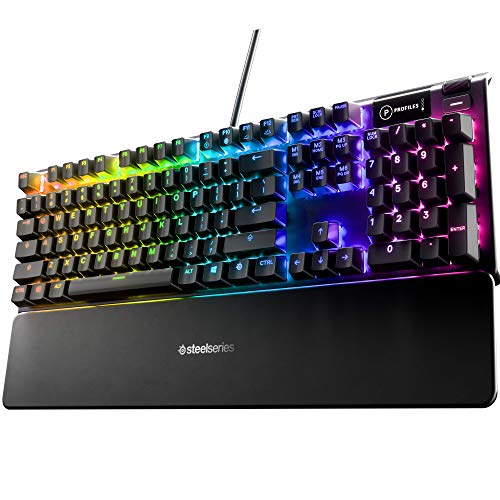
 Logitech G213 Prodigy Wired RGB Gaming Keyboard
- Product Group: Personal Computer
- Binding: Personal Computers

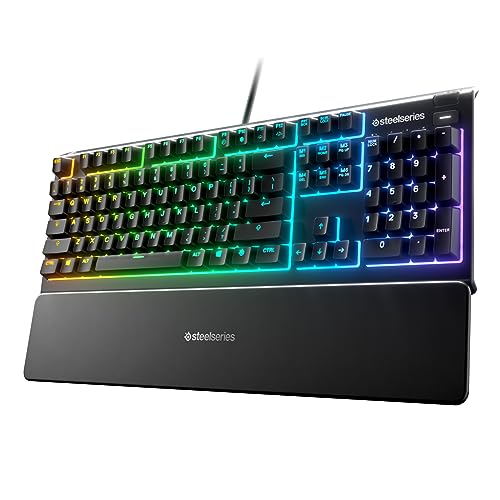
 Logitech G413 SE Full-Size Mechanical Gaming Keyboard
- Product Group: Personal Computer
- Binding: Personal Computers
As an Amazon Associate we earn from qualifying purchases at no extra cost to you. Ratings are shown as listed on Amazon.
⚡ Save on Your Next PC — Amazon Prime
Prime members get fast free shipping on the systems above, plus early access to Prime Day & Black Friday PC deals. New members get a 30-day free trial.
Watch: Mechanical Keyboard Switches Explained — Video Review
The Three Main Switch Types
Nearly every mechanical switch falls into one of three families, each defined by how it feels when pressed. Linear switches, often colored red, move smoothly straight down with no bump, giving a fast, consistent press that many gamers love. Tactile switches, commonly brown, add a small bump partway down so you feel the moment the key registers, which typists often prefer for feedback. Clicky switches, usually blue, add both that tactile bump and an audible click, delivering the loud, satisfying sound classic mechanical keyboards are famous for. There is no objectively best family, only the one that matches your preference, so understanding these three is the foundation of every switch decision.
Key Specs That Define a Switch
- Actuation force is how hard you must press for a key to register, measured in grams, with lighter switches feeling effortless and heavier ones resisting accidental presses.
- Actuation point is how far down the key travels before it registers, and shorter points make a switch feel faster and more responsive for gaming.
- Total travel is the full distance a key moves to the bottom, affecting how deep and cushioned each press feels.
- Sound profile ranges from near-silent to sharply clicky, which matters if you share a space or record audio while you play.
Choosing Switches for Gaming Versus Typing
Your main use should steer your switch choice, even though good switches handle both. For fast-paced gaming, many players favor light linear switches because their smooth, consistent travel and quick actuation let rapid inputs register without a bump slowing the finger down. For long typing sessions, tactile switches shine, since the small bump confirms each keystroke and reduces the tendency to bottom out hard, which eases finger fatigue. If you do both in equal measure, a light tactile or a medium linear often strikes a comfortable balance. Boards like the recommended options above offer everything from fast reds to hybrid and whisper-quiet switches, so you can match the feel to whether keys are your battlefield or your workspace.
Consider Sound and Your Environment
How loud your keyboard should be is a practical question, not just a preference. Clicky switches are gloriously satisfying but can be disruptive in a shared office, a bedroom, or on a stream where the microphone picks up every clack. If you game late at night or sit near others, quiet linear switches or dedicated silent switches, like the whisper-quiet options among the boards above, let you play without broadcasting every keystroke. Sound-dampened cases and switch lubrication soften the noise further. Think honestly about where and when you use the keyboard, because a switch that feels amazing to you can be a genuine nuisance to everyone else within earshot.
Why Hot-Swappable Boards Are Worth It
The hardest part of choosing switches is that you often cannot know what you love until you feel it under your own fingers. Hot-swappable keyboards solve this beautifully, letting you pull out switches and press in new ones without any soldering. That means you can start with one type, try another later, or even mix switch types across a single board, all for the price of a pack of switches rather than a whole new keyboard. Several boards above feature hot-swap sockets, which makes them ideal starting points for anyone still discovering their preference, since your keyboard can evolve with your taste instead of locking you into a single feel forever.
Tips
- Buy an inexpensive switch tester or start with a hot-swap board so you can feel the differences firsthand before committing.
- Choose light linear switches for competitive gaming and tactile switches for heavy typing if your use clearly leans one way.
- Factor in your surroundings, and pick quiet switches if you share a room, stream, or game late at night.
- Remember that keycaps, case, and lubrication also shape the sound and feel, so the switch is important but not the whole story.
Frequently Asked Questions
Which switch type is best for gaming?
Many gamers prefer light linear switches, often red, because their smooth travel and quick actuation suit rapid, repeated presses without a tactile bump slowing them down. That said, plenty of players game happily on tactile switches, so the best choice ultimately comes down to what feels most comfortable and responsive to you.
Are clicky switches too loud for an office?
They can be. Clicky switches produce a sharp, audible click on every press that carries across a shared space and can annoy nearby coworkers or show up on a stream. If noise is a concern, quiet linear or dedicated silent switches give you the mechanical feel without the disruptive sound.
What does actuation force mean and does it matter?
Actuation force is how much pressure a key needs to register, measured in grams. Lighter switches feel effortless and fast but can cause accidental presses, while heavier ones resist mistakes but tire the fingers sooner. It matters because it directly shapes how the keyboard feels during long gaming or typing sessions.
Can I change the switches on my keyboard later?
Only if it is hot-swappable. Boards with hot-swap sockets let you pull switches out and press new ones in with no soldering, so you can experiment freely. Keyboards with soldered switches are fixed unless you are comfortable desoldering, which is why hot-swap boards are popular with anyone still exploring their preferences.
Conclusion
Understanding switches turns keyboard shopping from guesswork into a confident choice. Learn the three families, linear for smooth speed, tactile for feedback, and clicky for satisfying sound, then weigh actuation force, travel, and noise against how and where you use the board. Lean linear for gaming, tactile for typing, and quiet switches for shared spaces, and consider a hot-swappable board so your keyboard can change as your taste does. Match the switch to your fingers and every keystroke becomes a small pleasure.