Key takeaways
- 14–15.6 inches: travel, hotel desks, dorm desks at arm’s length (0.5–0.8m). 1080p is plenty — at 15.6 inches it’s already ~141ppi. A 4K panel at this size hits ~282ppi, which looks gorgeous up close but costs more and draws more power.
- 17.3 inches: the dorm-desk sweet spot. Big enough to sit back slightly, small enough for a backpack sleeve. 1080p144Hz or 1440p60 panels both make sense here — the ViewSonic VX1755 and ASUS ROG Strix XG17AHP are well-known examples of the high-refresh variant.
- 21.5–24 inches: small bedrooms and shared spaces where you sit 1.2–2m away. At this size 1080p drops to ~92ppi, which looks soft up close but fine from a bed. Prefer 1440p (~122ppi at 24″) if the panel will double as a desk screen. Cased rigs like the GAEMS Guardian Pro XP put a 24-inch 1440p panel inside a hard case that also swallows the console — the classic “portable gaming station” format.
What's inside
A portable gaming TV for PS5 works when three things line up: an HDMI input rated for the resolution and refresh rate you actually plan to run (HDMI 2.0 covers everything up to 4K60 and 1440p120 — HDMI 2.1 is only needed for 4K120), a screen between 14 and 24 inches that matches your viewing distance, and a power plan, because the PS5 itself still needs a wall outlet or power station even when the display runs on a battery. Get those three right and almost any panel in this class will do the job.
Start with what the PS5 actually outputs
The console can send 720p, 1080p, 1440p, or 2160p over its single HDMI port, at 60Hz or 120Hz depending on the game. That output spec is what dictates the input spec you need on the display — not the other way around.

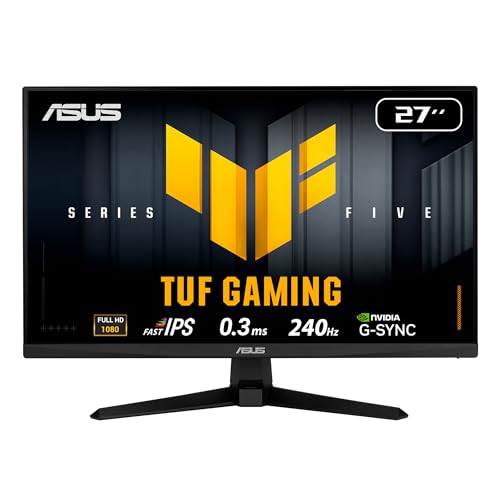
ASUS ROG Strix 17.3" 1080P Portable Gaming Monitor (XG17AHPE) - FHD, IPS, 240Hz, Adaptive-Sync, Built-in Battery, Smart Case, USB Type-C, Micro HDMI, for Laptop, PC, Phone, Console, 3-Year Warranty
Included for 'Portable Gaming TV for PS5: Sizes, Specs, and Setup Explained' because the listing specifies FHD and IPS, details this guide uses to compare options.
View on Amazon
ASUS ROG Strix XG17AHP 17.3” Portable Gaming Monitor, 1080P Full HD, IPS, 240Hz (Supports 144Hz), Adaptive-Sync, Eye Care, Micro-HDMI USB-C, ROG Tripod, Carrying Bag, 3 Hour Battery Life (Renewed)
Included for 'Portable Gaming TV for PS5: Sizes, Specs, and Setup Explained' because the listing specifies 1080P Full HD and IPS, details this guide uses to compare options.
View on Amazon
ARZOPA 16.1'' 144Hz Portable Gaming Monitor 106% sRGB - Z1FC
Included for 'Portable Gaming TV for PS5: Sizes, Specs, and Setup Explained' because the listing specifies Z1FC, details this guide uses to compare options.
View on Amazon
ASUS ZenScreen 15.6” 1080P Portable USB-C Monitor (MB16AHG) - Full HD, IPS, 144Hz, Mini-HDMI, Freesync Premium™, Ergo Kickstand, Eye Care, Blue Light Filter, Tripod Mountable, Protective Sleeve
Included for 'Portable Gaming TV for PS5: Sizes, Specs, and Setup Explained' because the listing specifies Full HD and IPS, details this guide uses to compare options.
View on Amazon| PS5 output mode | Approx. signal bandwidth | Minimum display input | Typical use |
|---|---|---|---|
| 1080p @ 60Hz | ~3.4 Gbps | HDMI 1.4 | Any portable TV or monitor |
| 1080p @ 120Hz | ~6.8 Gbps | HDMI 2.0 rated ≥120Hz | Competitive shooters, fighters |
| 1440p @ 60Hz / 120Hz | ~6 / ~13 Gbps | HDMI 2.0 | Native 1440p panels — the sweet spot |
| 2160p (4K) @ 60Hz | ~14 Gbps | HDMI 2.0 | 4K portables, cinematic games |
| 2160p (4K) @ 120Hz | ~27–32 Gbps | HDMI 2.1 (FRL) | Extremely rare in portable sizes |
Two implications most spec sheets won’t spell out. First, the PS5’s own HDMI 2.1 port tops out around 32Gbps, so even it drops to 4:2:2 chroma for 4K120 with HDR — you lose nothing by skipping 4K120 on a portable. Second, the PS5’s VRR (variable refresh rate) only works with HDMI 2.1 displays. Since virtually no panel under 24 inches ships with a true HDMI 2.1 input, treat VRR as effectively off in this category and don’t pay extra for a display that advertises it.
Match screen size to the room you’re actually in
- 14–15.6 inches: travel, hotel desks, dorm desks at arm’s length (0.5–0.8m). 1080p is plenty — at 15.6 inches it’s already ~141ppi. A 4K panel at this size hits ~282ppi, which looks gorgeous up close but costs more and draws more power.
- 17.3 inches: the dorm-desk sweet spot. Big enough to sit back slightly, small enough for a backpack sleeve. 1080p144Hz or 1440p60 panels both make sense here — the ViewSonic VX1755 and ASUS ROG Strix XG17AHP are well-known examples of the high-refresh variant.
- 21.5–24 inches: small bedrooms and shared spaces where you sit 1.2–2m away. At this size 1080p drops to ~92ppi, which looks soft up close but fine from a bed. Prefer 1440p (~122ppi at 24″) if the panel will double as a desk screen. Cased rigs like the GAEMS Guardian Pro XP put a 24-inch 1440p panel inside a hard case that also swallows the console — the classic “portable gaming station” format.
If you want a battery-powered TV rather than a monitor, small sets with tuners and HDMI inputs exist in the 13–24 inch range, and the LG StanbyME Go sits just above this range at 27 inches with a built-in battery — it’s a real “take the whole TV” option, just heavier and pricier (roughly $800–$1,000).
The HDMI-input trap on portable panels
This is where most buyers get burned. A display marketed as “144Hz” often only reaches that refresh through its USB-C DisplayPort input, while its HDMI port is an older HDMI 1.4 controller capped at 60Hz (sometimes 1080p120 at best). The PS5 has no USB-C video output — HDMI is the only path — so a USB-C-only high-refresh spec does you zero good.
Before buying, look for listing language like “120Hz via HDMI” or an explicit HDMI version for the input port itself, not just the panel’s native refresh. Also check the physical connector: many portables use mini- or micro-HDMI, so you’ll need a full-size-to-mini adapter or cable. And if you’re shopping for a 1440p panel, confirm it accepts 1440p input rather than only 1080p/4K — the PS5 outputs native 1440p and will negotiate whatever the display’s EDID reports.
Power math: the part everyone forgets
The display is the easy half of the power budget. The PS5 draws roughly 150–220W while gaming depending on model, so “portable” for the console still means “near an outlet” unless you bring a power station.
| Display class | Typical draw | Power source | Battery reality |
|---|---|---|---|
| 15.6″ 1080p60 IPS portable | 8–12W | USB-C PD, 20–30W adapter | ~38Wh internal pack → about 3h |
| 17.3″ 1080p high-refresh | 15–25W | 45–65W PD or AC brick | Rarely battery-powered; ~2h if it is |
| 15.6″ 4K60 portable | 12–18W | USB-C PD, 30–45W | Almost always needs a charger |
| 24″ cased rig (GAEMS class) | 30–50W | AC adapter only | Wall power required |
| 13–15″ 12V portable TV w/ tuner | 15–25W | AC or 12V car/DC plug | Runs off a power station’s DC port — no inverter loss |
Worked example for a camping or outage scenario: a PS5 pulling ~200W plus a 17-inch display at ~18W is ~218W total. A 512Wh power station delivers roughly 435Wh after inverter losses — about 2 hours of play. A 1kWh unit gets you a realistic 3.5–4 hours. If the display runs on its own battery, the same math applies in miniature: a 38Wh pack powering a 12W panel lasts ~3 hours, but only if you meet the panel’s PD requirement — a portable monitor asking for 30W PD will flicker or refuse to boot off a weak 18W power bank.
Setup and the settings that actually matter
- Cable: use a Premium High Speed (18Gbps) HDMI cable for anything up to 4K60 or 1440p120; you only need Ultra High Speed for 4K120. Check whether the display’s port is full-size, mini, or micro before you pack.
- Power the display first via its PD charger or AC brick, then connect HDMI — this avoids half-negotiated handshakes.
- PS5 → Settings → Screen and Video → Resolution: Automatic usually negotiates the panel’s native res correctly. If a cheap 1080p panel fails to handshake or shows a black screen, force 1080p manually.
- 120Hz Output → Automatic, then enable Performance Mode inside each supported game. The console only offers 120Hz if the display’s EDID advertises it over HDMI — which is exactly why the input-port check above matters.
- Verify, don’t assume: Settings → Screen and Video → “Video Output Information” shows the negotiated resolution, refresh rate, and HDR status. This screen is the definitive answer to “did I actually get 120Hz?”
- HDR: leave it “On When Supported” — but if your panel is a 300–400-nit display that merely accepts an HDR signal (very common in this class), switch HDR off. Faux-HDR tone mapping on a dim panel looks worse than clean SDR.
- VRR and ALLM → Automatic. Harmless to leave on; VRR simply won’t engage without an HDMI 2.1 display.
- Audio: HDMI carries sound to the panel’s speakers, which are typically thin 1–2W drivers. Better options: the DualSense 3.5mm jack, a USB dongle headset, or the display’s own 3.5mm output if it has one.
Decision matrix: your situation → what to buy
| Your situation | Priority spec | Buy this class | Typical price range |
|---|---|---|---|
| Dorm desk, competitive games (CoD, Fortnite, fighters) | 120Hz over HDMI, low lag | 17.3″ 1080p 120–144Hz portable monitor, HDMI 2.0 | $200–$350 |
| Dorm desk, cinematic/RPG player | Sharpness at arm’s length | 15.6–17.3″ 4K60 portable monitor, HDMI 2.0 | $250–$450 |
| Travel, hotels, LAN events | Thin, light, bus-powered | 15.6″ 1080p60 USB-C-powered panel + full HDMI input | $80–$150 |
| Moving often, small shared room | Console + screen in one case | 24″ cased rig or 21.5–24″ portable TV with HDMI 2.0 | $100–$500 |
| Unreliable outlets, camping, van setups | Self-powered display + power station for the PS5 | Battery portable monitor or 12V TV + ≥512Wh station | $150–$300 (display) + $300–$600 (station) |
| True all-in-one battery TV | Built-in battery, speakers, smart OS | Briefcase TV class (e.g., LG StanbyME Go, 27″ 1080p60) | $800–$1,000 |
FAQ
Will PS5 VRR work on a portable TV?
Almost never. PS5 VRR requires HDMI 2.1 on the display side, and true HDMI 2.1 inputs are essentially absent under 24 inches. Frame pacing is still fine — PS5 games hold their targets well — but don’t buy a panel for VRR support.
Can a 1080p portable display accept the PS5’s 4K signal?
Some can downscale a 2160p input; many can’t and will show a black screen or “no signal.” If it happens, force the PS5’s resolution to 1080p — hold the power button to boot into Safe Mode and change video output there if you can’t see the menu.
Is 4K worth it on a 15.6-inch screen?
Only if you sit close and play visually dense games. At 15.6 inches, 1080p is already ~141ppi; 4K roughly doubles pixel density but raises cost and power draw. A 1440p panel is the more efficient middle ground when you can find one with a solid HDMI 2.0 input.
Can the display’s battery also power the PS5?
No. Display batteries are 30–60Wh; the PS5 alone draws 150–220W. The console always needs AC power or a power station — the battery only ever covers the screen.