Our Top Picks
Pros & cons
- 240Hz OLED panel with 0.03ms response suits competitive play
- Triple UL certification targets anti-glare and low blue light
- DisplayHDR TrueBlack 400 adds deep contrast in dark scenes
- At nearly 16 pounds, it needs a sturdy stand or mount
- OLED panels need care to avoid static-image burn-in
Yes—the LG UltraGear 27GX704A is worth considering in 2026 if you want a sharp 27-inch 4K OLED with a genuinely high refresh rate, but it is not the best value for every gaming PC. Its strongest qualities are pixel-level OLED contrast, extremely fast motion response, and 4K/240Hz capability; its main drawbacks are OLED burn-in management, a relatively small 27-inch 4K image, and the graphics power required to use 240Hz properly.
LG UltraGear 27GX704A review: what you are buying
The 27GX704A belongs to LG’s UltraGear OLED class and is aimed at players who want both high-end image quality and competitive-speed performance. The key specification set is a 27-inch 3840×2160 panel, up to 240Hz refresh, an advertised response time around 0.03ms GTG, HDR support with DisplayHDR True Black certification, and adaptive sync support.

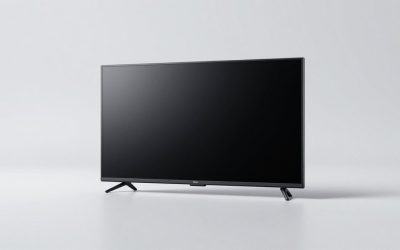
LG 27GX704A-B 27-inch Ultragear QHD (2650x1440) OLED Gaming Monitor 240Hz, 0.03ms, NVIDIA G-Sync Compatible, AMD FreeSync Premium Pro, VESA Display HDR TrueBlack400, HDMI 2.1, DisplayPort, Black
Chosen because it specifies 0.03ms and NVIDIA G-Sync Compatible.
View on Amazon
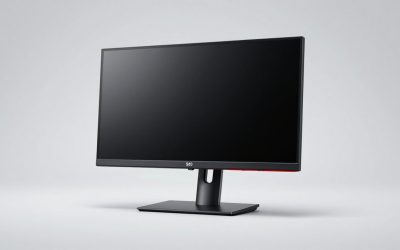
LG 27G640A-B 27-inch Ultragear QHD (2560 x 1440) IPS Gaming Monitor, 300Hz, 1ms, NVIDIA G-Sync, AMD FreeSync Premium, VESA DisplayHDR 400, HDMI 2.1, USB Type-C, Tilt/Height/Swivel/Pivot Stand, Black
Chosen because it specifies 300Hz and 1ms.
View on Amazon
LG 27GR83Q-B 27-inch Ultragear QHD (2560x1440) IPS Gaming Monitor, 240Hz, 1ms, DisplayHDR 400, G-Sync AMD FreeSync Premium, HDMI 2.1 DisplayPort, 4-Pole HP Out DTS GP:X, Tilt/Height/Pivot Stand, Black
Chosen because it specifies 240Hz and 1ms.
View on AmazonThose numbers matter, but they do not tell the whole story. A 4K 240Hz OLED monitor is useful only when your graphics card and games can deliver enough frames. If your system normally produces 80–140 fps at 4K, you will still benefit from OLED contrast and low latency, but you are paying for refresh headroom that remains unused much of the time.
| Area | What the 27GX704A offers | Practical consequence |
|---|---|---|
| Panel | 27-inch 4K OLED class | Very sharp text and fine game detail, with perfect per-pixel black |
| Refresh rate | Up to 240Hz | Excellent motion clarity when the PC can sustain high frame rates |
| Response time | Approximately 0.03ms advertised GTG | Very little pixel trailing; system latency still depends on the whole PC |
| HDR | DisplayHDR True Black class support | Strong shadow depth and bright highlights, but not LCD-level full-screen brightness |
| Sync | Adaptive sync support, including compatibility with major GPU platforms | Reduces tearing when frame rates fluctuate |
| Connectivity | Modern DisplayPort and HDMI gaming inputs, subject to regional configuration | Check the exact model suffix before planning a 4K/240Hz console or PC setup |
Image quality: the reason to choose OLED
Image quality is the 27GX704A’s clearest advantage. OLED pixels can switch off completely, so dark scenes do not have the gray haze common on conventional IPS or VA monitors. Night levels, space scenes, caves, and games with strong contrast look more convincing, particularly when the room is dim.
At 3840×2160 on a 27-inch screen, pixel density is roughly 163 pixels per inch. That produces crisp foliage, distant geometry, small interface text, and clean edges. It is noticeably sharper than 27-inch 1440p, although Windows scaling may be necessary. A 150% scaling setting is a sensible starting point for desktop use; 125% gives more workspace but can make some applications less comfortable to read.
OLED viewing angles are also excellent. Colors and contrast remain stable when you are sitting off-center, which helps in split-screen games or when the monitor is viewed from a standing desk position. The trade-off is that OLED brightness is more dependent on screen content than on the panel’s peak specification. A small highlight can look impressive, while a bright white webpage or large snowy scene may be limited to protect the panel and manage heat.
Refresh rate and response time
A 240Hz refresh rate updates the image every 4.17 milliseconds. That is a meaningful improvement over 144Hz, which refreshes every 6.94 milliseconds, but the difference is easiest to notice in fast competitive games such as arena shooters, racing games, and rhythm titles.
The advertised 0.03ms response figure should not be interpreted as total input lag. It describes pixel transition behavior under particular measurement conditions. Your actual result also includes game processing, frame rendering, the graphics driver, scanout, and input-device latency. OLED’s advantage is that it generally avoids the slow dark transitions and visible smearing that can affect VA panels.
For the cleanest motion, use the monitor’s highest refresh mode, enable adaptive sync, and avoid stacking aggressive overdrive settings on top of OLED’s already-fast response. If an overdrive option is available, the normal or middle setting is usually safer than the strongest mode, which can create bright edges or inverse ghosting.
4K/240Hz compatibility: the bandwidth reality
Here is the practical calculation that a specification sheet leaves out. A 3840×2160 image contains 8,294,400 pixels. At 240 frames per second and 30 bits per pixel for 10-bit RGB, the active image data alone is:
8,294,400 × 240 × 30 = 59.7 gigabits per second.
That figure excludes blanking intervals and transport overhead. In other words, 4K/240Hz 10-bit video is beyond the comfortable capacity of older DisplayPort and HDMI connections. Depending on the input and graphics card, the monitor may use Display Stream Compression, a newer high-bandwidth DisplayPort mode, or a reduced-color setting. DSC is visually lossless for normal gaming, so its presence is not automatically a problem.
Before buying, check that your GPU has a suitable modern output and that the included cable supports the required mode. For a laptop, the USB-C port must support the necessary DisplayPort Alt Mode bandwidth; a USB-C connector by itself proves nothing. Consoles generally cannot drive 4K at 240Hz, so the monitor’s full refresh capability is primarily a high-end PC feature.
HDR performance: excellent blacks, limited room-filling brightness
HDR is more convincing on this monitor than on a basic edge-lit LCD because OLED provides precise pixel-level control. Bright signs against a dark street, stars, flames, and metallic highlights can stand out without a large halo around them.
However, True Black HDR does not mean the screen is as bright across a large white area as a premium Mini-LED LCD. In a bright room, HDR games may look less dramatic than expected, and automatic brightness limiting can become visible during long bright scenes. This is a normal OLED behavior rather than a fault unique to LG.
Use HDR for games and video mastered for HDR, but leave it off for ordinary desktop work unless you specifically prefer the appearance. In Windows, enable HDR only when needed or use the operating system’s automatic HDR features selectively. Calibrate the HDR slider inside each game rather than raising brightness globally; the correct setting preserves detail in both dark shadows and bright highlights.
Recommended starting settings
- Refresh rate: select 240Hz in Windows and in the GPU control panel.
- Adaptive sync: enable the monitor’s sync option and the matching GPU feature.
- Frame-rate cap: cap games at about 237 fps for a 240Hz mode. This leaves a small margin below the refresh ceiling and helps adaptive sync remain active.
- Competitive games: use the lowest practical graphics settings that maintain a stable high frame rate; 200 consistent fps is usually preferable to swings between 120 and 240 fps.
- HDR games: enable HDR in Windows, then calibrate the game’s paper-white and peak-brightness controls.
- Desktop use: use 125–150% scaling, a comfortable SDR brightness, and a dark theme if you spend many hours in static applications.
- OLED care: allow the panel’s automatic pixel cleaning and screen-shift features to run. Hide taskbars, use a short display sleep timer, and avoid leaving a static browser or game interface visible all day.
OLED longevity and everyday usability
Burn-in remains the principal long-term concern. It is not inevitable, but static elements such as a taskbar, news ticker, productivity toolbar, or game HUD can create uneven wear over time. The risk depends on brightness, usage hours, content variation, and how consistently the same elements remain in the same positions.
The practical solution is routine rather than fear: set the screen to sleep after a few minutes, rotate demanding desktop tasks when possible, keep OLED protection features enabled, and do not disable compensation cycles simply to avoid a short maintenance process. A person using varied games and videos will generally have a lower risk profile than someone displaying the same spreadsheet for ten hours every day.
Value: who should buy it?
| Your situation | Verdict | Why |
|---|---|---|
| High-end desktop GPU, competitive games, and a preference for 4K | Strong buy | You can use the sharpness, OLED contrast, and much of the 240Hz headroom |
| Mid-range GPU producing 70–140 fps at 4K | Conditional | Great image quality, but a cheaper 4K 144–165Hz monitor may offer better value |
| Mostly console gaming | Conditional | HDR and OLED remain attractive, but the 240Hz premium will largely go unused |
| Heavy office work with fixed interfaces | Usually not ideal | OLED maintenance and burn-in management add concerns that an IPS monitor avoids |
| Dark-room single-player gaming | Excellent fit | Perfect blacks and strong contrast deliver the biggest visible benefit |
Market pricing will determine whether the 27GX704A is a good deal. It is reasonable at a premium OLED price, usually around $700–$1,000 depending on sales, region, and competing models. If it approaches the cost of larger or brighter OLED alternatives, compare screen size and HDR brightness before deciding. A cheaper 4K high-refresh IPS display is the more sensible purchase if your priority is desktop productivity, bright-room use, or minimizing long-term panel concerns.
Final verdict
The LG UltraGear 27GX704A is a high-performance gaming monitor rather than a universal bargain. Its 4K OLED image, near-instant response, and 240Hz ceiling make it especially compelling for a powerful PC and fast games, while HDR benefits from OLED’s perfect blacks even though full-screen brightness is limited. Buy it if you value clarity and contrast enough to accept OLED care and the cost of driving 4K at high frame rates; otherwise, a 4K 144–165Hz LCD or a less expensive OLED may deliver more value.