Key takeaways
- Map one to jump so you can bunny-hop or reposition while continuing to aim.
- Map the other to crouch, tactical ability, or interact, depending on your movement habits.
ex Legends on PC is the GameSir G7 SE for most competitive players: it combines low-latency wired USB, Hall-effect sticks, two rear buttons, trigger locks, and useful PC software at a usually modest price. If you want a premium wireless option, choose the Xbox Elite Wireless Controller Series 2; if you prioritize the lowest possible wired latency and four rear controls, consider the Victrix Pro BFG.
Best controllers for Apex Legends on PC at a glance
| Controller | Connection | Stick technology | Rear controls | Trigger stops | Typical market range | Best for |
|---|---|---|---|---|---|---|
| GameSir G7 SE | Wired USB | Hall effect | 2 buttons | Yes | Usually $40–$60 | Value-focused competitive play |
| Xbox Elite Wireless Controller Series 2 | Wired or Xbox Wireless/Bluetooth | Traditional potentiometer | 4 paddles | Yes | Usually $120–$180 | Wireless comfort and deep customization |
| Victrix Pro BFG | Wired or wireless, depending on version and adapter | Traditional modules | 4 back buttons | Yes | Usually $150–$180 | Many inputs and modular layouts |
| DualSense Edge | Wired or Bluetooth | Replaceable potentiometer modules | 2 rear levers | Adjustable stops | Usually $180–$200 | PlayStation layout and premium construction |
| Razer Wolverine V3 Tournament Edition | Wired USB | Hall effect | 6 extra buttons | Yes | Usually $100–$130 | Maximum remapping flexibility |
Prices are broad 2026 market ranges and can change with sales or regional availability. Features can also differ between revisions, so confirm the exact model and included wireless adapter before buying.

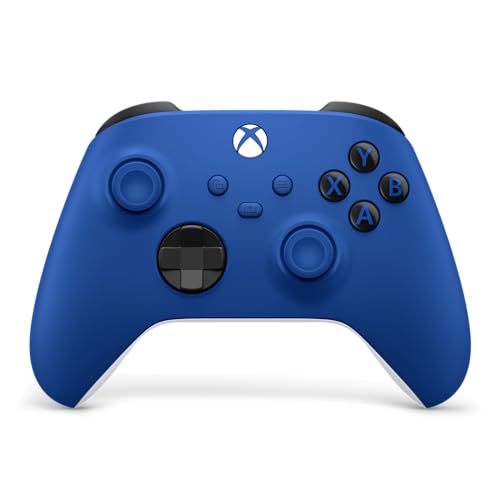
FLYDIGI Apex 5 PC Controller, Forceflex Joystick, 3ms Ultra-Low Latency
Included for 'Best Controller for Apex Legends on PC' because the listing specifies Forceflex Joystick and 3ms Ultra-Low Latency, details this guide uses to compare options.
View on Amazon
EasySMX X15 Wireless PC & Steam Gaming Controller, Hall Effect, Black
Included for 'Best Controller for Apex Legends on PC' because the listing specifies Hall Effect and Black, details this guide uses to compare options.
View on Amazon
ASUS ROG Raikiri II Xbox Wireless Gaming Controller for PC, Xbox Series X|S
Included for 'Best Controller for Apex Legends on PC' because the listing specifies Xbox Series X, details this guide uses to compare options.
View on Amazon
EasySMX X05Pro Wireless PC Gaming Controller with Smart Charging Dock
Included for 'Best Controller for Apex Legends on PC' as a relevant option in this category; details come from the product listing.
View on AmazonWhat matters most in Apex Legends
Input latency and connection reliability
A controller does not need an impressive polling-rate claim to be good in Apex. The important measurement is the complete path from button press to game response: switch scan time, controller processing, USB or wireless transmission, the game engine, and display latency. A wired USB connection removes one variable and is the safest choice for tournaments, crowded wireless environments, and players who want consistent behavior.
Modern 2.4 GHz wireless controllers can be reliable, but they require a receiver placed close to the controller rather than behind a metal PC case. Bluetooth is convenient but is generally the least attractive connection for competitive Apex because latency and interference are less predictable. On PC, use the controller’s included 2.4 GHz dongle when available, and connect the dongle directly to the computer or a short extension cable.
Stick precision and drift resistance
Hall-effect sticks, used by the GameSir G7 SE and Wolverine V3 Tournament Edition, measure stick position magnetically and avoid the physical contact surfaces that commonly wear in potentiometer modules. They are not magically drift-proof: contamination, calibration errors, mechanical wear, or a damaged stick can still cause problems. Their main advantage is usually better long-term resistance to ordinary sensor wear.
Precision is more than the sensor type. Look for a stable center, minimal dead-zone requirement, smooth motion at small deflections, and a configurable response curve. In Apex, a controller that needs a large dead zone makes micro-adjustments harder. Start with the lowest in-game dead zone that produces no visible cursor or camera movement, then raise it one step if drift appears.
Paddles and rear buttons
Rear controls let you jump, crouch, reload, or change weapons without removing your right thumb from the aiming stick. For a typical Apex layout, two rear controls are enough:
- Map one to jump so you can bunny-hop or reposition while continuing to aim.
- Map the other to crouch, tactical ability, or interact, depending on your movement habits.
Four paddles or six extra buttons are useful only if you can identify them without squeezing the grip accidentally. Too many closely spaced controls can produce misinputs during a close-range fight. The Elite Series 2 offers the most mature paddle shape and profile customization, while the Victrix Pro BFG and Wolverine V3 provide more remapping options in different physical layouts.
Trigger stops
Short trigger stops reduce the travel required to fire. That is valuable with semi-automatic weapons and fast close-range weapons, where a shorter actuation movement can make repeated shots feel more responsive. The trade-off is reduced analog range. A locked trigger is unsuitable for games that need fine throttle or brake control, but it is normally appropriate for shooting in Apex.
Use the shortest setting only if it does not cause accidental shots. Some players benefit from a slightly longer stop because it gives better tactile separation between aiming and firing. Trigger stops do not reduce every form of input latency; they mainly reduce finger travel and can make the control feel faster.
Head-to-head: which controller should you buy?
GameSir G7 SE: best overall value
The G7 SE is the strongest recommendation for most PC Apex players who are happy to remain wired. Its Hall-effect sticks, trigger locks, two rear buttons, and PC remapping software cover the features that matter most without paying for wireless hardware. The fixed cable is the major limitation: it adds desk clutter and makes couch play less convenient.
Choose it if your priorities are consistent USB performance, drift-resistant stick hardware, and a low purchase cost. It is also a sensible first controller for someone moving from keyboard and mouse and still deciding whether paddles are necessary.
Xbox Elite Wireless Controller Series 2: best premium wireless choice
The Elite Series 2 remains a strong choice for players who want four paddles, adjustable stick tension, interchangeable stick tops, trigger stops, and a built-in rechargeable battery. Its Xbox-style layout matches Apex’s common controller configuration, and the Xbox Accessories app supports firmware updates, profiles, remapping, and stick adjustments on Windows.
Its conventional potentiometer sticks mean it does not have the same theoretical drift-resistance advantage as a Hall-effect controller. It is also expensive, and wireless reliability depends on using the appropriate Xbox Wireless connection or a stable Bluetooth setup. For ranked play at a desk, wired mode is still the simpler option.
Victrix Pro BFG: best for four rear controls and modularity
The Victrix Pro BFG is aimed at players who want extensive physical customization. It offers interchangeable components, multiple rear buttons, trigger stops, and a layout that can be adapted to different games. Its extra controls are particularly useful if you want jump, crouch, tactical, and reload functions available without thumb movement.
The modular design increases flexibility but also adds complexity. The feel of its sticks and buttons differs from the Elite, and the exact wireless behavior depends on the version and adapter. Buy it for its control layout and customization, not simply because it has a higher feature count.
DualSense Edge: best for PlayStation-style ergonomics
The DualSense Edge is the natural premium option for players who prefer the symmetrical PlayStation stick arrangement. It has replaceable stick modules, rear controls, trigger travel adjustment, profiles, and wired PC support. The replaceable modules are valuable because a worn stick can be replaced without replacing the entire controller.
It is less compelling as a pure value choice: it has only two rear controls, and its battery life is limited compared with many conventional wireless gamepads. Use the supplied USB cable for competitive PC play, particularly if you do not need wireless freedom.
Razer Wolverine V3 Tournament Edition: best for many remaps
The Wolverine V3 Tournament Edition is a wired Xbox-layout controller with Hall-effect sticks, rear buttons, trigger stops, and additional shoulder controls. It suits players who want more than two rear inputs but do not want a modular controller. Razer’s PC software enables remapping and profile management, although software features and firmware requirements should be checked after installation.
Decision matrix for competitive Apex on PC
| Your situation | Best fit | Reason |
|---|---|---|
| You play at a desk and want maximum value | GameSir G7 SE | Wired reliability, Hall-effect sticks, trigger locks, and two rear buttons |
| You need four rear controls | Xbox Elite Series 2 or Victrix Pro BFG | Both support a four-input competitive layout, with different ergonomics |
| You want Hall-effect sticks and many buttons | Razer Wolverine V3 Tournament Edition | Combines Hall-effect sensing with extra remappable controls |
| You prefer PlayStation stick placement | DualSense Edge | Symmetrical layout and replaceable stick modules |
| You play from a sofa or need wireless | Xbox Elite Series 2 | Strong wireless feature set and built-in battery |
Recommended PC setup for Apex
- Update firmware first. Use the manufacturer’s Windows utility before changing game settings. Firmware updates can fix disconnects, incorrect trigger behavior, and profile problems.
- Prefer USB for ranked play. Plug the controller directly into the PC. Avoid an unpowered hub shared with external drives or webcams.
- Disable unnecessary remapping layers. Steam Input, manufacturer software, and Apex’s own bindings can overlap. If Apex detects duplicate inputs, use one remapping layer rather than stacking several.
- Set the trigger stops for firing. Test them in the firing range. If you produce accidental shots, move to the middle setting or restore full travel.
- Start with a small stick dead zone. In Apex, begin with the lowest available setting that does not show camera movement. A dead zone that is too high hides drift but makes fine aim less responsive.
- Map jump and crouch to rear controls. Keep the right thumb on the aiming stick during movement. Add tactical or reload only after the first two mappings feel automatic.
A practical test is to enter the firing range and track a moving target while walking slowly, then perform repeated slides, jumps, weapon swaps, and reloads. If the controller requires a large dead zone, produces accidental trigger presses, or causes hand fatigue after several minutes, a more expensive model will not automatically solve the underlying fit problem.
Final recommendation
For the best balance of competitive features, reliability, and price, buy the GameSir G7 SE. Choose the Xbox Elite Series 2 when wireless play, four paddles, and adjustable ergonomics matter more than Hall-effect sticks. Choose the Victrix Pro BFG or Razer Wolverine V3 Tournament Edition when you want a larger number of remappable controls. The DualSense Edge is the best fit for PlayStation-style ergonomics and replaceable stick modules, but it is harder to justify unless those specific strengths matter to you.