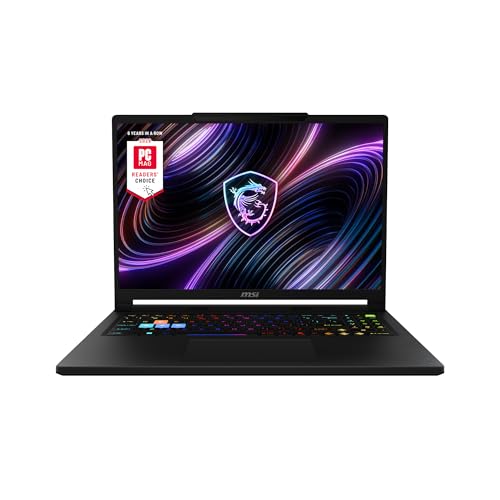
Key takeaways
- For maximum 4K performance: The desktop 5090 is far ahead and the clear winner.
- For portability: The laptop 5090 is the only option you can carry.
- For future upgrades: The desktop lets you swap the GPU and expand later.
- For value per frame: The desktop delivers more performance for the money.
- For an all-in-one setup: The laptop includes a high-refresh screen and battery.
The RTX 5090 badge appears on both laptops and desktops, but the two are fundamentally different pieces of silicon. NVIDIA gives mobile and desktop GPUs the same marketing name despite very different power budgets, core counts, and thermal ceilings, which means a “laptop 5090” and a “desktop 5090” deliver very different performance.
This comparison cuts through the naming confusion, using real machines like the GIGABYTE AORUS Master 16 laptop and the Lenovo Legion Tower and HP OMEN 45L desktops, so you understand exactly what you’re paying for and which makes sense for your needs.
Our top picks




As an Amazon Associate we earn from qualifying purchases at no extra cost to you. Ratings are shown as listed on Amazon.
🎮 Get More From Your Setup — Free
Prime Gaming gives you free PC games every month, in-game loot, and a free Twitch channel sub — plus fast free shipping on all the gear above. New members get a 30-day free trial.
Watch: Laptop 5090 Vs Desktop 5090: Full Comparison — Video Review
Quick Verdict
The desktop RTX 5090 is dramatically more powerful, with far more cores, higher power limits, and 32GB of VRAM, making it the choice for maximum 4K performance and future-proofing. The laptop RTX 5090 trades a large chunk of that power for portability and an integrated screen. If raw performance matters most, go desktop; if you need a powerful machine you can carry, the laptop 5090 is impressive in its own right.
Desktop RTX 5090
The desktop RTX 5090 is the full-fat GPU: more CUDA cores, a much higher power envelope, and 32GB of GDDR7 in systems like the Lenovo Legion Tower 7i and HP OMEN 45L. Paired with a desktop Core Ultra 9 285K and robust liquid cooling, it delivers uncompromised 4K gaming and heavy creative and AI workloads without throttling.
Desktops also win on longevity and value per frame. You can upgrade the GPU later, add storage, and the larger cooling and power supply headroom means sustained performance stays high through long sessions. The Lenovo Legion T7i with up to 128GB DDR5 shows how far a tower can scale.
The obvious downsides are size, the need for a separate monitor and peripherals, and zero portability.
Laptop RTX 5090
The laptop RTX 5090, as found in the GIGABYTE AORUS Master 16, is a genuine powerhouse for a portable, driving a 240Hz WQXGA or OLED panel with a strong Ryzen 9 9955HX3D or Intel Core Ultra 9 275HX alongside it. It handles modern games at high settings and tackles serious creative work on the move.
But it operates within a laptop’s power and thermal limits, so it can’t match the desktop card’s peak output. What you gain is an all-in-one machine, screen, keyboard, and battery included, that fits in a bag.
For students, professionals who travel, or anyone tight on space, that portability is worth the performance gap.
Head-to-Head: Which Should You Buy?
- For maximum 4K performance: The desktop 5090 is far ahead and the clear winner.
- For portability: The laptop 5090 is the only option you can carry.
- For future upgrades: The desktop lets you swap the GPU and expand later.
- For value per frame: The desktop delivers more performance for the money.
- For an all-in-one setup: The laptop includes a high-refresh screen and battery.
Frequently Asked Questions
Is a laptop 5090 as fast as a desktop 5090?
No. Despite the shared name, the desktop version has more cores, higher power limits, and more VRAM, making it significantly faster.
Why do they share the same name?
NVIDIA uses the same marketing tier for mobile and desktop GPUs even though they’re different chips with different power budgets. Always check the specs, not just the name.
How much VRAM does each have?
Desktop 5090 systems carry 32GB of GDDR7, while laptop 5090 configurations typically offer less, which affects heavy 4K and AI workloads.
Which is better for content creation?
The desktop for the most demanding, sustained rendering and AI work; the laptop for creators who need to work while traveling.
Final Verdict
If uncompromised performance and upgradeability are the goal, a desktop RTX 5090 in the Lenovo Legion Tower or HP OMEN 45L is the smarter buy. If you need serious power in a portable form, the laptop RTX 5090 in the GIGABYTE AORUS Master 16 is a remarkable machine, just don’t expect it to match its desktop namesake.