Key takeaways
- We compare five 1TB NVMe SSDs for gaming PCs, from flagship Gen4 speed to a quiet QLC pick, with endurance, cache and fit notes for every build.
A 1TB drive sits at the sweet spot for a gaming PC. It holds an system software, a handful of large modern games and the launchers that go with them, without forcing constant uninstalls. Go smaller and the juggling never ends. Go larger and the jump in spend is hard to justify when a second drive can come later. Every pick below is a 1TB NVMe M.2 2280 drive built around PCIe 4.0, the interface most gaming desktops made in the last few years already carry.
Speed figures on the box only tell part of the story. A drive that holds its pace during a 100 GB game install matters more than one that posts a big number in a short burst test. Endurance, cache design and physical fit matter too. This guide weighs all of them, and every model here carries a verified Amazon listing you can match by ASIN and model number before you buy.
As an Amazon Associate, we earn from qualifying purchases.
How to Choose a 1TB SSD for a Gaming PC
Match the interface first. All five picks use NVMe over PCIe 4.0 x4 in the M.2 2280 form factor, which is the slot found on nearly every gaming motherboard sold since 2020. A PCIe 3.0 slot will still run a Gen4 drive, just at Gen3 throughput, so check your board manual for the slot generation before you decide how much speed you are actually buying. SATA drives in the 2.5-inch form factor top out far below these numbers and belong in a different article.
DRAM cache versus host memory buffer. Four of the five picks carry onboard DRAM, which keeps the map of where data lives on the drive and helps sustained writes stay smooth. The fifth uses host memory buffer, borrowing a small slice of system memory for the same job. For pure game loading the difference is small, but for large installs, patching and moving game folders around, a DRAM-equipped drive holds its pace better.
Endurance is measured in TBW. Total bytes written tells you how much data the maker warrants the drive to absorb over its life. A 1TB gaming drive rated at 600 TBW or more will outlast several full game libraries. Lower endurance is not a flaw on its own, but it should come with a lower position in the ranking, which is how the last pick here earned its place.
Mind the heatsink and the fit. Most motherboards ship with an M.2 heatsink already fitted, and a bare drive slides underneath it without trouble. A drive with a factory heatsink is thicker, so measure the clearance above the slot if your graphics card sits close. Single-sided drives, where all the chips sit on one face, fit everywhere; double-sided drives can clash with thin laptop-style slots, though that is rarely an issue in a desktop tower.
Clone before you swap. If this drive replaces an older boot drive, clone the old drive onto the new one before removing anything. Samsung, Crucial and Kingston each offer free migration software, and a USB NVMe enclosure makes the job painless. Keep the old drive untouched until the new one boots cleanly on its own.
1. Samsung 980 PRO 1TB
The 980 PRO was the drive that set the Gen4 pace for everyone else, and the 1TB model remains a reference point years after launch. Sequential reads reach 7,000 MB/s with writes at 5,100 MB/s, and the Samsung Elpis controller paired with V-NAND and a 1GB LPDDR4 DRAM cache keeps those numbers honest during long installs rather than only in short bursts. It is a single-sided M.2 2280 module, so it slips under a motherboard heatsink without a second thought, and Samsung Magician software handles firmware updates, health checks and cloning in one place.
For a gaming PC this is the safe flagship choice: every motherboard maker has tested against it, every game launcher runs on it, and its 600 TBW endurance figure covers years of patching and reinstalling. The write figure trails the newer 990 PRO, which is why this drive sits at the top of a 1TB list rather than at the top of the whole Gen4 field, but for loading games the gap between 5,100 MB/s and 6,900 MB/s writes is invisible in practice. Match the listing by ASIN and model MZ-V8P1T0B/AM, since Samsung also sells a heatsink version under a different code.
Specs
- Capacity: 1TB
- Interface: NVMe PCIe 4.0 x4, M.2 2280
- Sequential read: up to 7,000 MB/s
- Sequential write: up to 5,100 MB/s
- NAND: Samsung V-NAND 3-bit MLC
- DRAM cache: 1GB LPDDR4
- Endurance: 600 TBW
- Warranty: 5-year limited
- Model: MZ-V8P1T0B/AM
2. XPG GAMMIX S70 Blade 1TB
The S70 Blade is the fastest drive in this group on paper, with sequential reads up to 7,400 MB/s and writes up to 5,500 MB/s from its Innogrit IG5236 controller. It ships with a low-profile aluminum heatsink already fitted, which keeps the drive cool under sustained load and makes it a natural fit for a desktop that lacks a motherboard heatsink. At 4.3 mm thick including that heatsink it still clears most graphics cards, though you should confirm the gap above your M.2 slot before you buy.
Endurance is rated at 740 TBW, the highest of the DRAM-equipped picks here, and the 1GB DRAM cache keeps large file moves smooth. The drive is also sold as PS5 compatible, which speaks to its thermal headroom, but its real home is a gaming desktop where the extra read headroom shows up in the largest open-world titles. Match the listing by ASIN and model AGAMMIXS70B-1T-CS. A second XPG model number, AGAMMIXS70B-1TB-CS, circulates for the same drive family, so confirm the exact code on the listing.
Specs
- Capacity: 1TB
- Interface: NVMe PCIe 4.0 x4, M.2 2280
- Sequential read: up to 7,400 MB/s
- Sequential write: up to 5,500 MB/s
- NAND: 3D TLC
- DRAM cache: 1GB
- Endurance: 740 TBW
- Warranty: 5-year limited
- Heatsink: low-profile aluminum, included
- Model: AGAMMIXS70B-1T-CS
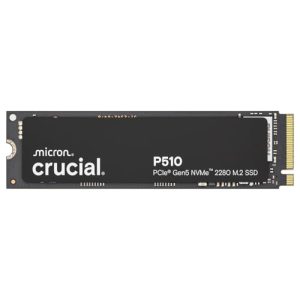
3. Crucial T500 1TB
The T500 pairs Micron 232-layer TLC NAND with a Phison E25 controller to deliver 7,300 MB/s reads and 6,800 MB/s writes, the strongest write figure in this group. It carries onboard DRAM, supports DirectStorage, and Crucial bundles a month of Adobe CC with the drive, which is a small bonus for anyone who also edits video on the same machine. The single-sided layout and standard 2.21 mm height fit under any motherboard heatsink.
What holds the T500 back from the top two spots is verification rather than hardware: its Amazon listing is confirmed through a printed ASIN field on a regional Amazon storefront, a tracker record and a Fulfilled by Amazon mirror, rather than a printed field on the main storefront. The drive itself is excellent, and its 600 TBW endurance matches the Samsung. Match the listing by ASIN and model CT1000T500SSD8, and note that the heatsink version carries a different model number, CT1000T500SSD5, under its own listing.
Specs
- Capacity: 1TB
- Interface: NVMe PCIe 4.0 x4, M.2 2280
- Sequential read: up to 7,300 MB/s
- Sequential write: up to 6,800 MB/s
- NAND: Micron 232-layer TLC
- DRAM cache: yes
- Endurance: 600 TBW
- Warranty: 5-year limited
- Model: CT1000T500SSD8
4. Kingston KC3000 1TB
The KC3000 is built on the Phison E18 controller with 3D TLC NAND and a 1GB DDR4 DRAM cache, posting 7,000 MB/s reads and 6,000 MB/s writes. Its headline figure is endurance: 800 TBW for the 1TB model, the best in this group, which makes it the pick for anyone who writes large amounts of data, whether that means constant game installs, recording gameplay footage to the same drive, or both. A graphene-aluminum heat spreader comes pre-fitted and keeps the single-sided module at 2.21 mm thick.
Kingston also sells this drive under its FURY Renegade badge with a small firmware change that lifts reads to 7,300 MB/s, so the KC3000 is effectively the quiet twin of a gaming-branded drive at a usually lower figure on the shelf. Like the T500, its listing is confirmed through a regional Amazon storefront and a tracker record rather than a printed field on the main storefront, so match the listing by ASIN and model SKC3000S/1024G before you buy. The 2TB version of this drive appears in our companion article on 2TB SSDs under a different ASIN.
Specs
- Capacity: 1TB
- Interface: NVMe PCIe 4.0 x4, M.2 2280
- Sequential read: up to 7,000 MB/s
- Sequential write: up to 6,000 MB/s
- NAND: 3D TLC
- DRAM cache: 1GB DDR4
- Endurance: 800 TBW
- Warranty: 5-year limited
- Model: SKC3000S/1024G
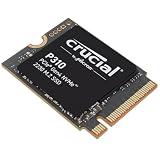
5. Crucial P3 Plus 1TB
The P3 Plus is the value pick of the group, and it earns its place honestly. It reads at up to 5,000 MB/s, which is still far beyond any SATA drive and plenty fast for game loading, and it writes at up to 3,600 MB/s. The trade-off is QLC NAND with no onboard DRAM, using host memory buffer instead, plus a lower endurance figure of 220 TBW. For a drive that mostly reads game data and only occasionally absorbs a big install, those compromises barely register. For a drive that will be written to heavily every day, they matter, which is why this pick sits last.
What the P3 Plus does offer is a clean, well-documented listing with a printed ASIN field, a five-year warranty and a single-sided layout that fits anywhere. It is also the lightest drive here in terms of power draw, which helps in compact builds. Match the listing by ASIN and model CT1000P3PSSD8. A UK variant with model CT1000P3PSSD801 circulates under its own code, so confirm the exact model number on the listing you buy from.
Specs
- Capacity: 1TB
- Interface: NVMe PCIe 4.0 x4, M.2 2280
- Sequential read: up to 5,000 MB/s
- Sequential write: up to 3,600 MB/s
- NAND: QLC
- DRAM cache: none, host memory buffer
- Endurance: 220 TBW
- Warranty: 5-year limited
- Model: CT1000P3PSSD8
What We Left Out
The Samsung 990 PRO 1TB and the WD Black SN850X 1TB are both excellent drives, but each already appears as a pick in an earlier article on this site, so they are not repeated here. The Kingston FURY Renegade 1TB with heatsink is the same situation. The SK hynix Platinum P41 1TB and the Seagate FireCuda 530 1TB are real drives with live listings, but their main-storefront codes could not be pinned cleanly enough to print here, so they stay on the bench for a future check. Gen5 NVMe drives belong in our Gen5 article, and SATA drives belong in our SATA article; neither family fits a 1TB Gen4 roundup.
Frequently Asked Questions
Is 1TB enough for a gaming PC in 2026?
Yes for most players. It holds an system software plus several large modern games at once, and a second drive can be added later when the library grows. Players who keep twenty or more large titles installed at all times should look at a 2TB drive instead.
Do I need a heatsink on a 1TB NVMe SSD?
Most gaming motherboards include an M.2 heatsink, and that is enough for the drives in this guide. A factory heatsink helps in compact builds or on boards without one, but a bare drive under a motherboard heatsink runs just as cool in normal gaming use.
Will a Gen4 SSD work in a PCIe 3.0 slot?
Yes. The drive runs at Gen3 throughput, which still beats any SATA drive by a wide margin. You lose the top-end Gen4 numbers, so a lower-tier Gen4 drive can be the smarter match for an older board.
Does DRAM cache matter for gaming?
It matters most during installs, patching and moving large game folders, where a DRAM-equipped drive holds its pace better. For loading games that are already installed, the difference between a DRAM drive and a host memory buffer drive is small.
More from Amazon
Programs that pair well with the guide above. Offers and eligibility are set by Amazon and may change.
Free shipping on eligible items, Prime Video and more. Eligible new members can start with a free trial.
Start a Prime free trialAd-free music streaming. Eligible new subscribers can start with a free trial.
Try Music Unlimited freeA Prime membership for ages 18-24 with a trial period. Eligibility is set by Amazon.
See Prime for Young AdultsAudiobooks and podcasts to listen to on the go. Eligible new members can start with a free trial.
Try Audible freeAs an Amazon Associate we earn from qualifying purchases.