Key takeaways
- Outstanding screen for portable play. The 7.4-inch OLED panel makes dark games, animated titles, and slower-paced RPGs look especially good. Its 90Hz refresh rate can also make menus and supported games feel smoother than on many older handhelds.
- Large game library. You can play many PC games without packing a laptop, mouse, and controller. SteamOS is designed around controller navigation, and the built-in controls cover most genres.
- Excellent for flights and hotel downtime. A downloaded game works without internet, which is valuable when airport Wi-Fi is unreliable or a hotel connection requires a browser sign-in. Suspend and resume also make it easy to play in short bursts.
- More flexible than a console handheld. Cloud saves, graphics settings, frame-rate limits, remote play, and desktop mode give experienced users plenty of control. You can lower demanding settings to stretch battery life or improve consistency.
- Comfortable controls for long sessions. The full-size grips and analog sticks are easier on the hands than many slim handhelds. The trackpads are particularly useful for strategy games, older PC titles, and interfaces designed for a mouse.
- Good value if you already use Steam. Your existing library, wishlist, saves, and controller preferences can follow you without buying a separate catalog of games.
The Short Answer
Yes—if you are willing to treat the Steam Deck OLED as a small gaming laptop rather than a pocket console. It is an excellent travel companion for flights, hotel rooms, and long waits, but its 669-gram weight, roughly 12.8 x 4.6 x 1.9-inch body, and need for a protective case make it noticeably bulkier than a Nintendo Switch or phone. For 2026 travel, the deciding condition is simple: bring it when you expect meaningful downtime and have room in your personal item for a case, charger, and accessories.
What You Actually Get
The Steam Deck OLED is a handheld PC with a 7.4-inch OLED touchscreen, a 1280 x 800 resolution, a 90Hz maximum refresh rate, dual analog sticks, trackpads, back buttons, motion controls, and standard gamepad buttons. The OLED display is its most obvious upgrade for travel. Black levels are deeper, colors are more vivid, and the larger screen feels more comfortable during long sessions than a typical phone or compact handheld.
Our top picks
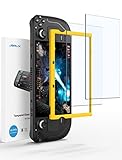
 JSAUX Carrying Case for Steam Deck/ROG Ally
- Product Group: Electronics
- Binding: Luggage
 JSAUX PC0104 ModCase Compatible with Steam Deck
- Product Group: Electronics
- Binding: Luggage
As an Amazon Associate we earn from qualifying purchases at no extra cost to you. Ratings are shown as listed on Amazon.
There are two main OLED storage configurations: 512GB and 1TB. Both use the same basic performance hardware, so the extra storage is mainly about convenience. Modern PC games can consume 50GB, 80GB, or more, making the 1TB model easier for travelers who do not want to manage installs constantly. You can also expand storage with a microSD card, although swapping cards is less convenient when you are moving between airports and hotels.
Battery life is highly dependent on the game. Valve rates the OLED model for approximately 3 to 12 hours, but demanding 3D games generally land toward the shorter end while indie games, older titles, and streaming can last much longer. The system includes a 45-watt USB-C power adapter. A power bank can help, but it should support USB-C Power Delivery at around 45W or higher; a basic phone battery pack may charge slowly or fail to keep up during play.
Travel protection is not optional. The included case is useful, but it takes up more space than the Deck itself. A hard-shell option such as the $26.99 JSAUX Carrying Case for Steam Deck/ROG Ally adds a structured exterior and room for small accessories. The $26.99 JSAUX PC0104 ModCase takes a different approach: it protects the device while allowing a detachable front shell, a body shell, a metal bracket, and a strap. The first is better for putting the Deck inside a backpack; the second is more adaptable for carrying and stand-style use. Neither changes the Deck’s weight or battery limits.
Pros
- Outstanding screen for portable play. The 7.4-inch OLED panel makes dark games, animated titles, and slower-paced RPGs look especially good. Its 90Hz refresh rate can also make menus and supported games feel smoother than on many older handhelds.
- Large game library. You can play many PC games without packing a laptop, mouse, and controller. SteamOS is designed around controller navigation, and the built-in controls cover most genres.
- Excellent for flights and hotel downtime. A downloaded game works without internet, which is valuable when airport Wi-Fi is unreliable or a hotel connection requires a browser sign-in. Suspend and resume also make it easy to play in short bursts.
- More flexible than a console handheld. Cloud saves, graphics settings, frame-rate limits, remote play, and desktop mode give experienced users plenty of control. You can lower demanding settings to stretch battery life or improve consistency.
- Comfortable controls for long sessions. The full-size grips and analog sticks are easier on the hands than many slim handhelds. The trackpads are particularly useful for strategy games, older PC titles, and interfaces designed for a mouse.
- Good value if you already use Steam. Your existing library, wishlist, saves, and controller preferences can follow you without buying a separate catalog of games.
Cons
- It is heavy for a handheld. At about 669 grams, the OLED Deck is nearly a pound before adding a case. Holding it above your face on a plane can become tiring, and it occupies substantial space in a small sling or personal item.
- Battery life is unpredictable. A demanding new release can drain the battery in only a few hours. Performance settings can help, but travelers should not assume the OLED model will last an entire long-haul flight without charging.
- Charging access can be inconvenient. Plane outlets may be unavailable, shared, or limited to lower power. A compatible power bank adds roughly 300 to 600 grams, depending on capacity, and must fit the airline’s battery rules. Most airlines allow spare lithium-ion batteries in carry-on baggage, not checked luggage, but confirm the current policy before flying.
- The case increases the footprint. The Deck measures about 11.7 inches wide, 4.6 inches tall, and 1.9 inches deep. A hard case can make the travel bundle closer to a compact book than a pocket device. It also leaves less room for headphones, a power bank, and a charger.
- Not every PC game is effortless. Compatibility varies, and some games involve launcher problems, anti-cheat limitations, small text, or awkward control layouts. Online multiplayer can be especially inconsistent when a title does not fully support SteamOS.
- It can be overkill for casual trips. If you have only a 30-minute commute, a crowded day bag, or little interest in PC games, a phone, tablet, or smaller console may be easier to carry and faster to use.
- Heat, noise, and screen glare remain practical concerns. Fans can become audible in demanding games, and bright outdoor conditions may make the glossy OLED screen harder to view comfortably.
Who Should Buy It
Buy the Steam Deck OLED if you regularly take flights, train rides, road trips, or work trips with at least a few hours of downtime. It is particularly well suited to travelers who already own Steam games, prefer full controls, and are comfortable adjusting graphics settings. It is also a strong choice for hotel gaming: connect it to a TV with the appropriate USB-C hub or dock, pair a controller, and it can serve as a compact console.
Choose the 1TB version if you want several large games installed at once and do not want to carry extra storage. Choose the 512GB version if you are comfortable using a microSD card or primarily play smaller games. In either case, budget for a case and, if you often travel away from outlets, a USB-C PD power bank rated at 45W or more.
Who Should Skip It
Skip it if your priority is the lightest possible luggage, instant access, or all-day battery life. A Nintendo Switch, phone, or small tablet is easier to pack for short trips. The Deck is also a poor fit if you mainly play competitive online games that require a stable connection or titles that are awkward on Linux-based software.
Travelers with wrist, hand, or shoulder discomfort should try the Deck before buying. Its grips are comfortable for many people, but comfort does not cancel out the weight. If you will carry the device through museums, conferences, or multiple transit connections all day, the case and charger may become more annoying than the gaming time is worth.
Cheaper Alternatives
| Option | Cost | Trade-off |
|---|---|---|
| Soft sleeve or padded tablet pouch | $10–$20 | Less bulk and lower cost, but limited protection from drops and pressure. |
| Generic hard case sized for a handheld | $15–$25 | May protect the Deck adequately, but fit, zipper quality, and accessory space vary. |
| JSAUX Carrying Case for Steam Deck/ROG Ally | $26.99 | More structured protection and storage, but larger than a sleeve and still adds weight. |
| JSAUX PC0104 ModCase Basic Set | $26.99 | Flexible shell, bracket, and strap system, but it is not a complete storage case for every accessory. |
| Use the included Steam Deck case | $0 extra | Best value, though it takes room and may not organize a power bank, hub, or extra cables. |
FAQ
Is the Steam Deck OLED good for airplane travel?
Yes, especially for offline games and flights with reliable tray-table space. Download and launch your games before boarding, enable offline mode when appropriate, and keep the Deck in your carry-on. The main limitation is battery life: plan on carrying the 45W charger or a suitable USB-C PD power bank for demanding games.
How much space does it take in a travel bag?
The console itself is about 11.7 inches wide, 4.6 inches tall, and 1.9 inches deep. A protective case adds several inches around those dimensions and can bring the total packed weight near 1 kilogram before the charger. Measure your personal item rather than assuming it will fit in a small electronics pouch.
Should I buy a case for travel?
Yes. A case protects the sticks, screen, triggers, and USB-C port from pressure and impacts. Use the included case for basic protection, a hard shell for luggage, or a shell-and-strap system if you want to keep the Deck accessible while moving. Avoid packing it loose next to keys, chargers, or heavy camera equipment.
Is the OLED model worth it over a cheaper handheld?
It is worth considering if you value the OLED screen, improved battery efficiency, full-size controls, and Steam integration. It is less compelling if you only play lightweight games or already own a smaller handheld that meets your travel needs. The OLED Deck is best understood as a portable PC with console-like convenience—not the smallest or longest-lasting device for every trip.