Key takeaways
- Core count: The RTX 5080 ships with 10,752 CUDA cores against 8,960 on the RTX 5070 Ti — roughly 20% more shading, RT and Tensor hardware.
- Memory bandwidth: Both use 16GB of GDDR7 on a 256-bit bus, but the 5080 runs faster modules for around 960GB/s versus roughly 900GB/s.
- Real-world performance: Expect a 15–20% lead for the 5080 at 4K, narrowing to closer to 12–15% at 1440p where CPU limits creep in.
- Power and cooling: 360W TGP versus 300W. The 5080 needs a stronger PSU, more case airflow, and generally a physically larger cooler.
- Price per frame: The 5070 Ti wins clearly on value; the 5080 commands a meaningful premium for a single-digit-to-mid-teens percentage gain.
- Feature parity: DLSS 4, Multi Frame Generation, PCIe 5.0 and DisplayPort 2.1 are on both — there is no feature you unlock by spending more.
Two years into the Blackwell generation, the GeForce RTX 5080 and RTX 5070 Ti remain the two cards most enthusiasts actually cross-shop. They sit one rung apart in NVIDIA’s stack, they both carry 16GB of GDDR7 on a 256-bit bus, and they both support the full DLSS 4 feature set including Multi Frame Generation. On paper the gap looks narrow. In practice, the choice comes down to how hard you intend to push resolution, refresh rate and ray tracing over the life of the card.
That decision matters more in 2026 than it did at launch. Path-traced titles have moved from novelty to expectation, 4K 240Hz panels are no longer exotic, and the used market has finally made last-gen alternatives look unappealing. Meanwhile, board partners have refined their designs — quieter coolers, better SFF-friendly options, dual BIOS switches — so the version of a card you buy now matters almost as much as the GPU inside it. Here’s how the two stack up.
Our top picks
 ASUS TUF Gaming GeForce RTX™ 5080 16GB
- Product Group: Personal Computer
- Binding: Personal Computers
| Product | Key specs | Amazon rating | |
|---|---|---|---|
| ASUS TUF Gaming GeForce RTX™ 5080 16GB | Product Group: Personal Computer Binding: Personal Computers | 4.1★ | Check price |
 ASUS ROG Astral NVIDIA GeForce RTX™ 5080 ASUS ROG Astral NVIDIA GeForce RTX™ 5080 | – | Check price | |
 PNY NVIDIA GeForce RTX™ 5080 Epic-X RGB™ PNY NVIDIA GeForce RTX™ 5080 Epic-X RGB™ | – | Check price | |
 GIGABYTE GeForce RTX 5070 Ti Gaming OC GIGABYTE GeForce RTX 5070 Ti Gaming OC | Product Group: Personal Computer Binding: Personal Computers | 4.1★ | Check price |
 GIGABYTE GeForce RTX 5080 Gaming OC 16G GIGABYTE GeForce RTX 5080 Gaming OC 16G | Product Group: Personal Computer Binding: Personal Computers | 4.6★ | Check price |
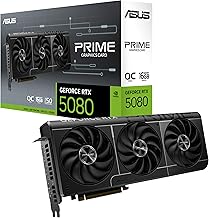 ASUS The SFF-Ready Prime GeForce RTX 5080 ASUS The SFF-Ready Prime GeForce RTX 5080 | – | Check price | |
 ASUS TUF Gaming NVIDIA GeForce RTX 5070 ASUS TUF Gaming NVIDIA GeForce RTX 5070 | Product Group: Personal Computer Binding: Personal Computers | 4.2★ | Check price |
 GIGABYTE NVIDIA GeForce RTX 5070 Ti SFF GIGABYTE NVIDIA GeForce RTX 5070 Ti SFF | – | Check price |
As an Amazon Associate we earn from qualifying purchases at no extra cost to you. Ratings are shown as listed on Amazon.
⚡ Save on Your Next PC — Amazon Prime
Prime members get fast free shipping on the systems above, plus early access to Prime Day & Black Friday PC deals. New members get a 30-day free trial.
Watch: RTX 5080 vs 5070 Ti: Worth It in 2026? — Video Review
Quick Verdict
The RTX 5080 is the card to buy if you game at 4K, chase high refresh rates, or want ray tracing and path tracing enabled without leaning heavily on upscaling. The RTX 5070 Ti is the smarter buy at 1440p — including 1440p ultrawide — where the performance deficit shrinks and the money saved is better spent on a monitor, CPU, or faster storage. Neither card is a bad purchase; they simply target different displays.
Key Differences
- Core count: The RTX 5080 ships with 10,752 CUDA cores against 8,960 on the RTX 5070 Ti — roughly 20% more shading, RT and Tensor hardware.
- Memory bandwidth: Both use 16GB of GDDR7 on a 256-bit bus, but the 5080 runs faster modules for around 960GB/s versus roughly 900GB/s.
- Real-world performance: Expect a 15–20% lead for the 5080 at 4K, narrowing to closer to 12–15% at 1440p where CPU limits creep in.
- Power and cooling: 360W TGP versus 300W. The 5080 needs a stronger PSU, more case airflow, and generally a physically larger cooler.
- Price per frame: The 5070 Ti wins clearly on value; the 5080 commands a meaningful premium for a single-digit-to-mid-teens percentage gain.
- Feature parity: DLSS 4, Multi Frame Generation, PCIe 5.0 and DisplayPort 2.1 are on both — there is no feature you unlock by spending more.
GeForce RTX 5080: The 4K Performance Pick
The RTX 5080 is the cheapest Blackwell card that consistently holds 60fps or better in path-traced games at 4K with DLSS Quality, and that single fact justifies its existence. It also has more headroom for the things that quietly eat frames: high-resolution textures, ray-traced global illumination, heavy VR, and content creation workloads that lean on the Tensor cores. If you already own a 4K high-refresh display, the 5080 is the card that keeps it fed.
Board partner choice matters here because of that 360W draw. The ASUS ROG Astral RTX 5080 OC is the extreme end — a 3.8-slot, four-fan design with a patented vapor chamber and a three-year warranty — and it runs remarkably cool and quiet, provided your case can swallow it. The ASUS TUF Gaming RTX 5080 OC and GIGABYTE RTX 5080 Gaming OC are the sensible mainstream picks, while the PNY RTX 5080 Epic-X RGB OC triple-fan covers the RGB-forward builds. For compact systems, the ASUS Prime RTX 5080 OC is SFF-ready at 2.5 slots with a dual BIOS, and the GIGABYTE RTX 5080 WINDFORCE OC SFF is a genuine small-form-factor option rather than a marketing claim.
GeForce RTX 5070 Ti: The Value High-End Pick
The RTX 5070 Ti is arguably the better-balanced product. It carries the same 16GB framebuffer as its bigger sibling, so it will not run out of VRAM before it runs out of compute — a criticism that has dogged plenty of mid-tier cards. At 1440p it delivers triple-digit frame rates in nearly everything, and with DLSS 4 and Multi Frame Generation it can drive a 4K panel comfortably if you accept upscaling as part of the pipeline.
Its 300W power target is the underrated advantage. It slots into more cases, tolerates modest PSUs, and generates less heat for the rest of your components to deal with — meaningful in a compact or poorly ventilated build. The trade-off is that the 5070 Ti has less spare capacity as games get heavier. If you typically keep a GPU for four or five years, that shorter runway is the real cost of saving money today.
Which Should You Buy?
- For 4K 120Hz+ gaming: pick the RTX 5080 — the extra cores and bandwidth are exactly what that resolution demands.
- For 1440p or 1440p ultrawide: pick the RTX 5070 Ti and put the savings into a better panel or CPU.
- For path tracing without compromise: pick the RTX 5080, ideally the ROG Astral or TUF Gaming for sustained clocks under load.
- For small-form-factor builds: either works, but the Prime RTX 5080 OC or GIGABYTE WINDFORCE OC SFF make the 5080 viable in tight cases.
- For a five-year upgrade cycle: pick the RTX 5080 — the headroom pays off in years three and four.
Frequently Asked Questions
Is 16GB of VRAM enough in 2026?
For 4K gaming with ray tracing, yes — 16GB remains sufficient in current titles. Heavy modding, 8K texture packs or large AI workloads can exceed it, but that applies equally to both cards since they share the same capacity.
What power supply do I need?
Plan on a quality 850W unit for the RTX 5080 and 750W for the RTX 5070 Ti, with more headroom if you’re pairing either with a high-core-count CPU or running an overclock.
Is the RTX 5080 worth the extra money?
Only if your display can show the difference. At 4K it’s a defensible upgrade; at 1080p or 1440p on a 144Hz panel, you’re paying for frames you’ll never see.
Do both cards support Multi Frame Generation?
Yes. DLSS 4 with Multi Frame Generation is available across the entire RTX 50 series, so the 5070 Ti loses nothing in features — only raw throughput.
Final Verdict
Buy the RTX 5070 Ti if you game at 1440p and want the best performance per dollar in the Blackwell stack; buy the RTX 5080 if you run a 4K high-refresh display, care about path tracing, or want the longer upgrade runway. For 5080 buyers, match the model to your case: ROG Astral or Gaming OC for full towers, Prime OC or WINDFORCE SFF for compact builds.