Key takeaways
- Table of Contents 7 sections 9 min read 1 Quick Verdict 2 Side by Side 3 Where V30 Wins 4 Where V60 Microsd Card for Steam Deck Games Wins 5 Cost Over 5 Years 6 Which One for Your Home…
What's inside
Choosing a V30 vs V60 microSD card for Steam Deck games sounds like a decision about speed, but the real choice is more practical: are you paying for performance the Steam Deck can actually use, or buying enough reliable storage for your household? A V60 card has a higher minimum sustained-write rating, yet the Steam Deck’s UHS-I card interface limits the benefit of that extra specification.
For most owners, a quality V30 card with an A2 application-performance rating is the sensible choice. It provides plenty of speed for installing and playing games, costs less per gigabyte, and is easier to replace if a family member loses or damages it. A V60 card can make sense for heavy file transfers, other cameras, or future devices, but it is rarely the best-value upgrade for a Steam Deck.
As an Amazon Associate we earn from qualifying purchases at no extra cost to you. Product prices and availability are accurate as of the date shown and are subject to change.



Quick Verdict
Buy a V30 microSD card for Steam Deck games unless you have a specific reason to use the card in a faster camera or computer. V30 guarantees a minimum sequential write speed of 30MB/s, while V60 guarantees 60MB/s under the right conditions. However, the Steam Deck uses a UHS-I microSD interface with a theoretical bus ceiling of about 104MB/s, and game loading depends heavily on random access, controller quality, file handling, and the game itself.
Look for a reputable UHS-I card with U3, V30, and preferably A2 markings. Choose 512GB for a moderate library, 1TB for a large installed collection, and 256GB only if you mostly play a few games at a time. A faster label does not automatically mean faster Steam Deck loading.
Side by Side
| Factor | V30 | V60 |
|---|---|---|
| Minimum sustained write rating | 30MB/s | 60MB/s |
| Steam Deck compatibility | Excellent when UHS-I, U3, and properly formatted | Usually backward-compatible, but the Deck cannot exploit its full rating |
| Comfort | Simple, affordable plug-in storage for handheld play | More speed headroom, but little extra comfort during ordinary gaming |
| Durability | Good cards commonly resist water, shock, temperature changes, and X-rays | Similar physical protection; the V60 label itself does not guarantee greater durability |
| Typical price range | About $15–$170, depending on capacity and brand | About $40–$350, with capacity, interface, and professional use driving the price |
| Maintenance | Low; leave it installed and keep some free space | Low for gaming, though its value is better realized with frequent large transfers |
| Space needed | Same tiny microSD footprint: approximately 15 × 11 × 1mm | Same physical size; capacity may be available in 256GB, 512GB, and 1TB versions |
| Look | Usually black or colored label; hidden inside the Deck | Similar appearance; speed markings are mostly packaging details |
| Resale | Easy to repurpose in cameras, tablets, and handheld consoles | Potentially attractive to camera users, but gaming buyers may not pay extra |
| Best for | Steam Deck libraries, everyday storage, and value-focused buyers | High-bitrate video, frequent transfers, and cross-device use beyond the Deck |
Where V30 Wins
The biggest V30 advantage is that it matches the Steam Deck’s needs without adding much cost. V30 is a Video Speed Class rating, not a promise that every game will load at exactly 30MB/s. It means the card is rated to maintain at least 30MB/s sequential write performance in compatible workloads. U3 is a related minimum write-speed classification, while A2 describes application performance features such as better input/output operations per second.
For game storage, A2 can be more relevant than moving from V30 to V60. Steam games contain many files and make varied storage requests, so sequential write speed is only one part of the experience. A reliable controller, genuine capacity, current firmware, and a healthy amount of free space matter too. The Deck should also format the card through SteamOS rather than relying on a computer’s default format.
V30 also wins on capacity-per-dollar. A 256GB card can be useful for indie games and a rotating library, while 512GB is a comfortable middle ground. If you want a large installed collection, a 1TB V30 card is often the more rational purchase. For reference, the Silicon Power 1TB Superior Gaming Micro SDXC is listed at $166.47, while the SANDISK 256B Extreme microSD Card plus adapter is listed at $73.99. Prices change, but these examples show why capacity and brand tier can matter more than jumping to V60.
There is also less worry about wasted capability. Since the Steam Deck cannot use the full performance of many faster card interfaces, a premium V60 purchase may feel no different in the dashboard or while launching a game. V30 cards are also widely available, making it easier to replace one or add a matching card for another handheld.
Where V60 Microsd Card for Steam Deck Games Wins
V60 wins when the card will regularly leave the Steam Deck. A 60MB/s minimum sustained-write rating is useful for recording high-bitrate video, moving large camera files, or handling demanding workflows where long sequential writes are common. If your card will serve a mirrorless camera, action camera, laptop, and Steam Deck, the broader headroom may justify the premium.
It can also be a reasonable choice if the price difference is small, the card is from a trusted brand, and you already need V60 for another device. In that case, backward compatibility makes one card easier to manage. Just confirm the product uses a standard microSD format and is supported by the Deck; newer “Express” branding should not be treated as an automatic performance upgrade for an older UHS-I slot.
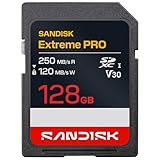
Do not confuse advertised read speed with Steam Deck performance. For example, the Lexar 1TB Play PRO Micro SD Express Card is listed at $349.99 and advertises up to 900MB/s read speed, but a compatible host device is needed to approach that figure. Similarly, the SanDisk 128GB Extreme PRO SD UHS-I card is listed at $51.99 and advertises up to 250MB/s read speed, but that product is a full-size SD card rather than the small microSD format required by the Deck unless used with a compatible adapter. Check the exact card and interface before buying.
Cost Over 5 Years
Storage cost is best judged by usable capacity, not the largest number on the package. A $40 512GB card that lasts five years costs about $8 per year. A $100 1TB card costs about $20 per year, while a $170 1TB card costs about $34 per year. Even a $350 premium card works out to $70 per year before considering whether its extra speed is useful.
Those calculations assume the card remains healthy for the full period. Do not treat a microSD card as the only copy of important saves, screenshots, or personal files. Steam game installations can be downloaded again, but backing up irreplaceable data and using Steam Cloud where available reduces replacement risk.
Capacity also affects long-term value. Modern games can occupy 50GB to well over 100GB, so a 256GB card may feel cramped after the operating system and a few large titles take space. A 512GB card generally offers a better balance for a family home. A 1TB card costs more upfront but reduces swapping, handling, and the temptation to buy several small cards.
Which One for Your Home
Small apartment
Choose a 512GB V30 A2 card from a reputable seller. It keeps the setup compact, avoids paying for unused camera performance, and provides enough room for a rotating library without adding accessories. The card itself weighs well under a gram, so storage footprint is effectively zero; the important factor is dependable capacity.
Family with kids or pets
Choose a 1TB V30 card if the budget allows. A larger library means fewer card swaps and less chance that a tiny card gets misplaced. Look for a card advertised as water-resistant, shock-resistant, temperature-resistant, and X-ray-resistant, but remember that these claims apply to the card, not necessarily the Deck or its slot. Keep a spare case and avoid removing the card while the system is writing data.
Rental
A 256GB or 512GB V30 card is the practical choice for a rental home or shared entertainment setup. It is inexpensive to replace, simple for different users to understand, and does not require a premium performance decision. If the Deck travels between rooms or homes, label the card case rather than the card itself, and store it away from keys, moisture, and loose metal objects.
Long-term home
Choose 1TB V30 unless you also use the card for professional video. The extra capacity is more valuable than V60 speed for a stationary game library. Consider V60 only when the same card will serve a camera or another device that explicitly benefits from it. In 2026, the most sensible purchase remains a genuine, warrantied card with the right capacity and A2 performance—not simply the highest speed number.
FAQ
Is V60 faster than V30 in a Steam Deck?
On paper, V60 has twice the minimum sustained-write rating. In the Steam Deck, however, the UHS-I interface and game workload limit the advantage. You may not notice faster launches or installations compared with a good V30 A2 card.
Can I use a V60 card in a Steam Deck?
Usually, yes, provided it is a compatible microSDXC card and is formatted correctly by SteamOS. The Deck will operate it within the limits of its card reader. Always verify the exact product type, especially when a listing uses Express or unusually high-speed branding.
Is A2 more important than V60 for Steam games?
Often, yes. A2 identifies application-focused performance features that are relevant to systems reading many files. It is not a guarantee of identical real-world results, but it is a more useful specification for game storage than paying solely for a higher video-speed class.
What capacity should I buy?
Choose 256GB for a small rotating library, 512GB for most households, and 1TB for frequent players with several large games installed. Leave free space for updates and system management, and buy from a reputable retailer to reduce the risk of counterfeit capacity.