Key takeaways
- USB-C is listed, but the description does not clearly say it supports video input or DisplayPort Alt Mode.
- The monitor has only one USB-C port and no clear explanation of whether it can receive video and power at the same time.
- A vague “HDR” claim is used without a stated brightness level or panel information.
- The product listing does not state weight, dimensions, refresh rate, or included cables.
- The stand is a thin fold-out flap with no nonslip surface or angle adjustment.
- The manufacturer offers less than a 12-month warranty or provides no visible support information.
- A 4K, 165Hz, or OLED model is priced suspiciously low compared with similar products; confirm the actual panel specifications and return terms.
What's inside
Choosing a portable monitor for a handheld PC is less about buying the biggest screen you can afford and more about matching the display to the way you actually play. The common mistakes are predictable: buying a 15.6-inch model that overwhelms a small travel desk, assuming every USB-C port carries video, paying extra for a high refresh rate the handheld cannot consistently use, or overlooking power draw until the battery drains far faster than expected.
A good portable monitor can make a handheld PC feel closer to a compact desktop setup, whether you use a Steam Deck, ASUS ROG Ally, Lenovo Legion Go, or another USB-C gaming handheld. For 2026, the sweet spot remains a 15.6-inch, 1080p IPS monitor with USB-C video input, HDMI backup, a protective cover, and sensible power requirements. Here is how to choose one without getting distracted by specs that will not improve your experience.
As an Amazon Associate we earn from qualifying purchases at no extra cost to you. Product prices and availability are accurate as of the date shown and are subject to change.


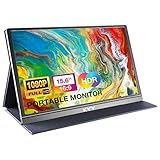

Decide These 3 Things First
First, decide where you will use it. A monitor for hotel rooms, coffee shops, and flights should prioritize a slim profile, a protective case, and simple one-cable USB-C operation. A monitor that will mostly live on a desk can be larger, brighter, and more dependent on a wall charger or dock.
Second, check your handheld’s output and power setup. Most current handheld PCs support video through USB-C with DisplayPort Alt Mode, but you should confirm this in your device documentation. If you use HDMI, you will generally need a USB-C dock or hub. A monitor may display video through one USB-C connection yet still need separate USB-C power, especially when brightness is high.
Third, set realistic performance expectations. A 1080p portable monitor is a practical match for handheld gaming. It is sharp enough for desktop work and games, while 720p or 800p internal rendering can be upscaled effectively. A 144Hz or 165Hz display is appealing, but it makes the most sense for lighter games, older titles, and desktop use; many demanding handheld games will run closer to 30 to 60 fps.
Screen Size and Resolution
The most versatile portable-monitor size is 15.6 inches. Most 15.6-inch models measure roughly 14.0 to 14.4 inches wide, 8.8 to 9.0 inches tall, and 0.3 to 0.5 inch thick before adding the folio cover. That is large enough to make strategy games, inventory screens, web browsing, and Windows desktop controls more comfortable than on a 7- to 8.8-inch handheld display.
A 13.3- or 14-inch model is better for frequent travel. These usually weigh about 1.2 to 1.6 pounds without accessories and fit more easily in a day bag. Their smaller screen is still useful for dual-screen work, but text and interface elements feel less relaxed at normal desk distance.
A 17.3-inch portable monitor can be excellent for longer stays or a semi-permanent desk, but it is less portable in practice. Expect a footprint around 15.5 by 9.8 inches and total carry weight of roughly 3 to 4 pounds with a cover and cables.
For resolution, choose 1920 by 1080 pixels unless you have a very specific reason not to. Full HD is well matched to a 15.6-inch screen, delivers readable text, and does not place an unrealistic burden on the handheld’s graphics hardware. Avoid paying a major premium for 4K on a 13- to 16-inch portable display if gaming is the priority. A 4K panel may make small text look cleaner for work, but it also encourages scaling adjustments and is rarely the most efficient gaming target for a handheld PC.
Materials and Everyday Durability
Portable monitors are thin by design, so material quality matters more than it does with a conventional desktop display. Most affordable models use a plastic rear housing, while midrange and premium options may have an aluminum or aluminum-alloy shell. Plastic is not automatically a problem: it keeps weight down and can handle casual use well. But it should not flex excessively when you hold the monitor by one edge.
For frequent travel, an aluminum-backed monitor is worth considering if the price difference is modest. It tends to feel more rigid in a backpack and is less likely to develop pressure marks from minor knocks. A reasonable 15.6-inch portable monitor should weigh about 1.5 to 2.2 pounds by itself. Heavier is not always better; a metal shell adds durability, but a 2.5-pound panel plus charger, cables, and cover becomes noticeably less convenient.
The included cover is nearly as important as the monitor housing. Look for a folio cover with a firm front panel, protected edges, and a nonslip inner surface. Thin fabric sleeves are fine for scratch protection but do little against screen pressure. If you pack the monitor beside chargers, handheld grips, or a keyboard, use a padded compartment rather than letting hard accessories press directly against the panel.
Construction, Ports, and Stand Design
Port placement can determine whether a portable monitor is easy to use or constantly awkward. The most useful layout includes two USB-C ports and one mini HDMI or full-size HDMI port. Two USB-C ports let one cable carry video from the handheld while the other receives power from a charger. This is particularly helpful when the handheld cannot provide enough power for the monitor at your preferred brightness.
Look for USB-C ports that explicitly support video input, not merely charging. The monitor should also include the necessary cables: ideally a full-featured USB-C to USB-C cable, a USB-A to USB-C power cable, and an HDMI cable. A USB-C cable that only charges will not transmit video.
Check the physical controls, too. Small side buttons are normal, but a dedicated power button and a clear on-screen menu are preferable to a single multipurpose rocker. You should be able to adjust brightness, volume, input selection, color temperature, and HDR mode without guessing.
Finally, inspect the stand arrangement. Many 15.6-inch monitors rely on a folio cover that folds into a kickstand. It is compact, but the viewing angle range can be limited. A built-in rear kickstand is usually more stable on uneven surfaces and allows faster adjustment. If you plan to use a monitor beside a handheld on a narrow table, a rear kickstand is often the more practical design.
Comfort and Gaming Performance
An IPS panel is the safest choice for a handheld PC setup. IPS screens generally offer better viewing angles and more consistent color than basic TN panels, which matters when you shift position in a chair or share the screen with someone nearby. VA portable monitors can provide deeper contrast, but their viewing-angle behavior and motion clarity vary more widely.
Brightness matters more than headline HDR labels. For indoor use, aim for at least 250 nits; 300 to 400 nits is more comfortable near windows or under strong room lighting. Few low-cost portable monitors produce the kind of brightness required for truly impactful HDR. Treat HDR support as a bonus feature, not a primary buying reason, unless the manufacturer clearly states high brightness and wide color performance.
A 60Hz panel is sufficient for single-player games, RPGs, strategy titles, emulation, streaming, and everyday desktop work. It also tends to be cheaper and easier on power. A 120Hz, 144Hz, or 165Hz portable monitor is worthwhile if you play competitive games, use the display with a gaming laptop as well, or want smoother mouse movement on the Windows desktop. Just remember that the handheld must output the selected refresh rate through its dock or USB-C connection.
Built-in speakers are convenient but modest. Most portable monitors use speakers rated around 1 to 2 watts per channel, enough for dialogue in a quiet room but not for immersive gaming. Plan on wired headphones, Bluetooth earbuds connected to the handheld, or a compact external speaker if audio quality matters.
Price Tiers and What You Get
Budget models: $40 to $80. This range includes many 15.6-inch 1080p, 60Hz IPS-style monitors. Examples similar to the MNN, InnoView, KYY, and VILVA models often fall between $40 and $70 during ordinary promotions. Expect USB-C and HDMI connectivity, a basic cover, and built-in speakers. Buy here when you want a straightforward second screen and can accept basic stands, average brightness, and less refined menus.
Midrange models: $90 to $180. This is where you may find better 300-nit-plus brightness, stronger aluminum construction, improved covers or built-in kickstands, touchscreen options, and 100Hz to 144Hz refresh rates. This tier is the best value for someone who travels frequently or uses the monitor several times per week.
Premium models: $200 to $400 or more. Premium portable displays may offer OLED panels, 1440p resolution, 144Hz or higher refresh rates, stronger color coverage, touch input, or specialized mounts. These features can be valuable for creative work and multi-device use. For a handheld PC alone, however, they can be overkill unless you also connect a laptop, console, or desktop system regularly.
Warranty and Support
Look for a warranty of at least 12 months. A 18- or 24-month warranty is better, especially for monitors with touch capability, batteries, or higher-priced panels. Read the return window before buying: 30 days is a practical minimum because dead pixels, uneven backlighting, loose ports, and unstable stands often become obvious quickly.
Check whether support is based in the United States, whether replacement shipping is covered, and whether the brand provides a clear pixel-defect policy. Do not assume every tiny mark qualifies for replacement. More importantly, test the monitor immediately with your actual handheld, dock, charger, and preferred cable arrangement.
Delivery, Setup, and Accessories
Portable monitors require little assembly, but setup is not always plug-and-play. When the package arrives, confirm that it includes a USB-C video cable, power cable, HDMI cable if advertised, wall adapter if advertised, and cover or stand. Some low-cost monitors include cables but no charging brick; use a reputable USB-C PD charger rated at 30 watts or higher for a basic monitor, or 45 to 65 watts when powering both a handheld dock and display.
For the cleanest travel setup, use one USB-C cable directly from the handheld to the monitor when the handheld supports video output and provides adequate power. For a docked desk setup, connect the handheld to a USB-C dock, run HDMI to the monitor, and power the monitor separately through USB-C. This arrangement is often more stable and avoids stressing the handheld battery.
Spec Checklist
| Spec | Budget | Mid | Premium |
|---|---|---|---|
| Screen size | 15.6 inches | 14 to 16 inches | 14 to 17.3 inches |
| Resolution | 1920 x 1080 | 1920 x 1080 or 2560 x 1440 | 2560 x 1440 or 3840 x 2160 |
| Refresh rate | 60Hz | 60Hz to 144Hz | 120Hz to 240Hz |
| Brightness target | 250 nits | 300 to 400 nits | 400 nits or higher |
| Ports | USB-C plus HDMI | 2 USB-C plus HDMI | 2 USB-C, HDMI, and extra features |
| Typical price | $40 to $80 | $90 to $180 | $200 to $400+ |
Red Flags
- USB-C is listed, but the description does not clearly say it supports video input or DisplayPort Alt Mode.
- The monitor has only one USB-C port and no clear explanation of whether it can receive video and power at the same time.
- A vague “HDR” claim is used without a stated brightness level or panel information.
- The product listing does not state weight, dimensions, refresh rate, or included cables.
- The stand is a thin fold-out flap with no nonslip surface or angle adjustment.
- The manufacturer offers less than a 12-month warranty or provides no visible support information.
- A 4K, 165Hz, or OLED model is priced suspiciously low compared with similar products; confirm the actual panel specifications and return terms.
FAQ
Can a handheld PC power a portable monitor through one USB-C cable?
Sometimes. If the handheld supports USB-C video output and supplies enough power, one full-featured USB-C cable can carry both video and power. At higher brightness, many 15.6-inch monitors work more reliably with separate USB-C power.
Is 60Hz good enough for a portable monitor for handheld gaming?
Yes. A 60Hz, 1080p IPS monitor is the practical choice for most handheld games. Choose 120Hz or higher if you play fast competitive titles, lighter games that exceed 60 fps, or also use the monitor with a more powerful PC.
Should I buy a 1080p or 1440p portable monitor?
Choose 1080p for the easiest setup, lower cost, and best fit with handheld performance. Choose 1440p if you also use the display for laptop productivity or desktop gaming and are comfortable adjusting game resolution and scaling.
Do I need a dock to connect a portable monitor?
No, not if your handheld supports direct USB-C video output and the monitor accepts USB-C video. You will need a dock or hub if you want HDMI output, multiple USB accessories, Ethernet, or a more permanent desktop-style setup.