
Key takeaways
- Installing immediately after cleaning without checking for lint: One dust particle can create a noticeable bubble. Always inspect the screen under angled light.
- Working in a steamy bathroom: Steam can reduce airborne dust briefly, but humidity and condensation are not ideal around electronics. Use a dry, still room instead.
- Touching the adhesive side: Finger oils may leave marks or weaken adhesion. Hold tempered glass only by the edges.
- Using excessive force: Do not bend the glass or press hard near the bezel. Gentle center pressure is enough to start adhesion.
- Using a metal tool to remove bubbles: Metal edges can chip the protector or scratch the Steam Deck’s surrounding finish.
- Ignoring case compatibility: A tight case can catch a protector’s edge and cause it to lift. Choose a case-friendly protector if you use a rigid shell.
A tempered glass protector is one of the simplest ways to protect a Steam Deck’s display from scratches, fingerprints, and the occasional bag mishap—but installation matters. Apply it crookedly, trap dust underneath, or press too aggressively around the edges, and you can end up with bubbles, reduced touch sensitivity, or a protector that lifts at the corners. The good news: learning how to apply tempered glass screen protector Steam Deck models use is straightforward when you work slowly in a clean, low-dust space. This method works for both the 7-inch Steam Deck LCD and 7.4-inch Steam Deck OLED, as long as you buy a protector specifically labeled for your model family.
For 2026, most Steam Deck screen protector kits include the basic cleaning supplies and either a positioning frame or guide stickers. A two-pack such as the JSAUX Ultra HD Screen Protector, priced around $9.49, is useful if you want a backup. A guided option such as the Spigen GlasTR EZ FIT, around $17.99, can make alignment easier for first-time installers.
As an Amazon Associate we earn from qualifying purchases at no extra cost to you. Product prices and availability are accurate as of the date shown and are subject to change.
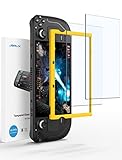

What You Need
| Item | Why | Optional? |
|---|---|---|
| Steam Deck-specific tempered glass protector | Provides the correct cutouts, edge shape, and display coverage for Steam Deck LCD or OLED models. | No |
| Microfiber cloth | Removes fingerprints and fine dust without scratching the screen. | No |
| Alcohol cleaning wipe | Cuts skin oils and residue that can interfere with adhesion. | No |
| Dust-removal sticker or clear tape | Lifts tiny particles immediately before installation. | Strongly recommended |
| Alignment frame or guide stickers | Helps center the glass evenly between the screen edges and the Steam Deck’s bezels. | Recommended |
| Plastic card wrapped in microfiber | Helps guide air outward without scraping the protector. | Optional |
| Bright lamp or indirect daylight | Makes dust, fingerprints, and alignment gaps easier to see. | Recommended |
Step-by-Step
-
1. Pick a clean, still workspace (5 minutes)
Choose a flat table with room for the Steam Deck, the protector tray, and cleaning supplies. Avoid working near an open window, ceiling fan, heating vent, or freshly folded laundry; all can introduce airborne lint. A kitchen or dining table is often better than a carpeted bedroom. Wash and dry your hands thoroughly, then turn off the Steam Deck and unplug its USB-C charger.
Place the console face-up on a soft, clean microfiber towel. This prevents the rear grips and triggers from rocking against a hard surface while you work.
-
2. Confirm the protector is the right size before removing film (2 minutes)
Without peeling anything, hold the tempered glass above the display. Check that the speaker openings, camera/sensor area, and screen corners correspond with the front of your Steam Deck. Do not use a generic 7-inch tablet protector: even if the diagonal measurement sounds similar, the cutouts and corner radii may be wrong.
Many protectors are designed to leave a slim border around the active display. That border is normal and helps prevent edge lifting, particularly if you use a fitted carrying case.
-
3. Clean the display with the alcohol wipe (2 minutes)
Use the included alcohol wipe, or a lightly dampened screen-safe wipe, to clean the entire glass display. Work from one edge to the other with gentle, overlapping passes. Pay extra attention to the lower corners, where thumbs often leave oils during play.
Do not spray cleaner directly onto the Steam Deck. Liquid can run into the speaker grilles, buttons, or seams. Let the screen air-dry for about 30 seconds, then use a dry microfiber cloth to remove remaining streaks.
-
4. Inspect for dust under bright light (2 minutes)
Tilt the Steam Deck toward a lamp or window and look across the screen at a shallow angle. Small dust flecks are easier to see this way than when looking straight down. Use the dust-removal sticker to dab, not drag, at any particles. If your kit does not include one, use a small loop of clear tape with the sticky side facing outward.
This is the most important moment in the process. Once the protective backing comes off, work efficiently so new dust does not settle on the screen.
-
5. Set up the alignment method (2 minutes)
If your kit includes an installation frame, position it over the Steam Deck according to the package directions. Make sure it sits flat and does not rest on a joystick or trigger. For a protector without a frame, use the “hinge” method: align the glass over the screen while its backing is still attached, then place two short strips of tape along one long edge. The tape acts like a hinge, letting you lift the protector, remove the liner, and lower it back into the same position.
Leave an even gap around the visible display area. Do not align only one corner; check all four sides before proceeding.
-
6. Remove the backing and lower the glass slowly (1 minute)
Peel off the underside protective film by its pull tab. Avoid touching the adhesive side of the glass. Hold the protector by its outer edges, then lower it gradually from one end to the other. With an alignment frame, place the protector into the frame and follow its pressing instructions.
Once it is in position, lightly press the center of the screen with one finger. The adhesive layer should begin spreading outward on its own. Resist the urge to keep lifting and repositioning it unless the protector is clearly misaligned.
-
7. Smooth out air bubbles and check the edges (3 to 5 minutes)
Most broad, pale air bubbles will disappear as the adhesive settles. For a stubborn bubble, use a microfiber-wrapped plastic card or your fingertip to push it slowly toward the nearest edge. Start in the middle of the bubble and use gentle, straight strokes.
A tiny bubble caused by moisture or static may fade within 24 to 48 hours. A bubble with a visible dark speck in its center is usually dust and will not disappear on its own. Check each edge for lifting, especially near corners. If the protector is flat and centered, remove the top protective film, if included.
-
8. Test the Steam Deck after installation (3 minutes)
Turn the console on and test touch input across the display. Open the keyboard or a touch-enabled menu and tap near all four corners. Then place the Steam Deck in its usual case to confirm the case does not push against the protector’s edges. Tempered glass should not affect normal button, trackpad, or touchscreen operation when correctly installed.
Mistakes to Avoid
- Installing immediately after cleaning without checking for lint: One dust particle can create a noticeable bubble. Always inspect the screen under angled light.
- Working in a steamy bathroom: Steam can reduce airborne dust briefly, but humidity and condensation are not ideal around electronics. Use a dry, still room instead.
- Touching the adhesive side: Finger oils may leave marks or weaken adhesion. Hold tempered glass only by the edges.
- Using excessive force: Do not bend the glass or press hard near the bezel. Gentle center pressure is enough to start adhesion.
- Using a metal tool to remove bubbles: Metal edges can chip the protector or scratch the Steam Deck’s surrounding finish.
- Ignoring case compatibility: A tight case can catch a protector’s edge and cause it to lift. Choose a case-friendly protector if you use a rigid shell.
How Often
You only need to apply a tempered glass protector once, then replace it when it is damaged or no longer adheres properly. Check it every few months while wiping down the Steam Deck. Replace it promptly if you see a crack, chipped corner, spreading edge lift, deep scratch, or a large dust pocket that interferes with viewing.
For regular care, wipe the installed protector with a clean microfiber cloth once a week or whenever fingerprints become distracting. Avoid abrasive paper towels, window cleaner, and harsh disinfectants. If you use the Steam Deck during travel, store it in a protective case rather than relying on the screen protector alone.
When to Call a Pro or Replace
Professional installation is rarely necessary, but it can be worthwhile if you have limited hand mobility, have already gone through multiple protectors, or are applying protection alongside a more complicated repair. A local electronics repair shop may install a customer-supplied protector for a small service fee, though prices vary by area.
Replace the protector rather than trying to repair it if it has cracked, chipped, developed permanent bubbles, or lifted enough to collect dust. To remove one, power off the Steam Deck, warm the room slightly, and lift a corner carefully with a plastic pick or a piece of tape. Pull the glass away slowly and evenly. Never pry hard against the display with a blade, screwdriver, or metal tool.
FAQ
Can I use the same tempered glass protector on Steam Deck LCD and OLED?
Only if the manufacturer specifically says it fits both versions. The consoles are closely related, but the OLED model has a larger 7.4-inch display compared with the LCD model’s 7-inch display. Check the product packaging and cutout layout rather than assuming interchangeability.
Should I remove the factory screen protection before applying tempered glass?
Remove only a temporary shipping film, if present. Do not try to remove the Steam Deck’s actual display surface or any factory-applied coating. Clean the screen normally, then apply the tempered glass directly over it.
Why is there a bubble under my Steam Deck screen protector?
A clear or milky bubble without debris may be trapped air and can shrink over a day or two. If you can see a dot in the center, it is almost certainly dust. Small dust bubbles can sometimes be lifted and cleaned with a sticker, but replacing the protector is often the cleanest solution if the spot is prominent.
Will a tempered glass protector reduce touchscreen sensitivity?
A quality Steam Deck-specific tempered glass protector should preserve normal touchscreen use. If taps fail near an edge, first check whether the protector is shifted, lifting, or incompatible with your model. Also restart the Steam Deck and test the screen without a case pressing against the protector.


