Key takeaways
- Excellent 1440p and entry-4K performance with DLSS 4
- 16GB GDDR7 memory offers strong future headroom
- PCIe 5.0 and DisplayPort 2.1 connectivity across all cards
- SFF-ready options bring the performance to compact builds
The NVIDIA GeForce RTX 5070 Ti has quickly become one of the most talked-about graphics cards of the Blackwell generation, and for good reason. It targets the high-refresh 1440p and entry-4K sweet spot where most enthusiast gamers actually live, delivering 16GB of fast GDDR7 memory and DLSS 4 frame generation without the flagship price of a 5080 or 5090. For many builders, it’s the card that hits the ideal balance of performance and value.
We looked across the major board partner versions from ASUS, MSI, PNY, and GIGABYTE to assess what the RTX 5070 Ti offers and which variant makes sense for your build. Since the GPU silicon is identical, cooling, size, and clock speeds are what separate these cards, so here’s how they stack up.
As an Amazon Associate we earn from qualifying purchases.


🎮 Get More From Your Setup — Free
Prime Gaming gives you free PC games every month, in-game loot, and a free Twitch channel sub — plus fast free shipping on all the gear above. New members get a 30-day free trial.
Watch: Nvidia Geforce Rtx 5070 Ti Review — Video Review
Design & Build
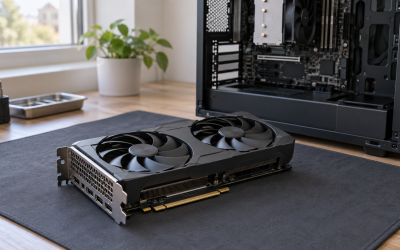
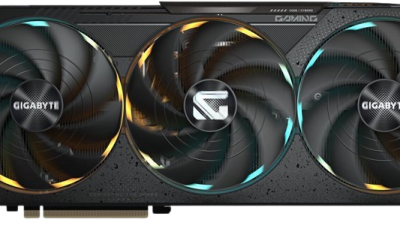
Board partner designs range from compact to substantial. The ASUS SFF-Ready Prime OC and GIGABYTE Eagle OC ICE SFF are built for small-form-factor cases, with a 2.5-slot footprint and cooling tuned for tighter enclosures. The PNY Triple Fan OC and MSI Gaming Trio OC Plus are larger, using triple-fan coolers and thicker heatsinks to keep temperatures and noise low in standard towers. The slimmer PNY Dual-Fan Slim targets builders who want a quieter, more compact 2-slot card. All feature PCIe 5.0, HDMI 2.1b, and DisplayPort 2.1 outputs, so connectivity is consistent; the real choice is matching the cooler size to your case.
Performance
Because every card here uses the same GPU, gaming performance is very close, differing only by factory overclock and thermal headroom. Expect excellent high-refresh 1440p performance in demanding titles with ray tracing enabled, and playable 4K with DLSS 4 doing the heavy lifting. The 16GB of GDDR7 memory provides ample headroom for modern textures and gives the card longevity. The MSI Gaming Trio OC Plus and ASUS Prime with their robust triple-fan and dual-BIOS designs sustain the highest sustained clocks under load with the least noise, while the SFF-ready GIGABYTE Eagle ICE and ASUS SFF Prime run slightly warmer in exchange for fitting compact builds. Real-world frame-rate differences between them are small.
Pros & Cons
- Excellent 1440p and entry-4K performance with DLSS 4
- 16GB GDDR7 memory offers strong future headroom
- PCIe 5.0 and DisplayPort 2.1 connectivity across all cards
- SFF-ready options bring the performance to compact builds
- Premium pricing compared with the standard 5070
- Larger triple-fan models demand significant case clearance
- Minimal performance gaps between partner cards can complicate choosing
Alternatives to Consider
Builders with compact cases should prioritize the ASUS SFF-Ready Prime or GIGABYTE Eagle OC ICE SFF. Those with full towers wanting the quietest, coolest operation should look at the MSI Gaming Trio OC Plus or a triple-fan PNY. If the 5070 Ti stretches your budget, the standard RTX 5070 saves money at some performance cost, while those chasing uncompromised 4K can step up to a 5080.
Frequently Asked Questions
Is the RTX 5070 Ti good for 1440p gaming?
It’s arguably the ideal 1440p card. It handles high-refresh 1440p with ray tracing comfortably and, with DLSS 4, even manages solid 4K performance in most titles.
Does the board partner brand matter?
Since the GPU is identical, gaming performance is nearly the same across brands. What differs is cooler size, noise, factory overclock, and whether the card fits your case, so choose based on those factors.
How much VRAM does the 5070 Ti have?
It carries 16GB of fast GDDR7 memory, which is generous for 1440p and entry-4K gaming and provides good headroom for future titles with high-resolution textures.
Will a triple-fan model fit my case?
Large triple-fan cards need significant clearance. Measure your case’s GPU length and slot space first, and if you have a compact build, choose one of the SFF-ready 2.5-slot versions instead.
Verdict
The RTX 5070 Ti is a superb high-refresh 1440p and entry-4K graphics card that hits the enthusiast value sweet spot. For full towers, the MSI Gaming Trio OC Plus is our pick for its cooling and quiet operation, while compact builders should choose the ASUS SFF-Ready Prime. Since performance is nearly identical across partners, match the cooler to your case and buy the best-priced version that fits.