Key takeaways
- Up to 70W (Ryzen 7 5700X, Ryzen 5 5600): Quality single-tower air cooler is enough. Expect 65-75C with good case airflow.
- 75-105W (Ryzen 9 5900X, Ryzen 9 7900): Dual-tower air cooler or 240mm AIO required to stay under 85C and hold 4.2-4.5 GHz all-core.
- 105W+ (Ryzen 9 7950X, 9950X): 280mm/360mm AIO or large dual-tower highly recommended. These chips will hit 95C quickly and aggressively limit power to stay there, which directly cuts hashrate if cooling is insufficient.
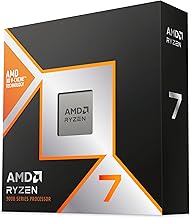
The best mining CPU for most people in 2026 is the AMD Ryzen 9 7950X for pure hashrate and efficiency, or the Ryzen 9 5900X / Ryzen 7 5700X if you want the lowest platform cost and fastest payback on RandomX (Monero) mining, while Intel LGA1700 CPUs are generally poor value for CPU mining despite strong gaming performance.
How CPU Mining Value Is Actually Calculated
CPU mining in 2026 is dominated by RandomX-based coins like Monero (XMR). Unlike GPU mining, performance scales almost linearly with L3 cache size and memory bandwidth, not just core count. That is why a 16-core CPU with 64MB of L3 cache will more than double the hashrate of a 24-core CPU with 36MB of L3.
Profitability comes down to four variables: hashrate, wall power draw, total platform cost (CPU + motherboard + RAM + cooler), and your electricity price. A CPU that mines 20% faster is not better if it costs 80% more to buy and needs a 240mm AIO to sustain its clocks.
Best Mining CPUs Head-to-Head: Hashrate and Efficiency
These are the most relevant CPUs for mining in 2026. All numbers are for RandomX with XMRig, using 3200-3600 MT/s DDR4 or 5200-6000 MT/s DDR5, huge pages enabled, and a sustained all-core load after 15 minutes of thermal soak. Hasrates vary by silicon and RAM tuning, but the ranking is consistent.
| CPU | Cores / Threads / L3 Cache | Typical RandomX Hashrate | CPU Package Power While Mining | Efficiency (H/W) | Platform Cost Range |
|---|---|---|---|---|---|
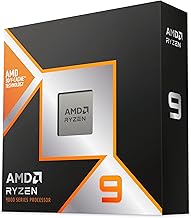
| AMD Ryzen 9 9950X | 16C/32T / 64MB | 20,500 – 22,000 H/s | 105 – 125W | ~175 – 195 H/W | usually $550–$750 |
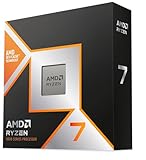
| AMD Ryzen 9 7950X | 16C/32T / 64MB | 16,500 – 18,000 H/s | 95 – 115W | ~155 – 170 H/W | usually $450–$650 |
| AMD Ryzen 9 5900X | 12C/24T / 64MB | 13,500 – 14,800 H/s | 85 – 105W | ~135 – 155 H/W | usually $280–$420 |
| AMD Ryzen 7 5700X / 5700 | 8C/16T / 32MB | 8,200 – 9,200 H/s | 55 – 70W | ~130 – 145 H/W | usually $180–$300 |
| AMD Ryzen 9 7900 | 12C/24T / 64MB | 14,000 – 15,500 H/s | 75 – 90W | ~165 – 180 H/W | usually $350–$500 |
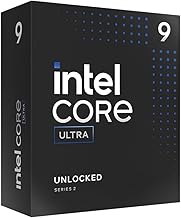
| Intel Core i9-14900K | 24C (8P+16E) / 32T / 36MB | 7,500 – 9,000 H/s | 110 – 140W | ~65 – 75 H/W | usually $450–$650 |
| Intel Core i7-14700K | 20C (8P+12E) / 28T / 33MB | 6,800 – 8,200 H/s | 100 – 130W | ~62 – 72 H/W | usually $350–$550 |
Takeaway: Zen 4 and Zen 3 chips with 64MB L3 dominate RandomX. The Ryzen 9 7950X and 9950X allow 2MB L3 per thread, which is the sweet spot for RandomX’s 2MB dataset per thread. Intel’s hybrid architecture is bottlenecked by smaller L3 per performant core and much lower efficiency, which is why even a mid-range Ryzen 7 often beats a flagship Intel part in mining.
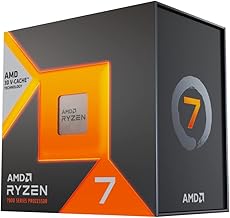
Avoid X3D chips for dedicated mining. The Ryzen 7 7800X3D, 7950X3D and 9800X3D are excellent gaming CPUs but the extra 3D V-Cache does not scale for RandomX and usually adds cost without hashrate gain. Threadripper and EPYC (like the Threadripper 7960X or EPYC 7303 series) can exceed 25,000-50,000 H/s, but platform costs usually exceed $900–$1,800, making payback far longer for home miners.
Power Efficiency and Sustained Thermals: The Real Limit
CPU mining is a 24/7 all-core AVX workload. Advertised boost clocks are irrelevant; sustained power and temperature determine your actual hashrate. Most AM4/AM5 Ryzens will thermally throttle on a stock cooler within 10-20 minutes, dropping 8-15% hashrate.
For continuous operation, plan cooling by sustained TDP, not base TDP:
- Up to 70W (Ryzen 7 5700X, Ryzen 5 5600): Quality single-tower air cooler is enough. Expect 65-75C with good case airflow.
- 75-105W (Ryzen 9 5900X, Ryzen 9 7900): Dual-tower air cooler or 240mm AIO required to stay under 85C and hold 4.2-4.5 GHz all-core.
- 105W+ (Ryzen 9 7950X, 9950X): 280mm/360mm AIO or large dual-tower highly recommended. These chips will hit 95C quickly and aggressively limit power to stay there, which directly cuts hashrate if cooling is insufficient.
Undervolting is critical. Most Ryzen 7000/9000 samples can run RandomX at -10 to -20 mV curve optimizer offset or with a manual 105W PPT limit, losing only 3-5% hashrate for 15-20% lower power. Intel 13th/14th Gen parts benefit even more from power limits (125W PL1/PL2) because stock limits push 200W+ for minimal gain.
Worked Calculation: Daily Profit and Payback at Real Electricity Prices
Use this formula to estimate your own setup. No calculator hides the math:
Daily Cost = (Wall Power in kW) x 24 hours x Electricity Price per kWh
Daily Revenue = (Hashrate in MH/s x Network Reward Factor) – interpret as XMR per day from a mining calculator
Example with a Ryzen 9 7950X system in 2026:
- System wall power while mining: 155W (110W CPU package + ~45W for motherboard, RAM, SSD, PSU losses)
- Hashrate: 17,000 H/s (17 KH/s)
- Electricity price: $0.15/kWh (US average residential; $0.10 is cheap, $0.25+ is common in EU)
- Daily electricity cost: 0.155 kW x 24 x $0.15 = $0.558 per day
- If the network pays ~0.000105 XMR per KH/s per day and XMR is ~$165, revenue = 17 x 0.000105 x $165 = $0.294 per day
- Net daily profit at $0.15/kWh: $0.294 – $0.558 = -$0.264 (a loss)
- At $0.10/kWh: Cost = $0.372, Net = -$0.078 (near break-even)
- At $0.07/kWh: Cost = $0.260, Net = +$0.034 profit, or ~$12.40 per year
This is why CPU mining is not about raw hashrate alone. At $0.15/kWh, even the best mining CPU loses money if you buy hardware just to mine. It only becomes viable if you already own the PC, have cheap power (usually under $0.08–$0.10/kWh), or are mining speculatively for future price appreciation. Payback on a $500 platform at $0.03/day profit would be over 4 years — longer than the CPU’s likely competitive lifespan.
Platform Cost Matters More Than CPU Price
A CPU does not mine alone. DDR5 and AM5 motherboards raise the entry price for Ryzen 7000/9000, while AM4 (Ryzen 5000) remains the value king for low-cost rigs.
- Lowest payback build: Ryzen 9 5900X or Ryzen 7 5700X on a B550 motherboard with 2x16GB DDR4 3600 CL16. Reuses cheap DDR4 and needs no expensive cooler. The entire platform often costs $150–$250 less than an AM5 equivalent, which offsets the slightly lower efficiency.
- Best efficiency build: Ryzen 9 7900 (65W Eco variant) or 7950X on B650 with DDR5 5600-6000. The 7900 is particularly strong because its 65W base TDP lets it run at high efficiency with a simple air cooler, hitting ~180 H/W with tuning.
- Avoid for mining-only: Intel Z790 + DDR5 7000+ builds. You pay a premium for memory speed and motherboards that do not improve RandomX hashrate meaningfully. DDR5-6000 vs DDR5-7200 changes RandomX by less than 2%.
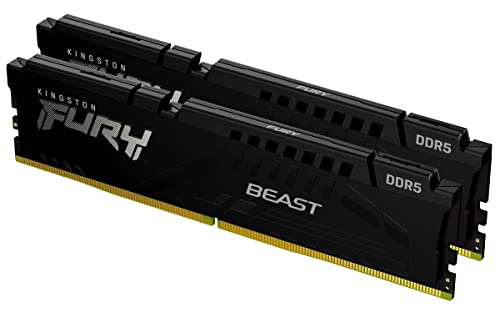
RAM rule: For RandomX, capacity and rank matter more than extreme frequency. Use 2x16GB dual-rank or 4x8GB if your board handles it, at 3200-3600 MT/s (DDR4) or 5200-6000 MT/s (DDR5). Ensure you have at least 2GB per thread plus OS overhead – 32GB is ideal for 16-core/32-thread CPUs.
Which CPU Should You Buy? Decision Matrix
| Your Situation | Recommended Best Mining CPU | Why |
|---|---|---|
| You already own an AM4 gaming PC and want to mine on the side | Ryzen 9 5900X or 5950X (used) | Drop-in upgrade, 64MB L3, DDR4 reuse keeps extra cost near zero, best payback |
| Building a new efficient rig for 24/7 mining with cheap power | Ryzen 9 7900 or 7950X with power limit | Highest H/W on consumer platform, scales well with undervolting |
| You want maximum hashrate regardless of platform cost | Ryzen 9 9950X | Top consumer RandomX performance in 2026, needs 360mm cooling and tuned RAM |
| You have Intel LGA1700 system already | Mine only if power is under $0.08/kWh, otherwise skip | Efficiency is ~2.5x worse than Ryzen, often unprofitable |
| Electricity above $0.18/kWh | Don’t buy hardware to mine; only mine on existing hardware speculatively | Electricity erases revenue; payback never arrives |
Concrete Tuning Settings for Better Efficiency (Without Guesswork)
After enabling XMP/EXPO and updating BIOS, these settings give most of the gain with minimal risk. Reset to defaults if unstable.
For AMD Ryzen 5000 / 7000 / 9000
- Enable EXPO/XMP, set Infinity Fabric 1:1 (e.g., DDR5-6000 with FCLK 2000MHz, or DDR4-3600 with FCLK 1800MHz). This adds 3-7% hashrate.
- Enable huge pages: In Windows, enable Lock Pages in Memory for your user and run XMRig as administrator. On Linux, set `vm.nr_hugepages=1280`. This alone adds 15-25% vs default.
- Set PPT limit: 105W for 7950X/9950X, 88W for 5900X, 65W for 7900. Keeps thermals in check and improves H/W.
- Curve Optimizer: Start at -15 all-core offset, test stability with CoreCycler. Reduce power 10-15W with negligible hashrate loss.
- Set threads to physical cores minus 1-2 if you use the PC while mining (e.g., 30 threads on a 16C/32T chip) to keep system responsive.
For Intel Core i9-14900K / i7-14700K
- Disable overclocking profiles. Set PL1 = 125W and PL2 = 125W to prevent 250W+ spikes that destroy efficiency.
- For RandomX, try disabling E-cores in BIOS and mining on P-cores only – some users gain 5% efficiency as the scheduler stops assigning RandomX threads to slow E-cores.
- Ensure RAM is dual-channel. Single-channel cuts RandomX by 30-40%.
- Expect lower hashrate even when tuned; Intel’s advantage in gaming does not translate to RandomX.
Monitor with HWInfo64 (package power, core temps) and XMRig’s built-in benchmark (5-minute run). If temps exceed 90C sustained or hashrate drops more than 5% after 30 minutes, improve case airflow or lower PPT/PL1 before the chip thermal throttles.
FAQ
Is CPU mining profitable in 2026?
On its own, rarely at residential US/EU power prices. At $0.10/kWh, top Ryzen CPUs are roughly break-even to slightly profitable for Monero. At $0.15/kWh+, you will usually pay more for power than you earn unless you have solar, subsidized power, or are heating a room with the waste heat. Most buyers should treat it as a way to offset PC cost or accumulate coins, not as passive income.
Do I need a GPU to CPU mine?
No, but your motherboard needs a display output. Ryzen CPUs without a G suffix (like 7950X, 5900X, 9950X) have no integrated graphics except 7000/9000 series which have a small iGPU – so you can still boot. Older 5000 series non-G chips need a cheap GPU to boot, though GPU load does not affect CPU mining.
Is 32GB RAM needed for CPU mining?
For 12-16 core CPUs, 32GB is strongly recommended. RandomX needs about 2.1GB per mining thread plus OS. A 16C/32T chip mining on 32 threads needs 4-5GB, but dual-rank 2x16GB kits also give 5-8% more hashrate than single-rank 2x8GB due to interleaving. 16GB works for 8-core CPUs.
What about mining other coins with CPUs?
RandomX (Monero) is the only CPU algorithm with meaningful network value and consistent payouts in 2026. Alternatives like VerusHash, Yespower, or GhostRider exist but have lower liquidity and even tighter margins. If you are choosing a CPU specifically to mine, optimize for RandomX; a CPU good at RandomX will be decent at others.