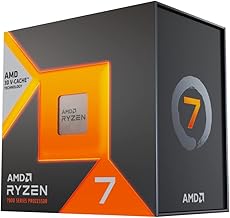
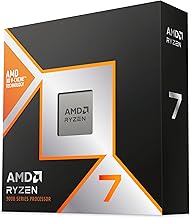
Our Top Picks
For most new gaming builds in 2026, AMD is the best company for CPU, while Intel remains the better fit for some productivity-heavy systems, discounted upgrades, and buyers who value Quick Sync media features.
AMD vs. Intel: the short decision
| Build situation | Better starting point | Why |
|---|---|---|
| Gaming-first desktop with a midrange or high-end graphics card | AMD Ryzen 7000 or 9000 | Strong gaming performance, efficient chips, and the long-lived AM5 platform |
| Maximum gaming performance at high refresh rates | AMD X3D processor | Large 3D V-Cache can improve CPU-limited frame rates in many games |
| Heavy rendering, compiling, simulation, or mixed professional workloads | AMD Ryzen 9 or Intel Core Ultra 9 | Both offer high core counts; the right choice depends on the applications |
| Frequent H.264 or H.265 video editing and streaming | Intel Core Ultra with integrated graphics | Quick Sync can accelerate supported media workflows |
| Replacing an older AM5 system | AMD | A BIOS update may allow a CPU upgrade without replacing the motherboard and memory |
| Replacing an older LGA1700 system | Intel, only if the price is compelling | Existing boards may accept a later compatible processor, but the platform is not the strongest long-term upgrade route |
Gaming performance: AMD usually wins the CPU-limited race
At 1440p and 4K, the graphics card normally determines frame rate, so the difference between similarly priced CPUs can be small. The CPU matters much more at 1080p, with a very fast graphics card, or when targeting 200Hz and above. In those situations, AMD’s X3D models are often the safest gaming choice because their extra cache reduces the need to fetch game data from slower system memory.
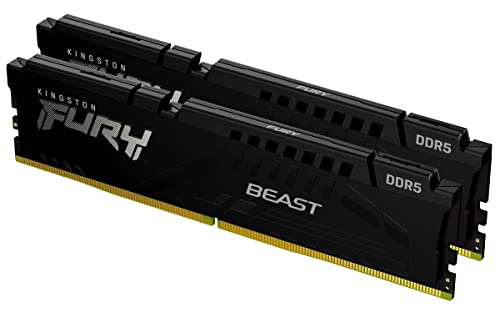
Kingston FURY Beast 128GB (2x64GB) 5600MT/s DDR5 CL36 Desktop Memory | AMD EXPO | Kit of 2 | KF556C36BBEK2-128
Chosen because it specifies AMD EXPO and Kit of 2.
View on Amazon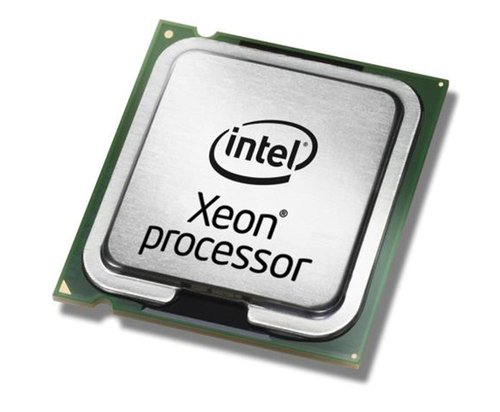
Intel SLBV9 Xeon X5677 3.46GHz 12MB Cache Quad-Core Processor
Picked as a relevant option in this category.
View on Amazon
Intel SLBV9 Xeon X5677 3.46GHz 12MB Cache Quad-Core Processor (Renewed)
Picked as a relevant option in this category.
View on Amazon
Intel Core i5 i5-4570S Quad-core (4 Core) 2.90 GHz Processor - Socket H3 LGA-1150OEM Pack
Chosen because it specifies Socket H3 LGA-1150OEM Pack.
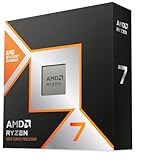
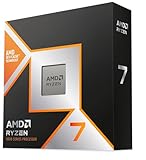
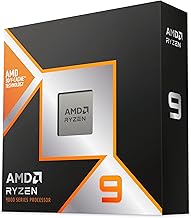
View on AmazonA Ryzen 7 9800X3D is a particularly sensible gaming-focused class of processor: it has eight high-performance cores, substantial cache, and does not require the extreme power settings associated with some high-end desktop processors. AMD’s higher-core-count X3D options, such as the Ryzen 9 9950X3D, make more sense when gaming is combined with serious rendering, code compilation, or other parallel workloads.
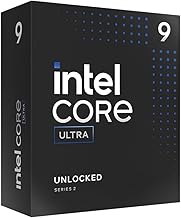
Intel’s Core Ultra desktop processors, including models such as the Core Ultra 7 265K and Core Ultra 9 285K, remain capable gaming CPUs. They can be excellent choices when a motherboard-and-CPU bundle is cheaper or when the rest of the system benefits from Intel’s media features. However, gaming results vary by title, memory configuration, power limits, and graphics card, so do not choose solely from the brand name.
What the benchmark gap means in practice
Suppose a game runs at 240 frames per second with one CPU and 225 frames per second with another. That 15 fps difference matters if you own a 240Hz monitor and play competitive games. It matters far less on a 144Hz display when your graphics card already produces 110 fps at the chosen settings. Spend the difference on the graphics card if your system is GPU-limited.
For a balanced build, use this rule: choose the CPU tier that keeps your graphics card busy at your target resolution, then avoid paying a large premium for frames your monitor cannot display.
Productivity: choose by workload, not core count alone
Productivity is too broad for a single winner. Blender rendering, code compilation, compression, spreadsheet calculation, Adobe applications, and video export do not use hardware in exactly the same way.
- Rendering and heavily threaded work: compare Ryzen 9 and Core Ultra 9 models by application benchmarks. More cores and sustained cooling capacity usually matter more than peak gaming results.
- Photo editing and general office work: a modern six- or eight-core processor is already fast. A cheaper CPU and more memory may produce a better overall system.
- Video editing: Intel’s integrated graphics and Quick Sync can be valuable for supported H.264 and H.265 workflows. AMD can still be the better choice for CPU rendering, gaming, or software that favors its processor.
- Software development: prioritize cores, memory capacity, storage, and compiler performance. A 12- or 16-core processor can save substantial time on large projects, but only if the motherboard and cooler can sustain the load.
Do not assume that a processor with a higher advertised boost clock will be faster in every application. Cooling, power limits, cache, memory latency, and the software’s threading behavior all affect the result.
Platform cost: the CPU price is only the beginning
AMD’s current mainstream desktop path is AM5, used by Ryzen 7000 and Ryzen 9000 processors. It requires DDR5 memory and an AM5 motherboard, but it gives a new builder a clearer future upgrade route. A Ryzen 5 9600X-class system, for example, can start with a moderate motherboard and later move to a faster Ryzen 7 or Ryzen 9 chip without automatically replacing the memory.
Intel’s Core Ultra 200S desktop processors use the LGA1851 platform and DDR5 memory. A new Intel build therefore also needs a new motherboard and DDR5, even if you are upgrading from an older Intel desktop. Intel’s platform can be attractively priced when a board-and-CPU combination is discounted, but buyers should verify future CPU compatibility rather than assume a later generation will fit.
Typical market ranges vary by country and sale period, but a useful planning budget is:
- Mainstream CPU: usually $180–$300
- Upper-midrange CPU: usually $300–$450
- High-end gaming or productivity CPU: usually $450–$700
- DDR5 memory: usually $80–$180 for a 32GB kit, depending on speed and timings
- Compatible motherboard: usually $140–$350, with premium boards costing more
- CPU cooler: usually $35–$150, depending on noise and sustained workload requirements
A $40 cheaper processor can become the more expensive choice if it requires a costly motherboard, a stronger cooler, or a platform replacement at the next upgrade.
Power, heat, and cooling requirements
Power specifications are not directly comparable between brands. A processor’s advertised base power, processor-base power, turbo power, and actual motherboard settings may all describe different conditions. Some boards also remove default power limits, increasing performance slightly while producing much more heat and noise.
Here is a practical system-power calculation for a gaming build:
Example: assume a graphics card can draw 320W, the CPU averages 120W while gaming, the motherboard, memory, SSD, fans, and USB devices use 70W, and you want 25% headroom.
(320W + 120W + 70W) × 1.25 = 637.5W
A quality 750W power supply is therefore a reasonable target, while an 850W model gives more transient and upgrade headroom. This is not a guarantee for every graphics card; check the graphics card manufacturer’s recommendation and power connector requirements.
For cooling, a six- or eight-core mainstream processor is generally manageable with a good tower air cooler. High-core-count Ryzen 9 and Core Ultra 9 processors benefit from a large dual-tower air cooler or a quality 240mm-or-larger liquid cooler, especially for long rendering sessions. If you want a quiet PC, set sensible motherboard power limits instead of chasing a tiny all-core performance gain.
Upgrade paths and compatibility checks
AMD is the stronger choice when upgrade flexibility is important. AM5 systems use DDR5 and may support later processors through firmware updates, although support depends on the exact motherboard, BIOS version, and manufacturer. Buy a board with adequate power delivery, BIOS flashback if possible, and the features you expect to keep for several years.
For Intel, check the processor socket and chipset before buying. Do not assume an older LGA1700 board supports a Core Ultra 200S CPU, because Core Ultra desktop processors use a different socket. Likewise, a new LGA1851 board is not a drop-in replacement for an older Intel system. Intel can still be the right purchase, but its value should be judged as a complete platform rather than only as a CPU.
AMD or Intel: a final buying checklist
- Set your target resolution, refresh rate, and graphics card before choosing the CPU.
- Decide whether gaming, rendering, media work, or general use is the primary workload.
- Compare the complete platform cost: processor, motherboard, memory, cooler, and power supply.
- Check application-specific benchmarks if productivity is important.
- Confirm socket, BIOS, memory, cooler, and power-supply compatibility.
- Choose an X3D AMD model for a gaming-first high-refresh build unless Intel’s price or media acceleration is more valuable to you.
In summary, AMD is the best company for CPU for most new gaming builds because its X3D processors are strong in CPU-limited games and AM5 offers a practical upgrade path. Intel deserves serious consideration for Quick Sync video workflows, certain productivity applications, and unusually good platform pricing. The best answer is the processor that fits your complete build, not simply the brand with the highest benchmark score.