Key takeaways
- Near-flagship gaming performance and top-tier multi-core throughput in one chip
- Sixteen cores handle rendering, streaming, and compilation with ease
- Improved under-die cache design cools and clocks better than prior X3D parts
- Long-lived AM5 platform with drop-in compatibility on many boards
The AMD Ryzen 9 9950X3D is the do-everything flagship of the Zen 5 desktop range, combining sixteen cores and thirty-two threads with second-generation 3D V-Cache. It is designed to answer a specific question: can a single chip deliver top-tier gaming frame rates and workstation-class multi-core throughput without forcing you to choose? For the most part, the answer is yes.
This processor is aimed at creators, streamers, and enthusiasts who game seriously but also render, compile, encode, or run virtual machines. If you only game, a cheaper eight-core X3D chip gets you nearly identical frame rates for far less money. The 9950X3D justifies its cost when your workload genuinely spans both worlds and you don’t want two separate machines.
Our top picks
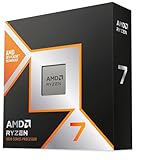
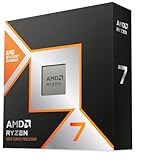
 AMD Ryzen 9 9950X3D 16-Core Processor
- AMD Ryzen 9 9950X3D Gaming and Content Creation…
- Max
- Form Factor: Desktops , Boxed Processor
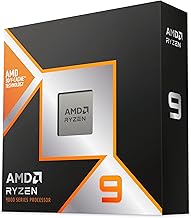
 AMD Ryzen™ 9 9950X 16-Core
- The best for creators meets the best for…
- 16 Cores and 32 processing threads, based on…
- 5.7 GHz Max Boost, unlocked for overclocking, 80…
| Product | Key specs | |
|---|---|---|
| AMD Ryzen 9 9950X3D 16-Core Processor | AMD Ryzen 9 9950X3D Gaming and Content Creation… Max Form Factor: Desktops , Boxed Processor | Check price |
 AMD Ryzen™ 9 9950X3D2 Dual Edition AMD Ryzen™ 9 9950X3D2 Dual Edition | AMD Ryzen 9 9950X3D2 Dual Edition | Check price |
| AMD Ryzen™ 9 9950X 16-Core | The best for creators meets the best for… 16 Cores and 32 processing threads, based on… 5.7 GHz Max Boost, unlocked for overclocking, 80… | Check price |
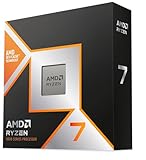
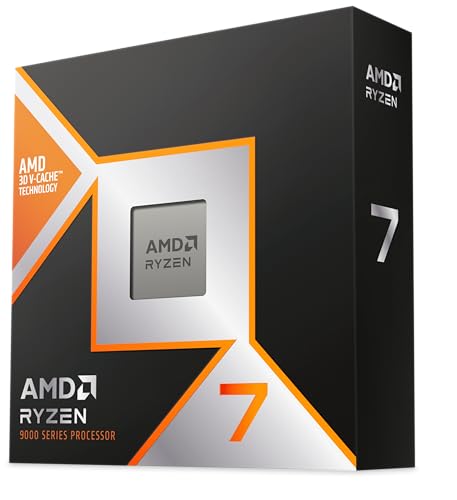 AMD RYZEN 7 9800X3D 8-Core AMD RYZEN 7 9800X3D 8-Core | The world’s fastest gaming processor, built on AMD… 8 cores and 16 threads, delivering +~16% IPC… 96MB L3 cache with better thermal performance vs | Check price |
 AMD Ryzen 9 9950X3D Processor with Gigabyte AMD Ryzen 9 9950X3D Processor with Gigabyte | Get FREE Onimusha for 9800X3D, 9850X3D, 9950X3D, 9950X3D2,… For the state-of-the-art Socket AM5 platform, can support… GIGABYTE X870E AORUS Elite Motherboard, AMD Socket AM5,… | Check price |
 AMD Ryzen 9 9900X3D 12-Core Processor AMD Ryzen 9 9900X3D 12-Core Processor | AMD Ryzen 9 9900X3D Gaming and Content Creation… | Check price |
 AMD Ryzen™ 7 9850X3D Desktop Processor AMD Ryzen™ 7 9850X3D Desktop Processor | AMD Ryzen 7 9850X3D Desktop Processor | Check price |
 AMD Ryzen™ 9 5900XT 16-Core AMD Ryzen™ 9 5900XT 16-Core | Powerful Content Creation and Game Performance 16 Cores and 32 processing threads, based on… 4.8 GHz Max Boost, unlocked for overclocking, 72… | Check price |
As an Amazon Associate we earn from qualifying purchases at no extra cost to you.
⚡ Save on Your Next PC — Amazon Prime
Prime members get fast free shipping on the systems above, plus early access to Prime Day & Black Friday PC deals. New members get a 30-day free trial.
Watch: Ryzen 9 9950X3D Review — Video Review
Design & Build
The 9950X3D uses a dual-chiplet layout: one core-complex die carries the stacked V-Cache for gaming, while the other runs at higher clocks for heavily threaded work. AMD’s updated placement puts the cache beneath the cores for better cooling, and the chip drops into the AM5 socket on existing 600-series boards after a BIOS update. With a 170W TDP and sixteen high-clocking cores, it runs warm under full multi-core load and really wants a 280mm or 360mm liquid cooler to hold sustained boost.
Performance
In gaming, Windows and AMD’s driver stack park game threads on the cache-equipped die, so frame rates land within a hair of the dedicated gaming-focused 9800X3D. In productivity, the full sixteen cores wake up and deliver rendering and compile times that leave any eight-core chip far behind. That dual identity is the whole point, and it mostly works seamlessly.
The realistic caveats are cost and scheduling. It is one of the most expensive mainstream desktop CPUs, and the cross-die core parking occasionally needs a game or driver update to behave optimally. For pure gaming you’re paying a large premium over the 9800X3D for a negligible frame-rate difference, so the value case rests entirely on your multi-core needs.
Pros & Cons
- Near-flagship gaming performance and top-tier multi-core throughput in one chip
- Sixteen cores handle rendering, streaming, and compilation with ease
- Improved under-die cache design cools and clocks better than prior X3D parts
- Long-lived AM5 platform with drop-in compatibility on many boards
- Very high price, especially if you only game
- Dual-die core scheduling can occasionally need software tuning
- 170W under load demands serious cooling
Alternatives to Consider
Pure gamers should save money with the Ryzen 7 9800X3D, which matches it in most titles for far less. If you want strong multi-core performance without paying the X3D premium and gaming is secondary, the Ryzen 9 9950X is a cheaper sixteen-core option, while the twelve-core Ryzen 9 9900X3D splits the difference for mixed workloads at a lower price than the flagship.
Frequently Asked Questions
Is it faster in games than the 9800X3D?
No, not meaningfully. Gaming performance is essentially tied because both rely on the same V-Cache die. You pay the premium for the extra eight cores, not for higher frame rates.
Do I need to configure anything for gaming performance?
Usually not, but keeping chipset drivers and Game Bar updated helps Windows park game threads on the cache die correctly. Most modern titles work well out of the box.
What cooling does it require?
With a 170W TDP and sixteen cores, a 280mm or 360mm AIO is strongly recommended to sustain clocks under heavy multi-core loads.
Is it overkill for a gaming-only PC?
Yes. If you never render, stream, or compile, the 9800X3D delivers the same gaming experience for much less money.
Verdict
The Ryzen 9 9950X3D is the closest thing to a true single-chip solution for people who game and create at a high level. It pairs frame rates within touching distance of the best gaming CPU with workstation-grade multi-core power, all on the durable AM5 platform. The price is steep and pure gamers should look elsewhere, but for a genuine mixed workload it is the flagship that finally stops making you choose.