Our Top Picks
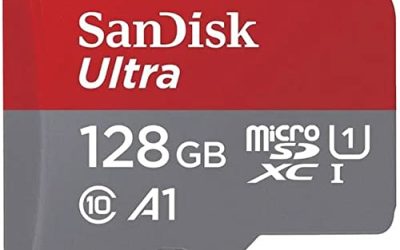
 SANDISK 128GB High Endurance Video microSDXC Card with128 GB0.4 x 0.6 x 0.1 inches0 poundsCheck on Amazon
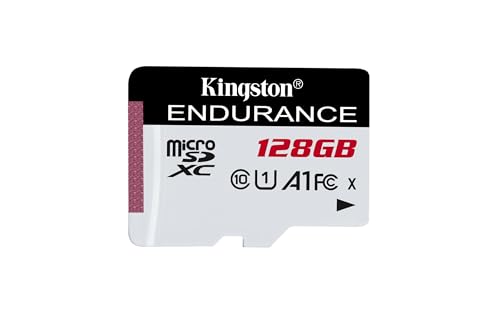 Kingston High Endurance 128GB MicroSD Card High Performance1 Count (Pack of 1)0.94 x 1.25 x 0.08 inches0.02 poundsCheck on Amazon

A dashcam is only as reliable as the memory card inside it, and the best SD cards for dashcams are built for a workload that ordinary cards never face. While a phone or camera card writes files occasionally and then rests, a dashcam card records video continuously, overwrites old footage in a loop, and does it all inside a hot car parked in direct sun. That combination of constant writing, heat, and vibration is exactly what wears ordinary cards out, and it is why choosing a card designed for continuous recording matters so much.

The difference between a standard card and an endurance card comes down to the memory inside. Endurance cards use higher-grade NAND flash rated for far more write cycles, along with firmware tuned for sequential video writes rather than the mixed small-file work a phone demands. The result is a card that keeps recording cleanly for years instead of developing corrupted files, dropped frames, or sudden failures at the worst possible moment. When footage is the whole point of owning a dashcam, the card is not the place to cut corners.
This guide explains what to look for in a dashcam card, then compares four endurance-rated microSD cards that are designed for dashcams, security cameras, and other always-recording devices. Every pick below is a microSD card with an included SD adapter, in the 128GB capacity that suits most single and dual-channel dashcams. Before buying, check your dashcam manual for its maximum supported capacity and its recommended speed class, since a card larger than the supported limit may not be recognized at all.
How to Choose
1. Endurance rating and total bytes written
The single most important specification for a dashcam card is its endurance rating, usually expressed in hours of Full HD recording or in terabytes written. A card rated for 10,000 hours of continuous recording will survive far more overwrite cycles than a standard card of the same capacity, because its NAND is rated for heavier use. Compare ratings at the same capacity, since a 256GB card naturally lasts longer than a 128GB card from the same line. If your dashcam runs in parking mode around the clock, endurance should outweigh every other factor.
2. Capacity and loop recording time
Capacity decides how much footage your dashcam keeps before it begins overwriting the oldest files. A 128GB card typically holds many hours of Full HD footage from a single-channel camera, and less from a dual-channel setup that records front and rear at the same time. Larger cards keep a longer history, which matters if you only check footage days after an incident. At the same time, a card that is too large for your camera may not work, so confirm the maximum capacity in the manual and choose the largest size within that limit that your budget allows.
3. Speed class: U3 and V30
Dashcam video needs a card that can sustain its write speed without pauses. Look for UHS Speed Class 3, marked U3, and Video Speed Class 30, marked V30, which guarantee a minimum sustained write speed of 30MB/s. That is enough for Full HD and most 4K dashcam recording. Read speed matters less for recording, but a faster read speed makes checking and copying footage to a computer noticeably quicker. Avoid cards rated only U1 or Class 10 without a V30 mark for 4K cameras, since they may drop frames during high-bitrate recording.
4. Temperature and weather resistance
A dashcam sits on a windshield, one of the hottest places in a car. On a summer day the interior can climb well above the comfortable range for ordinary electronics, and in winter it can drop below freezing overnight. Endurance cards are rated for wide operating temperature ranges, commonly from minus 25 degrees Celsius to 85 degrees Celsius, and are built to resist water, shock, vibration, magnets, and X-rays. Check the temperature rating on the packaging, and treat a narrow rating as a warning sign for in-car use.
5. microSD form factor and adapter
Nearly every modern dashcam takes a microSD card, not a full-size SD card. All four cards in this guide are microSDXC cards that ship with a full-size SD adapter, so the same card can be read in a laptop or desktop card slot when you need to copy footage. Keep the adapter somewhere safe, since reading the card directly is usually faster and more reliable than pulling files over a wireless connection from the camera. If your dashcam uses a full-size SD slot, which is rare, the adapter covers that as well.
6. Brand reliability and warranty
Memory cards fail, and when one does, a long warranty and a straightforward replacement process matter. The endurance lines from established brands typically carry warranties of three to five years, and some cover the card specifically for dashcam and surveillance use. Buy from a reputable seller and keep the packaging until the card has proven itself in your camera for a few weeks. A card that arrives as a counterfeit or a relabeled lower-grade product is a real risk with storage, so a trusted seller is part of the purchase, not an afterthought.
7. Compatibility with your dashcam brand
Some dashcam makers publish lists of recommended or approved cards, and a few cameras are picky about which cards they accept. If your camera maker names specific models, begin there. In general, endurance cards from the brands in this guide work across Garmin, Nextbase, Viofo, BlackVue, Thinkware, and other major dashcam lines. After installing a new card, format it inside the dashcam itself rather than on a computer, since the camera formats the card with the file system and allocation size it expects. Repeat that in-camera format every month or two to keep the card healthy.
Top Picks
SanDisk High Endurance 128GB microSDXC
The SanDisk High Endurance 128GB is the straightforward default for most dashcam owners, and it earns that position with a balanced mix of endurance, speed, and a long track record in cameras. The card is model SDSQQNR-128G-GN6IA, rated U3 and V30 with Class 10, and it reads at speeds up to 100MB/s. SanDisk rates the 128GB model for up to 10,000 hours of Full HD recording, which covers years of daily driving for a typical commuter. It is built for dashcams and home monitoring systems, with resistance to temperature extremes, water, shock, humidity, and magnets.
In practice, this is the card to buy when you want a proven endurance card without paying a premium for the highest endurance tier. It handles single-channel Full HD and 4K recording comfortably, and it works well in dual-channel setups at Full HD. The included SD adapter makes footage transfer simple, and the card is widely listed as compatible across major dashcam brands.
Who it is for: drivers who want a reliable, well-supported endurance card for everyday commuting and road trips at a sensible capacity.
Caveats: its 10,000-hour endurance rating is lower than the top-tier options in this guide, so drivers who run parking mode around the clock may want a card rated for longer continuous use. As with any card, format it in the dashcam before first use.
Samsung PRO Endurance 128GB microSDXC
The Samsung PRO Endurance 128GB is the endurance leader in this guide by a wide margin, and it is the pick for cameras that almost never stop recording. The card is model MB-MJ128KA/AM, rated Class 10, U3, and V30, with read speeds up to 100MB/s and write speeds up to 40MB/s. Samsung rates the 128GB model for up to 70,080 hours of continuous Full HD recording, roughly seven times the rating of the SanDisk High Endurance at the same capacity, thanks to enterprise-grade NAND designed for constant rewriting.
That rating makes it the natural choice for parking mode, fleet vehicles, rideshare driving, and any camera that records while the car is parked as well as while it is moving. The card is built for dashcams, body cameras, and security cameras, and it resists water, magnets, X-rays, drops, and temperature extremes. It ships with an SD adapter and carries a five-year limited warranty.
Who it is for: drivers who use parking mode heavily, rideshare and fleet operators, and anyone who wants the longest rated lifespan available in a 128GB dashcam card.
Caveats: its write speed is lower than some rivals, at up to 40MB/s, which is still enough for Full HD and most 4K dashcam bitrates but worth confirming against your camera’s requirements if it records at a very high bitrate. It is also typically the most expensive card per gigabyte in this guide.
SanDisk MAX Endurance 128GB microSDXC
The SanDisk MAX Endurance 128GB sits one step above the High Endurance line, trading a higher endurance rating for a modest step up in cost. The card is model SDSQQVR-128G-GN6IA, rated Class 10, U3, and V30, with read speeds up to 100MB/s. SanDisk rates the 128GB MAX Endurance for up to 25,000 hours of Full HD recording, more than double the High Endurance card at the same capacity, which makes it a strong middle ground between the standard endurance pick and the Samsung PRO Endurance.
Like its sibling, the MAX Endurance is designed for dashcams and home security cameras, with protection against temperature extremes, water, shock, humidity, and magnets. It records Full HD and 4K video, and it includes an SD adapter for easy footage transfer. For a driver who leaves parking mode on overnight but does not need the absolute maximum endurance rating, this card covers the gap neatly.
Who it is for: drivers who want more endurance headroom than the base High Endurance card, especially those who use parking mode regularly but not around the clock.
Caveats: the step up in endurance over the High Endurance line is real but smaller than the jump to the Samsung PRO Endurance, so compare the two carefully if maximum lifespan is the priority. Confirm your dashcam supports 128GB before ordering.
Kingston High Endurance 128GB microSDXC
The Kingston High Endurance 128GB is a solid alternative from a brand with a long history in memory, and it is a good option when the SanDisk or Samsung cards are unavailable or when you already trust Kingston storage. The card is model SDCE/128GB, rated Class 10, UHS-I U1, and A1, with read speeds up to 95MB/s and write speeds up to 45MB/s at this capacity. Kingston rates the line for more than 20,000 hours of Full HD video capture, and the card is built for continuous recording in dashcams, security cameras, and body cameras.
It is designed to handle write-intensive use in harsh conditions, with resistance to extreme temperatures, water, and X-rays, and it is backed by a three-year warranty with free technical support. The card ships with an SD adapter, and Kingston offers the same line in 32GB, 64GB, and 256GB capacities if your camera needs a different size.
Who it is for: drivers who want a dependable endurance card from Kingston, or anyone looking for an alternative to the SanDisk and Samsung options in this guide.
Caveats: it is rated U1 rather than U3, so check your dashcam’s speed requirements carefully, especially for 4K recording at high bitrates. Its warranty is three years, shorter than the five-year coverage on the Samsung PRO Endurance.
Comparison Table
| Card | Capacity | Speed Class | Read / Write | Rated Endurance (Full HD) | Warranty |
|---|---|---|---|---|---|
| SanDisk High Endurance | 128GB | U3, V30 | Up to 100MB/s read | Up to 10,000 hours | 2-year limited |
| Samsung PRO Endurance | 128GB | U3, V30 | Up to 100MB/s read, 40MB/s write | Up to 70,080 hours | 5-year limited |
| SanDisk MAX Endurance | 128GB | U3, V30 | Up to 100MB/s read | Up to 25,000 hours | 2-year limited |
| Kingston High Endurance | 128GB | U1, A1 | Up to 95MB/s read, 45MB/s write | 20,000+ hours | 3-year limited |
Which One Is Right for You?
For most drivers, the SanDisk High Endurance 128GB is the right first choice. It is endurance-rated, fast enough for Full HD and 4K, widely compatible, and proven in dashcams over many years. If your camera records only while you drive and you check footage regularly, it covers your needs with room to spare.
Choose the Samsung PRO Endurance 128GB if your camera records around the clock. Parking mode, rideshare driving, and fleet use all pile on write cycles far faster than commuting does, and the 70,080-hour rating gives you a much larger margin before the card wears out. It is the most expensive option here, but for a camera that never sleeps, endurance is the feature that decides how long the card lasts.
Pick the SanDisk MAX Endurance 128GB if you want a middle path. Its 25,000-hour rating is a meaningful step up from the base High Endurance card, and it suits drivers who use parking mode overnight or on weekends without needing the top tier. The Kingston High Endurance 128GB is the alternative to keep in mind if you prefer Kingston or if the other cards are out of stock, with the reminder to confirm the U1 rating against your camera’s needs for 4K recording.
Whatever you choose, format the card in the dashcam before first use, and reformat it in the camera every month or two. That habit, plus an endurance-rated card, is what keeps footage intact when it matters.
Frequently Asked Questions
Do I really need an endurance card for a dashcam?
Yes, for any dashcam that records continuously. A standard card is designed for occasional writes, while a dashcam overwrites its storage constantly, which wears out standard NAND far faster. Endurance cards use higher-grade memory rated for many more write cycles, so they last longer and are less likely to corrupt footage. A standard card may work for a while, but it is far more likely to fail without warning.
What size SD card should I buy for a dashcam?
For most single-channel dashcams, 128GB is a good balance of recording history and cost, holding many hours of Full HD footage before looping. Dual-channel cameras that record front and rear benefit from 128GB or more, since they write roughly twice as much data. Always check your dashcam manual for the maximum supported capacity first, since a card above that limit may not be recognized.
How often should I replace a dashcam SD card?
Even endurance cards wear out eventually, because every overwrite cycle counts against the memory. With an endurance-rated card and regular in-camera formatting, many drivers get several years of service. If you notice corrupted files, missing clips, or the camera reporting card errors, replace the card right away rather than reformatting and hoping the problem goes away. For cameras in daily professional use, replacing the card on a yearly schedule is sensible preventative maintenance.
Can I use the same microSD card in a GoPro or security camera?
In many cases, yes, since endurance microSD cards are also designed for security cameras and action cameras that record continuously. The key requirements are the same: the right form factor, enough capacity, and a suitable speed class for the video bitrate. Check the device manual for its maximum capacity and recommended speed class, and format the card in the device you plan to use it in.
Disclosure: As an Amazon Associate, we may earn from qualifying purchases.
FAQ
Which One Is Right for You?
Do I really need an endurance card for a dashcam?
What size SD card should I buy for a dashcam?
How often should I replace a dashcam SD card?
Can I use the same microSD card in a GoPro or security camera?
More from Amazon
Programs that pair well with the guide above. Offers and eligibility are set by Amazon and may change.
Free shipping on eligible items, Prime Video and more. Eligible new members can start with a free trial.
Start a Prime free trialAd-free music streaming. Eligible new subscribers can start with a free trial.
Try Music Unlimited freeA Prime membership for ages 18-24 with a trial period. Eligibility is set by Amazon.
See Prime for Young AdultsAudiobooks and podcasts to listen to on the go. Eligible new members can start with a free trial.
Try Audible freeAs an Amazon Associate we earn from qualifying purchases.