Our Top Picks


Finding the best SD cards for HD video starts with one simple question: can the card keep up with your camera while it records? A card that is fine for still photos can still drop frames, stop a recording mid-clip, or corrupt a file when it is asked to write a continuous stream of high-definition video. That is why video shooters look at sustained write speed and video speed class first, and read speed and brand name second. Below, five full-size 128GB SDXC cards built for HD and 4K video work are compared, with each label explained in plain language. Every card below is a standard SD-size card, not a microSD card in an adapter, so it fits directly into DSLRs, mirrorless cameras, camcorders, and video recorders with a full-size SD slot.

How to Choose
1. Match the video speed class to your recording format
The video speed class, printed as V10, V30, V60, or V90, states the minimum sustained write speed the card is built to maintain. V30 guarantees at least 30 MB/s of sustained writing, which covers Full HD video and most 4K recording at ordinary bitrates. V60 guarantees at least 60 MB/s, and V90 guarantees at least 90 MB/s, which suits high-bitrate 4K and 8K formats. For HD video, V30 is the practical baseline. A card rated below V30, such as a Class 10 card with no V rating, may handle short clips but can struggle with long continuous takes. Check your camera manual for its recommended class, then pick a card rated at or above it.
2. Look at sustained write speed, not peak read speed
Card packaging shouts about read speed, often 150 MB/s, 200 MB/s, or 300 MB/s, because that number looks impressive and it does make file transfers faster. For video recording, however, write speed is the number that matters, and the sustained write speed matters more than the peak write speed. UHS-I cards in this guide list write speeds from 70 MB/s to 120 MB/s, while the UHS-II cards list write speeds up to 299 MB/s. If your camera records at a high bitrate, favour a card whose write speed is comfortably above the bitrate your camera produces.
3. Pick the right capacity for how you shoot
Capacity decides how much footage you can hold before swapping cards or offloading files. A 128GB card is a sensible middle ground for HD video: it holds several hours of Full HD footage at typical bitrates, or a solid block of 4K footage, without becoming a single point of failure for a whole day of shooting. Larger cards hold more, but they also put more footage at risk if a single card is lost or damaged. Many video shooters carry two or three 128GB cards rather than one very large card, so a lost or faulty card costs them only part of a shoot.
4. Check UHS-I against UHS-II and your camera slot
SD cards come in two bus types: UHS-I, with a single row of contacts, and UHS-II, with a second row that allows much faster transfers. UHS-II cards are faster, but they only reach their full speed in a UHS-II camera slot. In a UHS-I slot, a UHS-II card still works, but it falls back to UHS-I speeds, so you pay for speed you cannot use. Before choosing, check whether your camera has a UHS-II slot. If it does, a UHS-II card gives you faster offloads and headroom for demanding formats. If it does not, a fast UHS-I card is the better match.
5. Consider durability and build quality
Video shoots happen outdoors, in heat, in rain, and in bags that get knocked around. A card built for video work should resist water, temperature extremes, shock, and X-rays, and the best-built cards add a rigid one-piece body that resists bending. SanDisk, Lexar, and Kingston cards in this guide all list resistance to water, temperature, shock, and X-rays as part of their design. Durability does not change image quality, but it does change whether a card survives a drop onto concrete or a soak in a puddle. If you shoot outdoors or travel with your gear, treat build quality as a real feature, not a footnote.
6. Buy the full-size SD format your camera uses
This sounds obvious, yet it causes more wasted purchases than any other mistake. Many cameras use full-size SD cards, while drones, action cameras, and handheld devices use microSD cards. A microSD card in an adapter will fit a full-size slot, but the adapter adds a point of failure and can reduce reliability during long recordings. For HD video in a DSLR, mirrorless camera, or camcorder, buy a full-size SDXC card. All five picks in this guide are full-size SDXC cards, so they slot straight into a standard camera without an adapter.
7. Stick to known brands and check the model number
Counterfeit memory cards are common, and a fake card often reports a large capacity while holding far less, which leads to lost footage. The safest approach is to buy cards from established brands such as SanDisk, Lexar, Kingston, and Sony, and to check the exact model number before you order. Each pick in this guide lists its model number alongside its ASIN, so you can confirm that the listing you open matches the card described here. If a listing shows a different model number, a different capacity, or a different speed rating, do not assume it is the same card.
Top Picks
SanDisk Extreme PRO 128GB SDXC UHS-I
SanDisk Extreme PRO 128GB SDXC UHS-I on Amazon
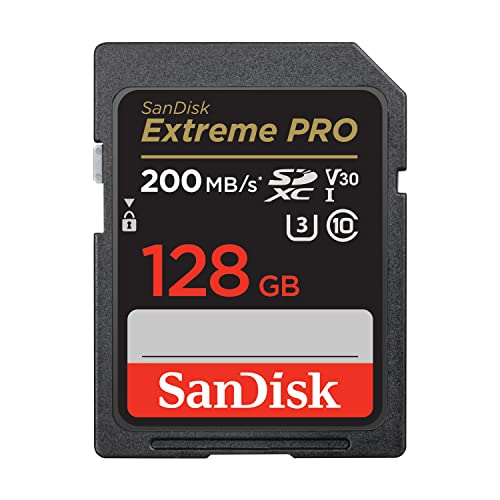
The SanDisk Extreme PRO 128GB is the headline UHS-I pick in this guide, and it is the card to choose when you want strong video performance without needing a UHS-II slot. Its model number is SDSDXXD-128G-GN4IN. It is rated U3 and V30, which makes it a straightforward match for Full HD video and for 4K UHD recording at ordinary bitrates. SanDisk lists read speeds of up to 200MB/s with its QuickFlow technology, and write speeds of up to 90MB/s, which gives it comfortable headroom above the sustained write speed that HD recording demands. The card is built to resist shock, temperature extremes, water, and X-rays, and it includes access to RescuePRO Deluxe recovery software, which can help retrieve files from a card that has been accidentally formatted.
This card suits mirrorless and DSLR shooters who record HD and 4K video in a UHS-I camera and want fast offloads afterwards. The 200MB/s read speed shortens the time it takes to move a full card onto a computer, which matters when you come home with several cards after a long shoot. The 128GB capacity holds hours of Full HD footage, so a single card covers most events without a swap. One caveat is that this is a UHS-I card, so it cannot match the write speeds of the UHS-II cards further down this list, and shooters who record very high-bitrate 4K formats should look at the V60 or V90 picks instead.
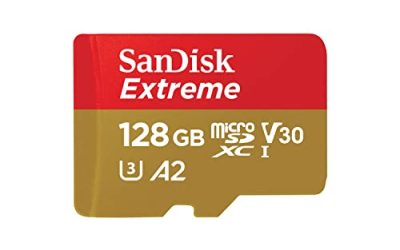
SanDisk Extreme 128GB SDXC UHS-I
SanDisk Extreme 128GB SDXC UHS-I on Amazon
The SanDisk Extreme 128GB is the value pick among the UHS-I cards here, and it is the card to choose when your shooting is mostly Full HD with some 4K, and you want a dependable card without paying for flagship speed. Its model number is SDSDXV5-128G-GNCIN. It is rated Class 10, U3, and V30, which covers Full HD video and 4K UHD recording at ordinary bitrates. SanDisk lists transfer speeds of up to 150MB/s and write speeds of up to 70MB/s for the 128GB capacity. Like its PRO sibling, it is built to resist shock, temperature extremes, water, and X-rays, so it holds up to outdoor use and travel.
This card suits beginners, family videographers, and anyone recording HD video on a camera with a UHS-I slot. The V30 rating is the key point: it guarantees the sustained write speed that HD recording needs, while the 70MB/s write speed gives reasonable headroom for longer takes. The 128GB capacity is generous for HD work, holding several hours of Full HD footage before a swap is needed. One caveat is the lower write speed compared with the Extreme PRO, so if you record long 4K takes at high bitrates, or you shoot bursts of stills between video clips, the PRO is the safer choice.
Lexar Professional 2000x 128GB SDXC UHS-II
Lexar Professional 2000x 128GB SDXC UHS-II on Amazon
The Lexar Professional 2000x 128GB is the UHS-II pick for shooters who want maximum write headroom for demanding video formats. Its model number is LSD2000128G-BNNNU. It is rated Class 10, U3, and V90, which is the highest video speed class, guaranteeing at least 90MB/s of sustained writing. Lexar lists read speeds of up to 300MB/s and write speeds of up to 260MB/s, which gives it far more headroom than any HD recording format requires, and plenty of room for high-bitrate 4K and 8K work as well. It is built for DSLR and cinema-quality video cameras, and it is backwards compatible with UHS-I devices, so it still works in a UHS-I slot at UHS-I speeds.
This card suits videographers who record high-bitrate 4K, who shoot long continuous takes, or who want one card that covers both HD work today and more demanding formats later. The V90 rating is the main reason to choose it: it removes the card as a bottleneck for almost any format a current camera can record. The 300MB/s read speed also makes offloading a full 128GB card noticeably faster with a UHS-II reader. One caveat is that you need a UHS-II camera slot and a UHS-II reader to see the full speed, so in a UHS-I camera much of the advantage is unused.
Kingston Canvas Go! Plus 128GB SDXC UHS-I
Kingston Canvas Go! Plus 128GB SDXC UHS-I on Amazon
The Kingston Canvas Go! Plus 128GB is the second UHS-I pick in this guide, and it is the card to choose when you want the fastest UHS-I read speed of the group alongside solid video credentials. Its model number is SDG4/128GB, the fourth-generation version of the Canvas Go! Plus line. It is rated Class 10, U3, and V30, which covers Full HD video and 4K UHD recording at ordinary bitrates. Kingston lists read speeds of up to 200MB/s, and the card is aimed at cameras and drones, with durability built in for outdoor use. The 128GB capacity holds hours of HD footage, making it a practical single-card choice for a day of shooting.
This card suits creators who move between a camera and a drone, or who want fast offloads from a UHS-I card without stepping up to UHS-II. The 200MB/s read speed matches the SanDisk Extreme PRO on paper, so moving files to a computer is quick with a compatible reader. The V30 rating gives it the sustained write speed that HD recording needs, and the Kingston name is a familiar one in memory cards. One caveat is that there are several generations of Canvas Go! Plus cards, so check the model number SDG4/128GB on the listing to make sure you are getting this generation and not an older one.
Sony TOUGH-G 128GB SDXC UHS-II
Sony TOUGH-G 128GB SDXC UHS-II on Amazon
The Sony TOUGH-G 128GB is the durability pick in this guide, and it is the card to choose when your shoots take you into rough conditions. Its model number is SF-G128T/T1. It is rated Class 10, U3, and V90, which guarantees at least 90MB/s of sustained writing, and Sony lists read speeds of up to 300MB/s and write speeds of up to 299MB/s, the fastest write speed in this guide. That combination covers high-bitrate 4K and 8K recording with room to spare, while the V90 rating keeps long takes smooth. What sets it apart, though, is the build: the TOUGH series uses a one-piece moulded body with no hollow ribs, making it far more resistant to bending and breaking than a standard card, and it carries a high waterproof rating alongside resistance to dust, shock, and X-rays.
This card suits professional videographers, travel shooters, and anyone who works outdoors in rain, dust, or cold, and who cannot afford a card failure in the field. The combination of V90 speed and a rigid body makes it the most capable card here on both fronts. The 128GB capacity holds a long block of high-bitrate footage, and the fast write speed clears the camera buffer quickly between takes. One caveat is that it needs a UHS-II slot to reach its full speed, so in a UHS-I camera it behaves like a fast UHS-I card.
Comparison Table
| Card | Interface | Video class | Read speed | Write speed | Capacity | Standout trait |
|---|---|---|---|---|---|---|
| SanDisk Extreme PRO 128GB | UHS-I | V30 | Up to 200MB/s | Up to 90MB/s | 128GB | Fast UHS-I all-rounder |
| SanDisk Extreme 128GB | UHS-I | V30 | Up to 150MB/s | Up to 70MB/s | 128GB | Dependable value pick |
| Lexar Professional 2000x 128GB | UHS-II | V90 | Up to 300MB/s | Up to 260MB/s | 128GB | Highest video class |
| Kingston Canvas Go! Plus 128GB | UHS-I | V30 | Up to 200MB/s | Up to 90MB/s | 128GB | Fast UHS-I read speed |
| Sony TOUGH-G 128GB | UHS-II | V90 | Up to 300MB/s | Up to 299MB/s | 128GB | Toughest build quality |
Speed figures are the maximum figures listed by each maker, and the speed you see in practice depends on your camera, your card reader, and the recording format you use.
Which One Is Right for You?
If you record mostly Full HD video on a camera with a UHS-I slot, start with the SanDisk Extreme 128GB. Its V30 rating covers HD recording, its 128GB capacity holds hours of footage, and it is the simplest fit for this kind of shooting. If you also record 4K, or you want faster offloads and more write headroom, step up to the SanDisk Extreme PRO 128GB or the Kingston Canvas Go! Plus 128GB. Both are V30 UHS-I cards with read speeds of up to 200MB/s, and the choice between them comes down to brand preference and which model is available when you order.
If your camera has a UHS-II slot and you record high-bitrate 4K, choose one of the V90 cards. The Lexar Professional 2000x 128GB gives you V90 speed with write speeds of up to 260MB/s, which handles demanding formats and long takes without strain. The Sony TOUGH-G 128GB gives you the same V90 rating with even faster write speeds of up to 299MB/s, plus the toughest body in this guide, so it is the pick for outdoor and professional work where a card failure would cost you a shoot.
Frequently Asked Questions
What speed class do I need for HD video?
For Full HD video, V30 is the practical baseline, because it guarantees at least 30MB/s of sustained writing, which covers Full HD recording at ordinary bitrates with headroom to spare. V10 can handle some HD recording, but it leaves little margin for long takes, so V30 is the safer choice. If you also record 4K, V30 still covers most 4K formats, while V60 and V90 suit high-bitrate 4K and 8K. Check your camera manual first, because some cameras state a minimum class, and picking a card rated below that minimum can cause recordings to stop.
Is 128GB enough for HD video?
For most shooters, yes. A 128GB card holds several hours of Full HD footage at typical bitrates, which covers a family event, a day of vlogging, or a wedding ceremony without a swap. It also holds a solid block of 4K footage, though high-bitrate 4K fills a card much faster than Full HD.
Can I use a UHS-II card in a UHS-I camera?
Yes. UHS-II cards are backwards compatible, so a UHS-II card works in a UHS-I slot, but it falls back to UHS-I speeds. That means you get the capacity and the video class, but not the extra speed you paid for. If your camera has only a UHS-I slot, a fast UHS-I card such as the SanDisk Extreme PRO or the Kingston Canvas Go! Plus is usually the better match. If you plan to upgrade to a camera with a UHS-II slot later, a UHS-II card bought now will still serve you then.
How do I avoid buying a fake SD card?
Buy from established brands and check the exact model number on the listing before you order. Each card in this guide lists its model number, and the listing you open should match it exactly. Be wary of listings with a different model number, a different capacity, or a speed rating that does not match the brand listing. Buy from the brand store or a seller you trust, keep the packaging, and run a full-capacity check on a new card before you rely on it for an important shoot.
Disclosure: As an Amazon Associate, we may earn from qualifying purchases.
FAQ
Which One Is Right for You?
What speed class do I need for HD video?
Is 128GB enough for HD video?
Can I use a UHS-II card in a UHS-I camera?
How do I avoid buying a fake SD card?
More from Amazon
Programs that pair well with the guide above. Offers and eligibility are set by Amazon and may change.
Free shipping on eligible items, Prime Video and more. Eligible new members can start with a free trial.
Start a Prime free trialAd-free music streaming. Eligible new subscribers can start with a free trial.
Try Music Unlimited freeA Prime membership for ages 18-24 with a trial period. Eligibility is set by Amazon.
See Prime for Young AdultsAudiobooks and podcasts to listen to on the go. Eligible new members can start with a free trial.
Try Audible freeAs an Amazon Associate we earn from qualifying purchases.