Key takeaways
- Pro: Effortless 4K high-refresh gaming at maximum settings.
- Pro: Elite ray-tracing and AI performance, especially on RTX 50-series.
- Pro: Large VRAM options like the RX 7900 XTX’s 24GB aid creative work.
- Pro: Premium cooling keeps these cards quiet under heavy load.
What's inside
When money is no object and you want the absolute best gaming and content-creation performance, the highest-end graphics card is where the conversation starts. These flagship GPUs deliver 4K gaming at high refresh rates, blistering ray-tracing performance, and the raw compute power that professionals and enthusiasts crave. The 2026 top tier is dominated by NVIDIA’s Blackwell RTX 50-series and AMD’s flagship Radeon cards.
This review examines the current crop of top-tier graphics cards, from the RTX 5080 to previous-gen halo products still worth considering. I’ll cover what separates these cards, where the trade-offs lie, and which flagship makes the most sense for your priorities and budget.
As an Amazon Associate we earn from qualifying purchases.


🎮 Get More From Your Setup — Free
Prime Gaming gives you free PC games every month, in-game loot, and a free Twitch channel sub — plus fast free shipping on all the gear above. New members get a 30-day free trial.
Watch: Highest End Graphics Card: Review & Buyer’s Guide — Video Review
Design & Build
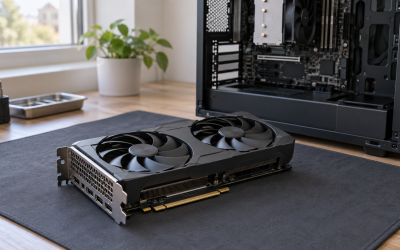
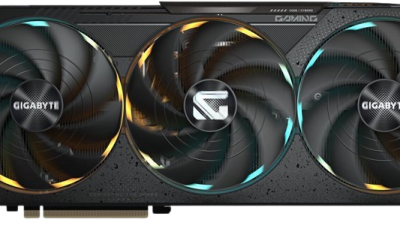
High-end cards are physically imposing, with massive triple-fan coolers, reinforced backplates, and multi-slot designs that demand serious case space. The ASUS TUF Gaming RTX 5080 and PNY RTX 5080 Epic-X exemplify the current generation, with robust cooling built to sustain high clocks under load, and the PNY notably occupies nearly three slots. Previous-gen halo cards like the XFX RX 7900 XTX with 24GB and the RTX 4090 Founders Edition remain formidable, the latter still among the fastest cards ever made. Build quality at this tier is excellent across the board, with premium materials, ARGB accents on some models, and cooling engineered for quiet operation even under heavy stress.
Performance
This is the segment where 4K becomes effortless. The RTX 5080 delivers exceptional 4K gaming with DLSS 4 pushing frame rates even higher, and its Blackwell architecture excels at ray tracing and AI workloads. AMD’s RX 7900 XTX counters with a massive 24GB of GDDR6, making it a strong choice for memory-hungry games and creative work at a relatively lower price. The RTX 4090, despite being previous-gen, still outpaces many current cards and remains a content-creation monster thanks to its enormous compute resources. Across these flagships, you’re getting maximum-settings 4K, high-refresh performance, and the headroom to drive demanding monitors, at the cost of high power draw and premium pricing.
Pros & Cons
- Pro: Effortless 4K high-refresh gaming at maximum settings.
- Pro: Elite ray-tracing and AI performance, especially on RTX 50-series.
- Pro: Large VRAM options like the RX 7900 XTX’s 24GB aid creative work.
- Pro: Premium cooling keeps these cards quiet under heavy load.
- Con: Very high prices put them out of reach for most gamers.
- Con: High power draw demands a robust PSU and good airflow.
- Con: Large multi-slot designs require ample case clearance.
Alternatives to Consider
If the flagship premium is too steep, a mid-to-upper card like the RTX 5060 Ti or RX 9070 XT delivers excellent 1440p and entry 4K performance for far less. Creators who prioritize VRAM over gaming frames might favor the RX 7900 XTX’s 24GB buffer. And if you can find a previous-gen RTX 4090 at a reasonable price, it remains one of the most capable cards available for both gaming and professional work.
Frequently Asked Questions
Is the RTX 5080 enough for 4K gaming?
Absolutely. The RTX 5080 handles 4K at high settings with ease, and DLSS 4 boosts frame rates further in supported titles, making it a superb 4K flagship.
Should I buy an RTX 4090 in 2026?
If you find one at a fair price, yes, it’s still exceptionally fast for both gaming and content creation, rivaling or beating many current cards.
How much VRAM do flagships need?
16GB is ample for gaming, but creators and those using very high-res textures benefit from more, which is where the RX 7900 XTX’s 24GB shines.
Do I need a new power supply?
Likely. These cards draw significant power, so a high-quality 850W or greater PSU with the right connectors is strongly recommended.
Verdict
For the best modern flagship experience, the RTX 5080 leads with its blend of 4K gaming, ray tracing, and DLSS 4, with the TUF Gaming and PNY Epic-X versions offering excellent cooling. Creators who want maximum VRAM should weigh the RX 7900 XTX, while an RTX 4090 remains a powerhouse alternative if the price is right.